The Red Cord vs. The Keyed Lock: Your Guide to Garage Door Emergency Releases
Published: Jun 22, 2026
It’s a scenario no homeowner wants to face: the power is out, your car is trapped inside the garage, and you’re running late. Or worse, you’ve arrived home during a storm only to find your clicker is useless, and your garage is the only way into your house. You’re locked out.
In moments like these, a tiny, often-overlooked feature of your garage door system becomes the most important tool you own: the emergency release. But not all releases are created equal, and knowing which one you have—and which one you need—can be the difference between a minor inconvenience and a major headache.
Many homeowners are familiar with the red cord hanging from the opener, but what about the small, circular lock on the garage door itself? This guide will walk you through the difference between the standard internal pull cord and an external keyed release, helping you understand how they work and which one is right for your home.
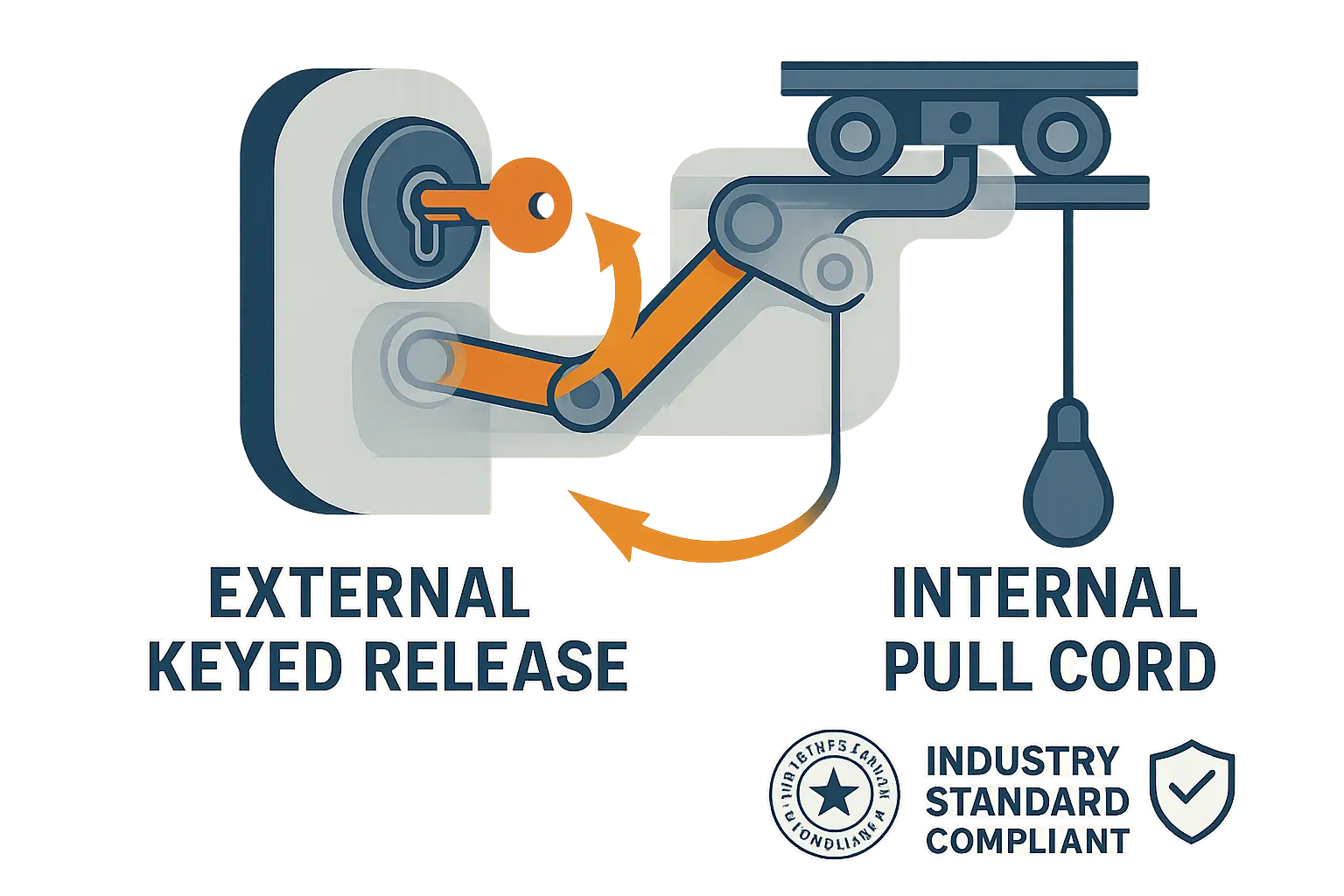
Foundation: Your Opener's Lifeline - The Internal Release Cord
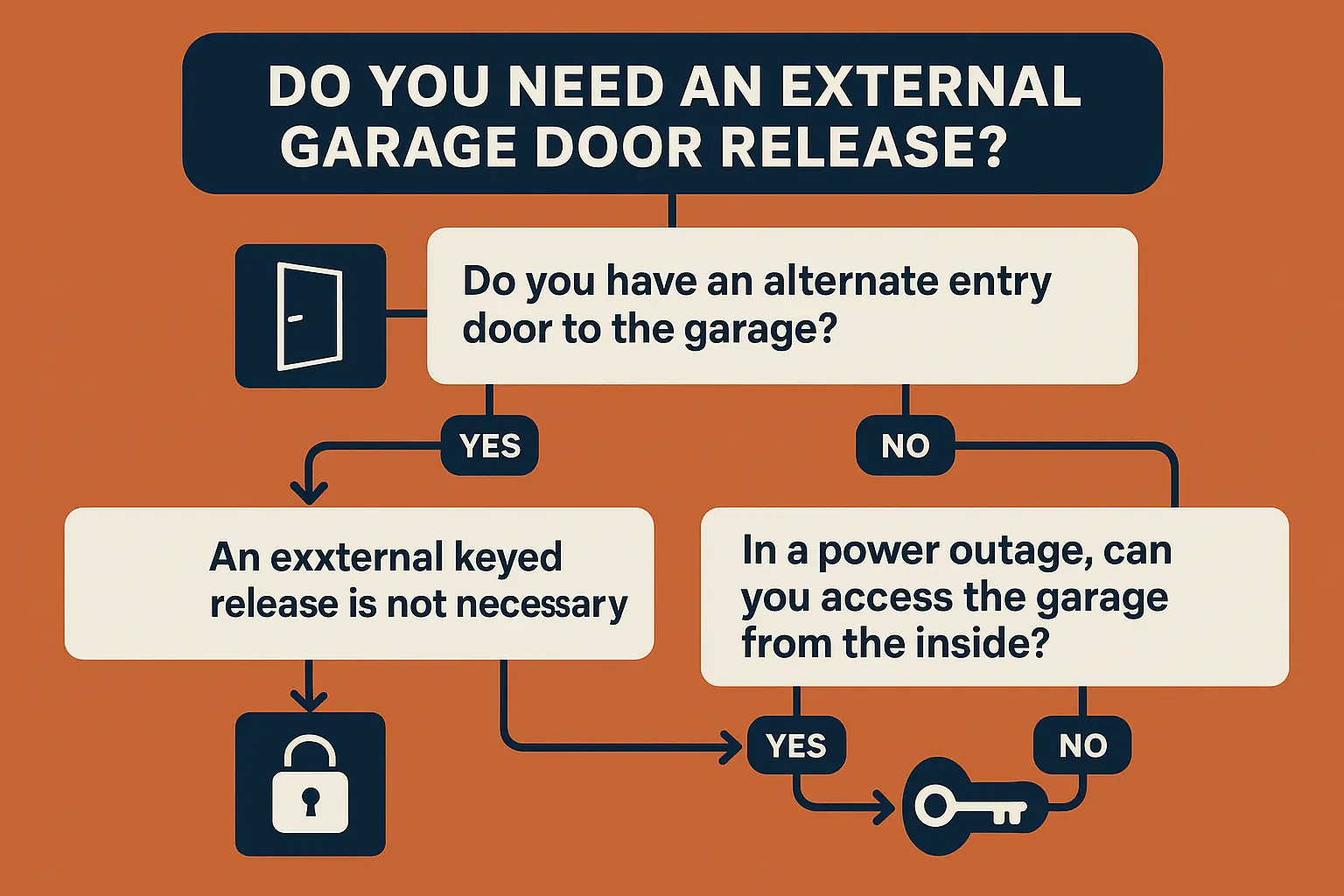
Building: The Critical Question - When is the Lifeline Not Enough?
This presents a serious problem for a specific type of garage—one with no other entry point, often called a "detached" or "no-pass-door" garage. If the power goes out, and you don't have a secondary door to walk through, you are completely locked out.
This is where the external keyed emergency release comes in.
Mastery: Step-by-Step Operation & Troubleshooting
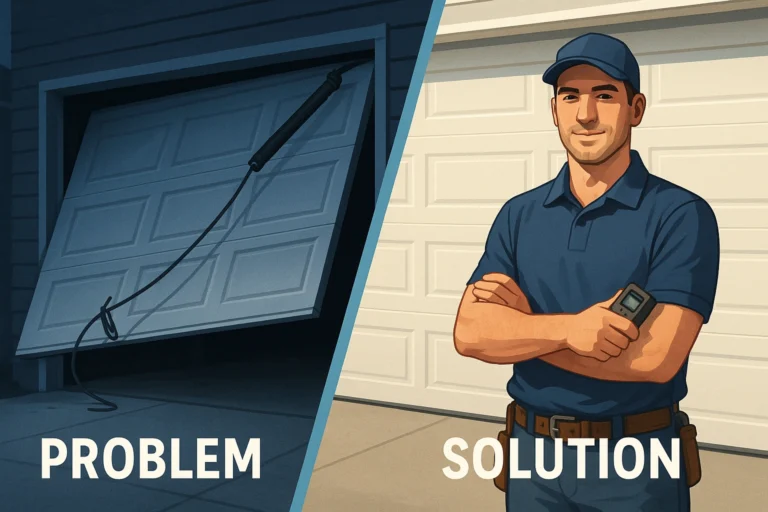
From Stuck to Solved: A Guide to Common Release Problems
- Problem: The release is pulled, but the door is too heavy to lift.
- Cause: This is almost always a sign of a broken or worn-out spring. The springs do the heavy lifting, not the opener. A garage door can weigh hundreds of pounds, and lifting it without spring assistance is dangerous and often impossible.
- Solution: Do not attempt to force the door open. This is a job for a professional. Continuing to try and lift it can cause further damage or serious injury. You likely need an expert in garage door spring repair to safely resolve the issue.
- Problem: I can't reconnect the opener after using the release.
- Cause: The trolley on the rail and the connector on the chain/belt are not aligned. For them to click back together, they need to meet up.
- Solution: With the door closed, press your remote button. The motor will run, moving the chain or belt connector along the rail. It will eventually meet the trolley and automatically re-engage with a loud click. If this doesn't work, our guide on how to reconnect a garage door opener provides more detailed steps.
Action: Security, Maintenance, and Next Steps
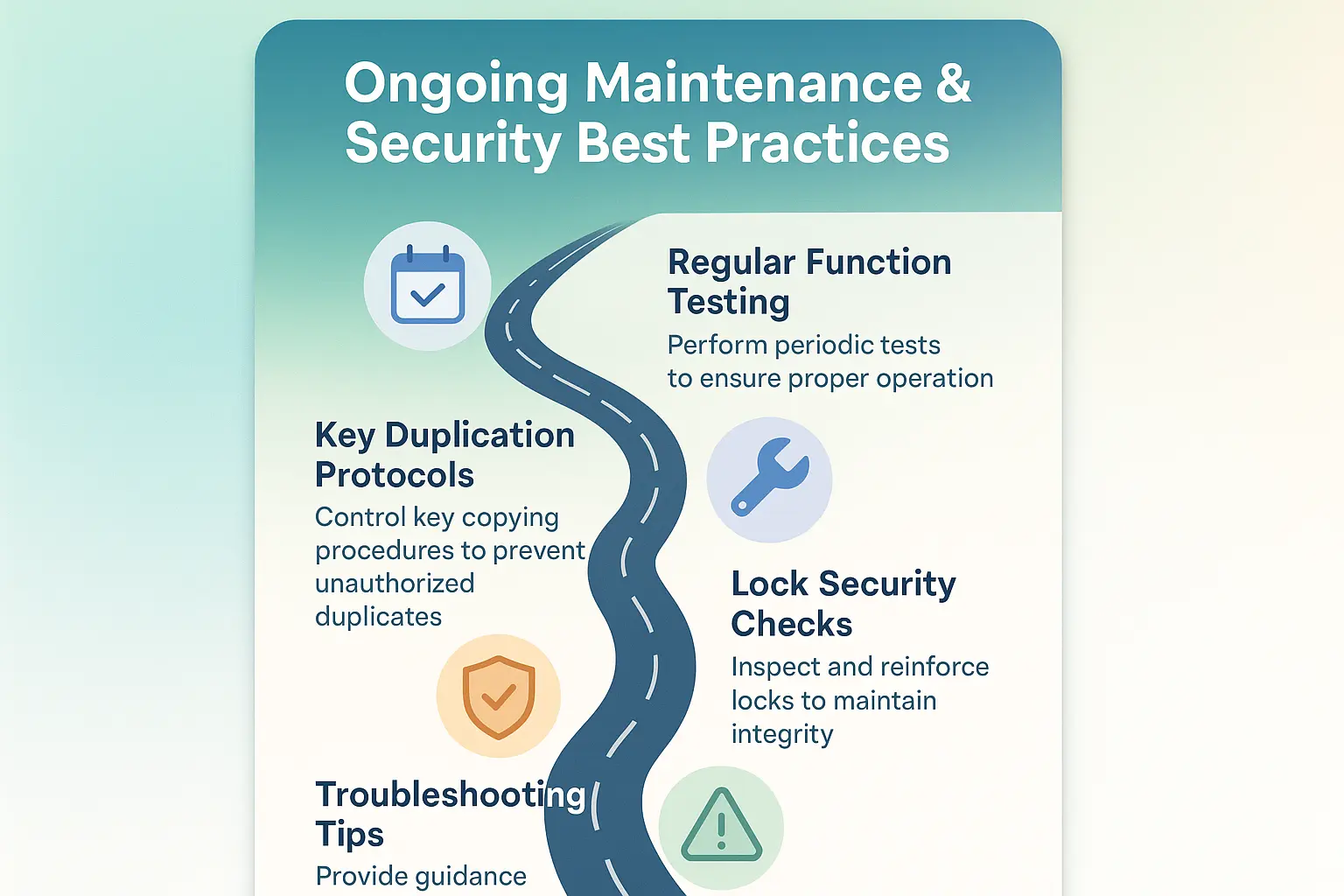
Security and Maintenance Roadmap
- Security: An external keyed release is designed with security in mind, but like any lock, it can be a target. Most are tumbler locks that are reasonably secure. For added peace of mind, some homeowners install a garage door shield, which blocks the lock from being tampered with.
- What if I lose the key? Treat the key like any other house key. Keep a spare in a safe place. If you lose all copies, a locksmith or garage door technician can drill out the lock and replace the kit.
- Regular Checks: Once or twice a year, test your emergency release (with the door closed!). Disengage and re-engage it to ensure the mechanism is moving freely and hasn't seized up. Check that the key for your external lock works smoothly.
Frequently Asked Questions (FAQ)
Do I really need an external release if my garage is attached to my house?
What happens if I pull the emergency cord while the garage door is open?
How do I reset my garage door after using the release?
Continuing Your Learning Journey
By assessing your garage's access points and knowing how these simple but vital mechanisms work, you can ensure you’re always prepared and never left out in the cold.
You may also like