Garage Door Sticking After a Fresh Paint Job: Seals, Panels, and Solutions


Published: Nov 3, 2026

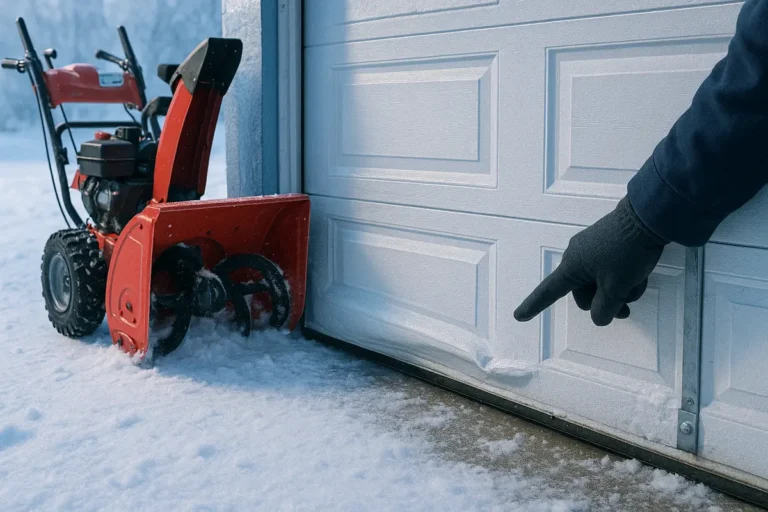
Applying a fresh coat of paint to a garage door instantly refreshes your home’s curb appeal. However, hours or days later, a frustrating mechanical failure often occurs: the door sticks shut, shakes violently, makes alarming popping noises when opening, or peels fresh paint off the jambs and panel joints.

When evaluating how to fix this issue, understanding whether your door is binding along the side weather stripping or along the horizontal panel seams is critical. Forcing the door to operate mechanically risks structural damage, but applying the right diagnosis and release methods will restore smooth operation while preserving your new finish.
Emergency Release Protocol: Stop Motor Damage Immediately


If your door is stuck shut after painting, do not attempt to force it open using the automatic opener. Residential garage door openers generate between 1/2 HP and 1-1/4 HP, exerting 300 to 900 Newtons of pulling force. Forcing an opener against stuck paint can strip trolley drive gears, pop cables off drums, or tear the rubber perimeter weather seal directly off the wood or PVC trim.

  1. Disengage the Opener: Pull the emergency release cord (red handle) to disconnect the opener arm from the drive chain or belt.
  2. Break the Bond Manually: Insert a plastic putty knife or flexible scraper gently between the exterior rubber stop molding and the painted panel face to break the adhesive bond without scratching your finish.
  3. Score Panel Seams: If the door sticks between horizontal sections, use a utility knife to lightly score along the panel joint from the outside before lifting the door manually from the center handle.

If manual release reveals that your garage door won’t close smoothly due to severe alignment friction, mechanical relief may be required.

Still stuck? Get it fixed today.
24/7 emergency service from licensed local technicians.
Call (860) 362-3018

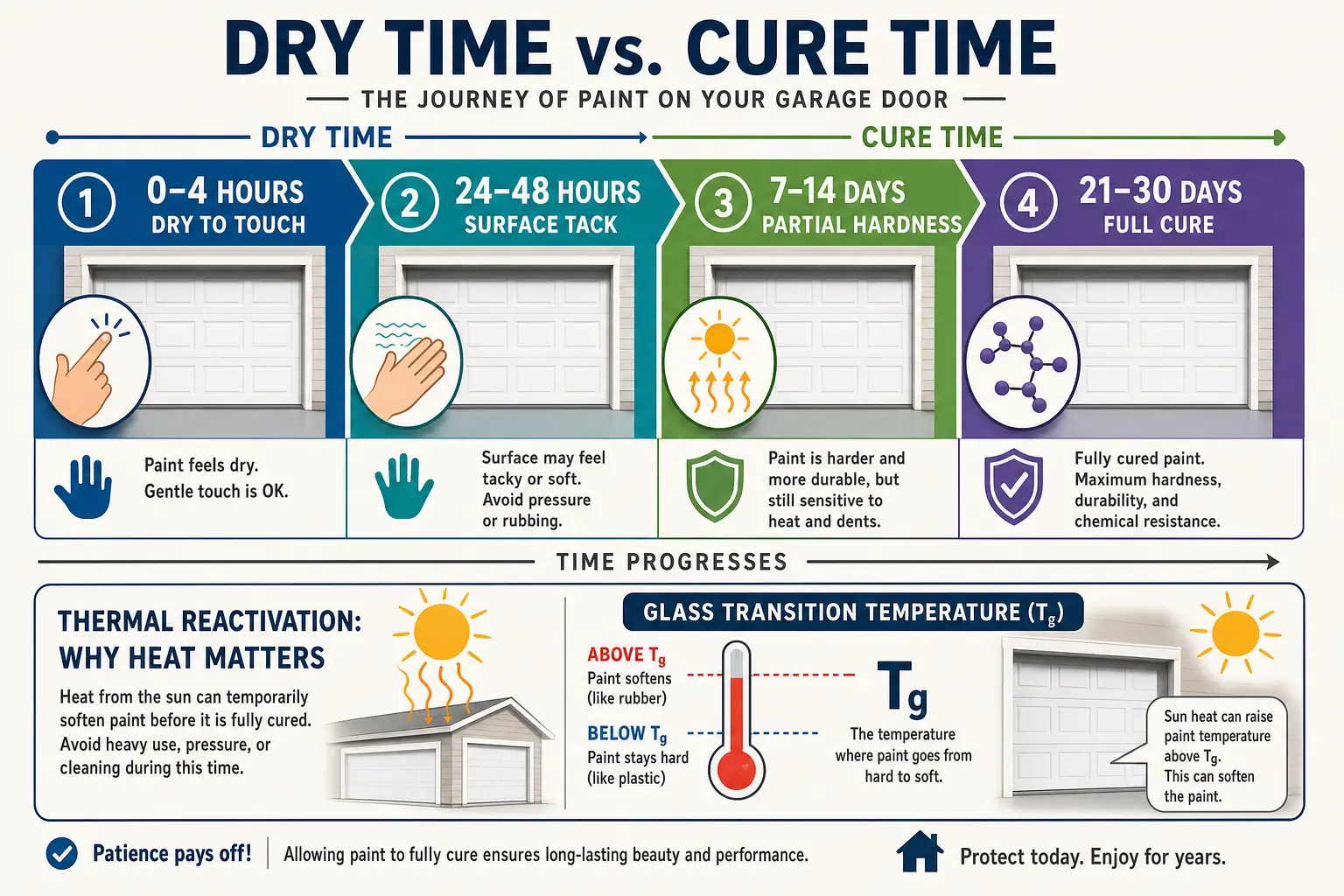
Why Fresh Paint Sticks: Dry Time vs. Cure Time


The root cause of post-paint binding comes down to polymer chemistry. Standard architectural latex and acrylic paints dry to the touch in 1 to 4 hours as the water carrier evaporates. However, full polymer cross-linking—known as curing—requires 14 to 30 days, depending on humidity and ambient temperature.

Understanding the critical distinction between paint 'dry time' and 'cure time' explains why freshly painted garage doors may feel dry but still stick due to incomplete polymer curing and thermal softening in sunlight.

Under ASTM D4946 standards for block resistance, uncured paint films exhibit high surface tack when pressed against other surfaces under load. Three main factors accelerate this sticking:

  • Glass Transition Temperature ($T_g$): Acrylic paint softens when temperatures exceed its $T_g$ threshold (95°F–110°F). Dark paint colors under direct sunlight can reach surface temperatures of 140°F–160°F, thermally reactivating cured paint into a sticky resin.
  • Plasticizer Migration: Flexible EPDM rubber and vinyl PVC weather seals contain plasticizers that chemically migrate into uncured latex resins, welding the seal to the paint film.
  • Seal Compression Pressure: Spring-loaded top track brackets press the door panel directly into the weather seal when fully closed, holding the surfaces together under continuous force.

Diagnostic Guide & Mechanical Fixes for Seals and Panels


Determining the exact point of contact allows you to apply targeted remedies that protect both the mechanics and the paint finish.

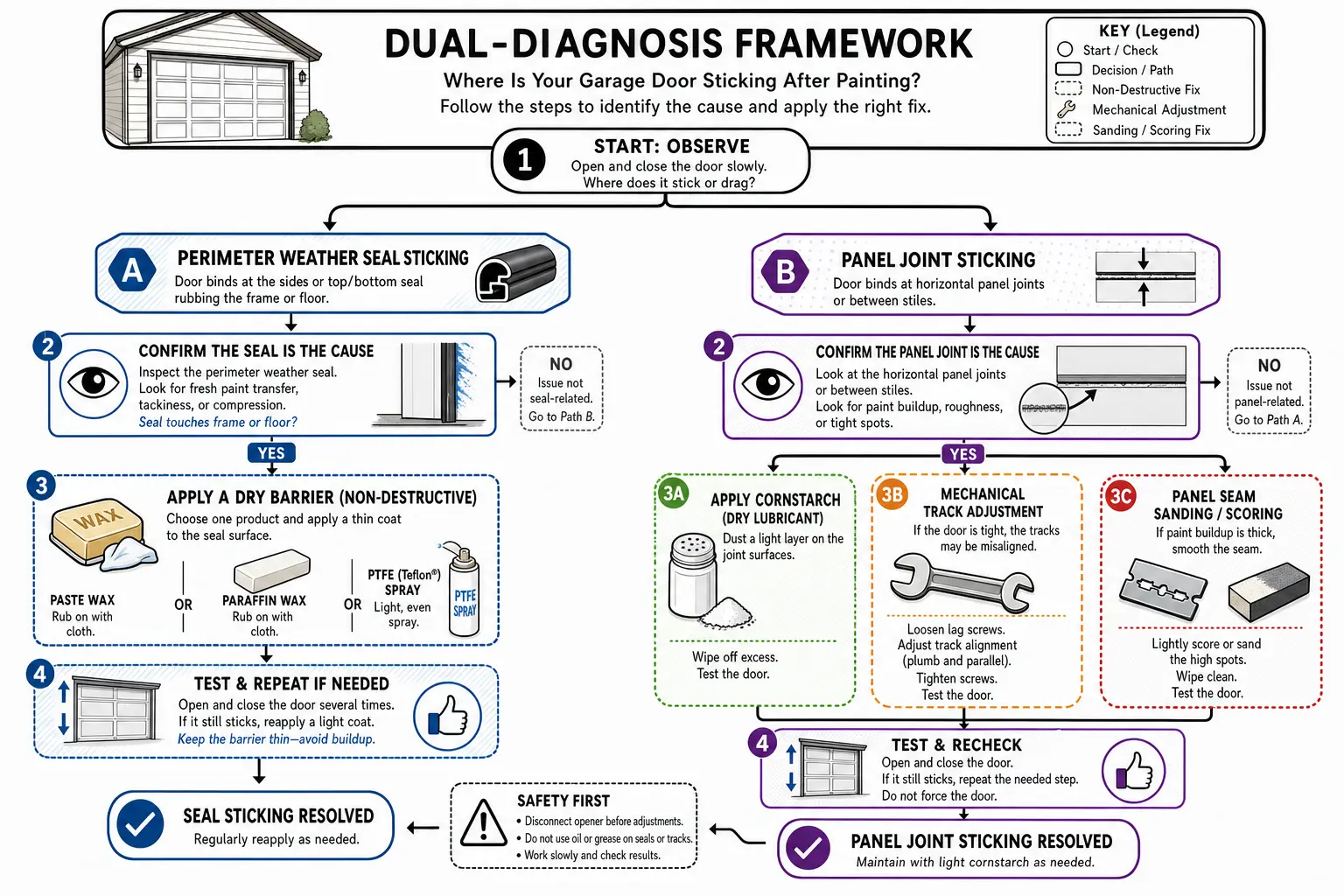
A clear decision-making flowchart guides you step-by-step to diagnose and fix sticking caused by either perimeter seals or panel joints, using safe methods that preserve paint and door mechanics.

Fixing Perimeter Weather Seal Sticking

If sticking occurs along the top or side molding, you can eliminate friction using barrier coatings or temporary mechanical relief:

  • Paste Wax Barrier: Apply a thin layer of 100% Carnauba paste wax along the rubber seal edge where it meets the painted door face. The wax creates a clear, non-tacky protective shell.
  • Wax Paper Cushion: Fold strips of wax paper over the edge of the perimeter weather strip during the initial 7-day cure window.
  • Track Relief Adjustment: Using a 7/16″ socket wrench, loosen the track bracket fasteners slightly and adjust the garage door track alignment back by 1/16″ to 1/8″. This reduces physical compression against the fresh paint while it completes cross-linking.

Fixing Horizontal Panel Joint Sticking

When paint runs into tongue-and-groove panel overlaps, horizontal joints stick as the door rolls through track curves:

  • Dry Lubricant Powder: Dust the interlocking lip joints with pure talcum powder or cornstarch to absorb surface tack without damaging the finish.
  • Staggered Drying Gaps: Disconnect the opener and prop the door open slightly with wooden blocks, exposing the tongue-and-groove lip to airflow during curing.

Safe Barrier Products vs. High-Risk Chemicals


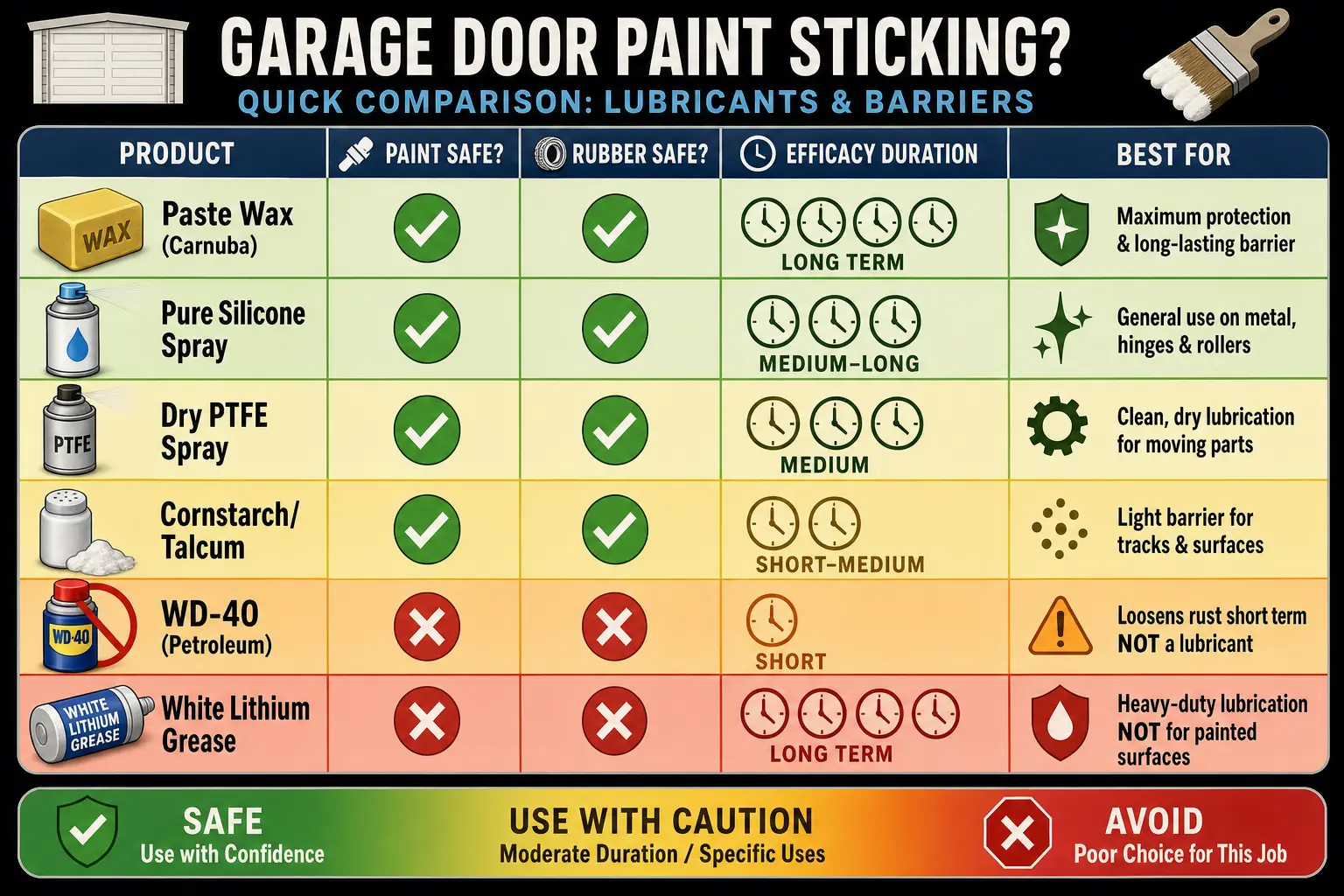
Selecting the correct barrier coating is critical. Using incorrect household lubricants can dissolve new paint or degrade rubber seals, compounding your repair costs.

Remember which lubricants and barriers protect your garage door paint and seals (like paste wax and silicone) and which to avoid (such as WD-40 and lithium grease) to prevent damage and prolong functionality.

  • Paste Wax (Carnauba): Excellent paint and rubber safety; provides 3 to 6 months of tack resistance.
  • Dry PTFE Spray: Ideal for panel joints; leaves a clear, dry micro-thin film that doesn’t attract dust.
  • Pure Silicone Spray: Safe for EPDM rubber seals when applied via cloth. Knowing how often to lubricate your garage door with silicone keeps rubber supple year-round.
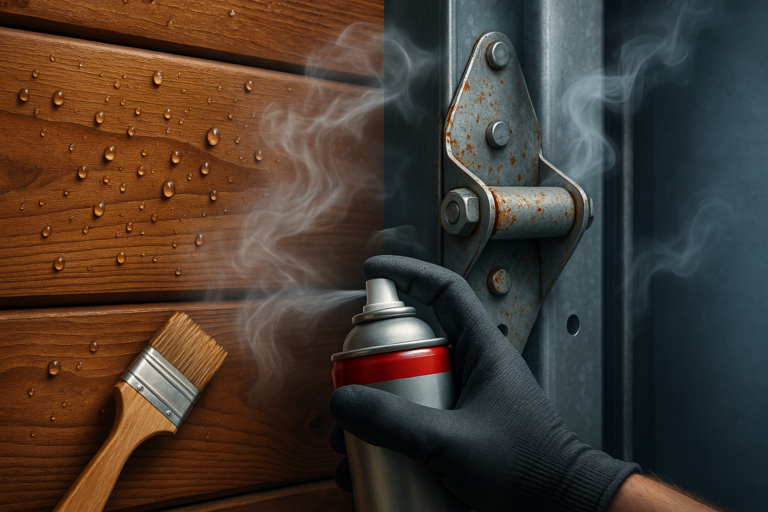
  • NEVER USE Petroleum WD-40 or White Lithium Grease: Petroleum solvents breakdown latex paint resins and cause vinyl/EPDM rubber weatherstripping to swell, soften, and fail permanently.

Pro Prevention: How to Paint Without Sticking


Taking structural steps before painting guarantees a flawless finish without binding issues:

  1. Choose Block-Resistant Coatings: Select 100% acrylic exterior paint or waterborne urethane alkyd enamels rated 8 to 10 on the ASTM D4946 block resistance scale.
  2. Remove Weather Stripping: Unbolt or un-nail perimeter stop molding before painting, allowing panels and trim to dry independently.
  3. Paint in Sections: Paint horizontal panel joints with the door cracked open, ensuring lips dry completely before closing.

Incorporating these steps into your home improvement routine is one of the best ways how to extend the lifespan of your garage door and maintain smooth motorized performance.

Professional Assistance for Smooth Operation


If adjusting track relief or unbinding stuck panels reveals bent hardware, damaged springs, or track misalignments, professional intervention ensures your system operates safely. Contact 24H Garage Doors for expert alignment, track relief adjustments, and comprehensive repair services available around the clock.

Frequently Asked Questions


Why does my garage door stick to the rubber seal even when the paint feels dry?

Paint dries from the outside in as moisture evaporates, creating a dry surface shell within 1 to 4 hours. However, full polymer curing takes 14 to 30 days. Under the continuous pressure of weather stripping, uncured soft resins beneath the surface fuse to the rubber through plasticizer migration.

Can trying to open a stuck painted garage door break the opener?

Yes. Openers exert up to 900 Newtons of force. Forcing an opener against a stuck paint bond can strip internal nylon drive gears, bend top section stiles, snap cables, or tear weather seals off the door frame.

How long should I leave my garage door open after painting?

Keep the door disengaged and propped open at least 4 to 6 hours after painting panel joints. Before closing the door fully overnight, apply paste wax or PTFE dry lubricant along contact points to prevent surface bonding during early cure phases.

Contact / Request a Call