Choosing the Right Garage Door Rollers: Durability, Lifespan, and Maintenance Guide


Published: Aug 5, 2026

If your garage door shudders, screeches, or struggles along its tracks, the culprit is likely worn-out rollers. Homeowners often overlook these small wheels, but they function as the vital joints of your entire system. When rollers fail, they place immense mechanical strain on your opener and can easily lead to a dangerous garage door off track repair situation.

To prevent costly breakdowns, you must understand how different roller materials perform, how to spot wear, and how to maintain them safely.


Steel vs. Nylon: The Ultimate Durability & Lifespan Showdown


Steel vs. Nylon Rollers

When choosing replacement rollers, material quality determines how quiet your door will run and how many years the system will last.

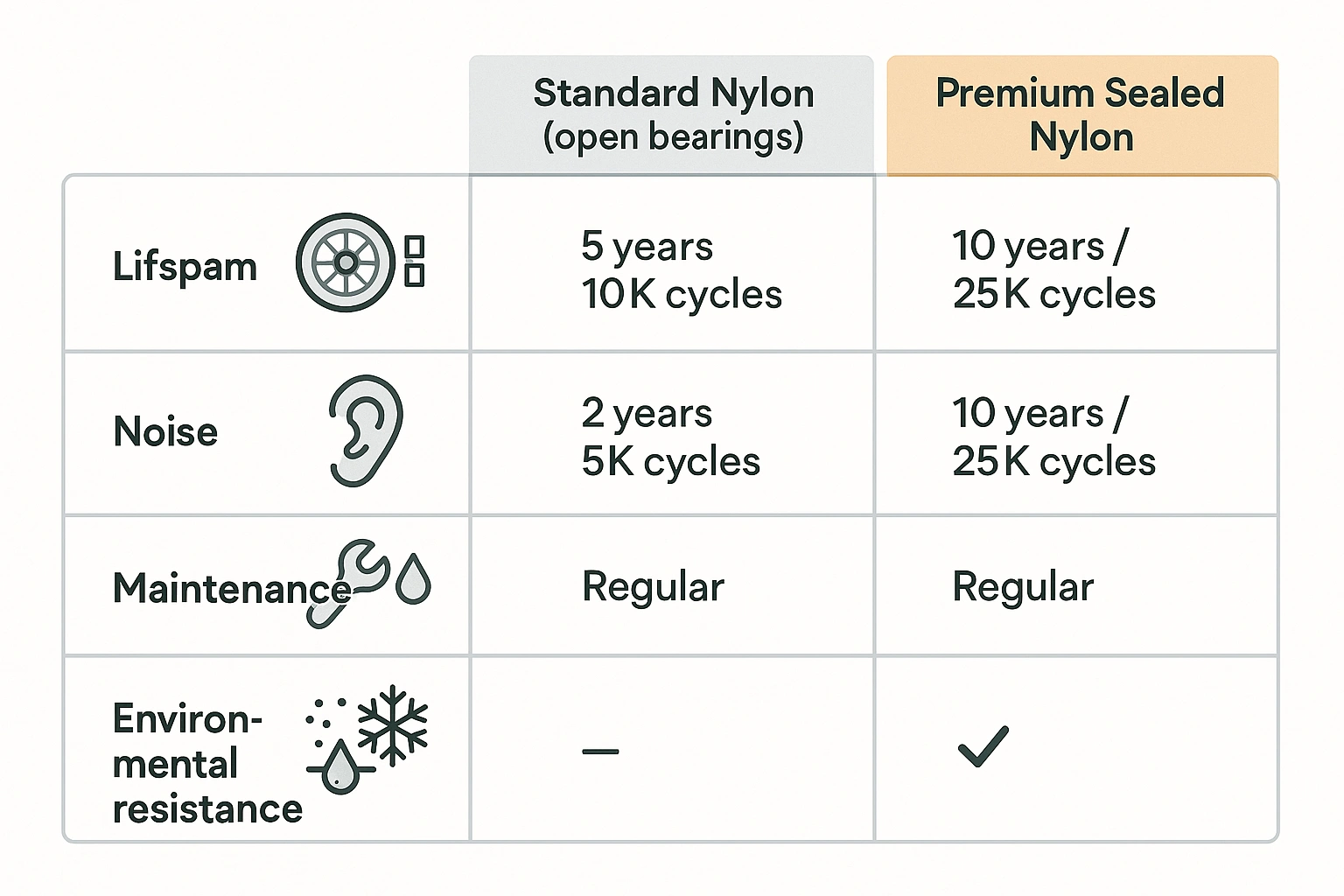
  • Plastic (No Bearings): Rated for 1,000–3,000 cycles (~2-3 years). These budget rollers quickly develop flat spots under summer heat, causing them to slide rather than roll.
  • Steel (Exposed 10-Ball Bearings): Rated for 5,000–7,000 cycles (~5-7 years). They are highly durable but prone to rust and require frequent oiling.
  • Nylon (Exposed 10-Ball Bearings): Rated for 10,000–15,000 cycles (~10-15 years). These offer a quieter operation but leave the bearings vulnerable to dust and grit.
  • Nylon (Premium 13-Ball Dual-Sealed Bearings – 6200ZZ or 6200-2RS): Rated for 20,000–100,000 cycles (~20-50 years). These are maintenance-free, waterproof, and run whisper-quiet.

The true secret to longevity lies in the bearing design. Open bearings allow dust and moisture to grind down the internal steel spheres. In contrast, dual-sealed rubber bearings (2RS) protect the lubricating grease from the elements, increasing roller lifespan by up to 600% in humid or coastal climates. Furthermore, in sub-zero winter temperatures, exposed-bearing steel rollers can freeze up, whereas sealed nylon rollers continue to spin smoothly.

Reviewing these material differences helps you identify when to replace garage door rollers before they lock up entirely and damage your tracks.

Safety-First: How to Replace a Bottom Roller Without Losing Your Fingers


How to Replace a Bottom Roller

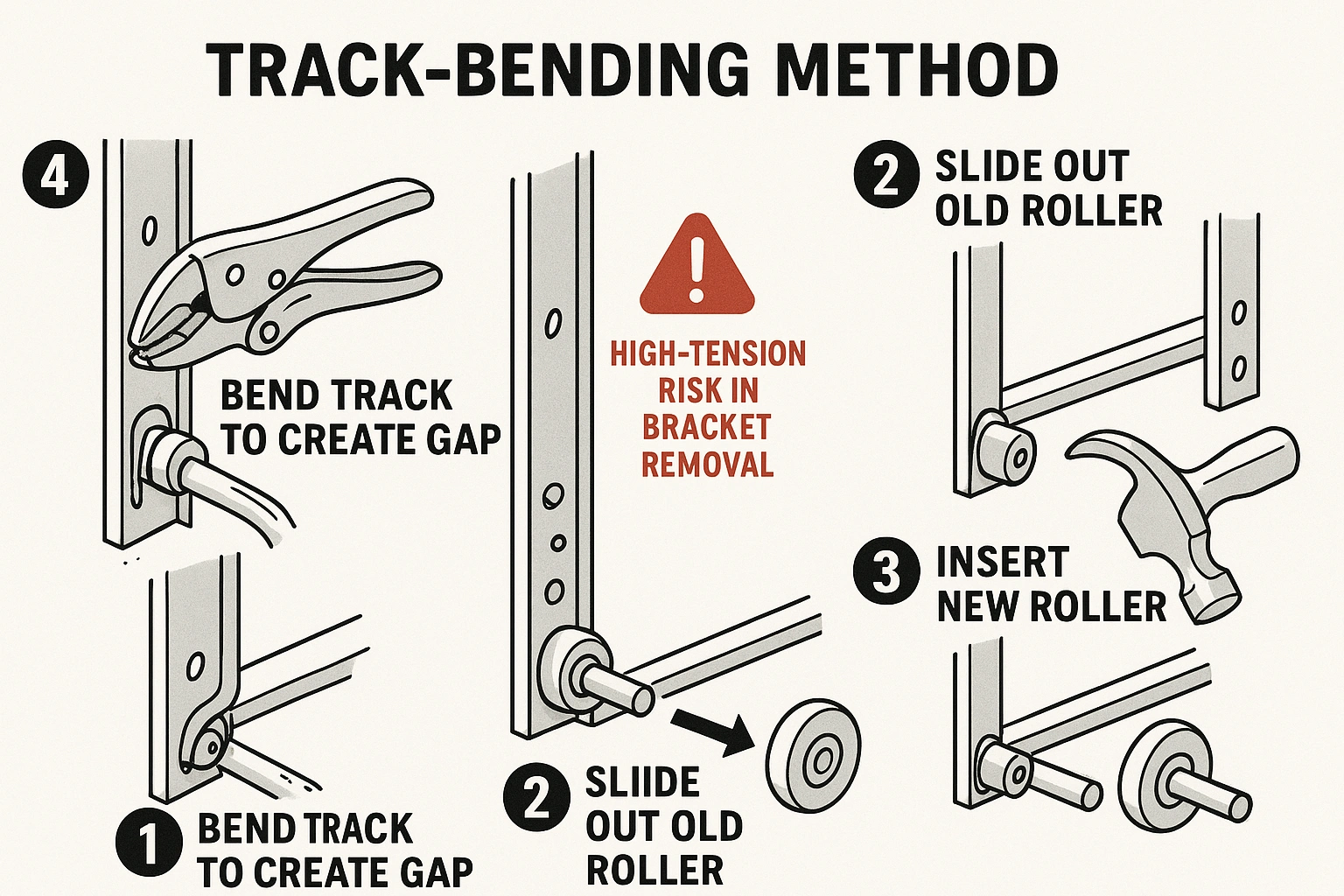
The bottom roller brackets of your garage door are under lethal tension from the counterbalancing cables. Never unscrew the bolts of a bottom bracket. Doing so can cause the bracket to fly off, causing severe injury or structural damage.

Instead, professionals and experienced DIYers use the safe “track-bending” method:

  1. Secure the Door: Open the door fully and clamp locking pliers to the track just beneath the bottom roller to prevent the door from moving.
  2. Open the Track: Use locking pliers to gently bend open the outer lip of the metal track at a convenient working height.
  3. Swap the Roller: Carefully slide the roller wheel out through this temporary gap, pull it from the hinge, insert the new roller stem, and guide the wheel back into the track.
  4. Restore the Track: Hammer the bent track edge back to its original flush position using a rubber mallet.

(Note: Legacy single-piece Henderson-style doors do not use standard tracks and require specialized spindle-pin replacements.)

If you lack the specialized tools or feel uncomfortable working around high-tension systems, hiring a professional for broken rollers repair is the safest way to ensure the job is done right.


The Science of Garage Door Lubrication


The Science of Garage Door Lubrication

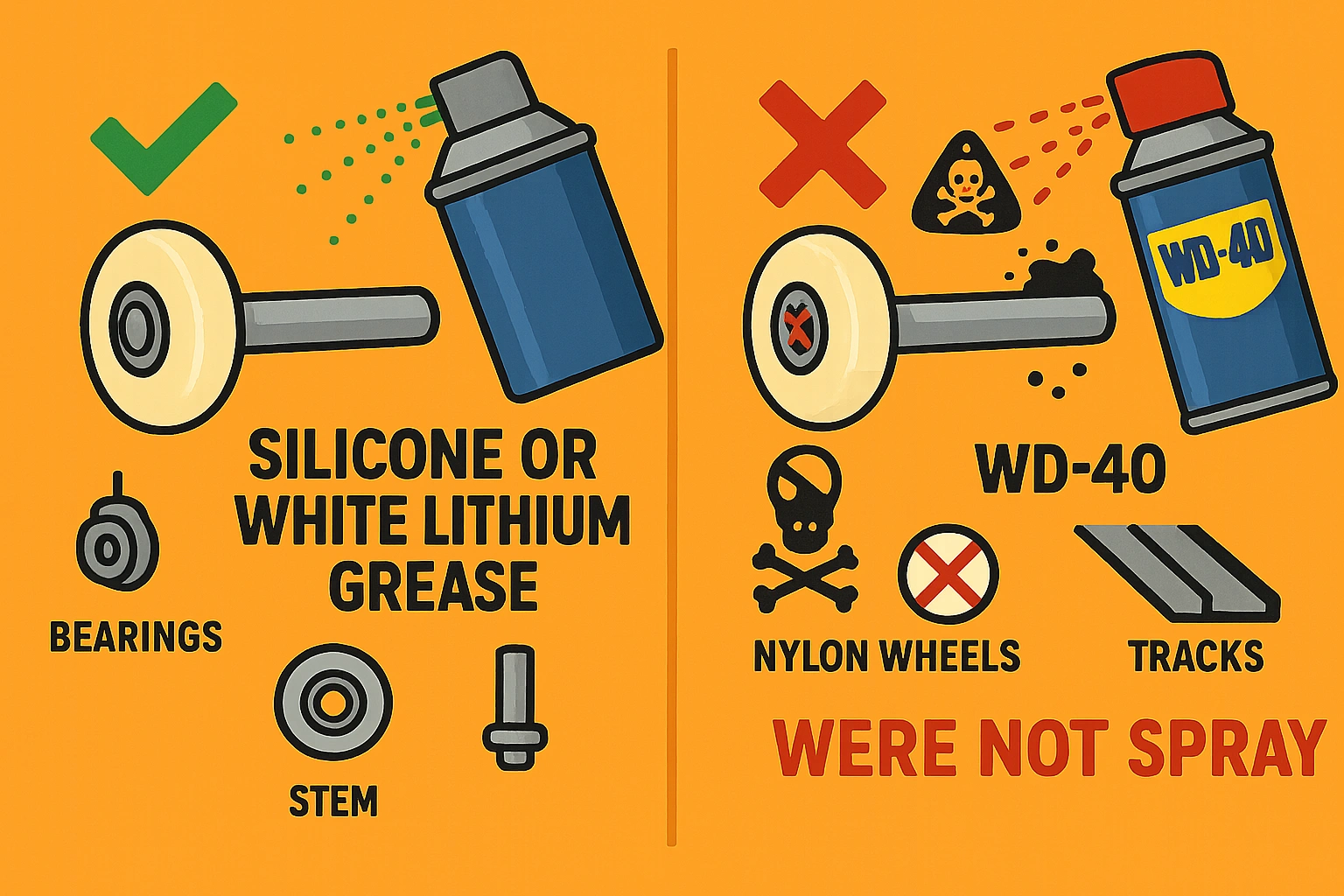
A common maintenance mistake is spraying standard WD-40 onto garage door rollers. Standard WD-40 is a solvent and degreaser—not a lubricant. Applying it strips away the factory-installed grease inside the bearings, accelerates nylon degradation, and attracts abrasive airborne dust.

Instead, use high-performance silicone sprays (ideal for cold climates down to -40°F) or white lithium grease (best for heavy-duty metal contact).

  • Where to Spray: Apply a small drop directly into the inner ball-bearing core and onto the metal stem where it sits inside the hinge.
  • Where NOT to Spray: Never lubricate the outer surface of nylon wheels or the inside of the tracks. Lubricant on tracks causes wheels to slide rather than roll, leading to flat spots. Keep tracks clean and perform routine garage door track maintenance by wiping them down with a dry microfiber cloth.

Knowing how to lubricate garage door components and understanding how often should you lubricate your garage door (typically twice a year) will dramatically extend the lifespan of your entire system.


The "Secret Weapon" of Whisper-Quiet Doors: Hinge Roller Stem Sleeves


Even after upgrading to premium nylon rollers, some homeowners still hear annoying rattling. This occurs because the metal roller stem vibrates against the steel hinge tube as the door moves.

The ultimate solution is installing 11mm ABS plastic quiet roller stem sleeves. These sleeves slip directly over the roller stems, creating a protective buffer that prevents metal-on-metal friction. When paired with high-quality sealed bearings, this minor addition can help you how to fix a squeaky garage door once and for all, reducing operational noise by up to 90%.


Frequently Asked Questions


Can I mix steel and nylon rollers on the same door?

While physically possible, it is not recommended. Mixing materials creates uneven tension, weight distribution, and wear patterns along the tracks. Always replace your rollers as a complete set of garage door parts to maintain proper structural balance.

Why does my garage door shake and pop when opening?

Shaking and popping usually point to flat spots on cheap plastic rollers or worn-out bearings that are intermittently seizing inside the tracks. Inspect each roller wheel for physical cracks or play.

How do I check if my rollers have "flat spots"?

With the door closed, manually spin each roller wheel. If a wheel resists spinning, drags along the track, or has visible flat edges, it must be replaced immediately.

Contact / Request a Call