That High-Pitched Squeak: A Homeowner's Guide to Silencing Garage Door Pulleys
Published: Jun 11, 2026
That sound. It’s the high-pitched squeal that cuts through the morning quiet, announcing your departure to the entire neighborhood. Or it’s the grating screech that welcomes you home, making you wince every time. A noisy garage door isn't just an annoyance; it's a communication. Your door is trying to tell you something is wrong, and one of the most common culprits is a tiny, overlooked part: the pulley.
Many homeowners grab the nearest can of spray and hope for the best, but this "spray and pray" method often misses the root cause. The secret isn't just what you do, but why. By learning to diagnose the specific sound your door is making, you can move from a temporary fix to a lasting solution. This guide will teach you how to listen to your garage door, pinpoint the problem, and finally bring peace and quiet back to your home.
If reducing noise is a priority, you may also want to explore the quietest garage door opener options for smooth operation and learn what contributes to a quieter garage door system overall.
Before You Grab the Lube: The Secret to Finding the Real Problem
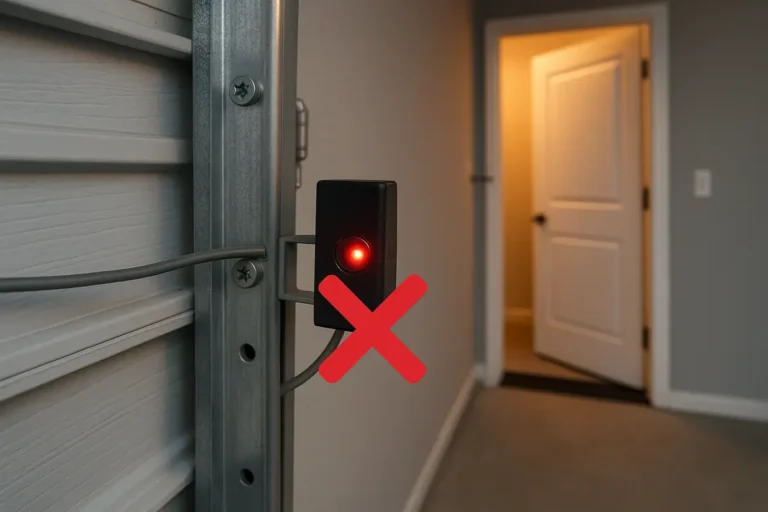
Safety First: What You MUST Know
The "Listen & Look" Test: Become a Garage Door Whisperer
- 1. Close the Garage Door: Ensure the door is fully closed before you begin.
- 2. Disconnect the Opener: Look for the red emergency release cord hanging from the garage door opener's track. Pull it down and back until it clicks. This disengages the opener, allowing you to lift the door manually.
- 3. Lift the Door by Hand: Slowly and carefully lift the door about halfway up. Listen closely. As you move the door, the source of the noise will become much clearer. Pay attention to where the squeak is loudest. Is it coming from the tracks, the springs above the door, or the corners where the cables run?
- 4. Observe the Pulleys: Watch the pulleys as the door moves. Do they spin smoothly, or do they wobble and jerk? This simple test filters out the noise of the opener chain and motor, letting you focus solely on the door's mechanical parts.
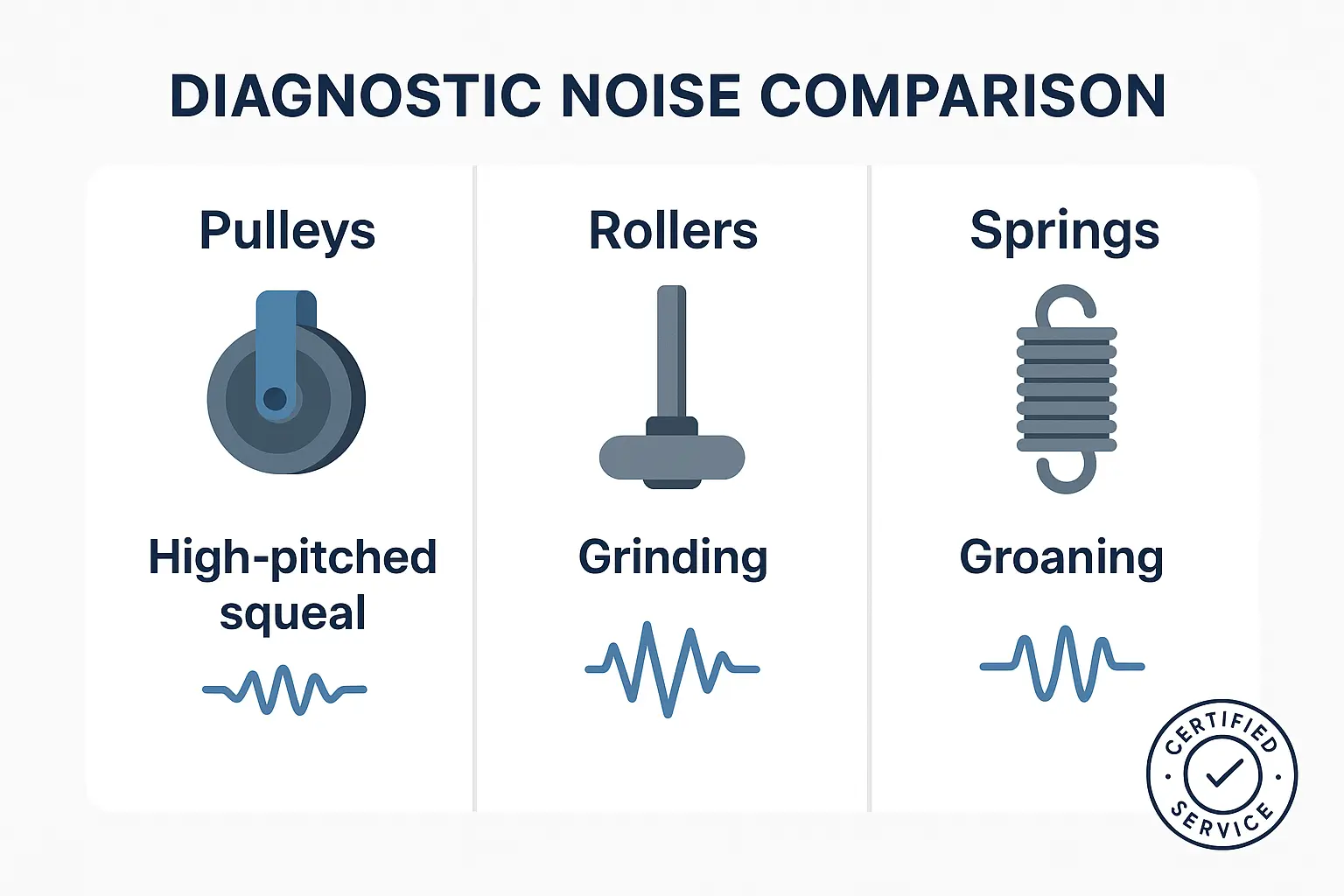
The Noise Diagnostic Chart: Is it the Pulleys, Rollers, or Springs?
- A High-Pitched Squeal or Chirp: This is the classic sound of a pulley problem. It’s caused by metal-on-metal friction, either from a dry axle or a failing ball bearing inside the pulley. The noise is usually most noticeable as the door starts and stops moving.
- A Rumbling or Grinding Noise: If you hear a low, bumpy, or grinding sound, the likely culprits are your garage door rollers—the wheels that run along the tracks. They may be worn out, dirty, or lack lubrication.
- A Loud Groaning or Popping Sound: This deep, distressing groan often comes from the torsion springs (the large springs on a bar above the door). They are under immense tension and need specific lubrication to operate quietly. If you suspect the springs are the issue, a proper lubricate garage door springs service can often solve the problem.
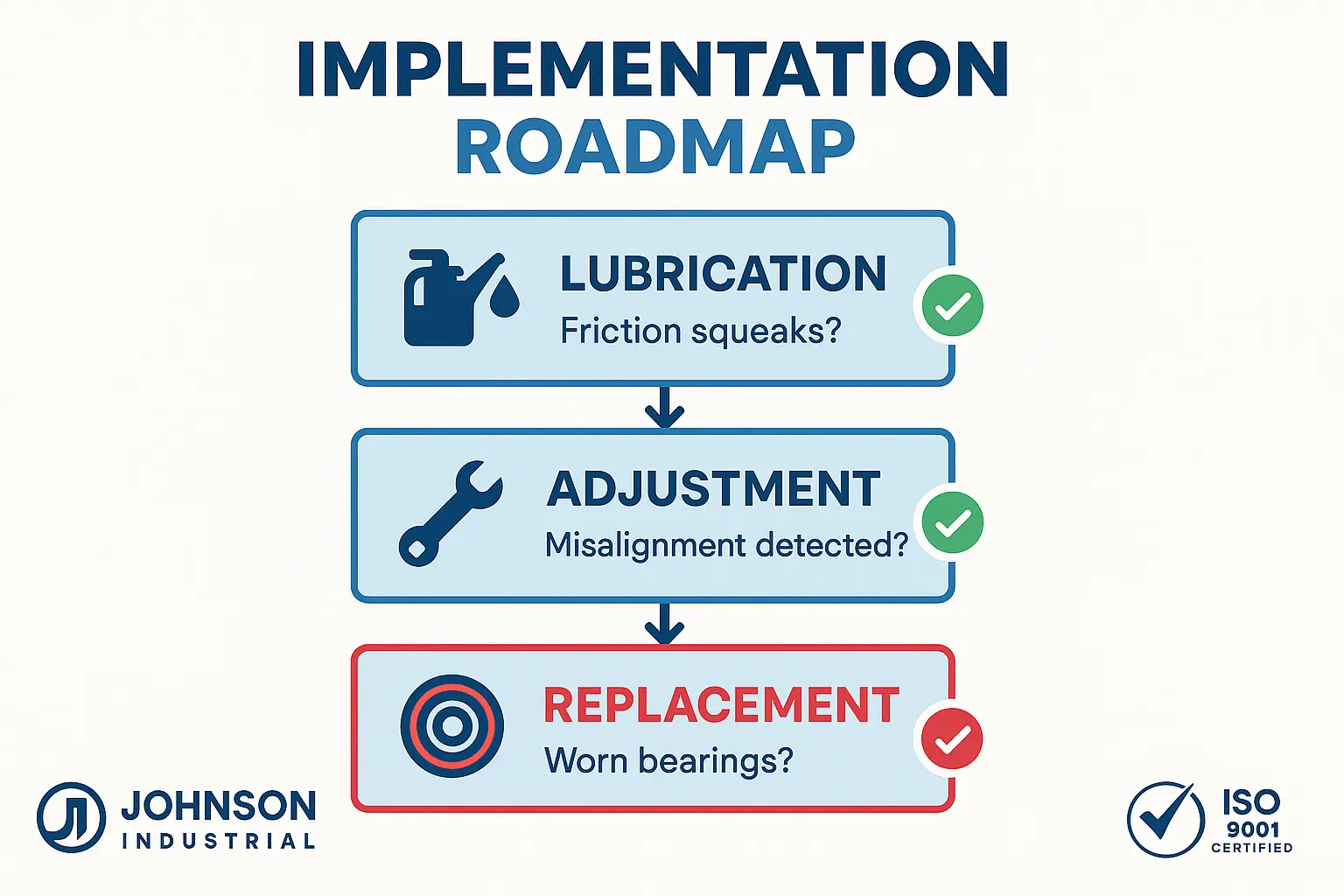
Solving the Pulley Problem: Lubricate, Adjust, or Replace?
Scenario A: The Simple Squeak (Time for a Tune-Up
- 1. Clean First: Use a clean rag to wipe down the pulley and the area around it. Dirt and grime can mix with lubricant and make the problem worse.
- 2. Lubricate the Axle: Apply a small amount of a garage door-specific lubricant, like white lithium grease or a silicone-based spray, directly onto the axle where the pulley spins. A little goes a long way.
- 3. Wipe Away Excess: Be sure to wipe off any excess lubricant. You don't want it dripping onto your door or the floor.
The "WD-40" Misconception: The Most Common DIY Mistake
Scenario B: The Persistent Squeal (A Sign of Worn Bearings)
- A Healthy Pulley: It will feel solid and have almost no side-to-side movement.
- A Worn Pulley: It will feel loose and you'll be able to see it wobble on its axle. This wobble is a clear sign that the internal bearings have failed and the pulley needs to be replaced.
FAQ: Your Garage Door Pulley Questions, Answered
How long do garage door pulleys last?
What kind of lubricant is best for garage door pulleys?
Can a bad pulley cause the garage door chain to go off track?
Is replacing a garage door pulley a DIY job?
What happens if I ignore a squeaky pulley?
From Squeaky Annoyance to Smooth Operation
Empowered with this knowledge, you can perform basic maintenance with confidence and, more importantly, know when a problem requires the skilled hand of a professional. If you’ve diagnosed a worn pulley or feel uncomfortable with any step of the process, our team of experienced technicians is ready to help restore your door to safe, silent operation.
You may also like