Same-Day Spring Repair: What the Technician Does on Arrival


Published: Oct 19, 2026

Hearing a sudden, loud bang from your garage followed by a door that refuses to open is a stressful experience. When your vehicle is trapped and home security is compromised, requesting an emergency garage door repair brings immediate relief. However, many homeowners worry about service quality, hidden fees, or unnecessary upselling during a high-pressure emergency visit.

Understanding the procedural workflow of a certified specialist eliminates uncertainty. A professional service call is a systematic, engineering-backed procedure completed safely within 45 to 90 minutes.

Initial Diagnostics and Precision Measurement


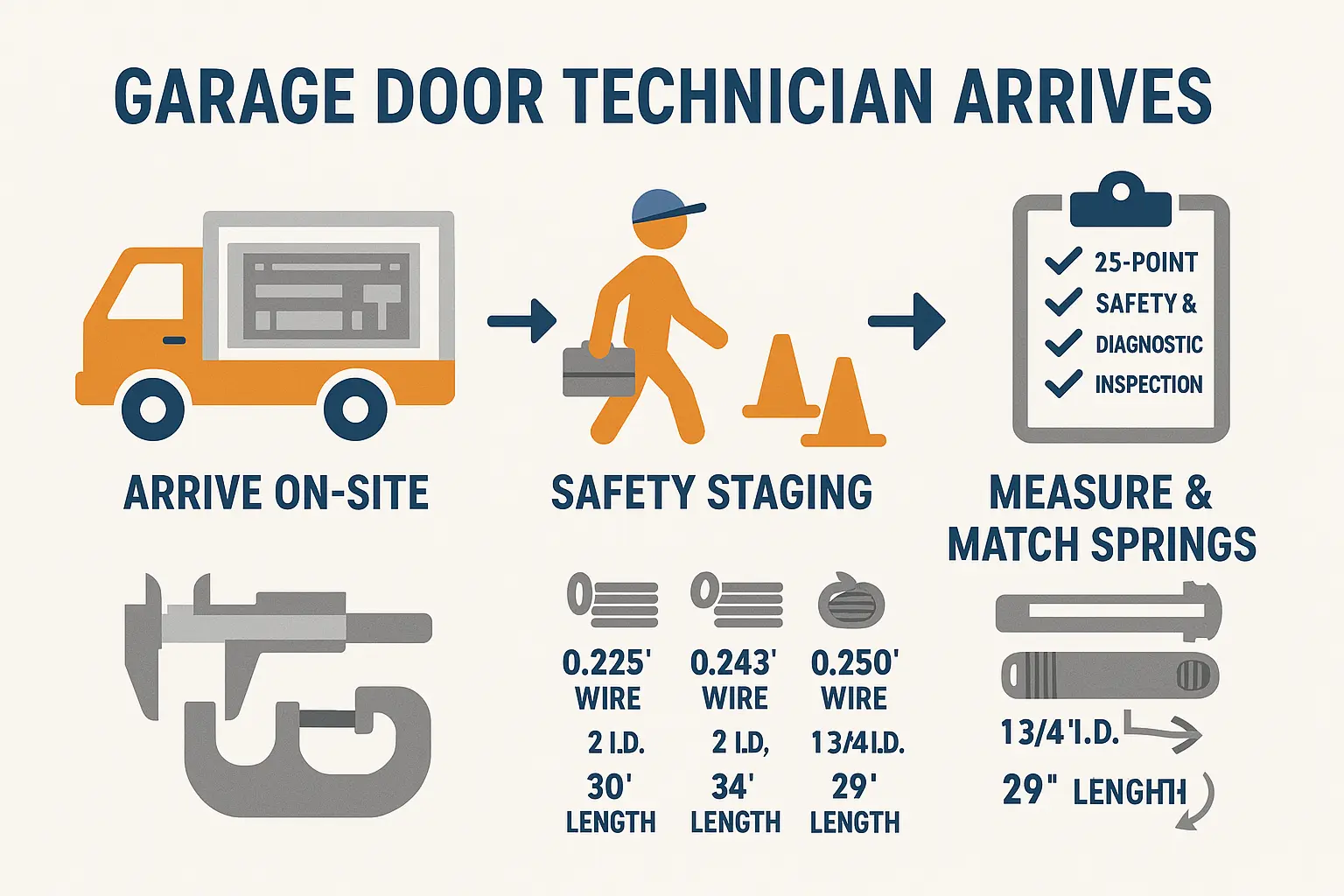
Upon pulling into your driveway, a qualified specialist begins by setting up a secure work staging area and confirming mobile truck inventory. True same-day completion relies on carrying over 15 variations of torsion spring wire gauges, lengths, and diameters directly on the service vehicle.

Visualizing the technician's first 15 minutes: arrival, safety preparations, and precise spring dimension measurements ensure a safe and accurate repair process.

Before touching any tools, the technician conducts a 25-point physical assessment. Using digital micrometers and calipers, they measure four essential variables:

  • Wire Diameter: Microscopic variations dictate lifting weight capacity.
  • Inside Diameter: Standard residential measures 1.75 or 2.0 inches.
  • Overall Coil Length: Dictates exact force output across full door travel.
  • Wind Direction: Left-hand or right-hand wound coils matched to proper shaft placement.

For homeowners seeking garage door repair stamford ct, receiving a written, flat-rate estimate before physical work begins guarantees complete pricing transparency.

Safe De-Energizing and Component Extraction


Garage door springs store massive potential energy, counterbalancing door panels weighing 130 to over 350 pounds. Releasing this residual tension safely is the most hazardous portion of the job.
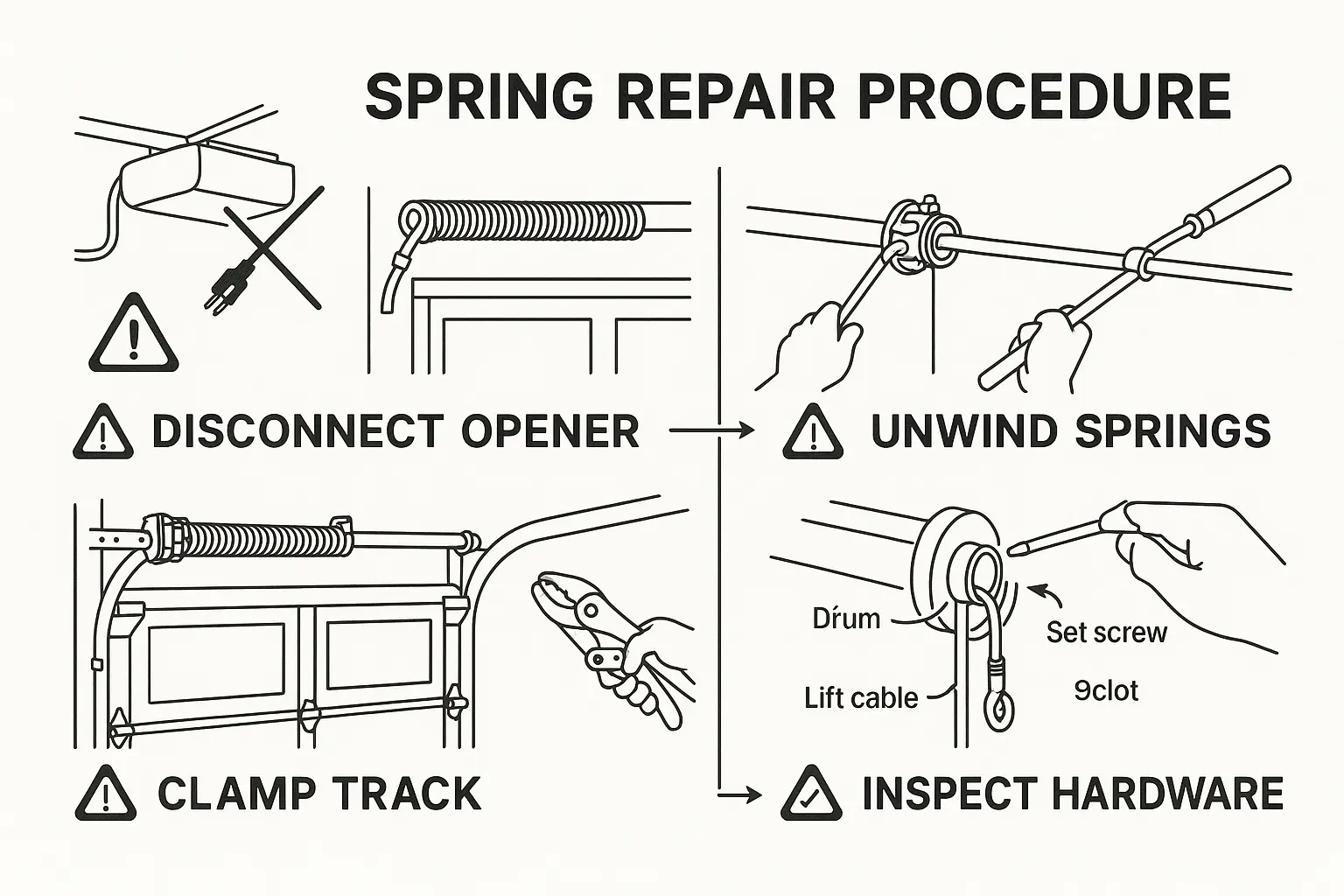
Breaking down the technician’s critical mid-job procedures: safely de-energizing the door springs and thoroughly inspecting hardware components to prevent future failures.

The technician disconnects the automatic opener and secures track-clamping locking pliers to freeze the door in place. Using hardened steel winding bars, they carefully unwind remaining spring tension in controlled quarter-turns to prevent kickback.

Next, set screws and stationary cones are loosened so worn springs can slide off the torsion shaft. During this phase, secondary components undergo thorough evaluation:

  • Lift Cables: Inspected for fraying or corrosion along the drum attachments.
  • Center Bearing Plate & End Rollers: Checked for metal fatigue, wear, and smooth rotation.
  • Seasonal Steel Degradation: Cold snaps cause over 40% of annual spring failures due to metal brittleness, a hazard frequently compounded by snowblower garage door damage during winter months.

Critical Warning: Never force an automatic opener when a spring is broken. Operating an opener against dead weight strips nylon drive gears ($150–$250 repair) or burns out logic boards ($350–$600 replacement), requiring extensive garage door opener repair.

Precision System Balancing and Hover Testing


Once high-grade replacement springs are positioned on the shaft, the technician calculates the exact number of quarter-turns required based on panel weight and total door height.

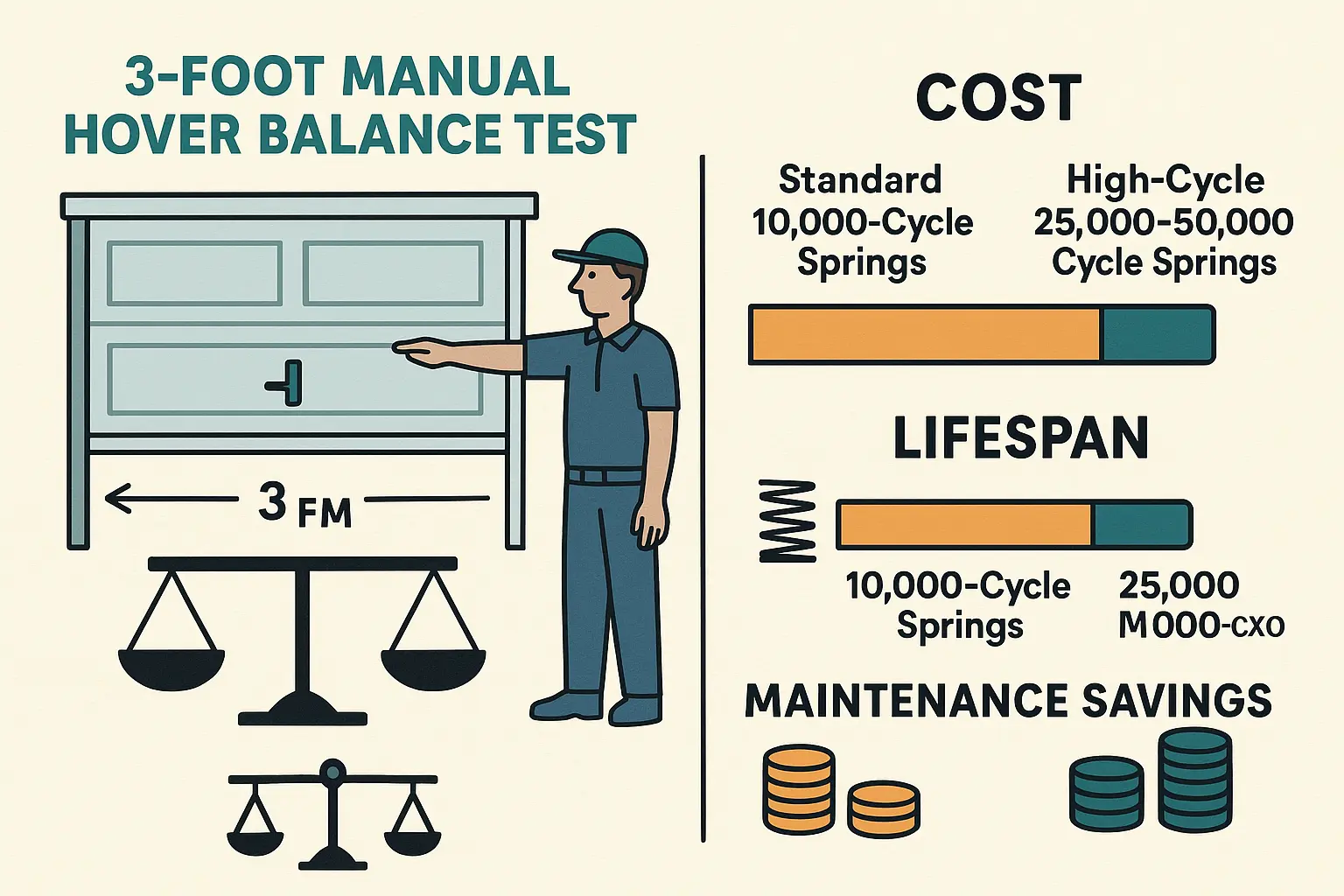
Remember the key safety hover test and smart consumer choices: this infographic anchors understanding of spring balance testing and long-term value between spring options.

After applying precise winding torque, the specialist conducts the mandatory 3-Foot Manual Hover Balance Test:

  1. The door is disconnected from the opener trolley.
  2. The technician lifts the door manually to approximately three feet off the ground and releases it.
  3. A properly balanced door remains completely stationary in neutral buoyancy—neither crashing down nor flying upward.

Finally, high-friction points are treated with specialized synthetic lubricants, and automatic opener safety reverses are verified.

Value Optimization: Spring Selection and Replacement Strategies


When evaluating replacement options, understanding lifecycle math protects your investment:

  • Standard 10,000-Cycle Springs: According to DASMA (Door & Access Systems Manufacturers Association) standards, standard springs provide 10,000 open/close cycles—lasting roughly 6 to 7 years for an average household operating the door 4 times daily.
  • High-Cycle Upgrade (25,000–50,000 Cycles): Specially coated high-cycle options extend operational lifespan to 15–20+ years for only a modest 25% to 35% upfront cost increase.

Replacing both springs simultaneously during a single service visit saves over $150 in secondary labor charges, as both original springs share identical fatigue cycles. Learn more about us and our commitment to transparent service.

Frequently Asked Questions


How long does a same-day spring replacement take on arrival?

A fully equipped technician completes a standard residential spring replacement, system balancing, and safety check within 45 to 90 minutes.

Can I pull the emergency release cord if my spring is broken?

You should never pull the emergency release cord while the garage door is stuck in an open or partially open position. Without spring tension to counterbalance the dead weight, the door will crash down rapidly, causing severe property damage or bodily injury.

Why should I replace both springs if only one is broken?

Garage door springs are installed at the same time and endure identical cycle wear. When one spring breaks, the secondary spring has experienced the exact same mechanical stress and typically fails within weeks, resulting in double the service visit fees.


Ready for fast, professional service? Contact us now to schedule immediate same-day repair with our certified garage door specialists.

Contact / Request a Call