Garage Door Repair for Renters: How to Handle Your Landlord and Your Locked-In Car


Published: Oct 8, 2026

A broken garage door is an immediate domestic crisis. Suddenly, your car is trapped inside, your home’s perimeter security is compromised, and you are left wondering: Who is going to pay for this? Will my landlord try to blame me?

According to renter behavior data, over 40% of tenants delay reporting minor maintenance issues out of fear of conflict. This hesitation often escalates simple fixes into catastrophic system failures. Navigating a broken garage door does not have to be a source of anxiety. By understanding your legal rights, identifying the technical cause of the failure, and using clear communication, you can resolve the issue quickly while protecting your security deposit.

Emergency Protocol — Car Trapped Inside? Read This First


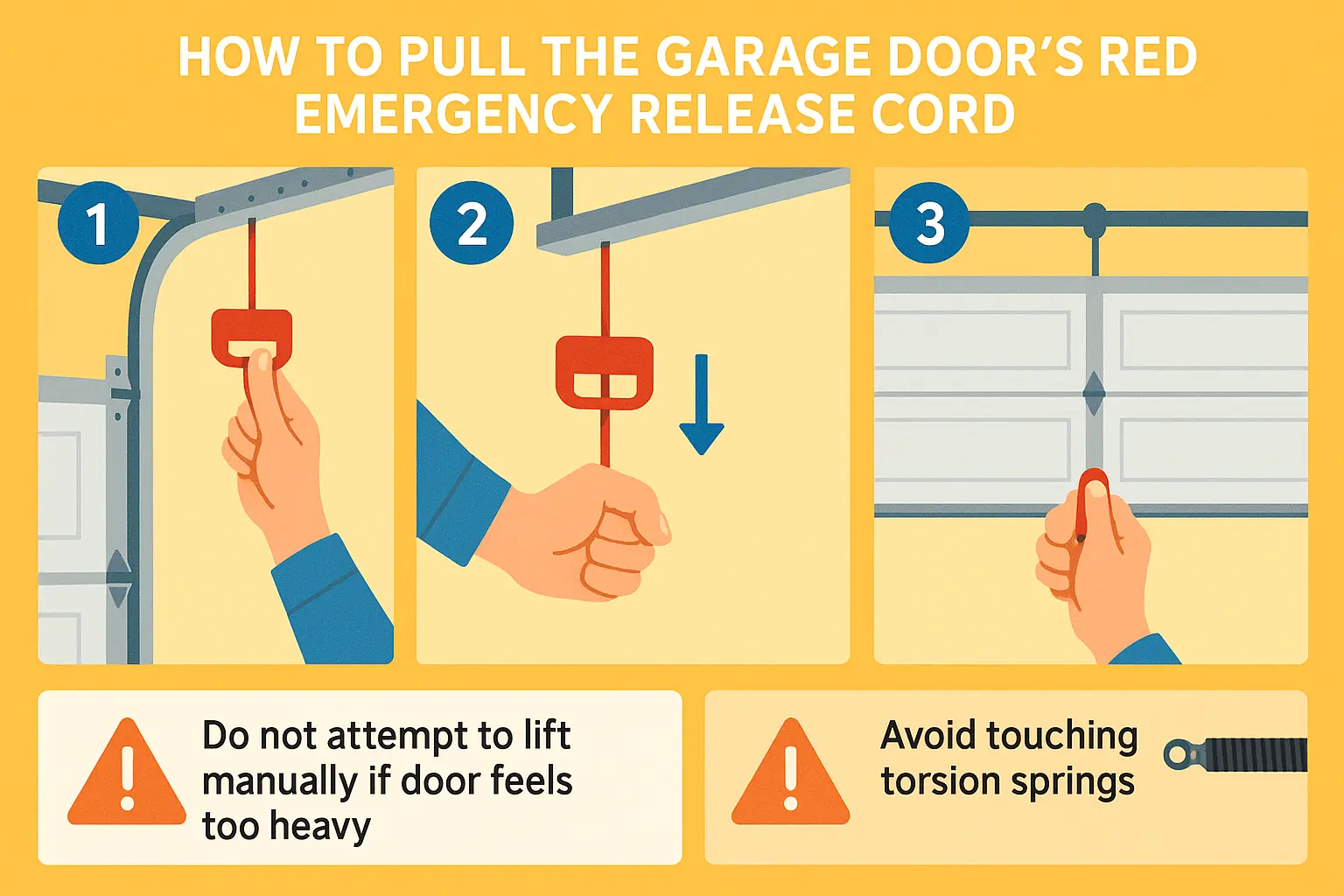
If your vehicle is locked inside, your first instinct might be to force the door open. Avoid doing this, as forcing a motorized system can destroy the opener gears or bend the steel tracks. Instead, you must safely disconnect the opener motor from the door.

To do this, locate the red manual release cord hanging from the overhead console trolley. Pulling this cord down and back shifts the system into manual mode. However, proceed with extreme caution. If you suspect a broken torsion spring, the door will lose its counterbalance and can crash down with immense force. Never attempt to lift the door manually if it feels unusually heavy, and never attempt to adjust the springs yourself due to severe garage door spring danger. Once the physical threat is resolved and the door is eventually repaired, you will need to know how to reset garage door opener after pulling red cord to re-engage the automatic motor safely.

Safe emergency release cord stepsFollow these illustrated steps to safely release a stuck garage door using the emergency red release cord, helping tenants get their car out without risking injury.

Using the garage door emergency release is a temporary workaround. Getting a long-term repair scheduled requires identifying who is financially responsible.

The Liability Decision Matrix — Who Pays for the Repair?


Determining who pays for the repair depends on whether the issue stems from normal wear and tear or tenant-inflicted damage. Under standard landlord-tenant laws, such as the Uniform Residential Landlord and Tenant Act (URLTA), landlords are legally required to maintain a secure, habitable environment, which includes keeping exterior doors in safe working order.

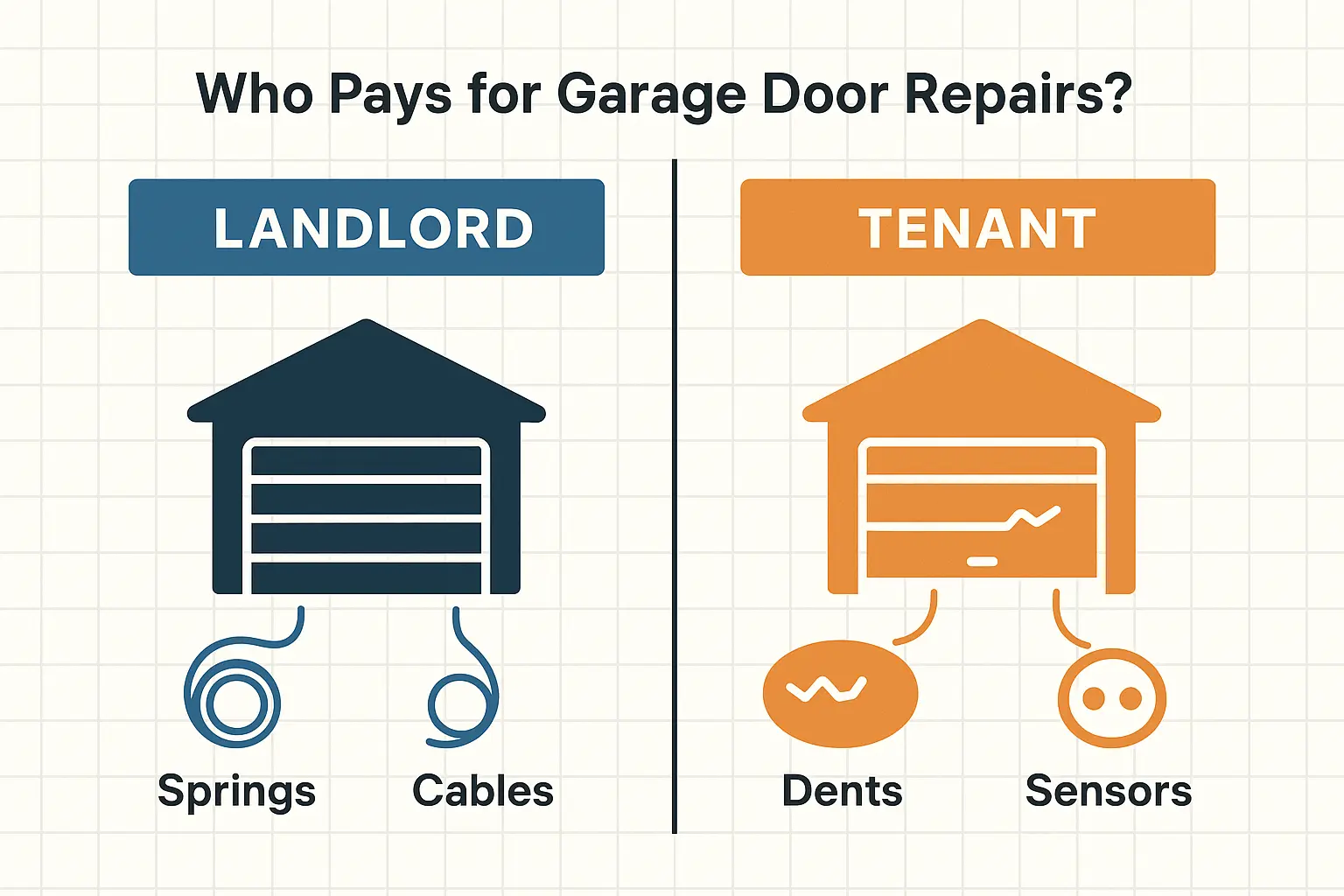
  • Landlord Responsibility (Normal Wear & Tear): Garage door components have finite lifespans. Torsion springs are rated by the Door and Access Systems Manufacturers Association (DASMA) for approximately 10,000 cycles (roughly 7 to 10 years of normal use). When a spring snaps, it is a mechanical lifecycle failure, making it 100% the landlord’s financial responsibility. The same rule applies to frayed lift cables, burned-out motor capacitors, and dry, cracked weather stripping.
  • Tenant Responsibility (Negligence/Accidents): If you or a guest accidentally crashed into garage door tracks, backed into the bottom panel, or knocked the safety sensor eyes out of alignment with stored boxes, this constitutes tenant damage. In these cases, you are responsible for the repair costs.

Wear and tear vs tenant damage decision matrixThis visual decision matrix clarifies which garage door repairs renters are typically responsible for versus those landlords must handle, based on wear-and-tear versus tenant-caused damage.

Before sending a message to your landlord, take clear photos of the issue. If a spring has snapped, a photo of a clean, straight fracture line is excellent proof of standard metal fatigue rather than physical impact.

Landlord Email & Text Templates


The way you present the issue to your landlord affects how quickly they respond. Written documentation also preserves your legal rights and protects your security deposit from unfair claims.

Use these customizable communication templates to initiate the repair process:

Standard Wear & Tear Notification

Subject: Maintenance Request: Garage Door Repair Needed – [Your Unit Number]

“Hi [Landlord Name], I hope you’re doing well. I am writing to report that the garage door has stopped functioning under normal use. It makes a clicking sound but does not open, indicating a broken torsion spring or an issue with the opener motor. Because this appears to be standard wear and tear on a lifecycle-limited component, could you please coordinate with a licensed garage door technician to inspect and repair the unit? Thank you for your time.”

Urgent Security/Safety Threat

Subject: URGENT: Garage Door Stuck Open / Security Breach – [Your Unit Number]

“Hi [Landlord Name], the garage door is currently stuck in the fully open position and cannot be closed manually. This leaves the rental property and my vehicle unsecured. Because this compromises home security and violates standard habitability requirements, this repair is an urgent safety hazard. Please let me know when an emergency technician will be dispatched to secure the property.”

Tenant-Caused Damage (Accidental Impact)

Subject: Repair Coordination: Garage Door Panel Damage – [Your Unit Number]

“Hi [Landlord Name], I wanted to let you know that I accidentally bumped the garage door panel with my car today. The door is currently out of alignment and won’t close properly. Because I want to ensure the work is done to your property standards, I would appreciate it if we could use your preferred licensed contractor. I am ready to cover the repair costs directly or coordinate through my renters insurance policy. Please let me know how you would like to proceed.”
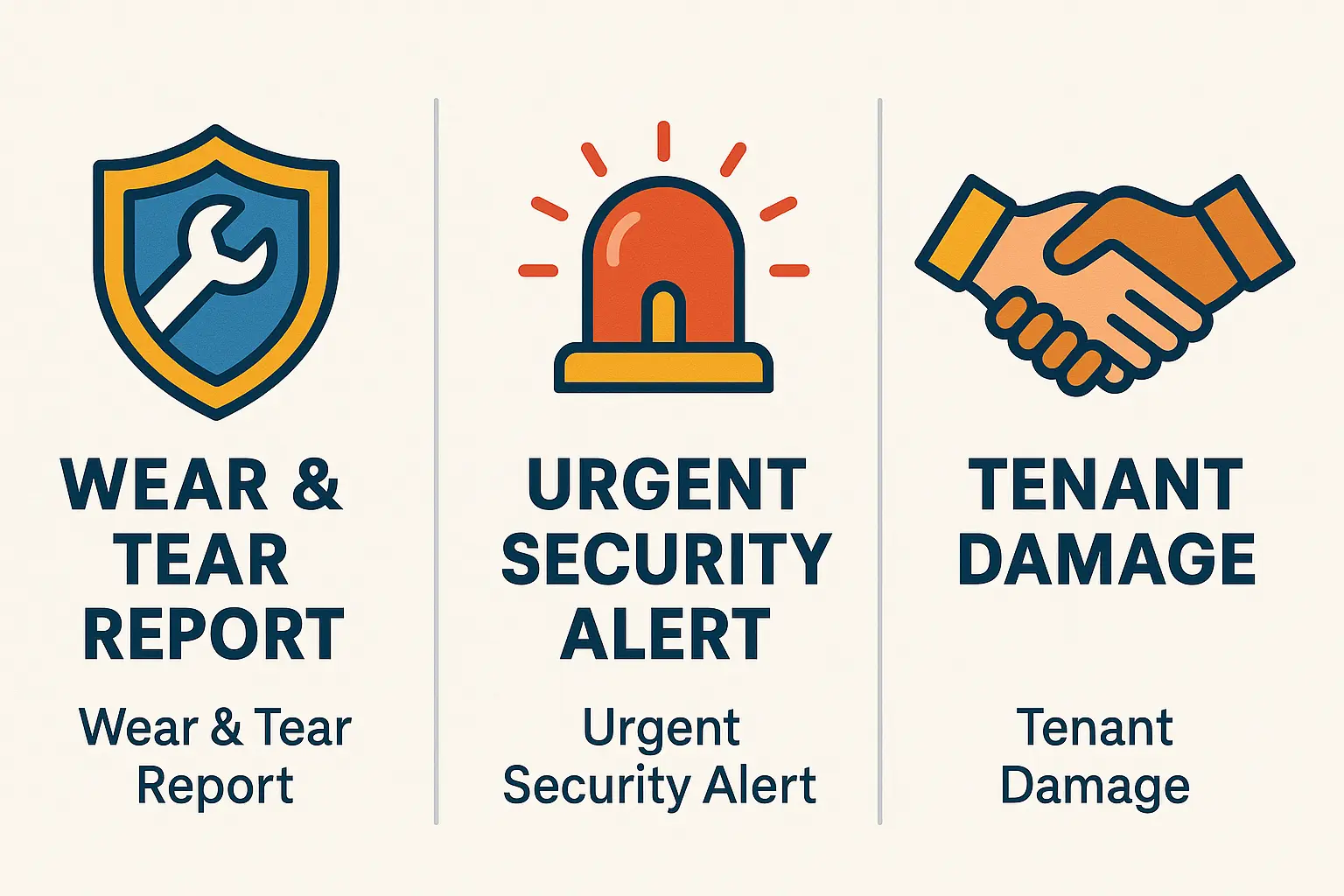
Three landlord communication templatesThis infographic visually anchors three key landlord communication templates, helping renters remember and access the right tone and message to maintain positive landlord relations during repairs.

What to Do If Your Landlord Ignores You


If your landlord does not respond to your requests within 24 to 72 hours, check your state and local tenant laws. Many jurisdictions permit “Repair and Deduct” practices for safety issues.

If the broken door compromises your home’s basic security or traps your vehicle inside, you may have the legal right to hire a professional emergency garage door service yourself. You can then submit the itemized invoice to your landlord and deduct that amount from your next rent payment. Be sure to keep all written communications, technician diagnostics, and receipts to protect your legal position.

Frequently Asked Questions


Can my landlord force me to pay for a broken garage door spring?

No, unless they can prove the break was caused by physical tenant abuse or impact. Torsion springs naturally break due to standard metal fatigue at the end of their mechanical lifespan. Because this represents normal wear and tear, the financial cost of replacement falls entirely on the landlord.

Does renters insurance cover a broken garage door?

Renters insurance does not cover structural damage to the garage door itself, as the building is owned by your landlord. However, if the broken door allows a break-in or weather damage to occur, your renters insurance policy will typically cover the theft or damage of your personal belongings stored inside the garage.

What should I do if my car is trapped inside a garage with a broken door?

You can use the red manual release cord to disconnect the garage door opener and lift the door by hand. However, if the door has a broken spring, do not attempt to lift it, as it will be extremely heavy and dangerous. Contact your landlord immediately to request an emergency technician to open the door safely.

Contact / Request a Call