That sinking feeling is all too familiar. You press the button on your remote, and… nothing. The largest moving object in your home is suddenly still, leaving you stuck inside or outside your garage. When your garage door opener seems completely dead, it’s easy to assume the worst.
But here’s a little secret: most of the time, the fix is surprisingly simple.
Before you start pricing new openers, let’s walk through this like a friendly detective. We’ll follow the flow of electricity from your house to the opener’s motor to pinpoint the exact culprit. In just a few minutes, you’ll have a clear idea of what’s wrong and a confident plan to fix it.
Troubleshooting Common Power-Related Issues with Garage Door Openers
Published: May 20, 2026 | Updated: Jul 28, 2026
Understanding the Three Types of Power Failure
When your opener goes dark, the problem almost always falls into one of three categories. Thinking about it this way helps us narrow down the possibilities fast.
Let’s start our investigation.
Your Step-by-Step Diagnostic Journey
Grab a small lamp or a phone charger—something you know works. This simple tool will be your best friend for the next few steps.
Step 1: Check the Obvious First
It sounds basic, but you’d be surprised how often these simple things are the root cause.
Is it plugged in? Vibrations from the opener can sometimes wiggle the plug loose from the ceiling outlet. Make sure it’s seated firmly.
Check the remote and wall switch. If the little light on your wall switch isn’t on, it could indicate a wiring issue or a problem with the switch itself. And while it might not explain a totally dead unit, it’s always worth checking the batteries in your remote. If your remote seems to be the only thing failing, you may need to troubleshoot it specifically. You can learn more in our guide if your garage door remote is not working.
Step 2: The Ultimate Test: Verify the Outlet
This is the single most important diagnostic step. It’s the “aha moment” that tells you whether the problem is your home’s wiring or the opener itself.
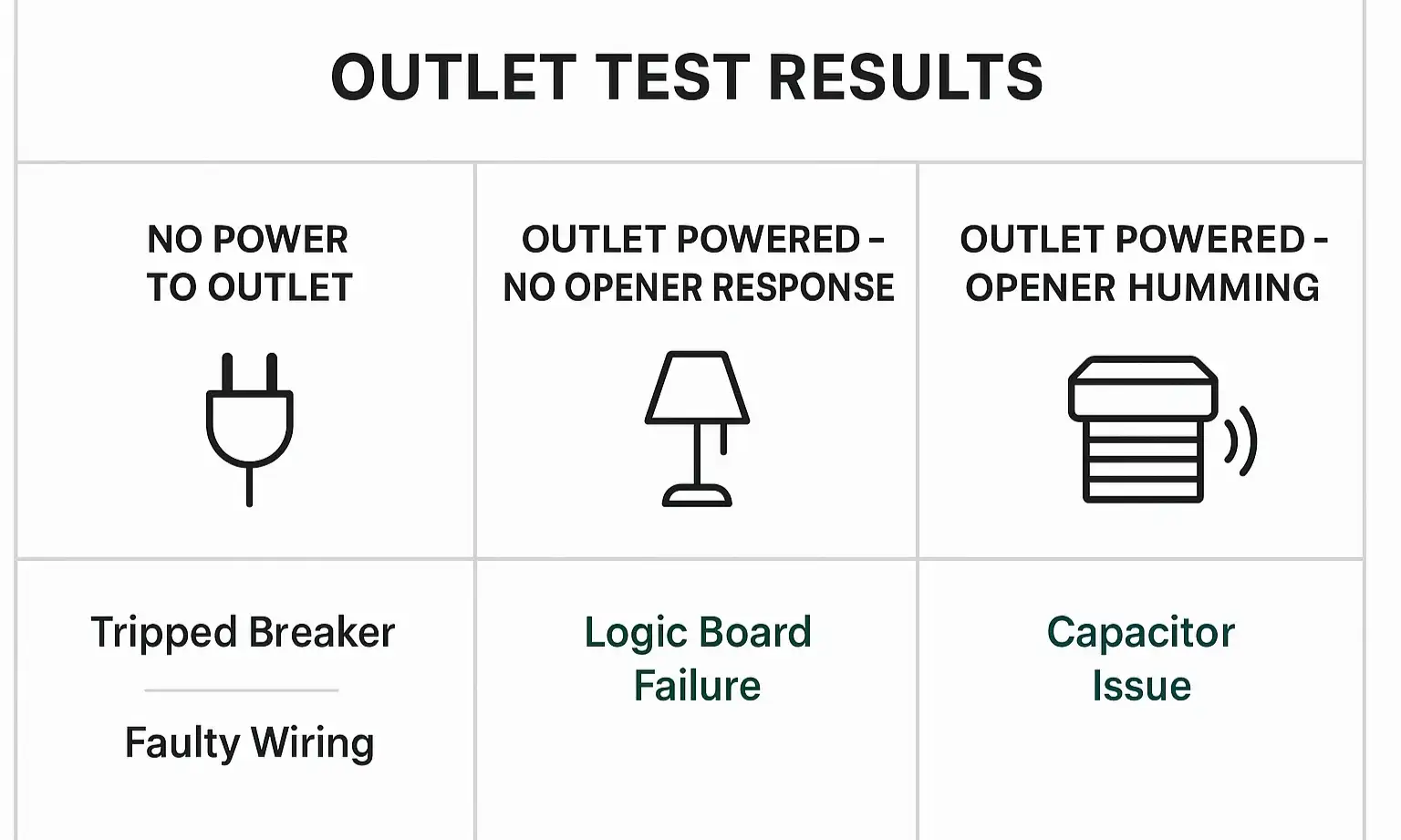
Unplug the garage door opener from the ceiling outlet. Now, plug your working lamp or phone charger into that same outlet.
What happens?
Step 3: Check Your Home’s Circuit Breaker
If your lamp test failed, don’t worry. This is usually a quick fix. Your garage is on a circuit connected to your home’s main electrical panel (the breaker box).
1. Check the GFCI Outlet: Most building codes require garage outlets to be GFCI (Ground Fault Circuit Interrupter) protected. Look for an outlet in your garage with “TEST” and “RESET” buttons. If the button has popped out, press “RESET” firmly until it clicks. This may be all it takes to restore power.
2. Find the Breaker Box: Locate your main electrical panel. Look for a switch that is flipped to the “OFF” position or is stuck in the middle. Flip it completely off, then back on again to reset it.
3. Consider the Circuit Load: If the breaker trips again, you may have too many things running on one circuit. Ideally, you want to know if your garage door opener needs a dedicated circuit to prevent this from happening. Unplug other devices in the garage and try resetting it one more time.
If you reset the GFCI and the breaker and the outlet still doesn’t work, you may have a larger electrical issue that requires an electrician.
Step 4: Decoding the Opener’s Signals (Or Silence)
If your lamp test passed, we now know the problem is inside the opener. What you hear—or don’t hear—is your biggest clue.
Symptom: Complete Silence
You have confirmed the outlet works, but the opener shows no signs of life. No lights, no sounds, no response whatsoever.
Symptom: A Humming or Buzzing Noise
You press the remote, and instead of movement, you hear a distinct noise. The type of noise is critical.
You press the remote, and instead of movement, you hear a distinct noise. The type of noise is critical.
DIY Fix or Time for a Pro?
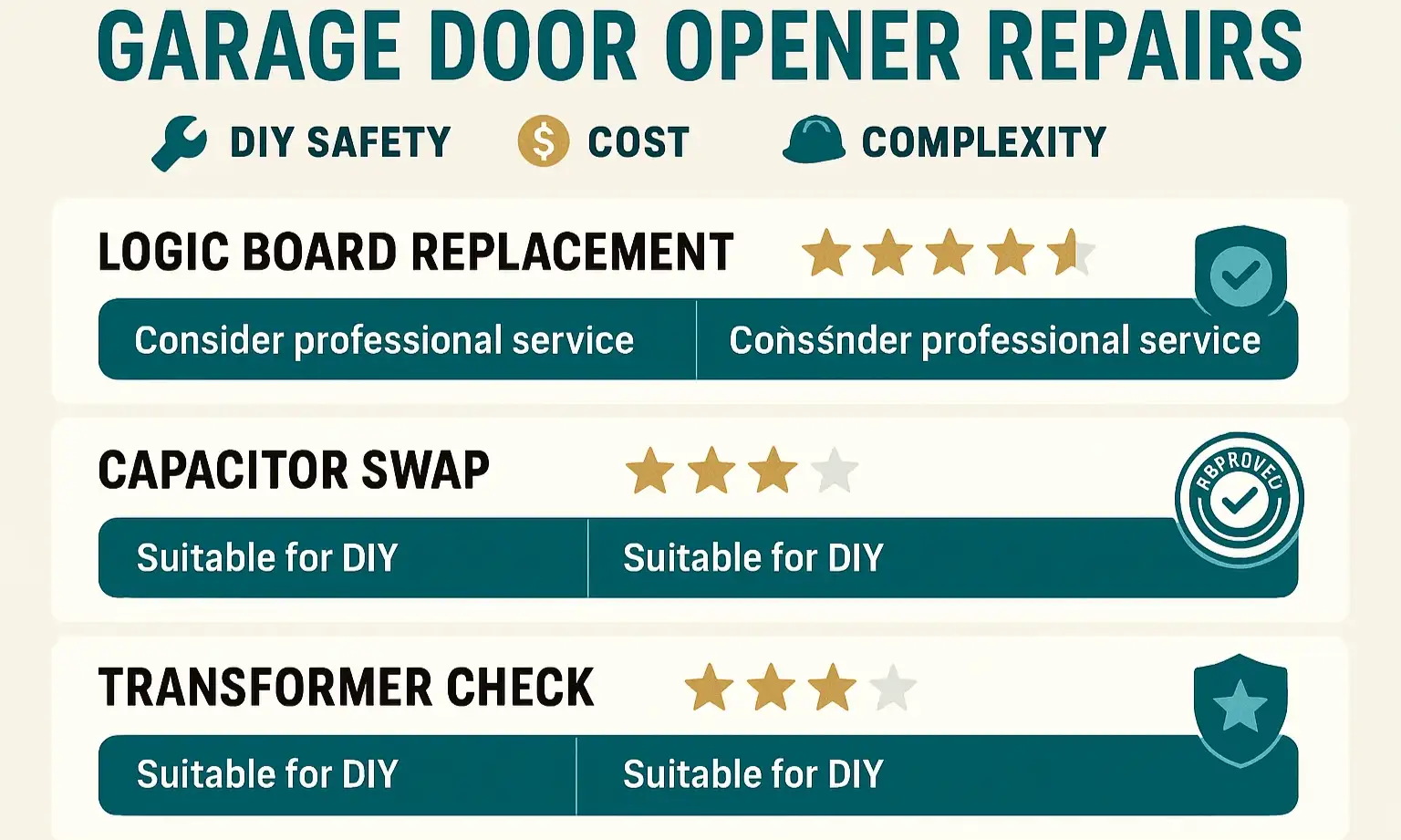
You’ve done the detective work and have a prime suspect. Now comes the big question: should you fix it yourself? Your decision depends on the part, your comfort level with electrical work, and safety.
Replacing a Start Capacitor:
Replacing a Start Capacitor:
Replacing a Logic Board:
Frequently Asked Questions (FAQ)
Why did my garage door opener suddenly lose power?
The most common causes are a tripped GFCI outlet or a tripped circuit breaker in your main electrical panel. Less common but possible causes include a nearby lightning strike causing a power surge, or the simple failure of an internal component like the logic board due to age.
Can I open my garage door if the power is out?
Absolutely. Nearly all garage door openers have a manual release cord. It’s typically a red rope hanging from the opener rail. Pulling this cord disengages the door from the opener, allowing you to lift it by hand. Knowing how to open a garage door without power is an essential skill for any homeowner.
My opener has lights, but the motor won’t run. Is that a power issue?
Not in the same way. If the lights work, the logic board is receiving power. This points to other issues, such as a faulty motor, a broken gear, misaligned safety sensors, or incorrect travel limits. You may need to look into garage door opener adjustment to solve that problem.
Are there garage door openers that work without grid power?
Yes. Many modern openers come with a battery backup system that kicks in during a power outage. For off-grid or energy-conscious applications, there are also solar-powered garage door openers available that run independently of your home’s electrical system.
Your Path Forward
By now, you should have a much clearer picture of your garage door opener’s power problem. You’ve moved from confusion to diagnosis, identifying whether the issue lies with your home’s electricity or a specific part inside the opener.
If you’ve traced the problem to an internal component and aren’t comfortable performing the repair, or if you’re still unsure what’s wrong, that’s perfectly okay. Knowing when to call a professional is just as important as knowing how to troubleshoot. A qualified technician can safely diagnose and repair complex electrical components, ensuring your opener runs safely and reliably for years to come.
If you’ve traced the problem to an internal component and aren’t comfortable performing the repair, or if you’re still unsure what’s wrong, that’s perfectly okay. Knowing when to call a professional is just as important as knowing how to troubleshoot. A qualified technician can safely diagnose and repair complex electrical components, ensuring your opener runs safely and reliably for years to come.
Frequently Asked Questions
Why did my garage door opener suddenly lose power?
The most common causes are a tripped GFCI outlet or a tripped circuit breaker in your main electrical panel. Less common but possible causes include a nearby lightning strike causing a power surge, or the simple failure of an internal component like the logic board due to age.
Can I open my garage door if the power is out?
Absolutely. Nearly all garage door openers have a manual release cord. It’s typically a red rope hanging from the opener rail. Pulling this cord disengages the door from the opener, allowing you to lift it by hand. Knowing how to open a garage door without power is an essential skill for any homeowner.
My opener has lights, but the motor won't run. Is that a power issue?
Not in the same way. If the lights work, the logic board is receiving power. This points to other issues, such as a faulty motor, a broken gear, misaligned safety sensors, or incorrect travel limits. You may need to look into garage door opener adjustment to solve that problem.
Are there garage door openers that work without grid power?
Yes. Many modern openers come with a battery backup system that kicks in during a power outage. For off-grid or energy-conscious applications, there are also solar-powered garage door openers available that run independently of your home’s electrical system.