Opener Belt Slipping or Broken: Replace the Belt or the Opener?


Published: Sep 23, 2026

When your garage door opener’s drive belt sags, slips, or snaps, you face a critical economic decision: should you buy a simple replacement belt, or is it time to replace the entire opener?

The answer centers on the 10-Year Rule. If your opener is under 10 years old and the motor is healthy, a simple belt replacement (costing $40 to $100 DIY, or $150 to $250 professionally) is a smart, cost-effective fix. However, if your unit is over 10 years old, shows signs of internal mechanical wear, or is an obsolete pre-2004 model, investing in a complete new opener is the economically superior choice.
Is It Actually the Belt?


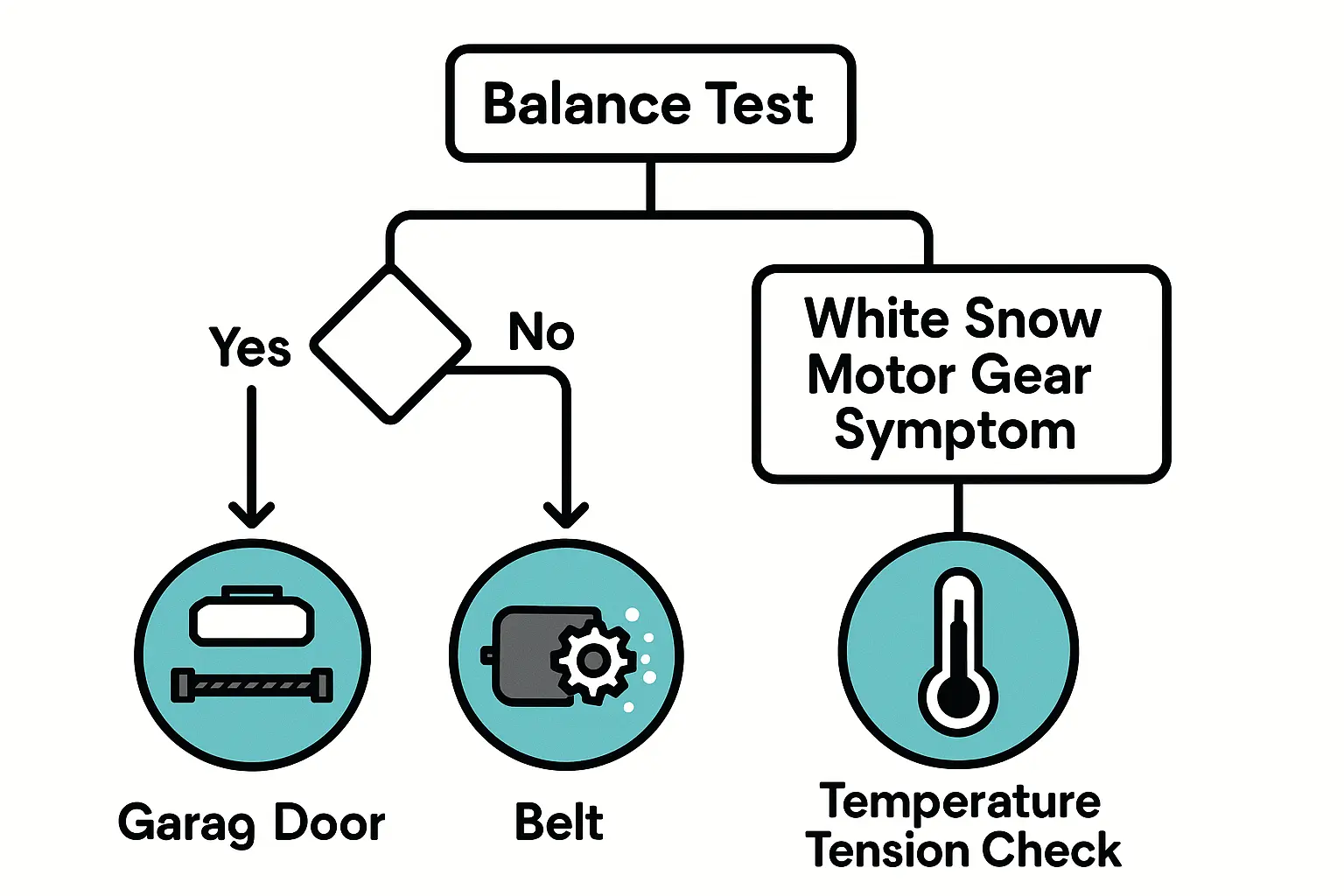
Before purchasing replacement parts, you must isolate the root cause. Many homeowners mistake a slipping belt for a dying motor or a structural failure. To save time and money, perform three quick diagnostic steps first:

  1. The Balance Test: Pull the emergency release cord and manually lift your door. If the door feels extremely heavy or won’t stay open at midpoint, you are likely looking at garage door spring broken symptoms rather than a faulty belt.
  2. The “White Snow” Motor Test: Run the motor without the door attached. If the motor hums but the drive sprocket fails to rotate, inspect the casing. White plastic shavings inside indicate stripped internal gears, a scenario that mimics a slipping belt but requires a professional repair. For a deeper dive, review our large electric garage door failure analysis.
  3. The Temperature Tension Check: Extreme seasonal shifts can contract the rubber belt, causing temporary slack. A simple turn of the tension nut may resolve this “false slipping” without requiring a new belt.

A simple diagnostic decision tree helps readers quickly identify whether their garage door opener issue is caused by a slipping belt, broken springs, or stripped internal gears, ensuring they order the right repair part.

Tuning Proper Belt Tension


If you choose to replace or adjust the belt yourself, achieving the correct tension is essential to prevent motor fatigue.

When adjusting the tension nut on the trolley assembly, ensure the belt does not sag below the rail, but avoid making it bowstring-tight. A reliable rule of thumb is that a properly tensioned belt should sit 1/4″ to 1/2″ above the base of the rail at its midpoint when the garage door is fully closed. For systems requiring adjustments to travel distances after a belt change, a detailed garage door opener adjustment will keep the system aligned. If the installation process feels too demanding, booking a professional garage door opener installation service guarantees structural safety. For immediate assistance during a system breakdown, our professional crew offers emergency garage door service to secure your home.

Critical Decision Factors


Beyond immediate hardware costs, several overlooked variables can tilt your decision:

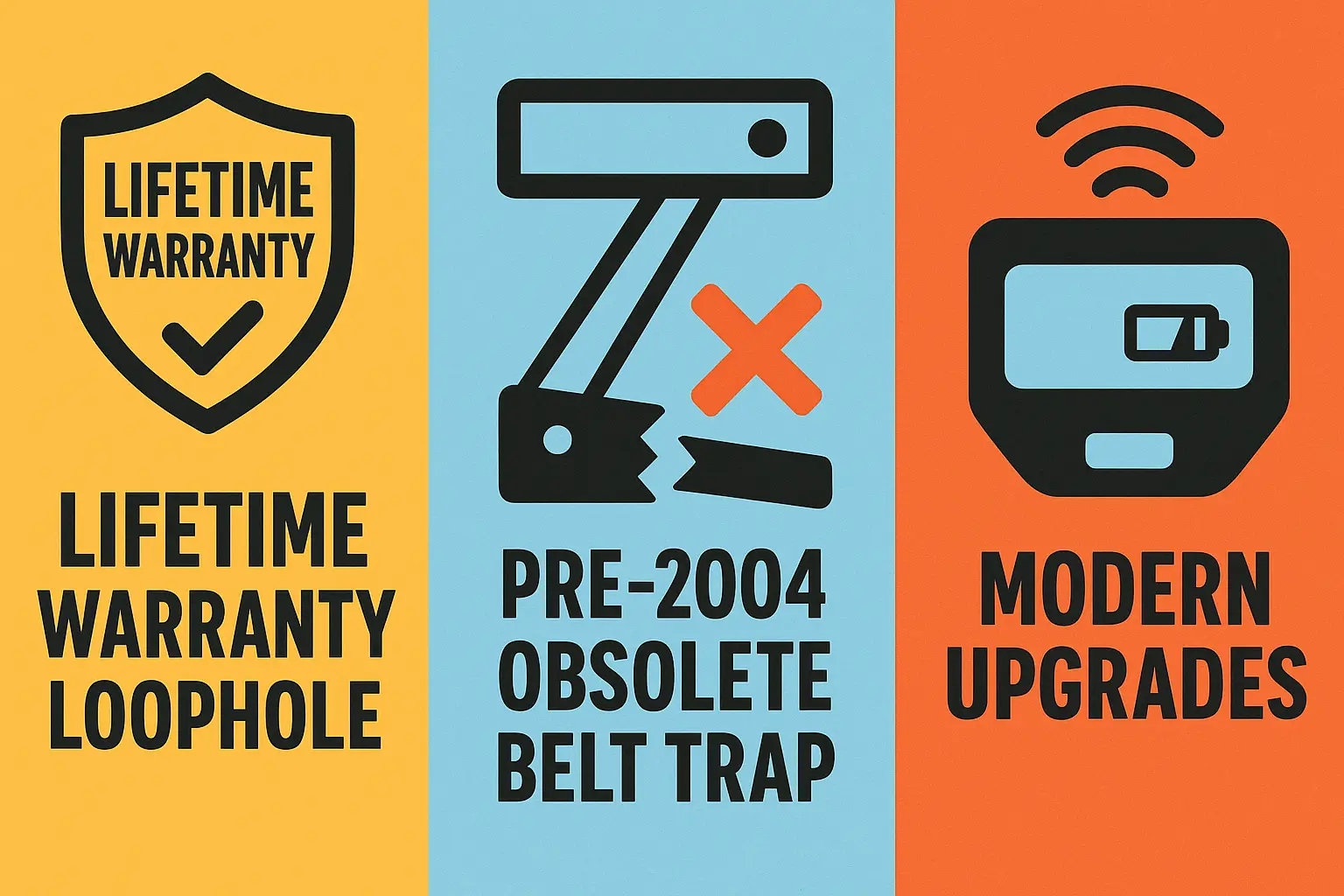
  • The Lifetime Warranty Loophole: High-end models from manufacturers like Chamberlain or LiftMaster often include a lifetime warranty on the belt itself. If you are the original homeowner, you can often claim a free OEM replacement belt directly from the manufacturer.
  • The Pre-2004 Compatibility Trap: If your opener was manufactured before 2004, finding compatible replacement parts is nearly impossible due to legacy rail configurations. In this case, upgrading is your only viable path.
  • Modern Upgrades & Performance: Replacing a legacy system lets you install the quietest garage door opener on the market. Modern units feature DC motors, Wi-Fi smart control, and integrated battery backups to comply with safety regulations. If you’re unsure which model fits your home, explore our comprehensive guide on how to choose a garage door opener.

Visual anchors highlight critical repair decision factors: eligibility for a lifelong free belt replacement, the risk of obsolete belts in older models, and reasons to upgrade to smart, battery-backed openers.

Frequently Asked Questions


How do I know if my garage door opener belt is slipping or if the motor is failing?

A slipping belt usually produces a visible sag, jerky door movements, or squeaking noises while the motor runs. If the motor hums but the belt doesn’t move at all, or if you find plastic shavings inside the unit, the issue is likely stripped internal gears or a failing motor rather than a belt tension problem.

Can I replace a garage door opener belt myself?

Yes, replacing a belt is a manageable DIY task if you have the correct OEM replacement part and basic hand tools. However, you must always release the door from the opener carriage first to ensure you are not working under tension from the heavy garage door itself.

How long do garage door opener belts typically last?

Under normal residential use of about four open-and-close cycles per day, a high-quality reinforced polyurethane belt will last between 10 to 12 years. In extreme climates with rapid temperature swings, rubber elasticity can decrease sooner, requiring periodic tension adjustments.

Contact / Request a Call