main logo

The 5-Minute Test: How to Diagnose Door Sag vs. Door Warping


Published: Jul 28, 2026

That grating scrape of a door dragging on the floor. The frustrating rattle of a latch that just won’t catch. Or maybe it’s the subtle draft you feel from a gap that wasn’t there last winter. These are the tell-tale signs of a sagging door, a problem most homeowners face at some point.

The go-to advice is often to just tighten the hinge screws. And sometimes, that simple trick works like a charm. But what happens when it doesn't? You've spent your afternoon with a screwdriver only for the problem to remain, or worse, return a week later.

This happens because a sagging door is a symptom, not the root problem. The real issue is almost always one of two things: the hinges are failing, or the door itself has warped. Throwing the same fix at both is like using a hammer to fix a leaky faucet—it’s the wrong tool for the job.

Why a Proper Diagnosis is the Key to a Lasting Fix


Before you buy new hardware or, worse, a new door, taking five minutes to accurately diagnose the cause will save you hours of frustration and wasted money. Treating a warped door like a hinge problem is ineffective. Treating a hinge problem like a warped door is an expensive mistake.

By understanding the distinct signs of each issue, you can move forward confidently with the right repair, ensuring a smooth, secure, and perfectly aligned door for years to come.

The 5-Minute Diagnostic Test: Your Path to Clarity


Ready for your "aha moment"? Grab a long level or any object you know is perfectly straight (like the factory edge of a plywood sheet) and follow these simple steps. This observational test requires no special tools, just your eyes.

Step 1: The Gap Inspection

Close the door completely. Look at the gap between the door and the frame.

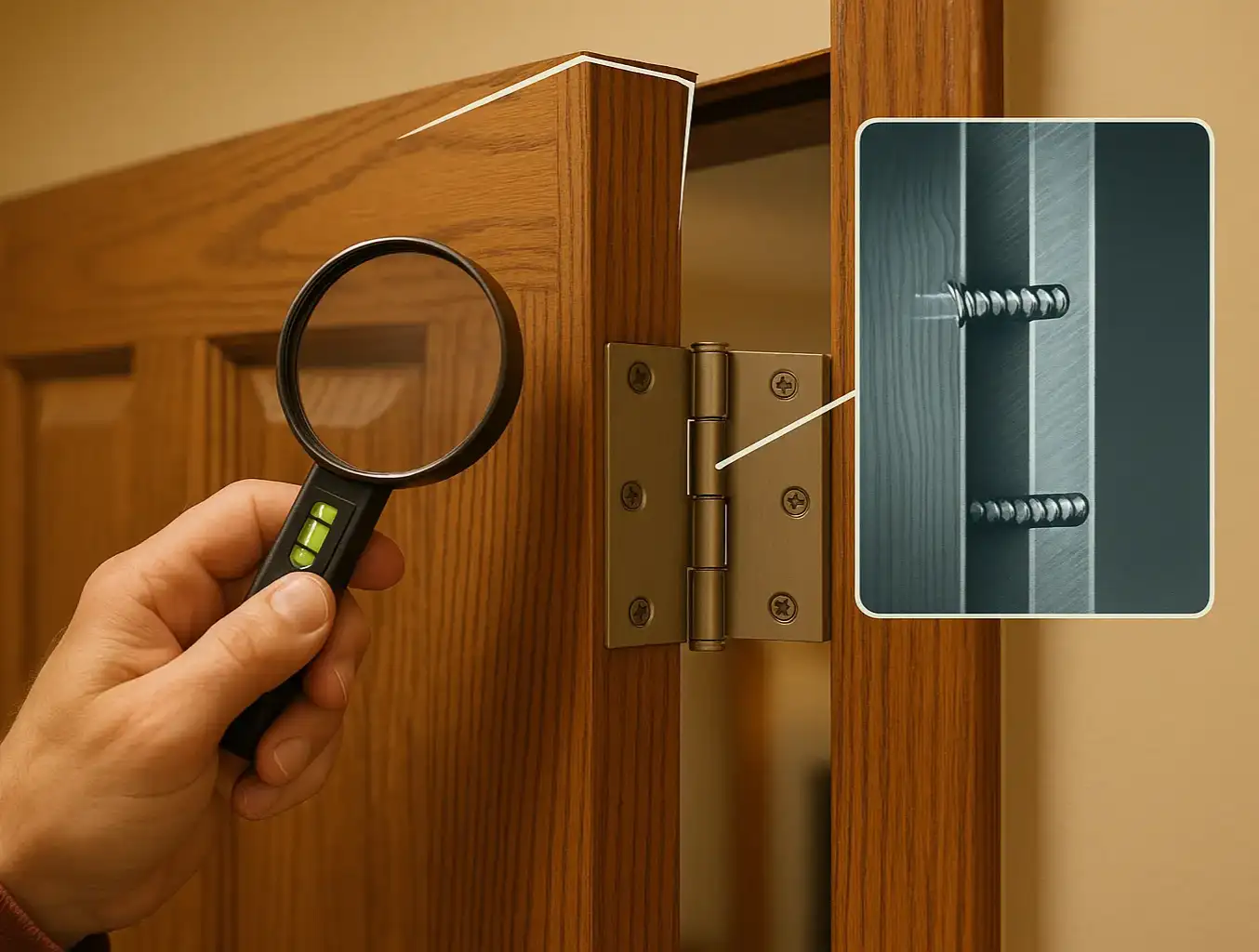
Sign of Hinge Sag: Is the gap wider at the top corner on the hinge side and tight at the top corner on the latch side? This classic triangle-shaped gap is the number one sign that gravity is winning the battle against your top hinge.

Sign of Warping: Are the gaps inconsistent all around? Maybe the door touches the frame in the middle on the latch side but has a huge gap at the top and bottom. Or perhaps it sticks out from the frame instead of sitting flush. This inconsistency points toward a door that’s no longer flat.
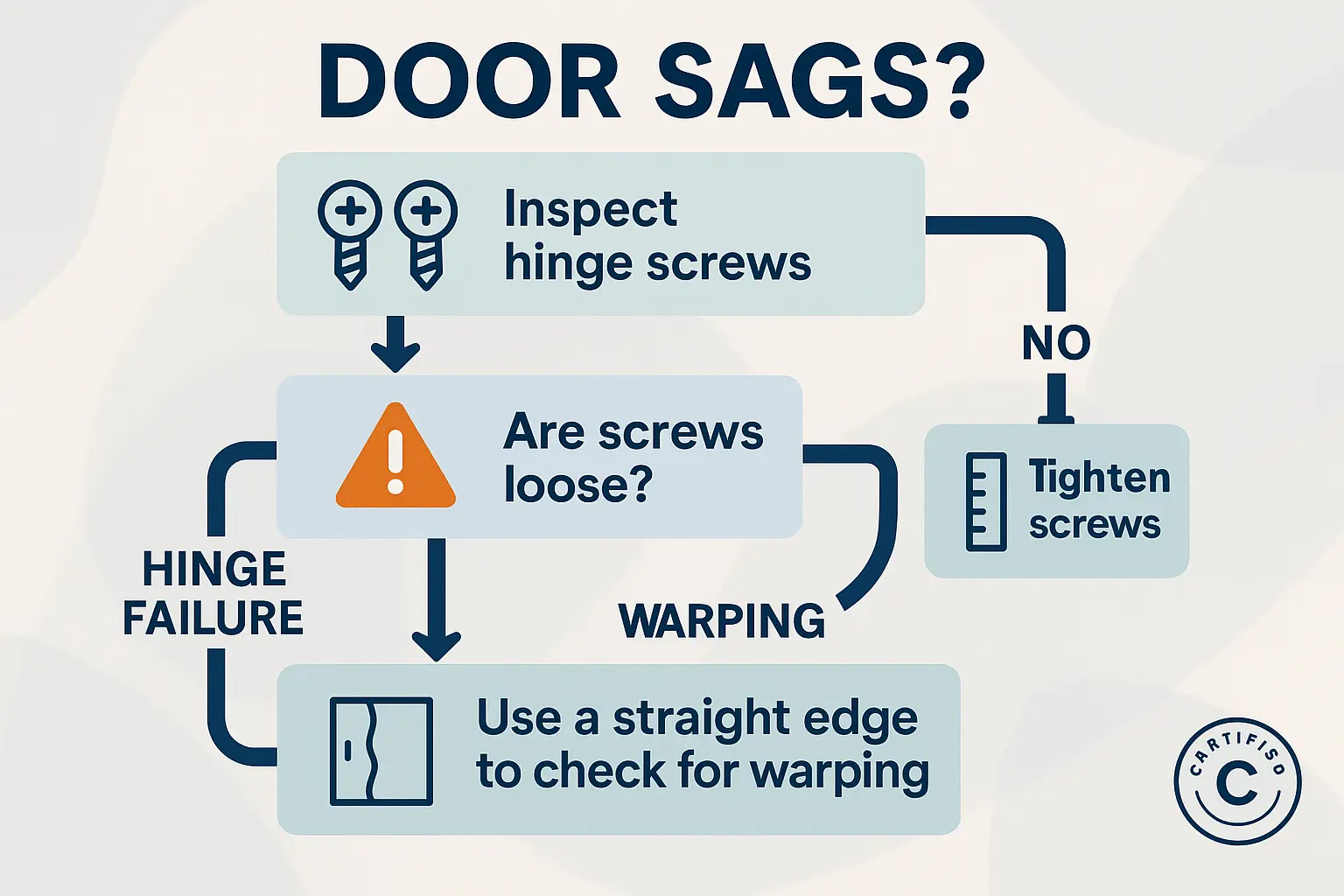
A flowchart guiding the user through the diagnostic process for a sagging door. It starts with 'Check the Gaps.' If the gap is uneven at the top, it directs the user to 'Check Hinges.' If the hinges are loose, the diagnosis is 'Hinge Failure.' If the hinges are tight, it suggests the door may be too heavy. If the gaps are inconsistent all around, it directs the user to perform the 'Straightedge Test.' If the test reveals gaps, the diagnosis is 'Warped Door.' If not, it suggests checking the frame for squareness.

Step 2: The Straightedge Test

Open the door and hold your level or straightedge vertically against the face of the door, from top to bottom. Then, hold it diagonally from corner to corner in an "X" pattern.

Sign of Warping: Do you see daylight between the straightedge and the door? If the door has a bow, twist, or cup, it will be immediately obvious. A perfectly flat door will make consistent contact with your straightedge. This is the definitive test for a warped door.

Sign of Hinge Sag: The door itself will be perfectly flat against the straightedge, even if it hangs crooked in the frame.

Step 3: The Hinge Wiggle Test

Open the door about halfway. Grip the doorknob and try to lift the door straight up and down.

Sign of Hinge Sag: Do you feel movement, clunking, or play? That's a sure sign of loose hinge screws or worn-out hinge pins. The movement should be noticeable.

Sign of Warping: The door will feel solid. Even if it's warped, it will be firmly attached to the frame, so you won't feel any vertical movement.

A flowchart guiding the user through the diagnostic process for a sagging door. It starts with 'Check the Gaps.' If the gap is uneven at the top, it directs the user to 'Check Hinges.' If the hinges are loose, the diagnosis is 'Hinge Failure.' If the hinges are tight, it suggests the door may be too heavy. If the gaps are inconsistent all around, it directs the user to perform the 'Straightedge Test.' If the test reveals gaps, the diagnosis is 'Warped Door.' If not, it suggests checking the frame for squareness.

Interpreting the Results


By now, you should have a clear answer. Let’s look at what your findings mean and what your next steps should be.

Diagnosis: Hinge Failure

If you discovered a triangular gap at the top and your door wiggled during the test, congratulations—you likely have the easier problem to fix. Your door slab is fine; its support system just needs attention. The typical solutions include:

• Tightening loose hinge screws.

• Replacing short screws with longer 3-inch screws that bite into the wall stud behind the jamb.

• Shimming the hinges to adjust the door's position.

• Replacing worn-out hinges entirely.

Fixing a hinge is also a great opportunity to improve your home’s security. As you work on the hinges, consider the door’s overall integrity. To transform a simple repair into a real security upgrade, start by reading our guide on reinforcing side entry doors.
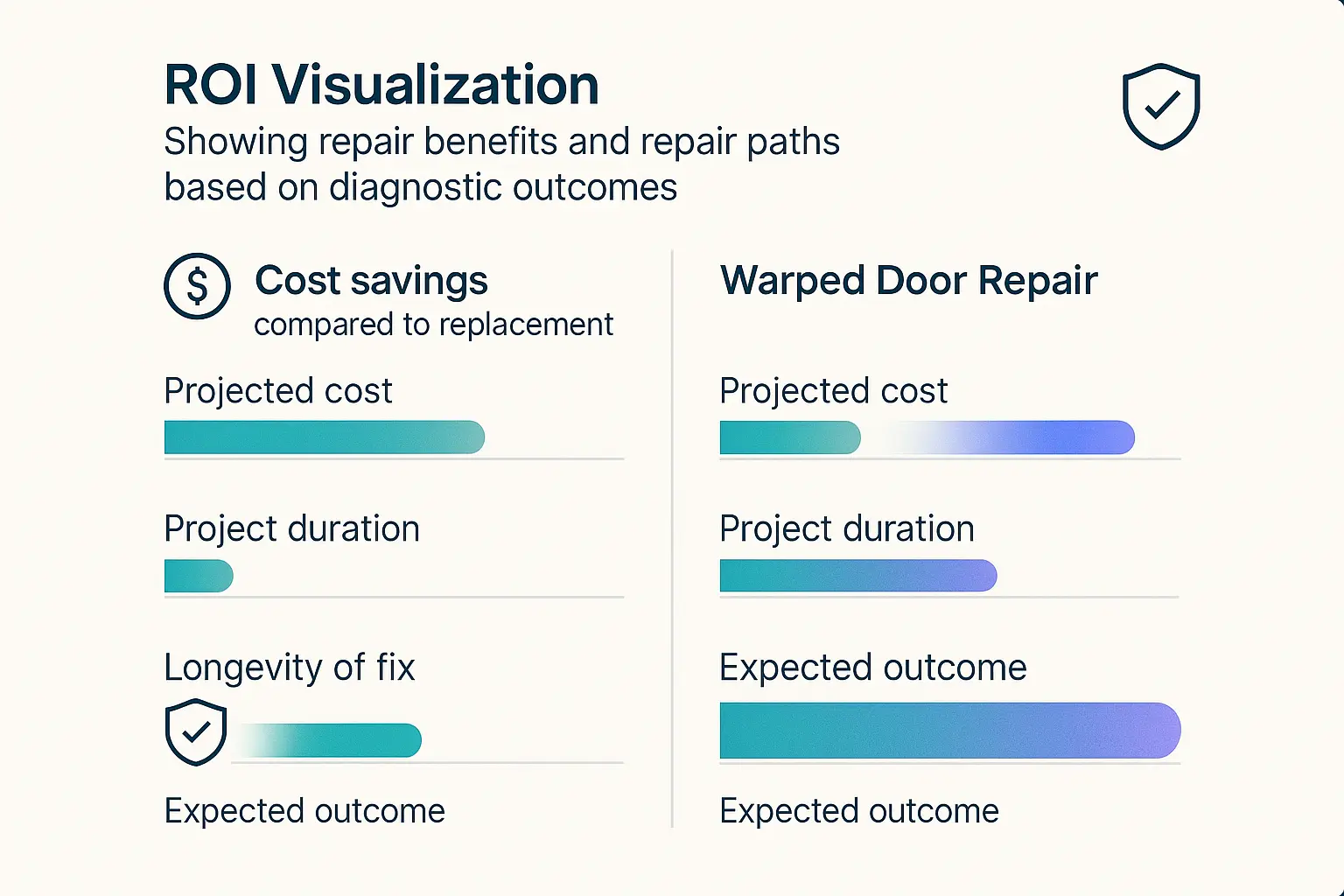
A comparison chart for door repair options. 'Hinge Repair' is listed as low cost, DIY-friendly, and a quick fix. 'Door Replacement' is listed as higher cost, often requiring professional installation, but is a permanent solution for warping.

Diagnosis: Door Warping

If the straightedge test revealed a bow or twist, your door material itself has failed. This is a more challenging issue because it’s not about adjustment; it’s about the physical shape of the door. Warping is often caused by:

• Sunlight hitting one side of the door, causing it to expand.

• Moisture absorption from rain, humidity, or even steam from a bathroom.

• Poor quality materials or improper sealing during manufacturing.

Unfortunately, fixing a warped door is extremely difficult and often temporary. The most reliable and permanent solution is usually a replacement. When you discover your door is warped, the conversation naturally turns to materials. The material's quality and its suitability for your climate are the biggest factors in preventing future warping. This principle is critical for all exterior doors. For instance, the technology behind a fire rated door for garage focuses on materials that resist extreme temperature changes—a key cause of warping. Similarly, when homeowners look into custom garage door design, they're often balancing aesthetics with durable, weather-resistant materials to avoid these very issues.

A comparison chart for door repair options. 'Hinge Repair' is listed as low cost, DIY-friendly, and a quick fix. 'Door Replacement' is listed as higher cost, often requiring professional installation, but is a permanent solution for warping.

The Two Main Culprits: Hinges vs. Warping
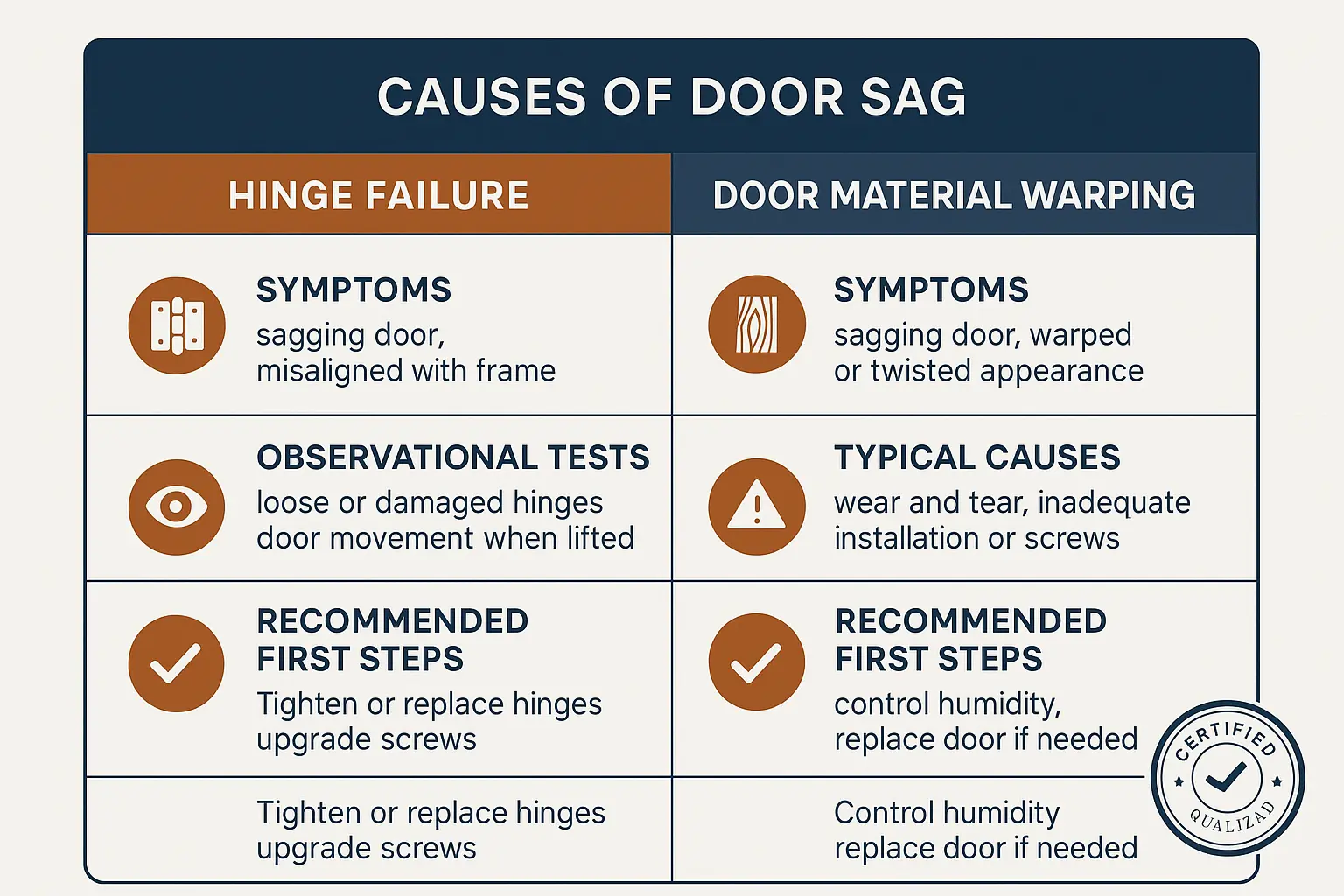

Let's think of your door like a painting hung on a wall. The hinges are the hooks holding it up, and the door is the canvas. If the painting hangs crooked, it’s either because the hooks are loose or because the canvas itself has bent. It’s the same principle with your door.
A comparison table showing the differences between a sagging door due to hinge failure and a warped door. On the left, 'Hinge Failure' shows symptoms like an uneven gap at the top, scrapes at the top corner, loose hinge screws, and the door wiggling. On the right, 'Door Warping' shows symptoms like inconsistent gaps on all sides, the door not sitting flush in the frame, multiple contact points, and a visible bow or twist in the door panel.
Hinge Failure: This is a problem with the "hooks." Over time, the weight of the door can pull screws loose from the frame, wear down the hinge knuckles, or even slightly bend the hinge plates. This is a structural support issue.

Door Warping: This is a problem with the "canvas." Changes in temperature and humidity can cause the door material (especially wood) to expand or contract unevenly. This results in the door slab itself twisting or bowing, losing its flat shape. This is a material integrity issue.

These two problems create very different patterns of misalignment.

A comparison table showing the differences between a sagging door due to hinge failure and a warped door. On the left, 'Hinge Failure' shows symptoms like an uneven gap at the top, scrapes at the top corner, loose hinge screws, and the door wiggling. On the right, 'Door Warping' shows symptoms like inconsistent gaps on all sides, the door not sitting flush in the frame, multiple contact points, and a visible bow or twist in the door panel.

FAQ: Your Questions on Sagging & Warped Doors Answered


Can a brand-new door sag?

Absolutely. If a door is not installed correctly, if the hinges are not rated for the door's weight, or if the frame itself isn't square, even a new door can start sagging quickly.

Can I really fix a badly warped wooden door myself?

While there are methods online that involve wetting and clamping the door, they are often unsuccessful and rarely provide a permanent fix. Once the wood fibers have been stretched and compromised, it's very difficult to force them back into a perfectly flat shape.

How much of a gap is considered normal for a door?

A properly installed door should have a consistent gap of about 1/8 inch (the thickness of a nickel) on all sides. There should be no "normal" amount of sag; the gaps should be even.

Why did my door suddenly start sticking?

This is often caused by seasonal changes. A sudden spike in humidity can cause a wood door to swell, leading to sticking and rubbing. Likewise, a screw in the top hinge that has been slowly pulling out for years might finally give way, causing a sudden sag.

Don't Guess, Diagnose: Your Next Steps


You no longer have to wonder why your door isn't closing properly. With the knowledge from these simple diagnostic tests, you have moved beyond guessing and can now take confident, decisive action. You're equipped to choose the correct repair path, saving yourself time, money, and the headache of a failed fix.

If your diagnosis points to a simple hinge issue, your next step is to try tightening the screws or replacing them with longer ones. If you've discovered a warped door, the best path forward is to begin researching replacement options that feature materials suited to your home and climate.

When a diagnosis reveals a problem that's more than a simple DIY task, professional guidance can be invaluable. If you're in Connecticut and want an expert opinion, the team at 24H Garage Doors is here to help with all your door needs. We believe in empowering our customers with knowledge first, ensuring you always make the best decision for your home.

You may also like

blog photo

How to Troubleshoot and Fix a Slipping Garage Door Cable

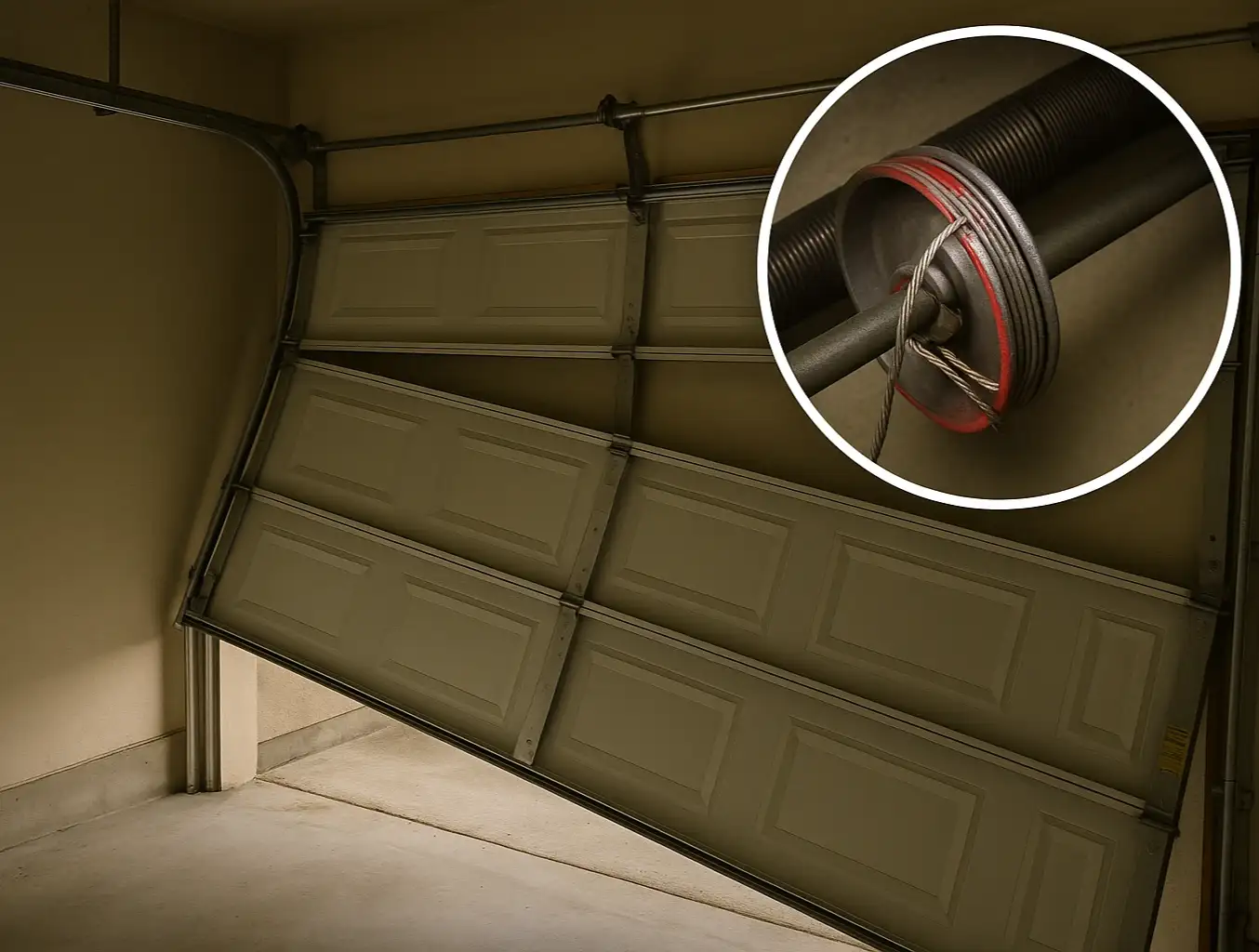
You hit the button, and something just isn’t right. One side of your garage door lifts faster than the other, creating a jarring, crooked angle. Or maybe you heard a loud bang, and now a cable is hanging loose, looking like a tangled fishing line. It’s a common problem, but it’s also a clear signal that a critical part of your garage door system is failing—and it’s more dangerous than most people realize.That crooked door is a symptom, not the core issue. The real problem lies in the complex, high-tension system of cables, drums, and springs that does the heavy lifting. When a cable winds unevenly on its drum, it throws the entire system out of balance. This guide will help you safely diagnose what’s happening, understand why it’s happening, and learn the crucial difference between a simple check-up and a high-risk repair that’s best left to the pros.