Accidents happen in seconds: a miscalculated reverse, a slick driveway, or a momentary distraction, and your vehicle bumper impacts your garage door. The resulting crunch creates immediate anxiety. Beyond cosmetic dents, the kinetic force of a vehicle impact often twists steel tracks out of alignment and buckles door panels. The critical question homeowners face during evaluation is clear: Can a bent track be straightened, should a single section be replaced, or does the entire door require full replacement?
Bent Track After Backing Into the Door: Repair or Replace the Section?
Published: Oct 21, 2026
Immediate Post-Collision Protocol
When an impact occurs, the single most damaging action you can take is pressing the wall button or remote control to test the door. Operating an automatic opener on jammed panels or misaligned tracks subjects drive gears to extreme friction loads. Within seconds, this strain can strip nylon drive gears or burn out electrical motor capacitors.
Immediately turn off your vehicle, put it in park, and pull the red emergency release cord on the motor rail to disengage the opener. Before attempting to lift the door manually, perform a visual assessment. If severe structural displacement exists, contacting a professional for emergency garage door repair prevents accidental spring release or full door collapse.
Diagnosing the Damage: Track vs. Panel Section vs. Combination
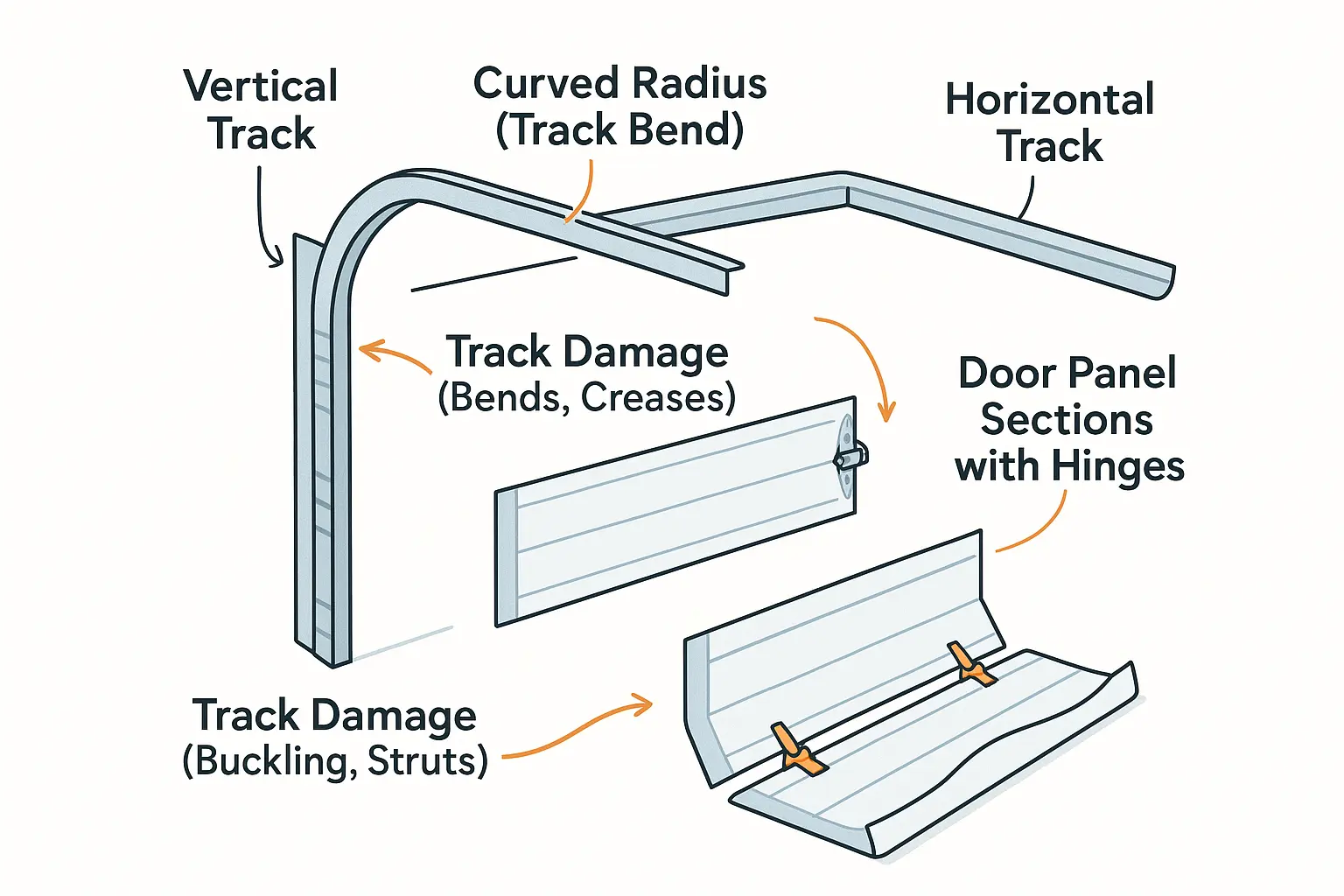
Diagnosing vehicle impact damage requires isolating the track system from panel section failures. Low-speed bumper contact typically damages the lower 18-gauge vertical track rail and bottom section. Higher SUV impacts often buckle middle panels and distort curved track radii. Evaluating whether your garage door hit by car suffered isolated rail binding or frame deformation determines the scope of necessary repairs.
The Bent Track Decision: Repair (Straighten) vs. Replace Track Rail
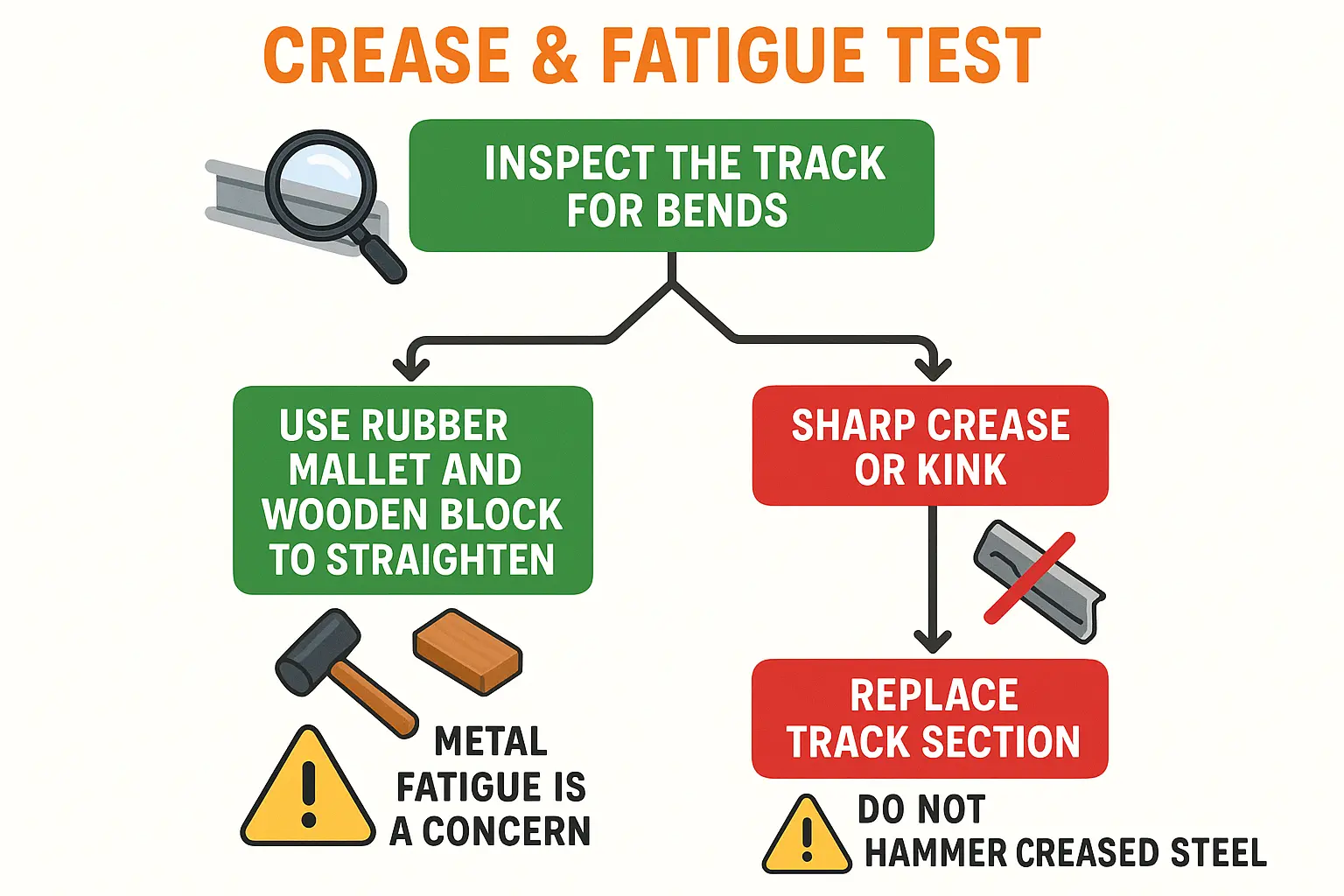
Evaluating bent tracks comes down to the Crease & Fatigue Test. Residential tracks are formed from rolled sheet steel. If a vertical track has a slight, smooth bow, specialized bent track repair using a rubber mallet and wooden block can restore track alignment without sacrificing strength ($120–$220). Minor bracket displacement can similarly be resolved with professional garage door track alignment.
However, if the metal exhibits a sharp crease, severe kink, or visible stress discoloration, hammering the steel reduces its load-bearing capacity by up to 60%. Attempting to straighten creased tracks creates structural weak points where rollers binding under load can cause the door to jump off its rails. Creased rails require full track replacement ($150–$350).
Panel Section Decision: Strut Reinforcement vs. Section Swap
When steel door panels buckle across hinge lines, structural rigidity is lost. Minor hairline cracks or light bows can occasionally be reinforced with a galvanized steel strut brace ($100–$200). However, deeply creased sections compromise safety and smooth travel, requiring single section replacement ($250–$600).
For garage doors older than 8 years, matching discontinued panel models and paint finishes becomes challenging. When panel replacement costs approach half the price of a full system, apply the 50% Financial Rule: invest in complete replacement ($800–$3,500+). Garage door replacements yield an impressive 90%–102% ROI upon home resale according to the Remodeling Magazine Cost vs. Value Report.
Comprehensive Cost and Decision Matrix
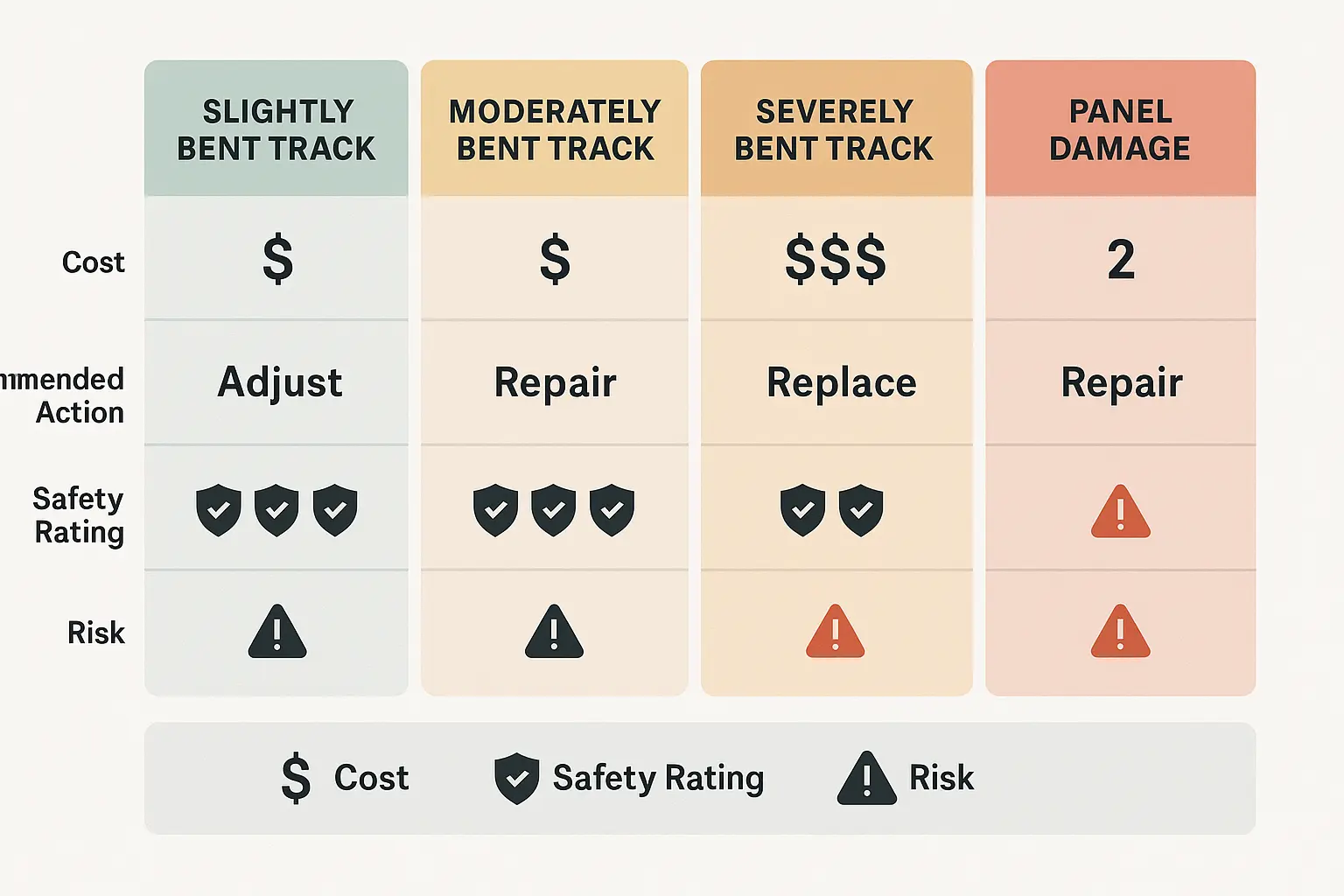
| Damage Scenario | Recommended Action | Cost Range | Risk Factor |
|---|---|---|---|
| Track Bracket Shift | Realign mounting brackets | $120 – $200 | Low |
| Bent Track (No Crease) | Professional track realignment | $120 – $220 | Low-Moderate |
| Kinked / Creased Track | Replace track rail section | $150 – $350 | Moderate |
| Creased Single Panel | Add strut brace or replace section | $250 – $600 | Moderate |
| Multi-Panel & Track Buckle | Replace sections & track rails | $500 – $950 | High |
| Severe System Impact | Full door system replacement | $1,000 – $3,500+ | High (Pro Only) |
Insurance and Safety Boundaries
Filing an Auto Collision or Homeowners claim makes sense for major structural damage exceeding $1,000. For minor track realignment or single section repairs ($120–$500), paying out-of-pocket avoids deductible costs and policy rate increases.
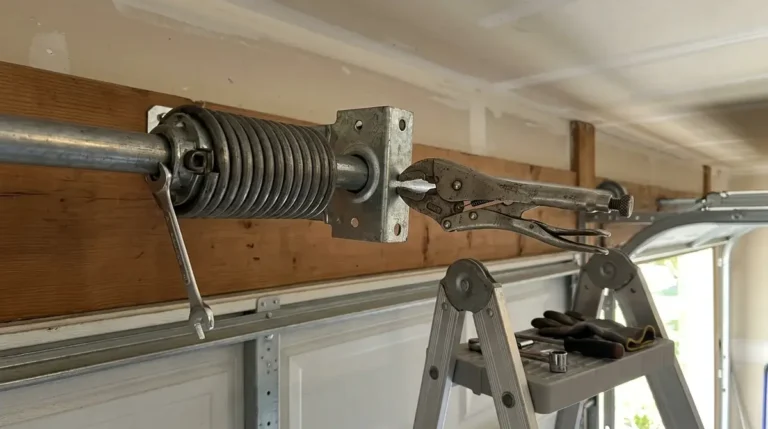
While minor track bracket adjustments are manageable, never attempt DIY work around high-tension cables, bottom brackets, or torsion springs. Consumer Product Safety Commission data indicates over 1,600 emergency room injuries occur annually from DIY garage door repairs due to uncontrolled tension release. Recognizing garage door spring danger protects your safety. When a door hangs unevenly, expert garage door off track repair restores safe balance.
Frequently Asked Questions
Can operating a garage door with a bent track burn out the motor?
Yes. Attempting to operate an automatic opener when tracks are misaligned or buckled forces the motor to overcome massive physical resistance. This extreme friction load quickly strips internal nylon drive gears or causes motor capacitors to burn out, necessitating an full garage door opener replacement.
How do I know if my bent garage door track can be straightened?
If the steel track exhibits a shallow bow without sharp creases, a technician can safely straighten it using specialized tools. However, if the track has a sharp kink, crease, or stress discoloration, the metal’s structural integrity is compromised by up to 60%, making rail replacement necessary for safety.
What is the 50 percent rule for garage door repair vs replacement?
The 50% rule states that when total repair costs for damaged tracks, hinges, and panel sections exceed half the price of installing a new garage door system, complete replacement is recommended due to cumulative mechanical wear and superior resale value retention.