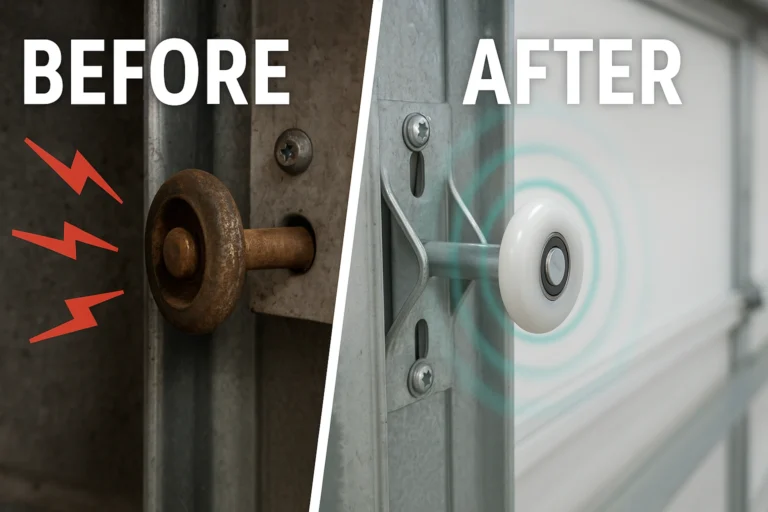
Your garage door is the largest moving wall of your home and its primary entry point. If you are currently evaluating a new opener or assessing your existing setup, choosing the right system comes down to validating the technology protecting your family. LiftMaster has built its industry-leading reputation on highly engineered, fail-safe security standards rather than superficial features. Let’s look at how these technologies operate to protect your household.
Evaluating LiftMaster Garage Door Opener Safety & Security Features
Published: Oct 26, 2026
The Anatomy of Modern Garage Security (The LiftMaster Ecosystem)
Modern home protection relies on a multi-layered shield that physical forces cannot easily bypass. LiftMaster integrates physical restrictions with smart sensors to prevent unauthorized entry and mechanical accidents.
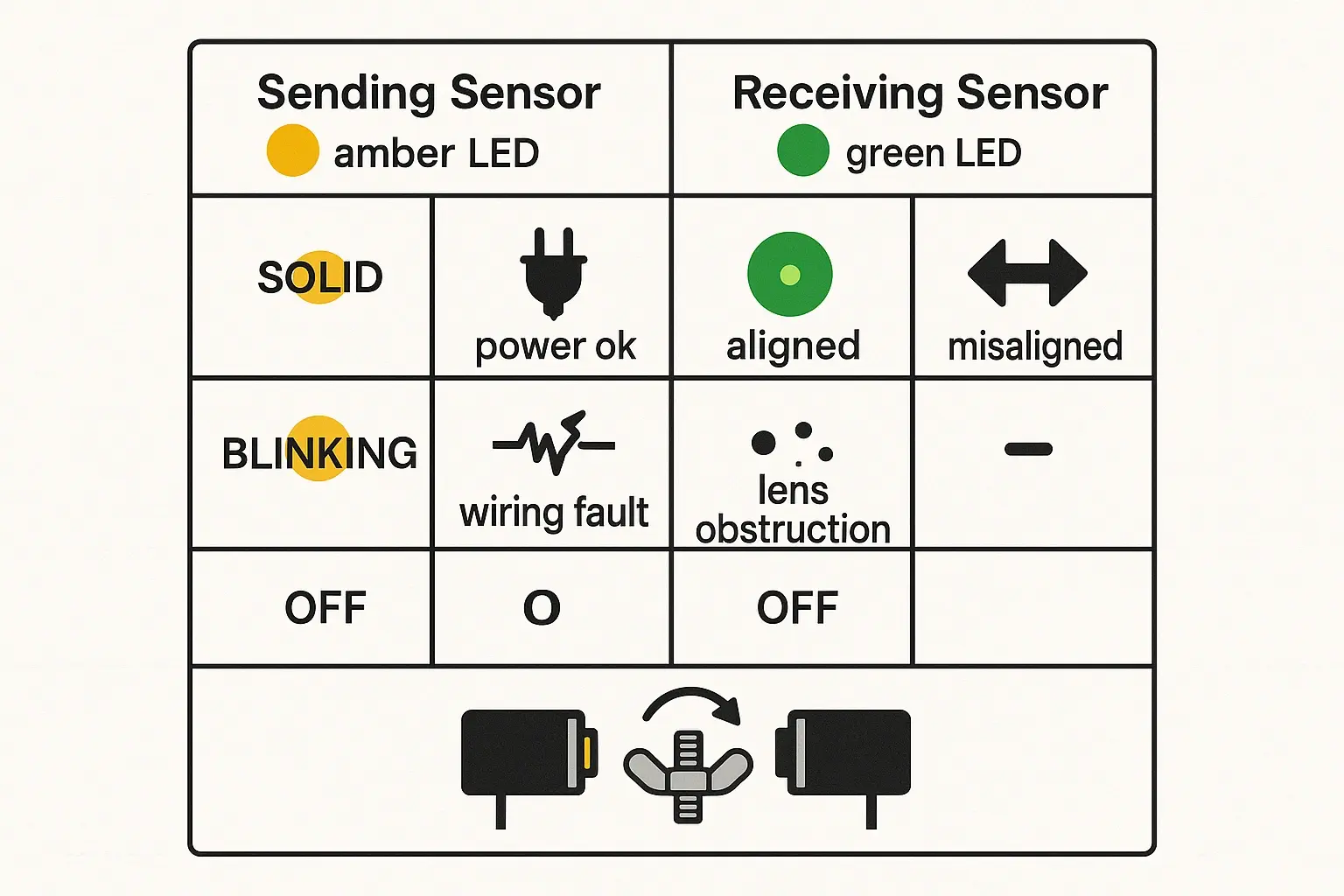
At the center of this system is the Protector System®, which projects an invisible light beam across the door opening. To understand the underlying engineering, you can read about how do garage door safety sensors work. Supporting this is the PosiLock® automatic lockdown system, which actively detects manual lifting attempts and applies an electronic counter-force to keep the door sealed. Additionally, the motor utilizes dynamic force monitoring to sense physical resistance instantly, acting as a reliable childproof garage door opener by reversing the door before it can cause harm.
The Sensor Diagnostic Matrix
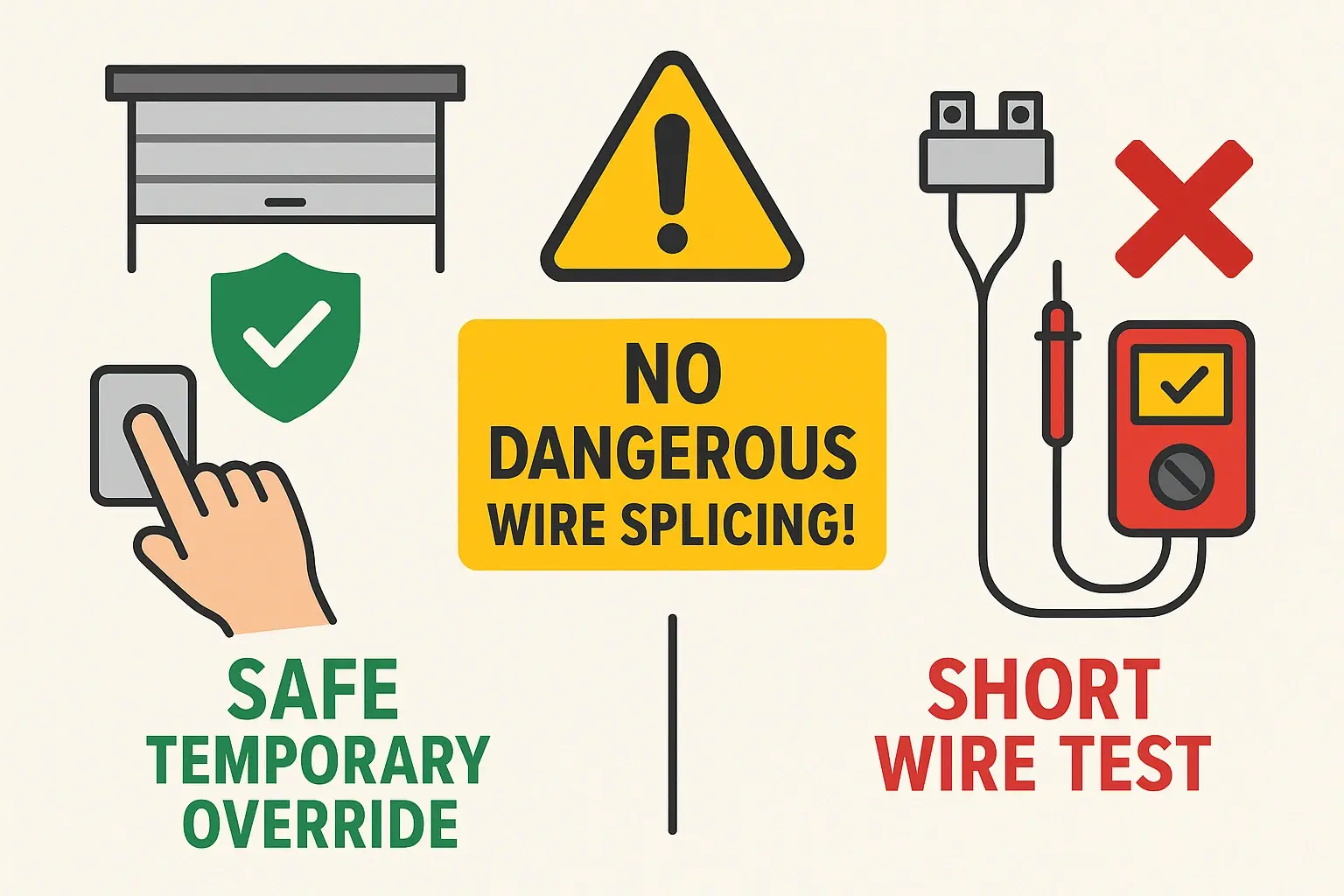
When a garage door refuses to close and flashes its lights, it is performing its primary safety function. To resolve this without frustration, you must decode the LED indicators on your safety sensors.
| Sensor Type | LED Color | Solid Light Meaning | Blinking / Dark Meaning |
|---|---|---|---|
| Sending Sensor | Amber/Yellow | Has power and correct wiring | Power fault or loose wire connection |
| Receiving Sensor | Green | Perfect alignment achieved | Alignment error, dirty lens, or physical blockage |
To correct an alignment issue, loosen the wing nut on the receiving sensor, adjust its position until the green LED glows steady and solid, then retighten the nut. If your system requires further fine-tuning, you may also need a professional garage door opener adjustment to ensure your limits are set correctly.
Bypassing Sensors Safely: Temporary Override vs. The Short Wire Test
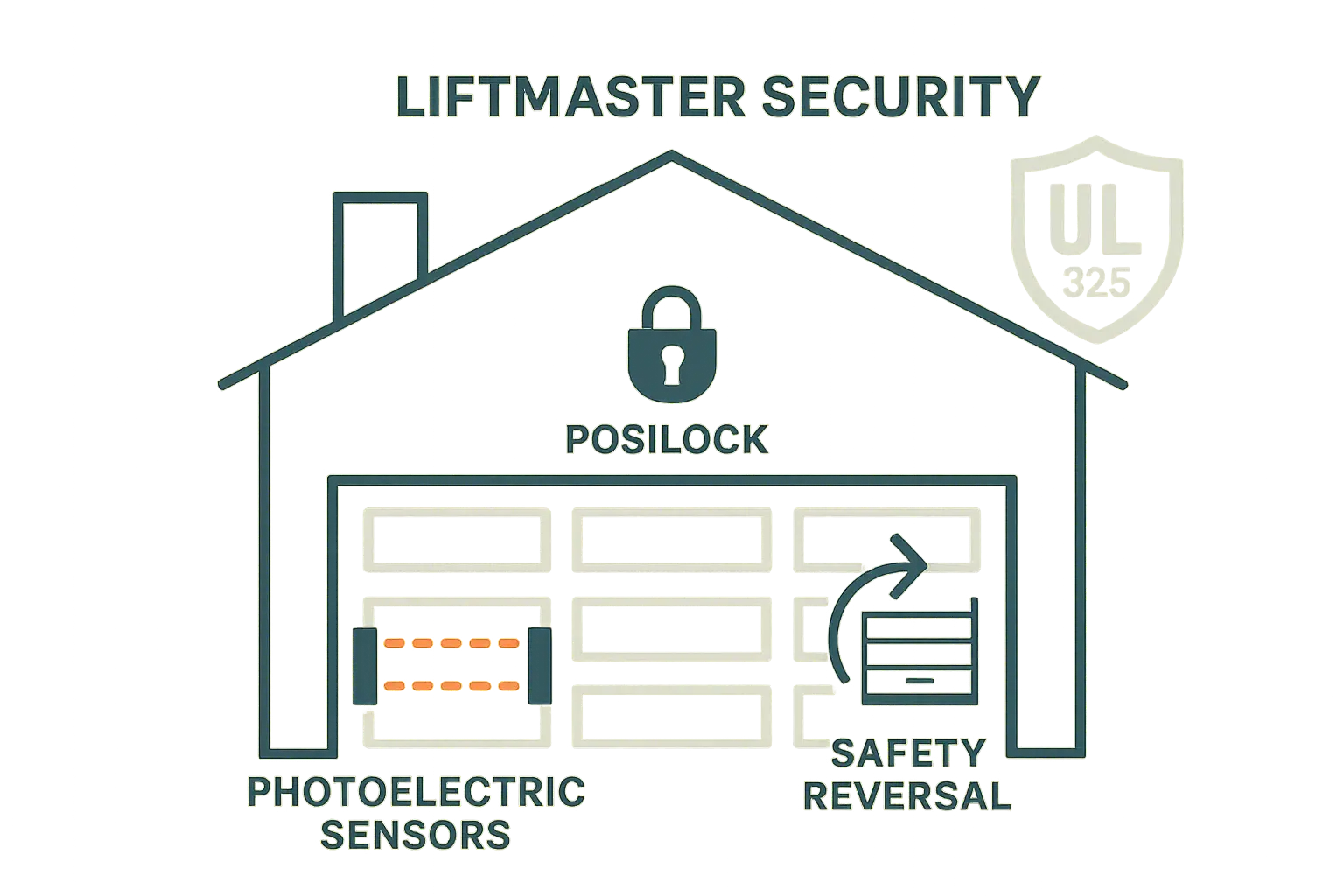
If your sensors are physically damaged and you must close your garage door immediately, LiftMaster provides a built-in safety override. Press and continuously hold the wall control button until the door is completely closed. Releasing the button before the cycle completes will trigger an immediate reversal.
Do not attempt to splice or bypass the sensors permanently, as this introduces severe safety risks. Instead, perform the Short Wire Test to diagnose the problem:
- Disconnect power to the opener.
- Cut the sensor wires 1–2 feet away from the motor head.
- Strip the wire ends and connect them directly to the corresponding terminals on the ceiling unit.
- Restore power. If both LEDs light up, your pre-wired wall lines are damaged and need replacement.
If your diagnostic tests indicate a deeper hardware fault, consulting a professional for liftmaster garage door repair is the safest path forward. For emergencies, familiarize yourself with the garage door emergency release to operate the door manually.
High-Tech Intruder Prevention: Security+ 2.0 Rolling Codes
Older garage systems were vulnerable to code-grabbing devices. Burglars could record your remote’s signal from the driveway and play it back to gain entry. Understanding what is a dip switch garage door opener highlights how fixed-code systems left homes exposed.
LiftMaster’s Security+ 2.0 neutralizes this threat. Every time you press your remote, the system rolls to a new code chosen from over 100 billion possible combinations. Additionally, tri-band frequency hopping (310, 315, and 390 MHz) prevents nearby signal-jamming devices from locking you out. When upgrading, confirm your garage door remote compatibility and follow current safety standards to seamlessly how to change garage door code systems for optimal security.
Regulatory Compliance & Upgrades: UL 325 and California SB-969
A safety audit reveals that roughly 1 in 15 residential garage doors in the US operates without fully functional entrapment protections. Under Federal Law (16 CFR Part 1211) and UL 325, all residential openers manufactured after January 1, 1993, must include an external entrapment protection system. Highlighting this commitment, LiftMaster discontinued support and replacement parts for pre-1993 openers back in 2008 to enforce modern safety standards.
More recently, California SB-969 made battery backup systems mandatory for all residential garage door openers sold or installed after July 1, 2019, carrying a $1,000 civil penalty for non-compliance. This legislation arose after several citizens were trapped in their garages during the catastrophic 2017 wildfires when power outages disabled their openers. To ensure your home is prepared for unexpected power cuts, learn how to open a garage door without power safely.
Frequently Asked Questions
Can I run a LiftMaster opener without safety sensors connected?
No. Modern LiftMaster openers will not complete a downward closing cycle if safety sensors are missing, damaged, or disconnected. This prevents dangerous entrapment hazards.
Why is my LiftMaster wall button blinking, but the door won't close?
This behavior usually indicates a safety sensor alignment issue or a physical obstruction blocking the path of the invisible infrared beam.
Is Security+ 2.0 compatible with older LiftMaster remotes?
No. Security+ 2.0 relies on modern encryption standards. Older fixed-code or older rolling-code remotes cannot communicate with these highly secure receivers.