Leaving a garage door open exposes an average of $6,500 in unprotected residential assets—from power tools to vehicles—and accounts for 34% of home break-in entry points. If you are evaluating left-open alert sensors, you are likely past simple problem identification and actively seeking a solution that restores peace of mind without introducing false alarms, app fatigue, or hardware lockouts.
Garage Door Left-Open Alert Sensors: The Complete Buyer & Setup Guide
Published: Oct 15, 2026
The Physical Garage Reality: Why Indoor Door Sensors Fail
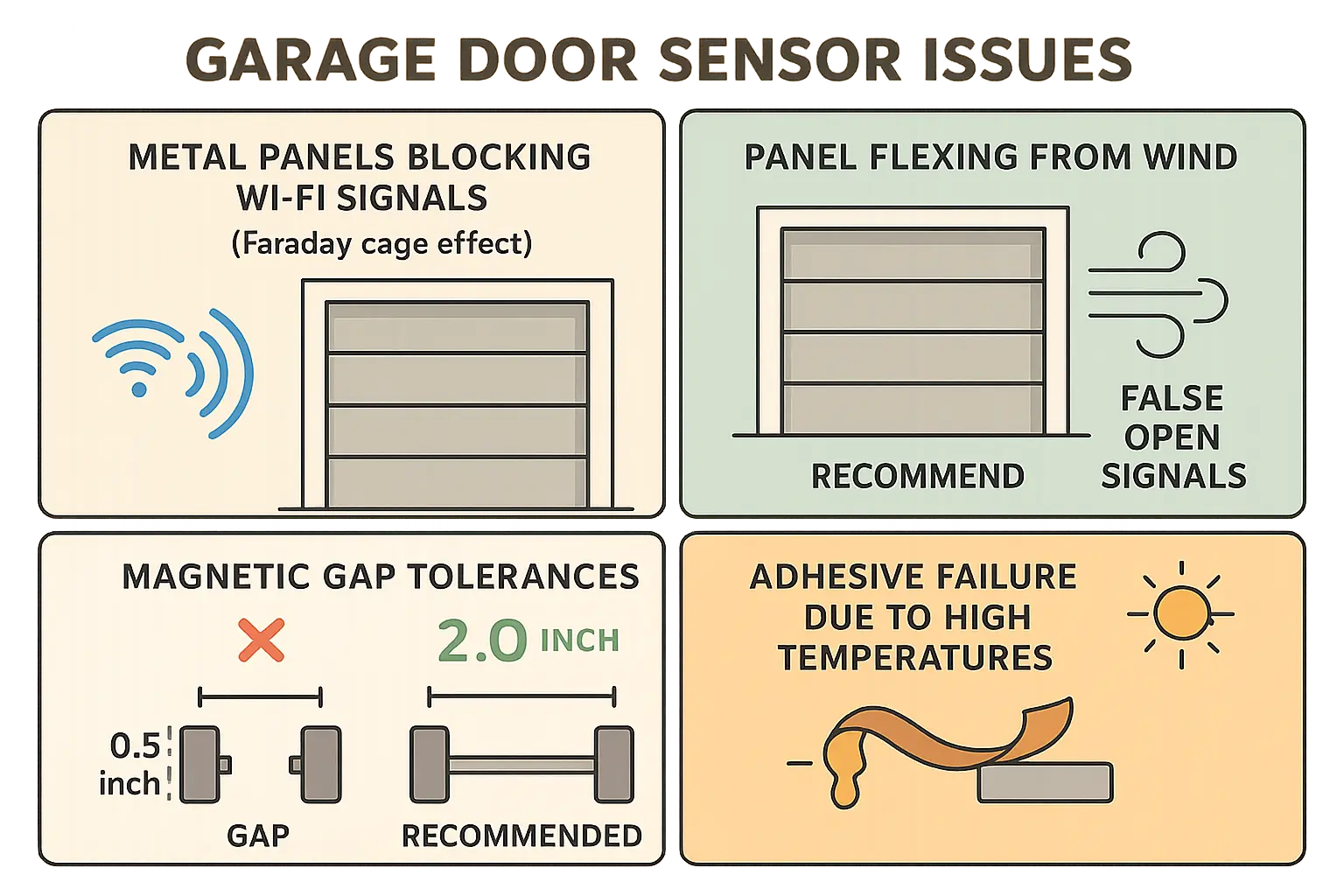
Standard indoor contact sensors frequently fail in garage environments due to three physical factors:
- Faraday Cage Shielding: Metal doors and reinforced concrete walls severely degrade standard 2.4GHz Wi-Fi signals.
- Thermal Stress: Garages experience extreme temperature swings, often ranging from -20°F in winter to 110°F+ in summer. These thermal cycles melt standard consumer 3M foam adhesive tape within 90 to 120 days.
- Track Flex & Wind Rattle: High winds push against overhead sectional doors, causing panels to flex up to an inch. A standard contact sensor with a tight 0.5-inch magnetic gap will interpret panel movement as an open door, triggering 3 AM false alarms.
To eliminate false positives, heavy-duty garage applications require a 50mm (2.0-inch) sensing gap threshold alongside mechanical mounting brackets. Regular garage maintenance, such as cleaning garage door tracks, helps minimize unnecessary door vibration and track play.
Smart Home Ecosystem Breakdown & The MyQ Cautionary Tale
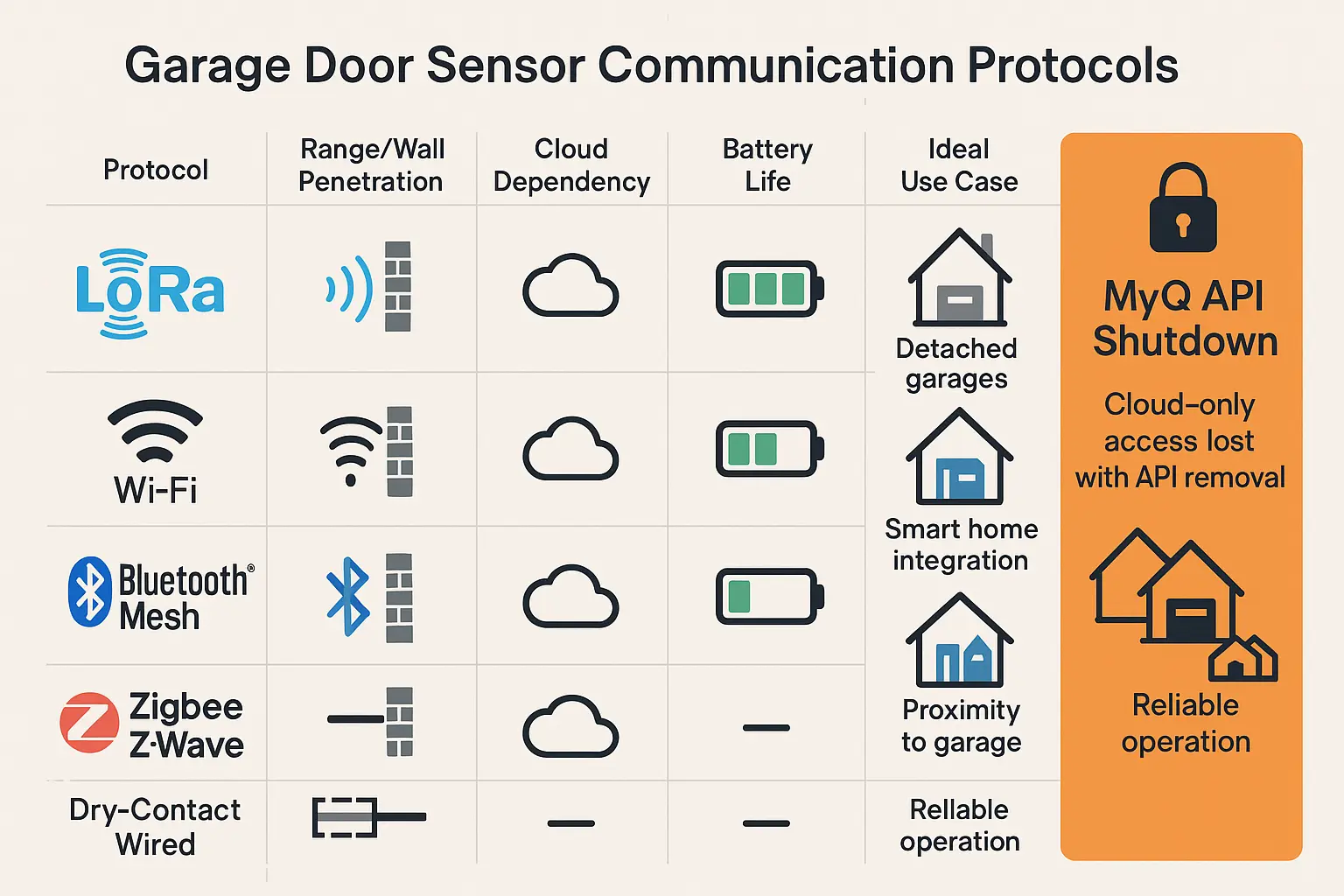
Many homeowners learned the risks of cloud dependency during Chamberlain myQ’s third-party API shutdown, which cut off external smart home integrations. When evaluating notification architecture, selecting local-control protocols and sub-GHz wireless channels ensures long-term permanence and hardware control.
- LoRa (915MHz Sub-GHz): Achieves over 1,320 feet (1/4 mile) of open-air range, easily penetrating thick concrete walls and metal doors. Ideal for detached garages and long driveways.
- Zigbee / Z-Wave: Operates locally through smart home hubs (SmartThings, Hubitat, Home Assistant) without relying on cloud APIs.
- Bluetooth Mesh / Standalone RF: Excellent choice for non-Wi-Fi environments using dedicated plug-in visual lightsticks or chime modules.
Integrating open-protocol hardware into modern smart garage door systems guarantees that your alert setup remains operational regardless of third-party cloud policy changes.
Alert Architecture: Preventing Alert Fatigue
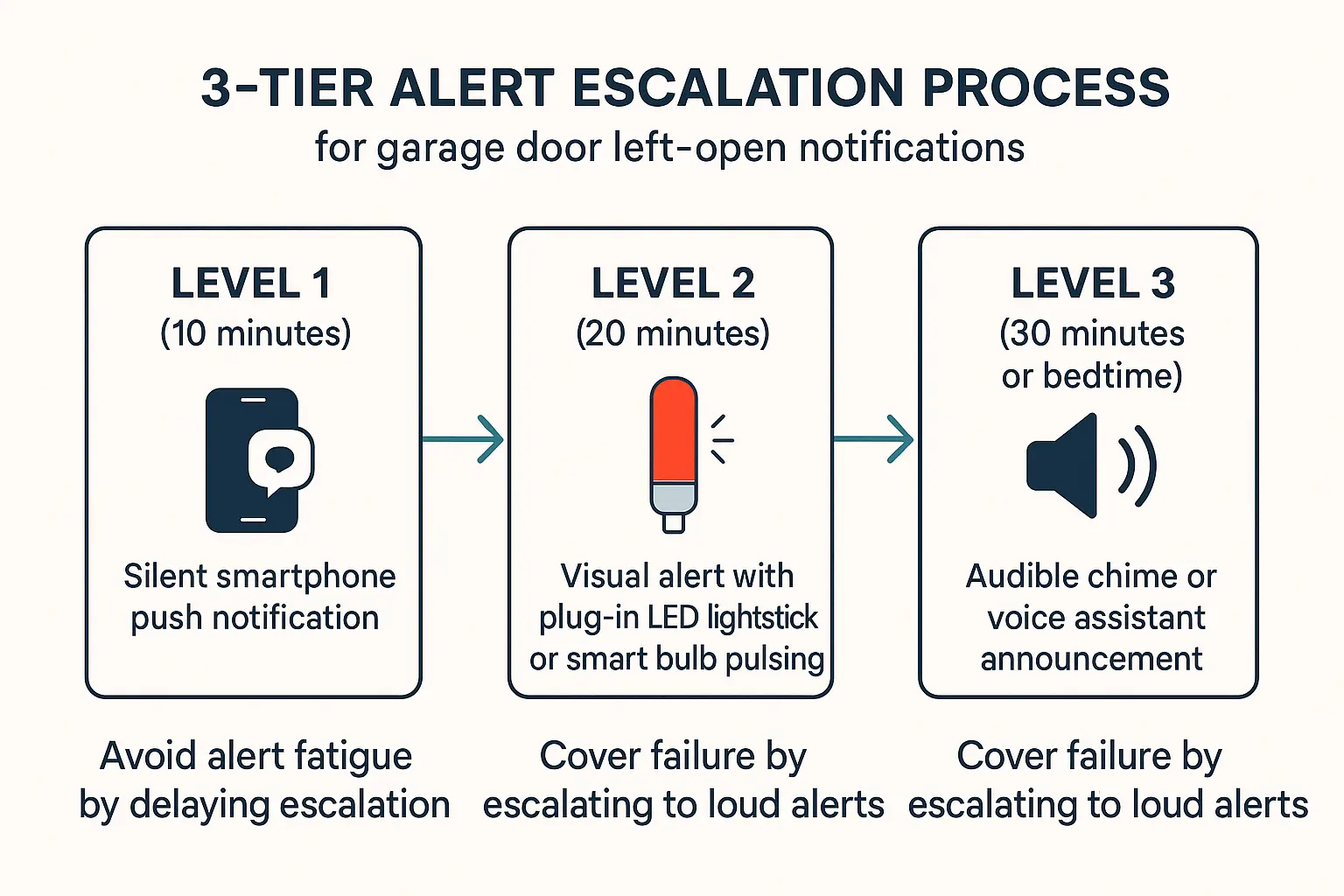
Immediate phone alerts every time a garage door opens lead to notification fatigue, prompting homeowners to mute push notifications altogether. A structured 3-tier escalation framework balances awareness with daily practicality:
- Tier 1 (10 Minutes Open): Silent phone push notification. Gives you ample time for normal activities like loading groceries or working in the yard.
- Tier 2 (20 Minutes Open): Visual status change inside the home (e.g., a plug-in LED lightstick changes to red, or a designated smart light bulb pulses).
- Tier 3 (30 Minutes Open / Bedtime Safety Rule): Audible high-decibel chime or voice assistant announcement (“Attention: Garage Door remains open”).
Implementing timed escalation logic is critical for preventing garage door break ins without causing constant disruption during daytime entry.
Safety and Regulatory Compliance
When moving beyond basic alert monitoring toward automated closure, safety compliance is paramount. Underwriters Laboratories standard UL 325 compliance dictates strict rules regarding unattended remote closing. Any remote auto-close system must feature a mandatory 5-second pre-warning window with flashing lights and a 70dB+ audible alarm before movement begins to prevent entrapment hazards.
Always ensure your setup complies with national garage door safety standards to prevent property damage or personal injury. If your primary safety reverse sensors are misaligned or malfunctioning, refer to our technical guide on garage door safety sensor troubleshooting.
Frequently Asked Questions
How do I prevent false left-open alerts caused by wind flex?
To stop false alarms caused by wind rattling the door, select heavy-duty magnetic contact sensors with a 50mm (2.0-inch) sensing gap threshold or use top-panel tilt sensors. Mount hardware mechanically using self-tapping screws rather than adhesive tape.
What is the best sensor protocol for a detached garage with weak Wi-Fi?
LoRa (Long Range Sub-GHz 915MHz) technology is the most effective protocol for detached structures. It easily penetrates metal siding and concrete walls over distances exceeding 1,320 feet without requiring Wi-Fi range extenders.
Can I monitor my garage door left-open status without a subscription fee?
Yes. Standalone non-Wi-Fi monitors utilizing direct RF plug-in receivers, local Z-Wave/Zigbee hub automations, and hardwired dry-contact sensors provide instant visual and audible left-open notifications with zero recurring monthly costs.
Whether you need assistance selecting hardware, aligning tracks, or configuring smart openers safely, partnering with experienced garage door specialists ensures your entryways stay fully secured.