Upgrading a standard 7-foot garage door to an 8-foot door provides 12 inches of vertical clearance. This additional foot makes a substantial difference when accommodating lifted trucks, Sprinter vans, roof racks, or installing an overhead car lift. However, executing this modification successfully requires understanding the physical parameters and engineering demands of your garage structure.
Raising a Garage Door From 7 to 8 Feet: What the Opening Needs
Published: Oct 14, 2026
Structural Opening Expansion vs. High-Lift Track Conversion
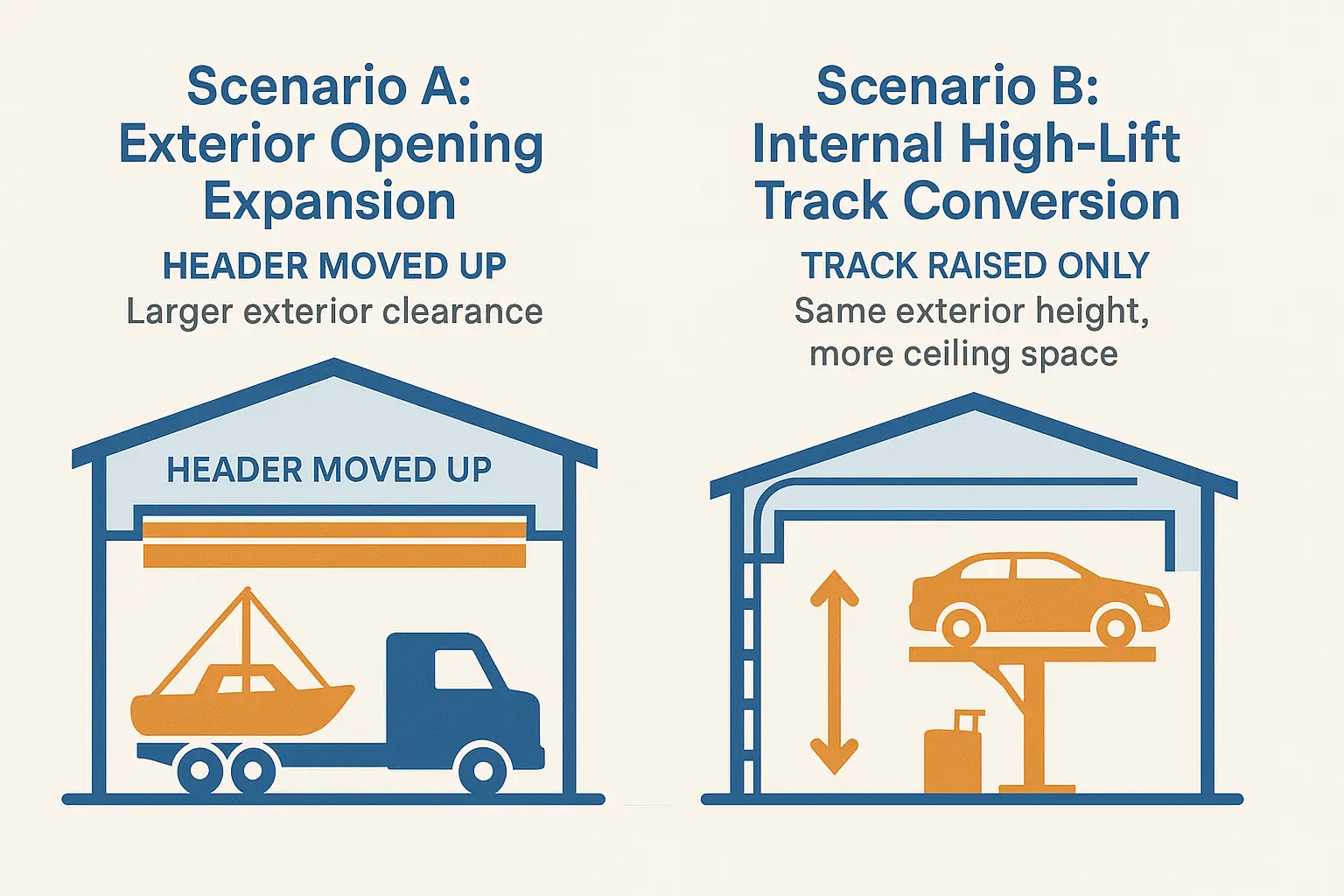
Before removing drywall or ordering materials, you must determine whether you need a physical opening expansion or an internal track conversion.
- Structural Rough Opening Expansion: This process physically raises the exterior wall framing, header, and exterior trim by 12 inches. It is required when a taller vehicle needs to enter the garage bay.
- High-Lift Track Conversion: This modification raises the internal tracks closer to the ceiling while leaving the exterior 7-foot opening unchanged. It creates vertical floor space inside for a car lift, but does not allow taller vehicles to pass through the exterior door frame.
Headroom & Ceiling Height Rules: Can Your Garage Handle an 8-Foot Door?
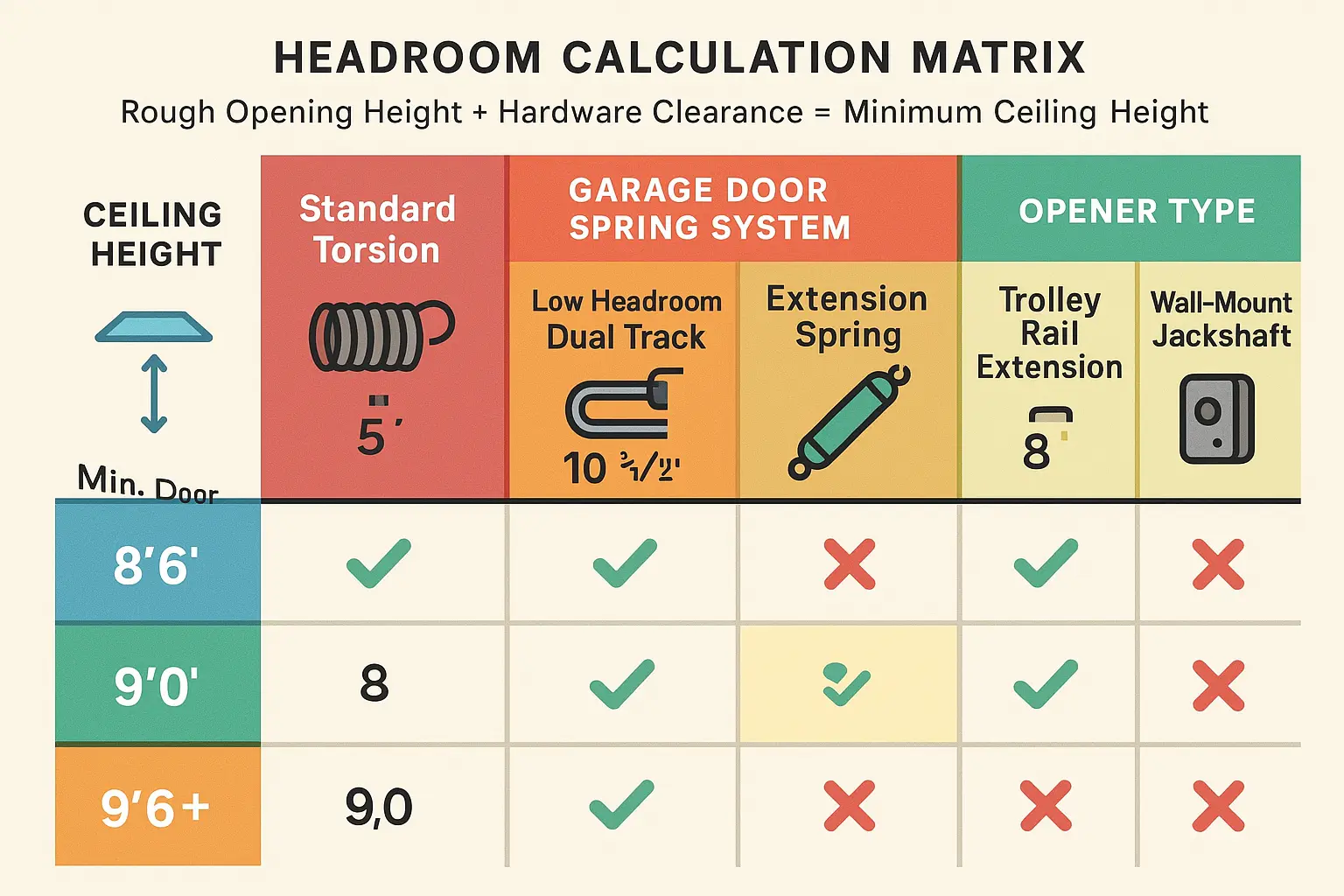
To fit an 8-foot door, your interior space must satisfy specific height requirements. The formula for minimum ceiling height is:
Rough Opening Height (8 feet / 96 inches) + Hardware Clearance = Minimum Ceiling Height
Clearance specifications vary based on hardware design per DASMA TDS-163 standards:
- Standard Torsion Spring System: Requires 12 inches of headroom above the header. This necessitates a minimum ceiling height of 9’0″.
- Low-Headroom Dual-Track Kit: Requires 4.5 to 6 inches of headroom above the header. This allows installation in garages with an 8’6″ ceiling. For tight spaces, reviewing an ideal garage door low headroom installation strategy ensures proper clearance.
- Extension Spring System: Requires 10 inches of headroom (minimum 8’10” ceiling).
- Trolley Opener Clearance: Adds 2 inches of required clearance above the highest point of door travel unless a wall-mount jackshaft opener is installed.
What the Physical Opening Needs: Structural Framing Step-by-Step
Raising the rough opening from 84 inches to 96 inches involves load-bearing adjustments governed by IRC Section R602 framing standards.
- Load-Bearing Assessment: Determine if roof trusses or ceiling joists rest on the door header. Gable ends without roof loads carry less weight, whereas load-bearing walls require temporary support.
- Shoring Wall Installation: Construct a temporary 2×4 load-bearing shoring wall inside the garage, positioned 3 feet back from the opening, to support the ceiling joists before cutting structural members.
- Header Removal: Demolish exterior trim, siding, and drywall. Remove the existing double 2×8 or 2×10 header and shorten or remove the cripple studs above it.
- Header Reframing: Frame the new opening height at 96 inches clear height. Per code guidelines, single-bay openings typically use double 2x10s, while double-bay 16-foot openings require engineered 11-7/8″ Laminated Veneer Lumber (LVL) beams. Install new, full-length trimmer (jack) studs to support the elevated header.
- Jambs & Exterior Finishing: Attach 2×6 wood jamb casing, exterior aluminum trim wrap, and heavy-duty vinyl perimeter weatherstripping.
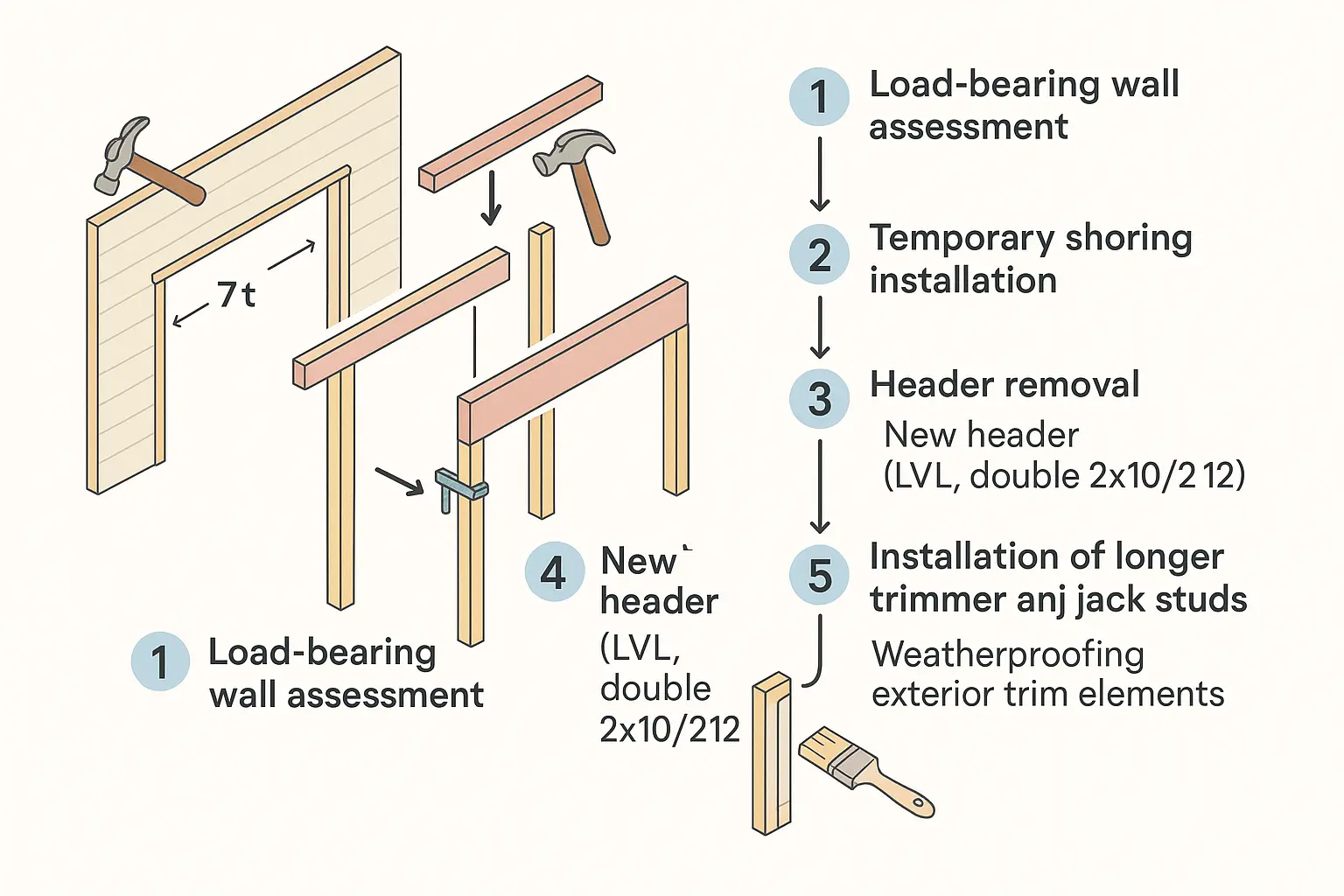
Coordinating structural adjustments alongside a professional garage door installation keeps the project compliant with local building codes.
Door Hardware Physics and Opener Upgrades
Modifying the opening dimensions requires updating core door mechanics:
- Panels and Vertical Tracks: An 8-foot door consists of five 21-inch panels or four 24-inch panels. Vertical track length increases from 76 inches to 88 inches.
- Spring Calibration: Existing 7-foot springs cannot be reused. Because an 8-foot door travels further, 7-foot springs will over-wind, causing premature failure or unbalanced lifting. Proper garage door spring installation requires recalculating spring wire size, inner diameter, and length to match the increased door weight and travel distance.
- Opener Systems: Standard trolley openers designed for 7-foot doors require an 8-foot rail extension kit. Alternatively, wall-mount jackshaft openers eliminate overhead rails entirely, making them ideal for spaces with tight headroom. Reviewing essential garage door parts helps ensure all hardware components remain compatible.
Frequently Asked Questions
Can I reuse my existing garage door opener on an 8-foot door?
You can reuse your existing motor, but standard trolley-style openers require an 8-foot rail extension kit. The stock 7-foot rail will not allow the door to open fully, leaving the bottom panel hanging in the rough opening. Alternatively, upgrading to a wall-mount jackshaft opener eliminates overhead rail length constraints.
Do I need a building permit to raise my garage door header?
Yes. Raising a header involves structural modifications to load-bearing exterior wall framing. Local municipal building codes mandate a structural permit and inspection to verify that temporary shoring, header sizing (such as LVL beams), and framing attachments comply with International Residential Code (IRC) standards.
Can 7-foot garage door springs be reused on an 8-foot door?
No. Springs are calibrated based on door weight, height, and travel distance. Attempting to use 7-foot springs on an 8-foot door requires additional winding turns, which over-stresses the steel, creates dangerous lifting physics, and leads to premature spring snapping or severe opener motor strain.