Garage Door Items Home Inspectors Flag When You Sell


Published: Oct 6, 2026

When you prepare to sell your home, the inspection phase can feel like a stressful legal and financial hurdle. While most sellers focus heavily on the roof, HVAC, or foundation, the garage is often the silent “deal killer” that catches homeowners completely off guard. According to the Consumer Product Safety Commission (CPSC), garage door failures and impact accidents send approximately 30,000 people to emergency rooms annually. Because of these severe safety risks, certified home inspectors evaluate this space with extreme scrutiny.

A single flagged item in your garage can stall your closing, trigger heavy buyer credit demands, or even cause a transaction to collapse. By conducting a pre-inspection of your garage systems, you can preserve your home’s equity and keep your sale on track.
The Fire Separation Wall: The Inspector’s #1 Focus


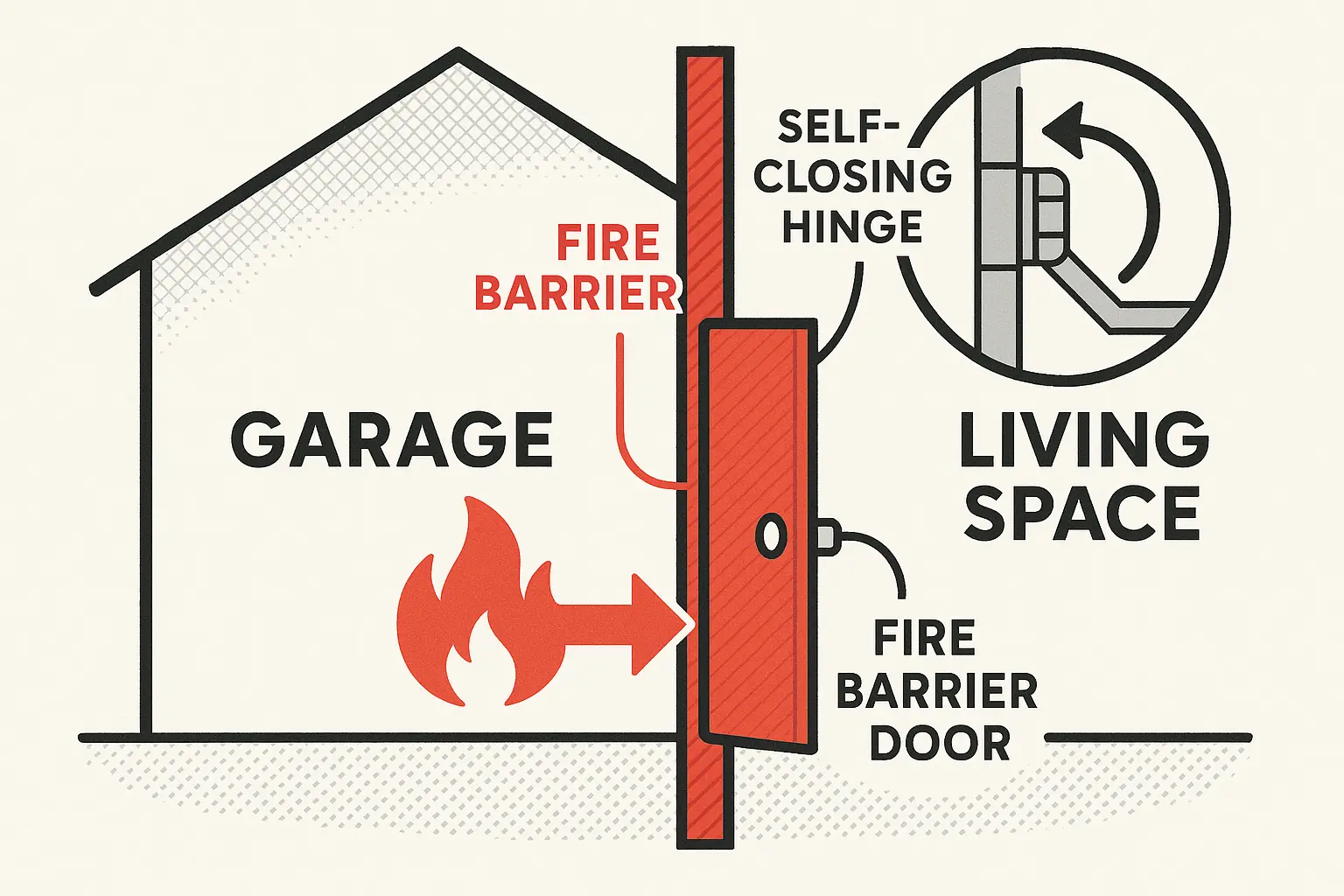
The wall separating your attached garage from your main living area is your home’s primary defense against smoke and fire. Under International Residential Code (IRC) Section R302.5.1, this fire separation barrier must meet strict structural standards. Any opening between an attached garage and a residence must be equipped with a solid wood door at least 1-3/8 inches thick, a solid or honeycomb-core steel door not less than 1-3/8 inches thick, or a 20-minute fire-rated door.

The most common citation inspectors flag is the absence of a self-closing and self-latching hinge system. If the door cannot swing closed and latch on its own, it violates fire-safety protocols. Fortunately, you can easily bypass this citation by installing a self-closing spring hinge for under $20.

Additionally, inspectors will search for compromises in the firewall itself. Unsealed drywall seams, missing nail holes, or an unrated attic access panel (like standard pegboard or thin plywood) will instantly be marked as a hazard.

This diagram clarifies the critical fire separation barrier requirements between your garage and home living space, emphasizing the importance of self-closing, self-latching doors per IRC R302.5.1 to prevent fire spread.

UL 325 Mechanical Safety & The Auto-Reverse Diagnostic


Federal law under the UL 325 standard mandates that all residential garage door openers manufactured after January 1, 1993, must include an automatic safety reversal system. If your opener pre-dates 1993, it is an automatic inspection failure.

Inspectors utilize two primary tests to verify ul 325 compliance:

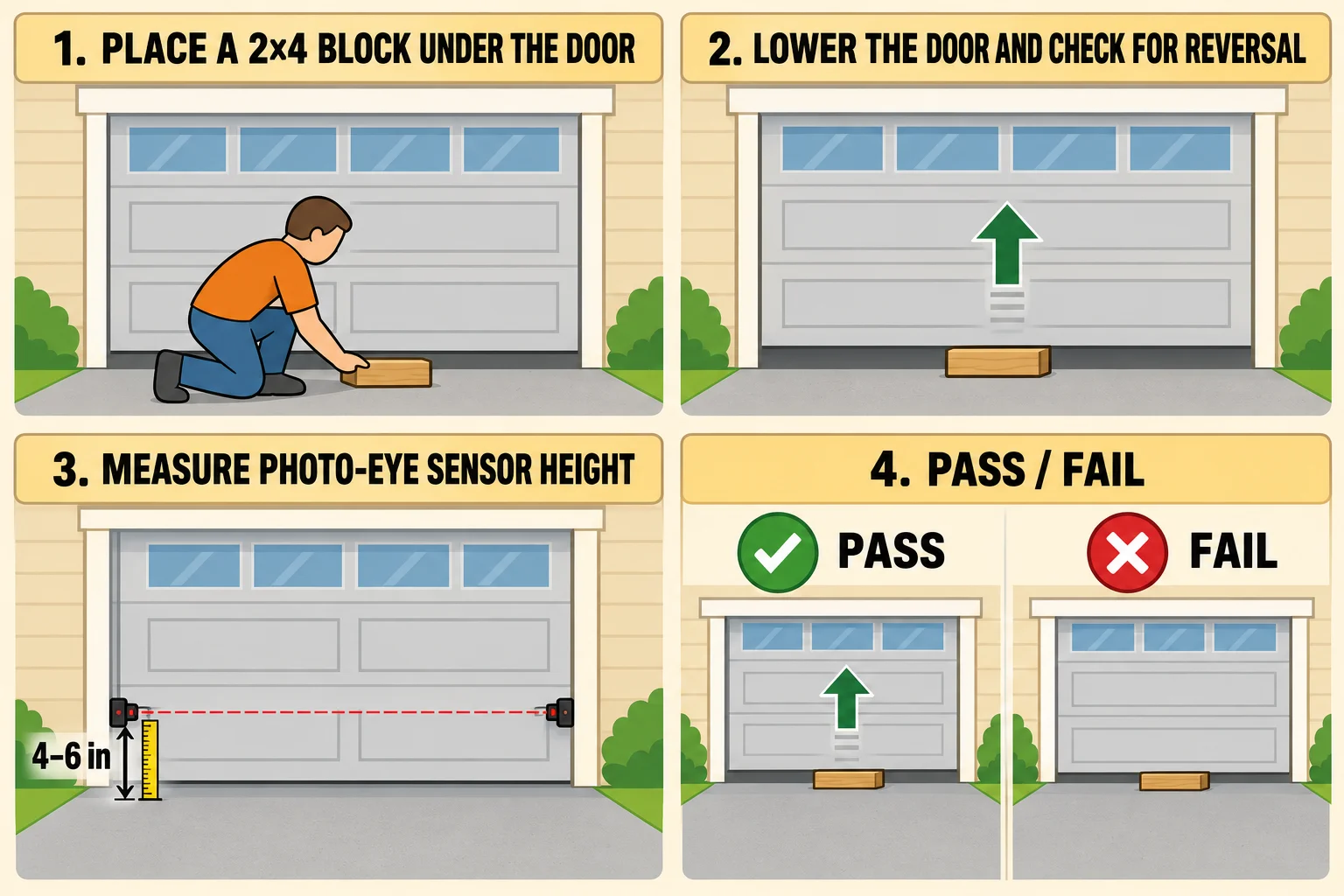
  • The Contact Reversal Test: Place a flat 2×4 wood block on the floor directly under the path of the door. When the door closes and strikes the wood, it must reverse direction within two seconds. If the door stalls, pushes through, or if the garage door wont close safely, it will be flagged.
  • The Photo-Eye Sensor Test: Under DASMA Technical Data Sheet 382, your photoelectric safety sensors must be aligned parallel to the floor, with the top of the lens positioned between 4 to 6 inches above the ground. If they are mounted higher, they cannot detect small children, pets, or low-lying obstructions.

A misaligned or dirty sensor is a frequent culprit when a garage door safety sensor not working tag is issued by inspectors.

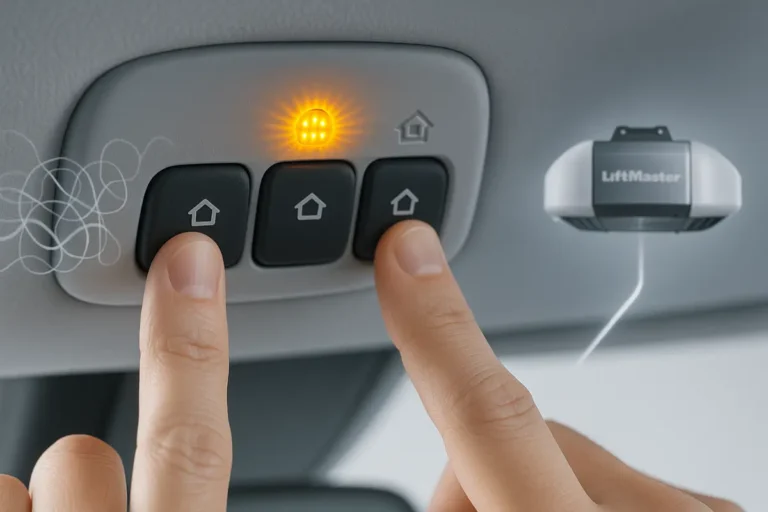
Follow these easy steps to test your garage door’s automatic safety reverse and ensure your photo-eye sensors meet the UL 325 height requirements, helping you pass home inspections safely.

Springs, Cables, and Electrical Violations


Because garage door hardware operates under extreme mechanical tension, inspectors examine these components for wear. You must know whether your door relies on extension springs or torsion springs. Extension springs stretch along the horizontal tracks and must feature an internal safety cable running through them. Without this safety cable, a snapping spring becomes a lethal projectile. Torsion springs, mounted above the door, are highly volatile; while you can perform a basic manual balance test by lifting the door halfway, you should never attempt a DIY adjustment because are garage door springs dangerous and can cause severe injury.

In addition, inspectors search for frayed lifting cables near the bottom bracket. If a garage door cable has too much slack or shows corrosion, it will be marked for immediate repair.

Electrical setups are also highly regulated. National Electrical Code (NEC) Section 210.8(A)(2) requires all receptacles in residential garages to be GFCI-protected. Running your ceiling opener through an extension cord rather than a dedicated outlet is a serious electrical violation. If you are preparing for an appraisal, completing a professional garage door opener repair or scheduling a noisy garage door repair will eliminate functional complaints. Be sure to use approved transmitter bulbs, as cheap LED bulbs can block receiver frequencies, mimicking a broken opener. If your system lost power recently, understand how to reset garage door opener after power outage cycles to prevent false diagnostic failures during the inspection.

Combustible Appliance Elevation


Under IRC Section G2408.2, any equipment containing an ignition source (such as a gas water heater or furnace) installed in a garage must be elevated so the pilot light or spark igniter is at least 18 inches above the floor. Heavy gasoline and chemical fumes naturally settle at ground level; raising these ignition sources prevents catastrophic vapor explosions.

The Ultimate Pre-Inspection Diagnostic Matrix


This strategic matrix helps you evaluate your garage systems, balance repair costs, and decide how to respond during buyer negotiations.

Defect Found Risk Level Average Fix Cost Best Response Strategy
No Self-Closing Fire Hinge Moderate $20 – $50 Install a spring hinge yourself before listing.
Photo-Eyes Too High (>6″) Critical $0 (DIY Adjust) Move bracket down to 4-6 inches above floor.
Non-Compliant Opener (Pre-1993) Critical $350 – $600 Replace it now or offer a buyers credit.
Frayed Lift Cables / Slacked High $150 – $250 Hire a pro immediately; do not attempt DIY.
Non-GFCI Garage Outlets Moderate $30 – $120 Have an electrician swap the receptacle.

Protecting your home’s equity during a sale requires taking control of the transaction before the buyer’s inspector ever steps foot on your property. Scheduling a preventive garage door maintenance visit ensures all mechanical, electrical, and structural components are certified and ready to pass.

Frequently Asked Questions


Do I have to replace my garage door opener if it was made before 1993?

Yes, if you want to pass a standard home inspection without objections. Federal UL 325 regulations mandate that any residential opener manufactured after January 1, 1993, must have an automatic sensor-reversal system. Pre-1993 openers lack modern safety reversals and are universally flagged as safety hazards by inspectors, often causing buyers to demand a complete replacement before closing.

Can I fix a flagged garage door spring myself?

No. Garage door springs operate under extreme mechanical tension and pose severe physical risks. Attempting a DIY adjustment or replacement of torsion springs can cause serious injury or death. If an inspector flags a rusty, unbalanced, or broken spring, you should always hire a certified technician to handle the repair safely and provide a receipt to satisfy the buyer’s contingency.

What is the 6-inch safety sensor rule?

According to DASMA guidelines and UL 325 standards, your garage door’s photo-eye sensors must be mounted no higher than 6 inches—and no lower than 4 inches—above the garage floor. This specific height is designed to detect children, pets, or low obstacles. Any sensors placed higher than 6 inches fail this standard and will be immediately flagged as a deficiency by a home inspector.

Contact / Request a Call