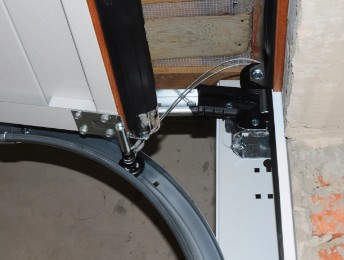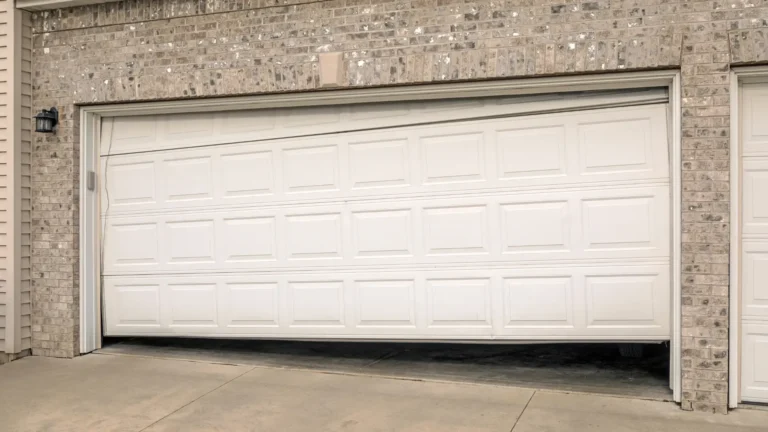
When winter temperatures plunge, a dripping wet garage door trim is rarely just a nuisance—it is often the signature of a hidden structural crisis. While many homeowners assume water pooling at the top of the opening is a simple gutter overflow, it is frequently the result of an active roof-level ice dam bypassing your home’s exterior drainage plane.
As a structural horizontal beam, your garage door header carries immense loads, spanning anywhere from 9 to 16 feet [1]. Left unchecked, water infiltrating this critical junction can lead to wood rot, sagging, and eventual failure under heavy snow loads [2]. Understanding how to triage this active leak, diagnose structural integrity, and apply permanent flashing fixes is essential to protecting your home.
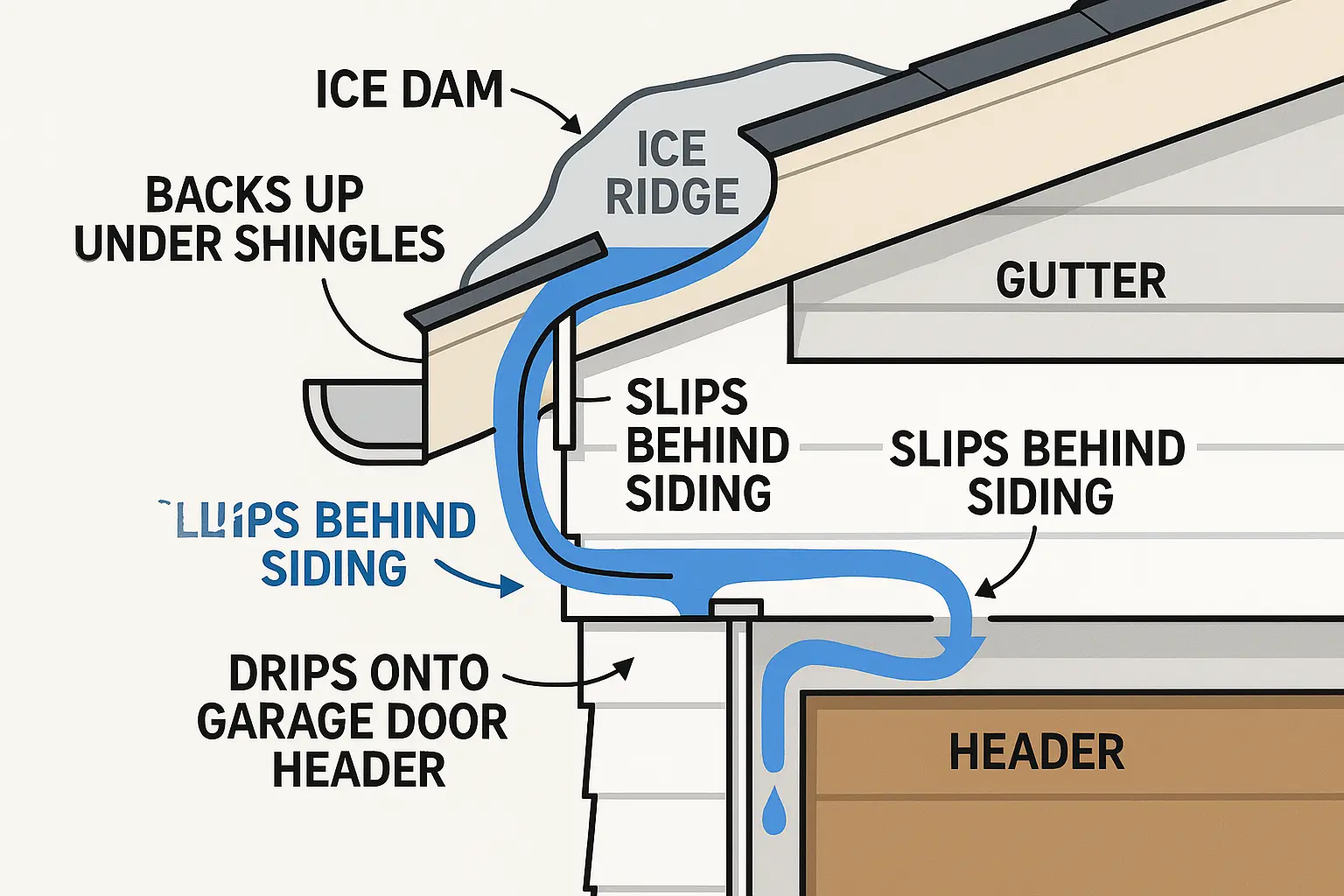 Illustrates how ice dam meltwater bypasses roof edge flashing and housewrap, leaking directly onto the garage door header to cause structural damage. Understanding this pathway is key to diagnosing and preventing frame rot.
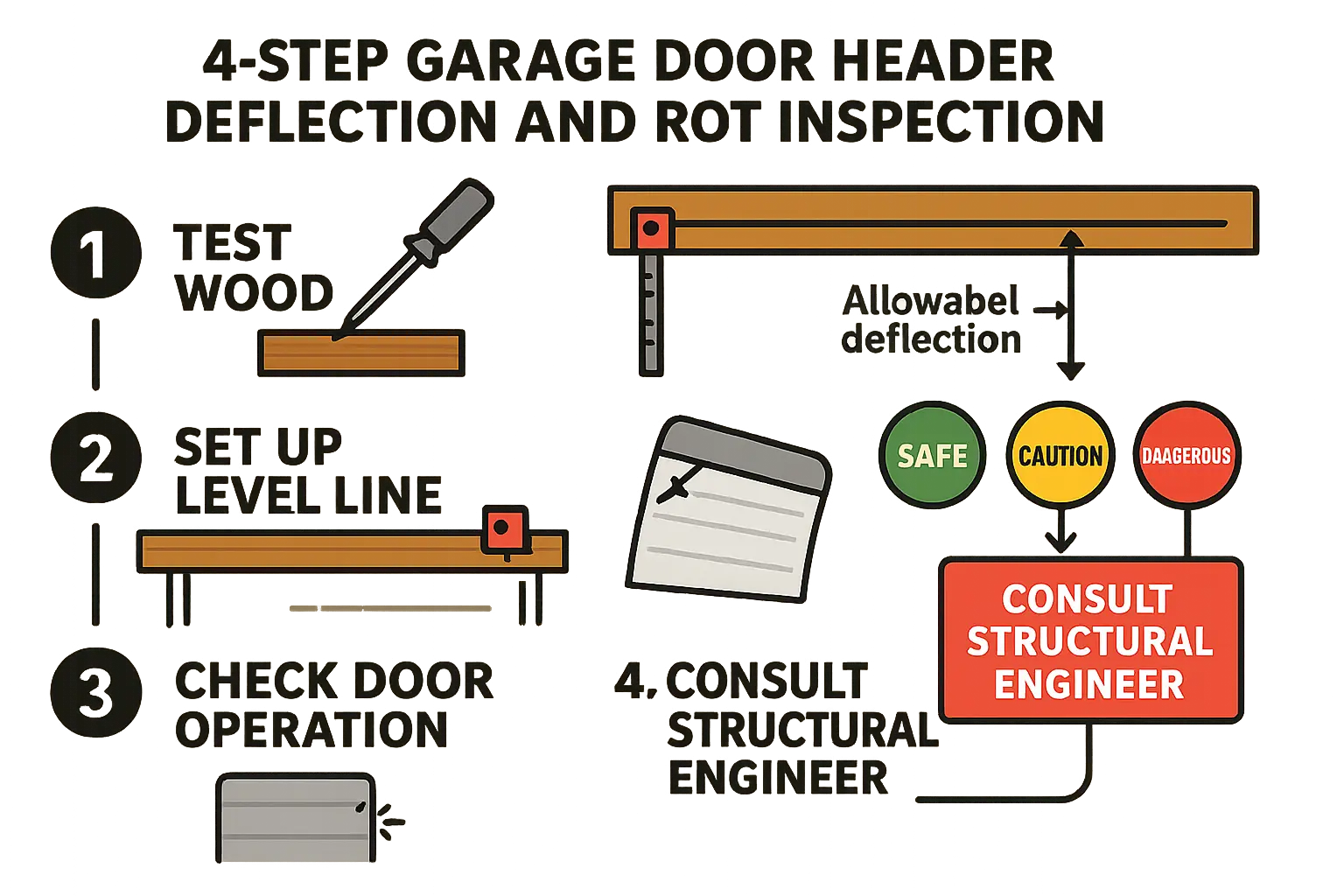 Step-by-step diagnostic guide empowers homeowners to assess if their garage door header is structurally compromised, helping reduce anxiety and prompt timely professional intervention.