Why Is There Frost on the Inside of My Garage Door? Causes, Risks, and Solutions


Published: Oct 2, 2026

Walk into your garage during a sub-zero cold snap, and you might find the interior of your garage door coated in a thick layer of white frost. When the sun hits the exterior panels, that frost melts, creating a destructive puddle that rots nearby drywall, rusts tools, and ruins floor finishes.

To resolve this issue permanently, you need an approach grounded in building science and thermodynamics—not generic sales pitches.

Emergency First Aid: How to Melt & Dry Frost Safely


If your door is currently covered in ice or thick frost, immediate damage control is essential.

  • Do: Use a wet/dry shop vac to clean up loose frost, or set up a low-heat, high-airflow floor fan to safely evaporate the moisture. Ensure the water is swept away from the threshold to keep it from refreezing.
  • Do Not: Never use metal ice scrapers, which scratch protective zinc coatings on steel panels and invite rust. Avoid pouring boiling water on seals—it will instantly refreeze, ruining the rubber.

To prevent immediate recurring drafts, check your seals. Understanding how to seal a garage door for winter is essential for keeping freezing air from mixing with indoor moisture.

Visual Diagnostic Guide: What Your Frost Pattern Is Telling You


To resolve the issue, you must diagnose where the thermal bridging and humidity are meeting.

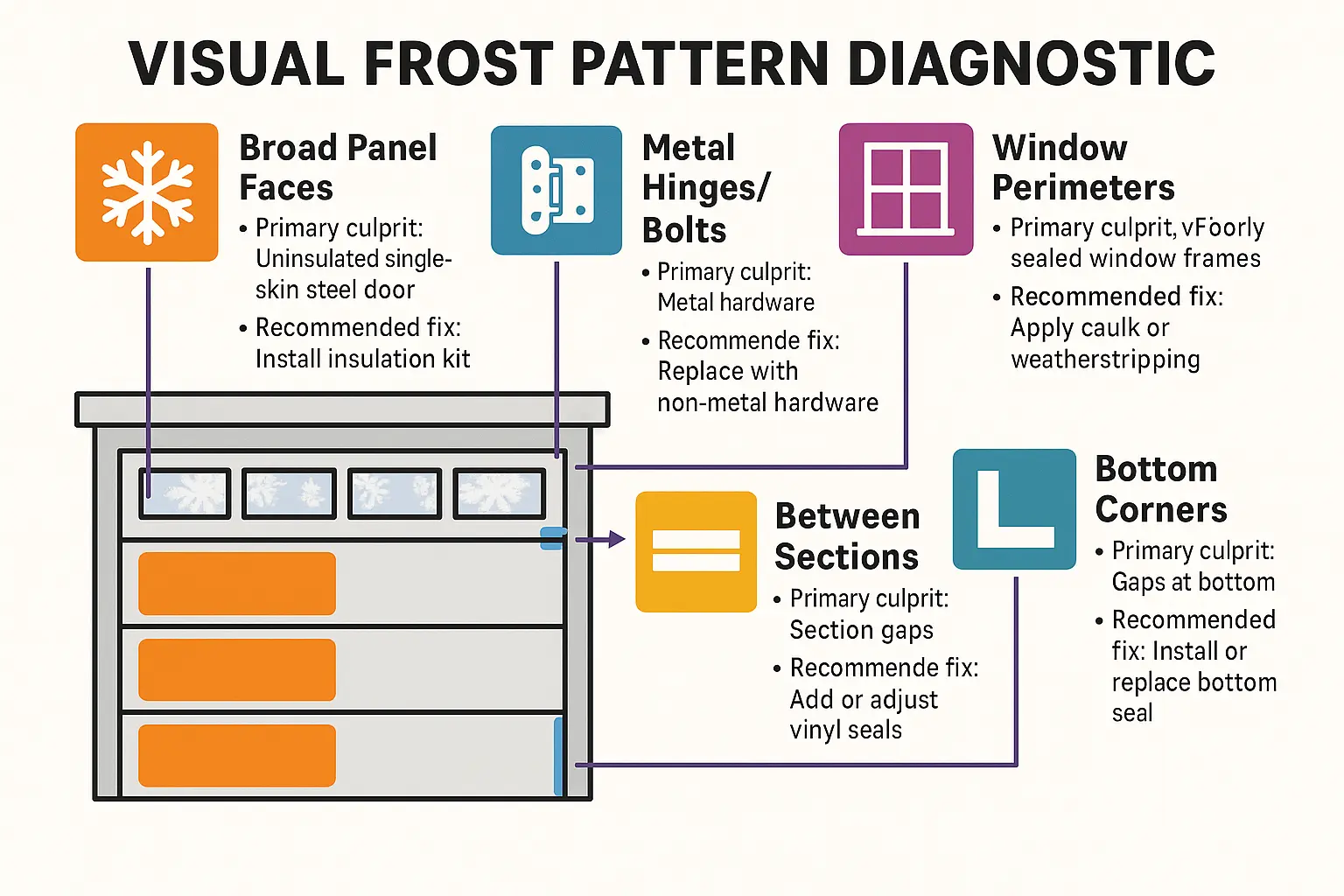
This visual guide helps you identify what different frost patterns on your garage door mean and the recommended fixes. Understanding these patterns simplifies troubleshooting and avoids unnecessary expense.

  • Broad Panel Frost: Indicates an uninsulated single-skin steel door acting as a giant thermal bridge.
  • Hinges & Bolts Frost: Shows localized thermal bridging, where metal hardware conducts cold directly from the outside through the door structure.
  • Frost in Panel Joints: Suggests worn section joints that leak air.
  • Ice at Bottom Corners: Points to a failing bottom seal or a gap at bottom of garage door caused by uneven concrete.

The Hidden Moisture Engines: Why Your Garage Is So Humid


Condensation requires two variables: a cold surface (the door) and airborne moisture. If your door is freezing, you have a major moisture engine at work inside.

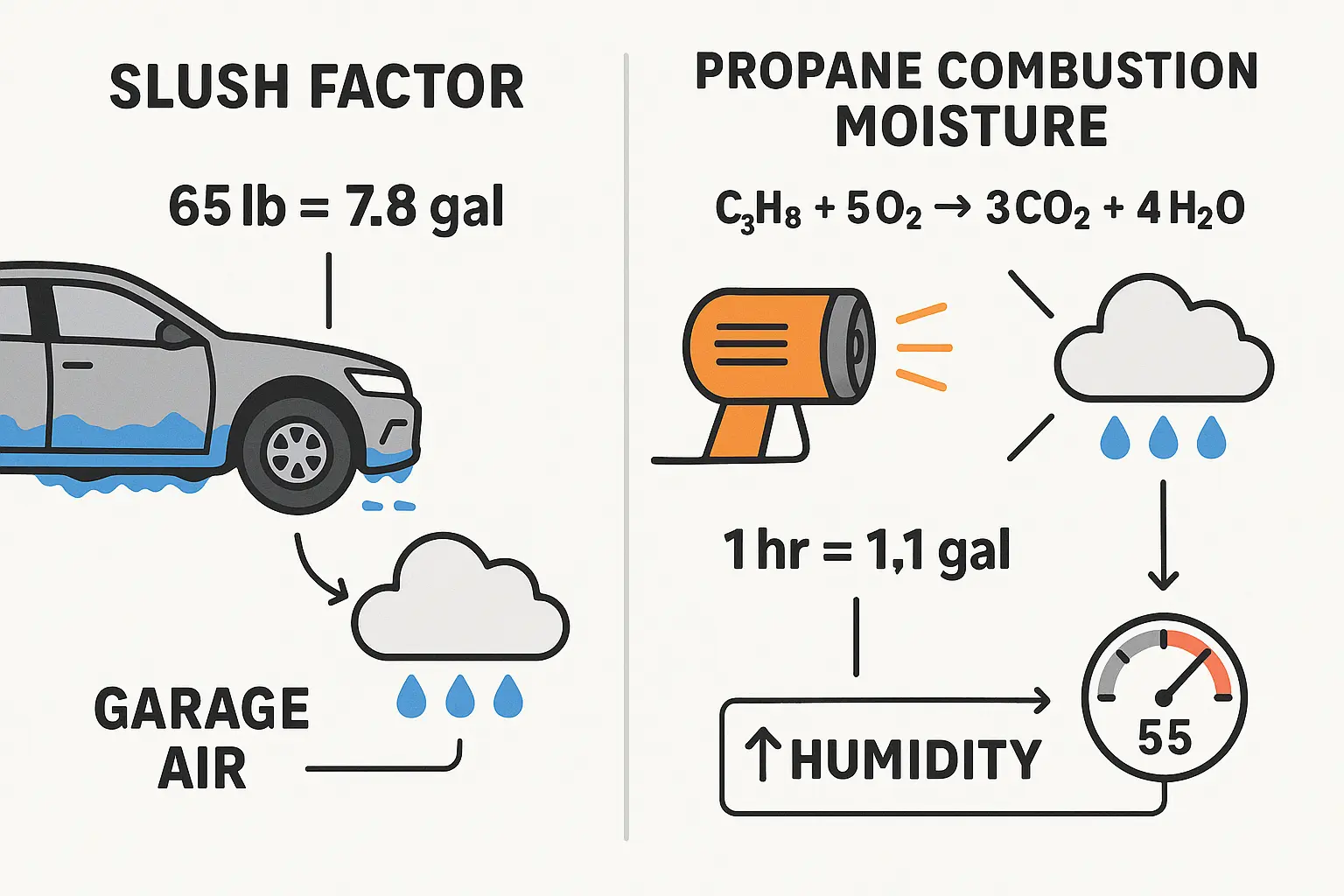
This infographic visualizes how melting winter slush from vehicles and unvented propane heaters add moisture inside your garage, increasing the risk of frost buildup on your garage door.

The Slush Factor

Parking a vehicle covered in winter slush brings an average of 15 to 30 pounds of packed snow into the garage. In a space warmed to just 40°F, this melts and produces 1.8 to 3.6 gallons of liquid water. Without proper ventilation, this evaporates rapidly, spiking relative humidity to 100%.

The Combustion Trap

Unvented propane space heaters are a primary culprit. The chemical combustion of propane ($C3H8 + 5O2 rightarrow 3CO2 + 4H_2O$) releases 6.8 pounds of water vapor (roughly 3.3 quarts of liquid) for every single gallon of fuel burned. This vapor instantly condenses and freezes on cold steel.

Solution Evaluation Matrix: DIY vs. Professional Upgrades


Addressing frost permanently requires balancing indoor relative humidity and minimizing thermal transfer.

Humidity Control

Standard compressor-based dehumidifiers fail and freeze up below 41°F. If your garage is unheated, you must use a desiccant (zeolite) dehumidifier to successfully extract water vapor in cold temperatures.

DIY Insulation vs. Professional Doors

Many homeowners consider aftermarket DIY kits. However, you must carefully evaluate different garage door insulation types before buying. Standard DIY foam kits add 10 to 25 pounds of dead weight to your door structure.
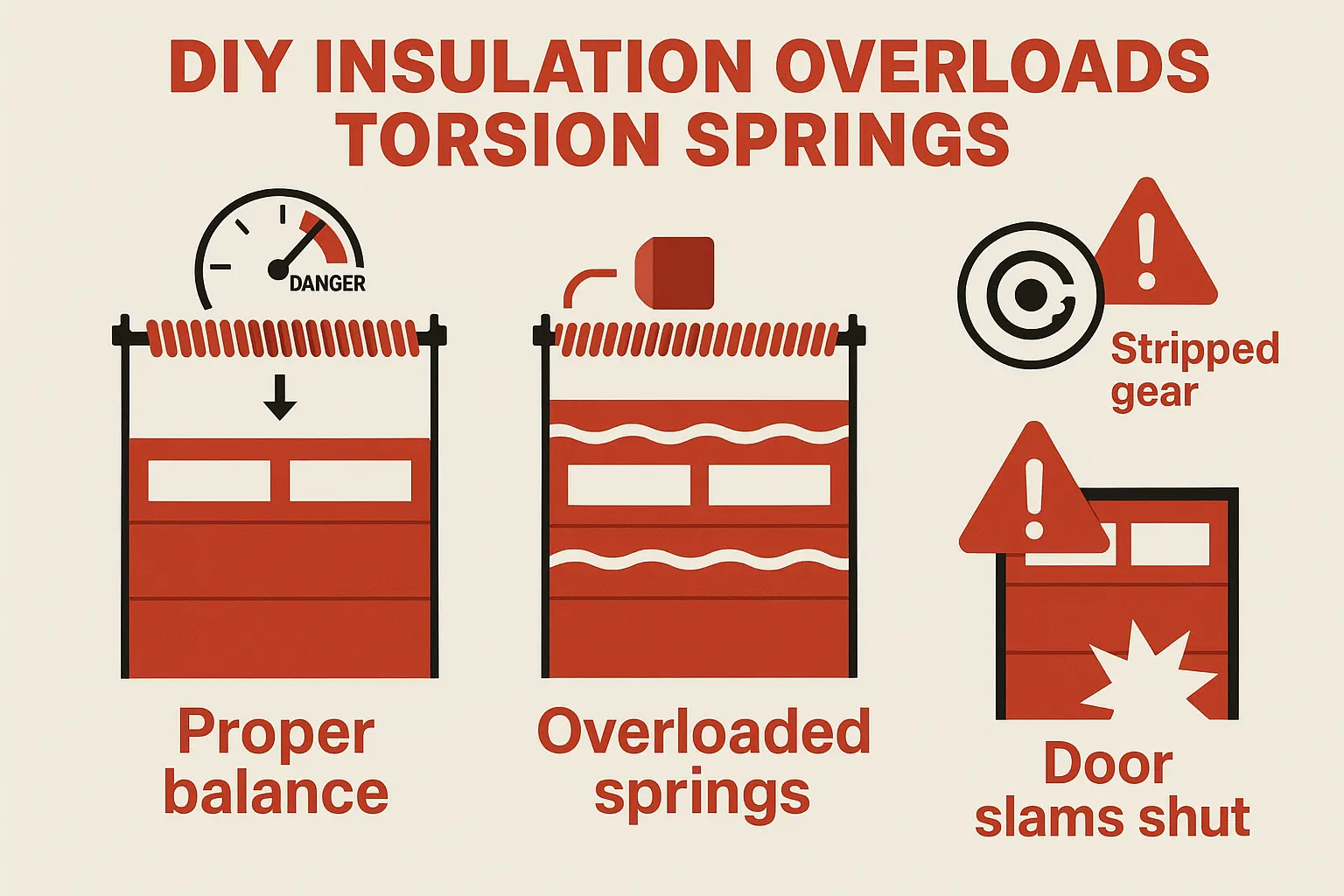
Adding DIY insulation to your garage door without professional spring adjustment increases door weight, risking spring failure, motor damage, and dangerous door slamming. Always consult a pro to rebalance springs.

Adding weight without recalibrating your torsion system introduces severe garage door spring danger. Standard openers are calibrated to lift a perfectly balanced door; adding even 10 pounds of DIY insulation can increase the effective floor-level weight by 30 to 40 pounds, stripping your opener’s internal gears within seasons.

The ultimate, permanent fix is transitioning to a professional, thermally broken polyurethane door. Investing in premium insulated garage doors featuring a high garage door r value ensures a physical break between the interior and exterior steel skins, preventing cold from migrating inside.

Taking Action Before the Next Freeze


Eliminating garage frost is a matter of physics and regular mechanical upkeep. Keeping moisture low, ensuring tight perimeter seals, and installing high-performance insulated systems protect your home from winter water damage. If you need a comprehensive assessment of your door’s balance, insulation, or spring health, consult with local professionals to keep your garage safe, warm, and dry all season long.

Frequently Asked Questions


Why is ice forming on my garage door bottom seal?

If there is a gap or uneven wear on your bottom rubber seal, cold air leaks in and meets ambient indoor moisture, freezing it directly onto the concrete. Adjusting your bottom seal or finding the best garage door seal for uneven floor issues is key to stopping ice bonding at the base.

Will a heater stop my garage door from frosting?

Only if it is a vented heating system. Unvented propane or kerosene space heaters release significant amounts of water vapor as a byproduct of combustion, which actually accelerates and worsens frost formation on cold metal panels.

Can adding DIY insulation ruin my garage door opener?

Yes. Adding insulation panels increases the physical weight of the door. If your torsion springs are not professionally adjusted to balance the new weight, the extra load will strain the opener, strip the drive gears, and create a hazardous situation if a spring snaps.

Contact / Request a Call