Converting a One-Piece Tilt-Up Garage Door to Sectional: Retrofit Guide


Published: Sep 30, 2026

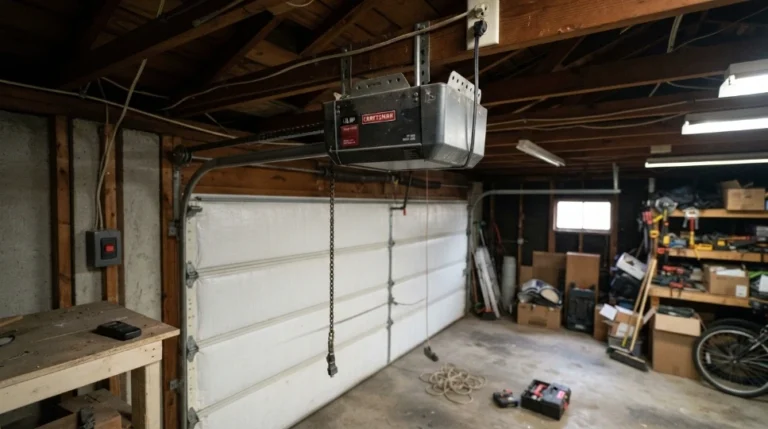
For owners of older homes, the heavy, single-panel tilt-up garage door is a familiar frustration. It creaks, catches the wind like a sail, and demands several feet of empty driveway space just to clear its sweeping arc. If you are evaluating whether to replace this obsolete system with a modern, vertical-opening sectional door, you are facing a critical technical transition.

Upgrading is highly practical: according to the Remodeling Magazine Cost vs. Value Report, a garage door replacement ranks as a premier home improvement project, yielding a consistent 94% to 102% ROI at home resale. However, executing this conversion successfully requires understanding the mechanics of headroom clearance, safety risks, and structural framing.
The Real Cost of Keeping Your One-Piece Tilt-Up Door


Beyond poor curb appeal, old tilt-up doors pose severe safety and environmental liabilities. Because they rely on uncontained, high-tension side-mount extension springs, any mechanical failure can be catastrophic. The U.S. Consumer Product Safety Commission (CPSC) associates garage doors with roughly 20,000 emergency room injuries annually, with older tilt-up spring snaps and sudden panel drops representing a substantial percentage of severe incidents.

Furthermore, tilt-up doors cannot be hermetically sealed due to their pivoting travel path. This structural design leaves large gaps along the jambs and floor, resulting in significant energy loss due to poor door seals. Upgrading to modern insulated garage doors completely seals your garage envelope, blocking drafts, pests, and moisture.


The Conversion Physics: How Sectional Doors Solve the "Swing-Out" Nightmare


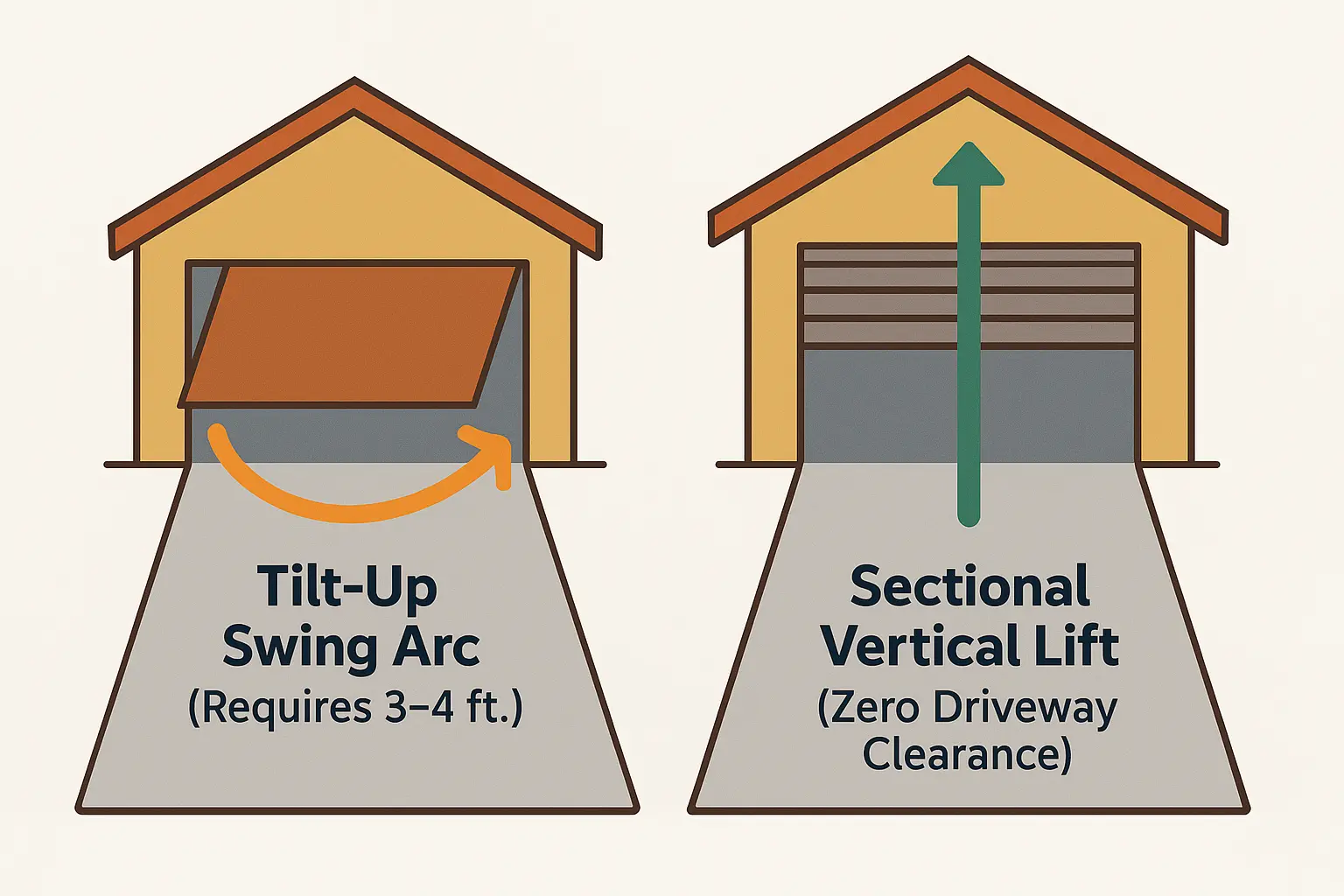
Unlike a tilt-up door that requires 3 to 4 feet of outward driveway clearance to open, a sectional door lifts straight up. This vertical-rise design allows you to park vehicles inches from the garage door without blocking its operation—a massive advantage for short driveways or tight properties.

This image visualizes how sectional garage doors operate with a vertical lifting motion, solving the space-consuming swing-out arc of one-piece tilt-up doors. It highlights the driveway clearance benefits sectional doors provide, especially in tight spaces.

When exploring different garage door types, the sectional door stands out because its multi-paneled construction distributes weight across heavy-duty steel tracks, utilizing a counterbalanced torsion or extension spring system to make manual or automated lifting effortless.


The Headroom Cheat Sheet (The Make-or-Break Step)


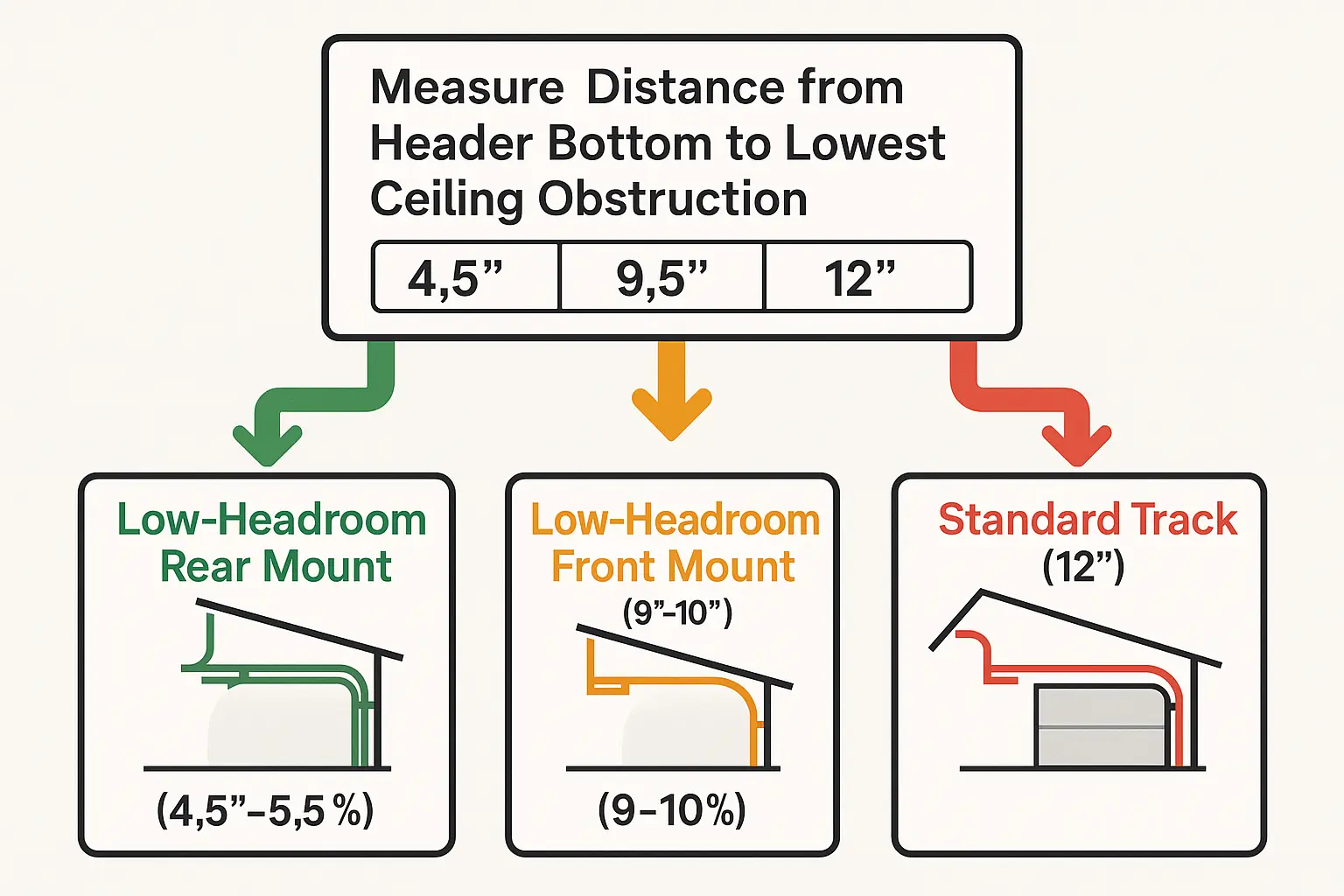
Before ordering a sectional door, you must measure your garage’s headroom. This is the vertical distance between the bottom of the structural header and the lowest ceiling obstruction (such as joists, pipes, or light fixtures).

Step-by-step guide to measuring headroom and selecting the appropriate sectional door track system based on ceiling clearance. This visual helps demystify the critical measurement needed to ensure a proper fit.

Use this architectural hierarchy to match your space to the correct track configuration:

  • Standard Sectional Track: Requires 12 inches of headroom above the header.
  • Low-Headroom Front Mount: Reduces the clearance requirement to 9 to 10 inches.
  • Low-Headroom Rear Mount: Can operate in as little as 4.5 to 5.5 inches of headroom by placing the torsion shaft at the back of the horizontal tracks.

To ensure proper clearance, remember that installing an automatic trolley opener requires an additional 2 inches of vertical space directly above the highest point of the door’s travel arc. If your clearance is exceptionally tight, finding the right low headroom garage door track is a necessity to avoid ceiling collisions.


Structural Framing Requirements: Preparing Your Garage for a Sectional


You cannot simply hang a sectional door where a tilt-up once lived; the rough opening must be retrofitted to handle different load distribution points:

  1. Add Vertical Wood Jambs: Mount $2times6$ framing lumber to the interior sides of the opening. This provides a flush, secure mounting surface for the vertical track brackets.
  2. Install a Center Anchor Pad: Mount a solid $2times6$ wood block directly above the header’s center, anchored firmly into structural studs. This pad must support the massive torque of the new torsion spring system.
  3. Confirm Alignment: Ensure the jambs are perfectly plumb and the header is level. Even slight deviations will cause binding and uneven wear, so precise garage door track alignment is critical during the initial framing phase.

Safety First: The "Widowmaker" Spring Decommissioning Protocol


Before installing your new door, you must safely decommission the old tilt-up mechanism. The massive side-mount springs on old doors are under immense tension and can cause severe injury if they snap during removal.

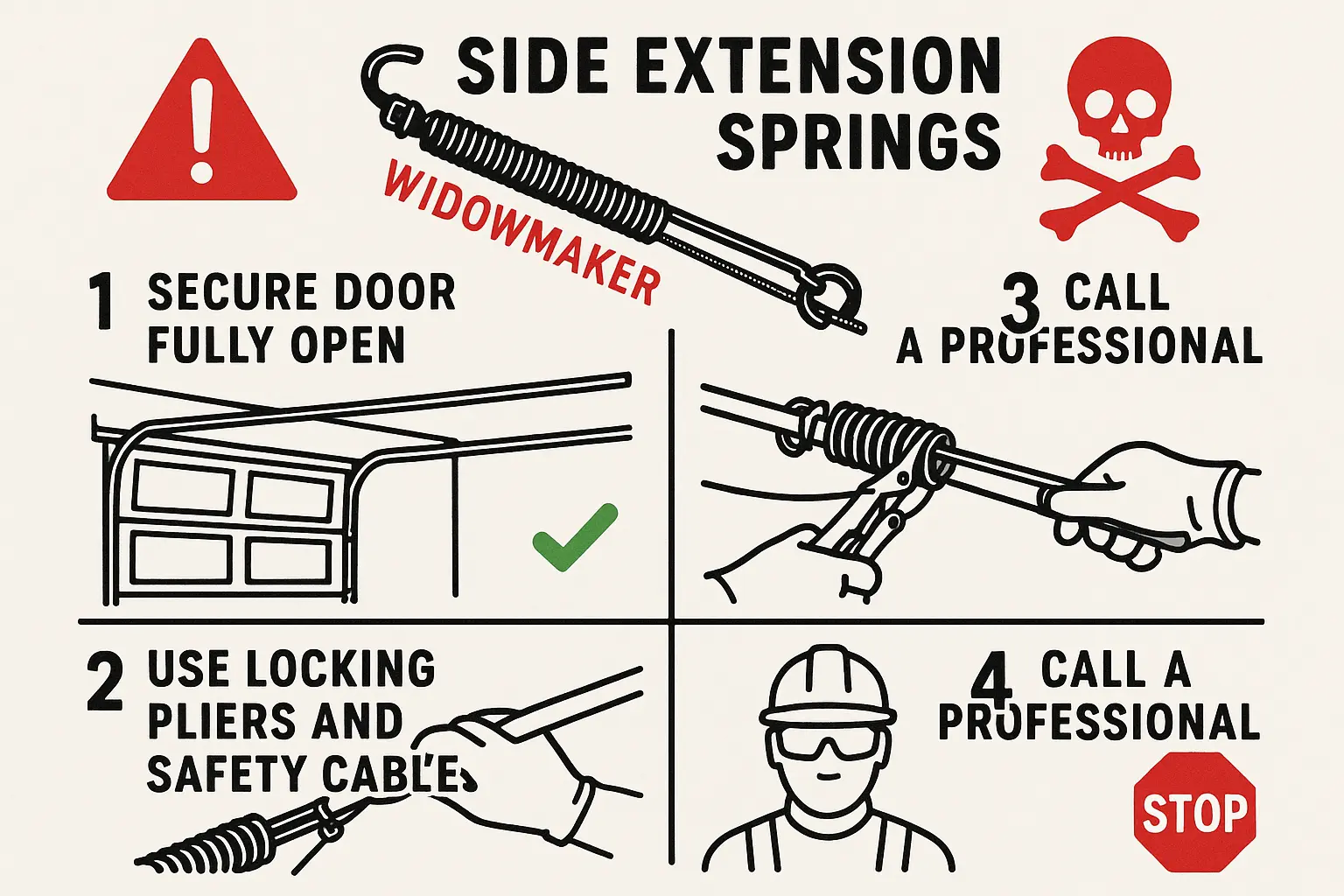
A critical safety guide illustrating the correct procedure to safely release tension on hazardous side extension springs, highlighting when professional assistance is mandatory to prevent injury.

If you plan to execute a how to remove garage door spring procedure yourself, you must follow strict safety protocols:

  • Fully open the door to stretch the springs to their point of minimum tension.
  • Secure the door in the open position using heavy-duty locking pliers clamped to the tracks.
  • Secure the spring with a safety cable to prevent flying debris if it releases unexpectedly.
  • Carefully disconnect the tension adjustments. If the springs are heavily rusted or frozen, stop immediately and call a professional.

Frequently Asked Questions


Can I keep my old automatic opener when converting to a sectional door?

Usually, no. Old tilt-up openers use a sweeping “hockey-stick” arm assembly designed to push a single-panel door outward. Sectional doors require a modern trolley system or a wall-mounted jackshaft opener that pulls the panels vertically along horizontal tracks.

What is the absolute minimum headroom required for a sectional door?

With a specialized rear-mount low-headroom double-track system, you can install a sectional door in as little as 4.5 inches of headroom clearance. If you plan to add an automatic opener, you will need a minimum of 6.5 inches.

Is it safe to remove the old tilt-up side springs myself?

Removing old side-mount extension springs carries significant risk of injury due to potential spring fatigue and sudden tension release. If the hardware is severely rusted, or if you lack experience handling high-tension mechanical systems, hiring an expert is highly recommended to ensure safety.

Contact / Request a Call