What Happens During an Emergency Garage Door Call, Step by Step
Published: Sep 25, 2026
The Anatomy of a Garage Door Emergency
When a heavy garage door malfunctions unexpectedly, it turns an ordinary day into a high-stress hazard. Whether your vehicle is trapped inside before a critical flight, or the door is hanging at a crooked 45-degree angle, the situation demands immediate resolution. In these moments, homeowners need rapid, professional emergency garage door service that prioritizes physical safety over quick profits. According to the Consumer Product Safety Commission (CPSC), failing systems are responsible for thousands of crush injuries and severe lacerations annually due to high-tension components. Understanding the dispatch and repair process helps you regain control and evaluate your options with confidence.
The Chronological Steps of an Emergency Service Call
A professional emergency response operates on a precise timeline, removing the mystery of who will arrive at your home and how they will handle the repair.
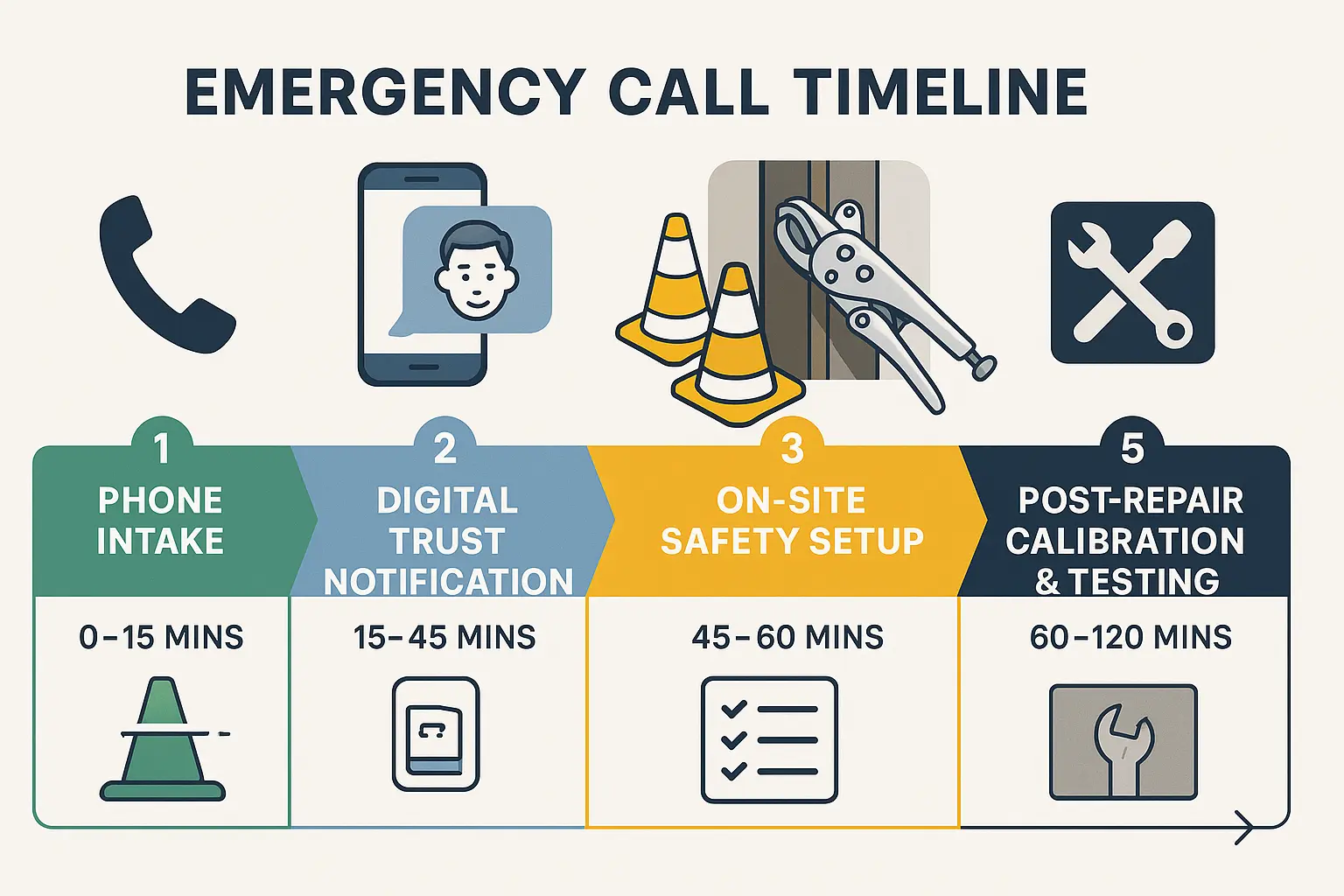
1. The Interactive Phone Intake (Minutes 0–15)
When you call, a trained dispatcher triages your situation. They will ask if your car is trapped, if you heard a loud snap indicating a broken garage door spring, or if the door is visibly off its tracks. An ethical provider outlines diagnostic fees upfront before sending a truck.
2. The Digital Trust Notification (Minutes 15–45)
Once dispatched, you receive a digital SMS containing your technician’s name, professional headshot, and a real-time GPS tracking link. This ensures you know exactly who is arriving at your property.
3. On-Site Safety Setup (Minutes 45–60)
Upon arrival within our target 45-to-90 minute window, the technician secures the work zone. They position safety cones and apply physical locking clamps to prevent the door from falling while they work.
4. The 25-Point Diagnostic Audit
The technician performs a thorough physical inspection of the door’s structural integrity. This audit evaluates spring cycle fatigue, track alignment, drum metallurgy, and cable tension. If a garage door off track situation is found, they assess whether the structural tracks require replacement or simple realignment.
5. Transparent Estimating
Before touching a tool, the technician provides a clear, written digital estimate. It contrasts immediate stabilization repairs from long-term component upgrades.
6. Repair vs. The “Make-Safe” Protocol
While 90% of emergency calls are resolved on the spot, rare parts or custom setups can occasionally cause delays. If a specialty component is broken at 2:00 AM, the technician executes a “Make-Safe” protocol: manually lowering and locking the door physically to secure your home’s perimeter, scheduling a return visit for first thing in the morning.
7. Calibration and UL 325 Testing
Once fixed, the system is calibrated. Under DASMA guidelines, a balanced door should hover halfway when manually lifted with minimal force. The technician then runs required UL 325 safety tests on the garage door opener repair and photo-eye sensors.
The Homeowner’s "Red Line" Safety Checklist
When a door fails, immediate action can prevent secondary damage.
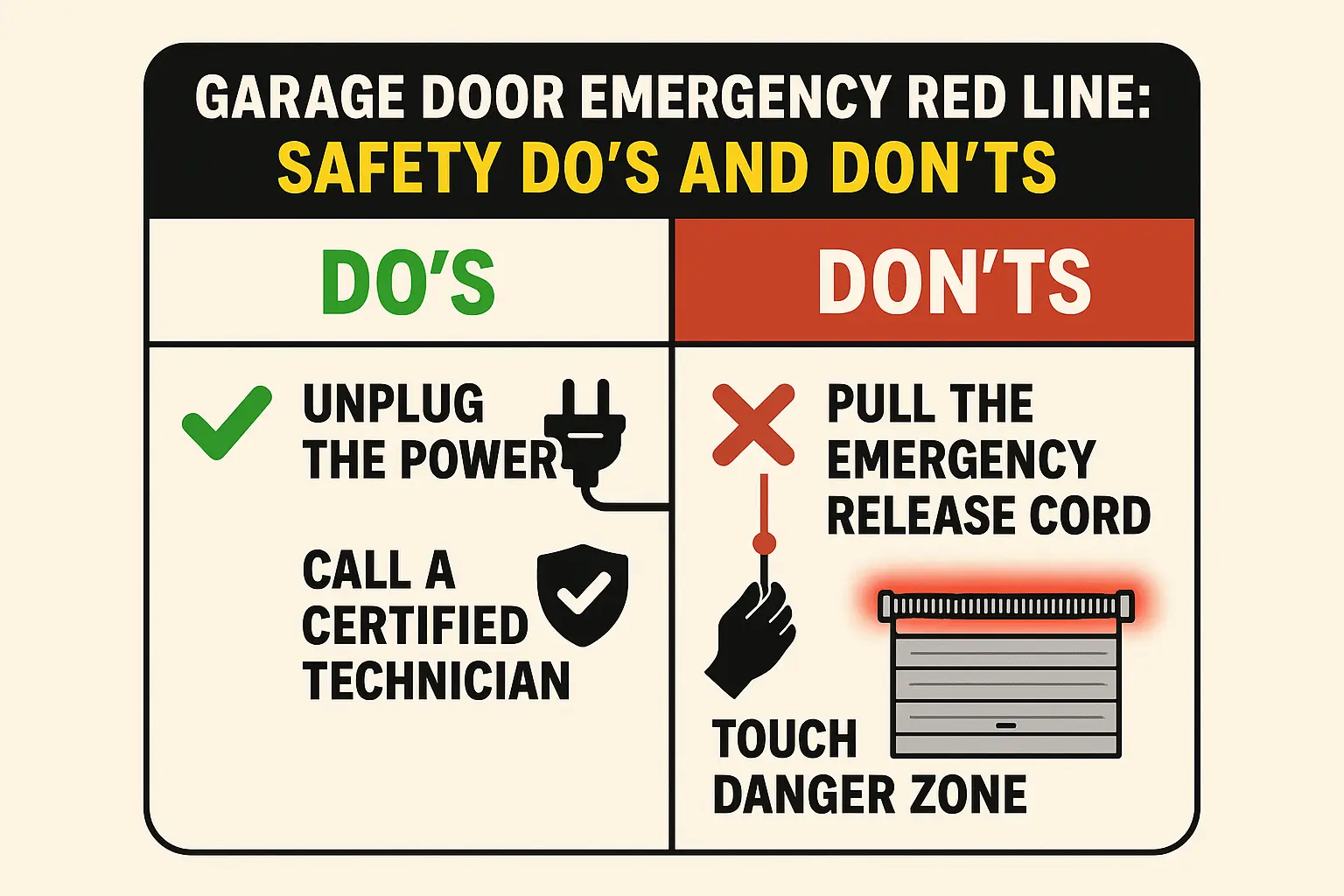
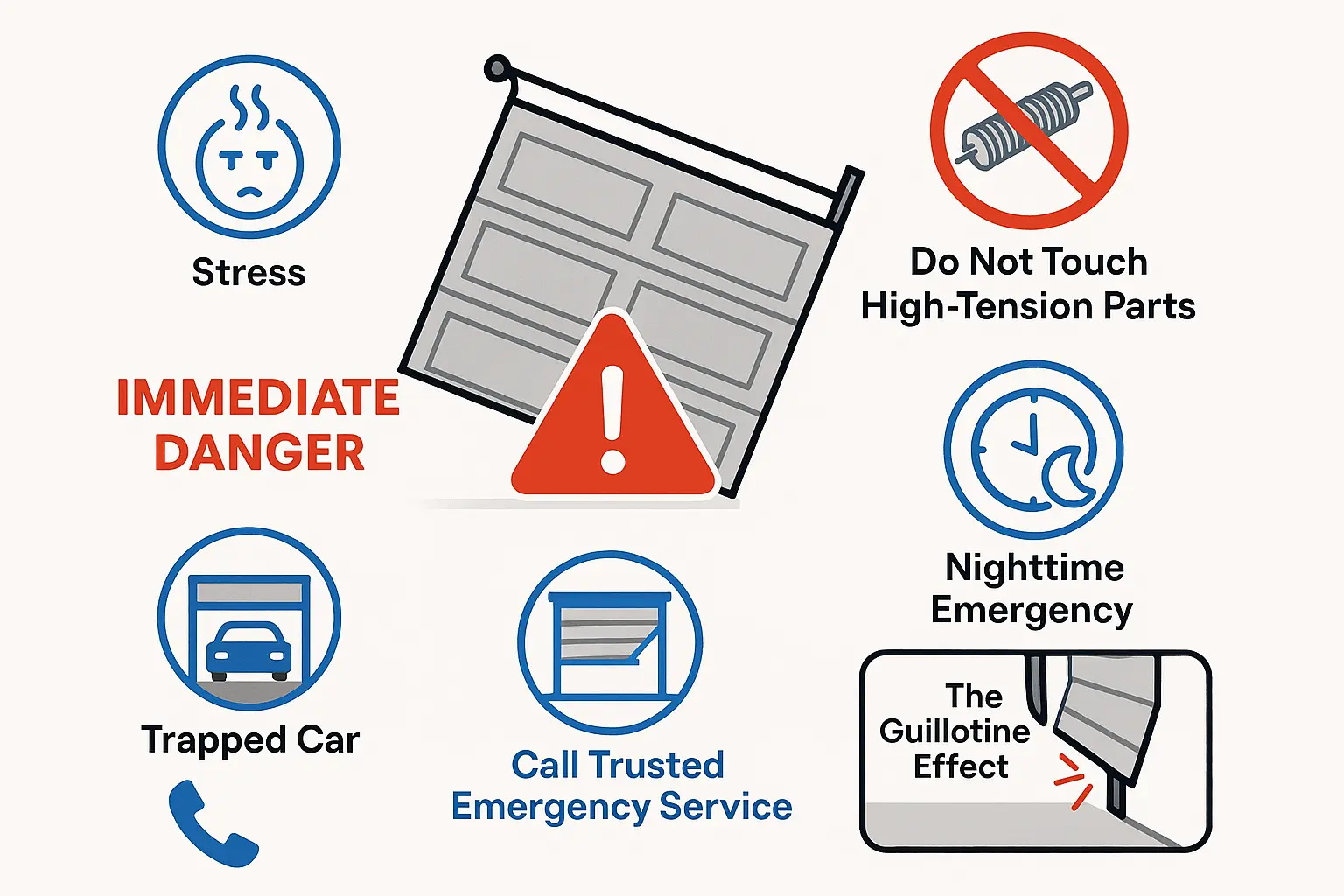
- Do Not pull the red manual release cord if the door is crooked. If you do, you risk dropping a multi-hundred-pound hazard instantly.
- Do unplug the electric opener. This prevents anyone from accidentally activating it via a smartphone or remote.
- Do Not attempt to adjust high-tension springs or cables yourself; they hold enough kinetic energy to cause catastrophic injuries.
If your garage door won’t close at night, secure the immediate area and wait for professional assistance.
How to Spot a "Phantom Dispatch" Scam
When urgency is high, predatory contractors may take advantage of panicked homeowners. Watch out for these crucial red flags during an emergency garage door repair:
- Unbranded vehicles: Technicians arriving in unmarked personal vans with zero company identification.
- The “$29 Dispatch Fee” Bait: Promising incredibly low diagnostic fees on the phone, only to demand thousands of dollars for simple hardware adjustments once on-site.
- Refusal to provide written estimates: Demanding verbal authorization before starting work.
At 24H Garage Doors, operating under Y & A Garage Doors LLC since 2016, we lean on transparency. Our commitment to upfront, structured pricing ensures that you remain in control of your budget and safety.
Frequently Asked Questions
Do all garage doors have an emergency release?
Yes, residential garage doors are equipped with a red manual release cord. However, you should only pull this cord when the door is fully closed and stable. Pulling it while the door is partially open or crooked can cause it to crash down violently. You can learn more about how to manage these mechanisms safely in our guide on do all garage doors have an emergency release?
What is the average response time for an emergency service call?
A reliable emergency service aims for an on-site arrival window of 45 to 90 minutes. This timeline ensures that critical safety hazards are stabilized quickly and that secure perimeter locks can be put in place if any immediate repairs are delayed by rare replacement parts.
Can I manually close my garage door if the spring is broken?
We strongly advise against trying to lift or close a door with a broken torsion or extension spring. The springs do the heavy lifting of the door’s actual weight. Attempting to move it manually puts extreme physical strain on you and can lead to total cable failure, drop hazards, or personal injury.