Nice/Linear Garage Door Opener Backup Power: Compatibility & Preparedness


Published: Sep 10, 2026

Imagine a severe coastal storm sweeping through Connecticut, knocking out the local grid. Your cars are parked inside, and you need to evacuate or reach an urgent appointment. You pull the red manual release cord, but the heavy sectional garage door refuses to budge.

A standard residential steel garage door weighs between 125 and 150 pounds. When a system is neglected or out of balance, lifting it manually becomes incredibly difficult, presenting a physical hazard to elderly family members or anyone lacking the strength to hoist that dead weight. This vulnerability is why regulatory updates like California’s SB-969 mandate battery backups on all new residential openers—carrying a $1,000 civil penalty per non-compliant installation. Ensuring your home has a reliable power plan isn’t just about convenience; it is a critical emergency preparedness measure.
The Power Outage Survival Matrix: Generators vs. Battery Backups


When planning for unexpected blackouts, homeowners typically evaluate two main paths: dedicated internal battery backups or integrated home generators.

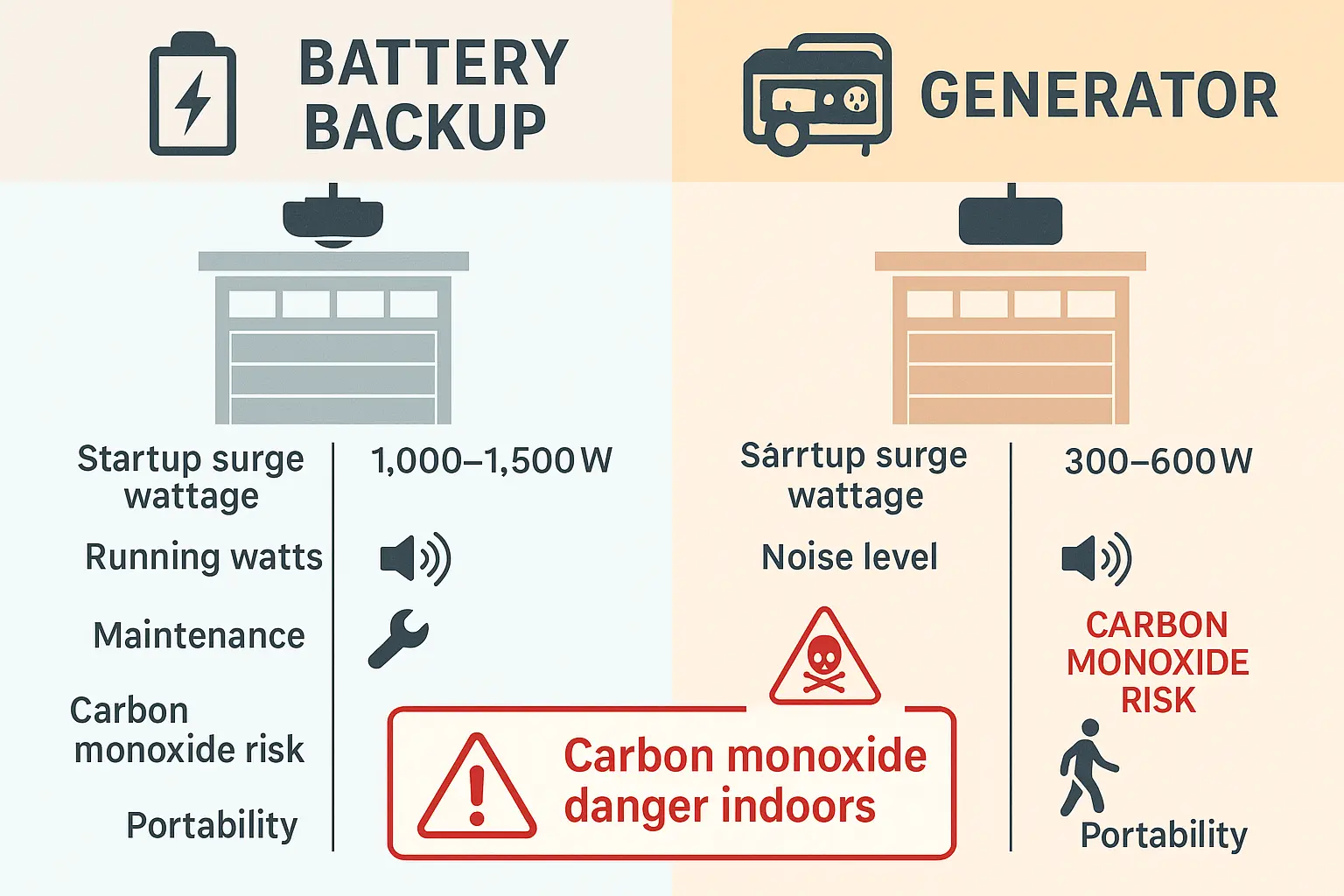
If you plan to run your opener off a home generator or a portable solar power station (like an EcoFlow or Jackery), you must account for the inductive load of the motor. While a typical residential garage door opener only consumes 300 to 600 running watts once in motion, the motor requires an initial startup surge of 1,000 to 1,500 watts to break the door’s inertia.

If your backup power system cannot handle this peak starting wattage, the system will fail to open. Furthermore, if you rely on a fuel-powered generator, safety is paramount: NEVER run a portable generator inside a garage or close to an open garage door. Carbon monoxide can build to lethal levels in minutes, long before you notice the symptoms of exposure.

This infographic clarifies the pros and cons of battery backups versus generators for powering garage door openers during outages, emphasizing safety and power requirements.


Can I Retrofit My Existing Garage Door Opener?


A common question we hear during a 24 hour garage door repair connecticut consultation is: “Can I add a battery backup to my current opener, or do I need to replace the entire system?”

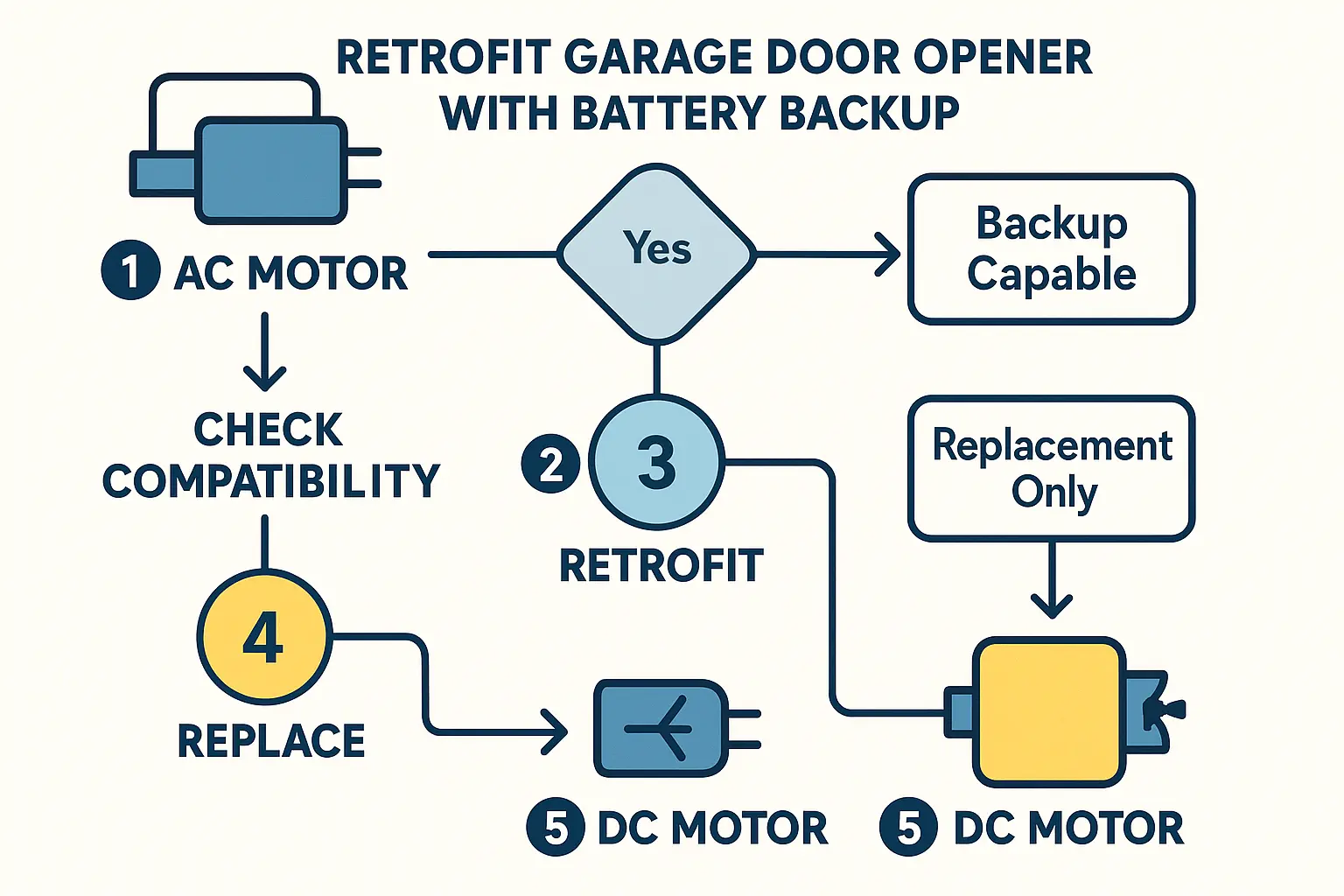
The answer depends entirely on the motor type inside your ceiling unit:

  • AC Motors (Alternating Current): Standard, older AC motors cannot easily accept an integrated battery backup. Because batteries store DC power, retrofitting an AC system requires complex, expensive external uninterruptible power supplies (UPS) that invert the power. In almost every case, replacing an old AC unit with a modern, energy-efficient DC motor is the more cost-effective decision.
  • DC Motors (Direct Current): Modern DC motors run natively on DC power. Most of these units are manufactured with dedicated expansion ports on their logic boards, making them prime candidates for plug-and-play battery backups.

This flowchart simplifies the complex decision-making process of retrofitting your garage door opener with a battery backup by clearly differentiating compatible motor types and retrofit possibilities.


Brand-Specific Compatibility & Replacement Manual


If your system supports a backup, matches must be precise. Below is the technical compatibility guide for leading models:

Linear Systems

Linear’s modern DC systems use brand-specific add-ons.

  • Linear BBU: Designed as a retrofitted add-on for legacy LDCO800 and LDCO801 models.
  • Linear BATT54 / BATT54BOX: Engineered for modern residential smart openers, including the LDCO841, LDCO850, LDCO852, and LDCO863B models. This provides compliant, reliable power to ensure seamless emergency operation.

Overhead Door Odyssey 1000

For those using the Odyssey 1000 (Model 7030), you cannot use a generic brand accessory. You will need the specific GBB-BX battery backup unit (Part #37228R). This unit mounts externally and connects directly to the motor head to provide up to 50 cycles of operation during an outage.

Chamberlain & LiftMaster

These systems rely heavily on the 485LM (12V 5Ah SLA) replacement battery. This sealed lead-acid battery sits inside the motor casing on compatible models, offering easy slide-in installation.


Diagnostic Deep-Dive: Why is My Garage Opener Beeping?


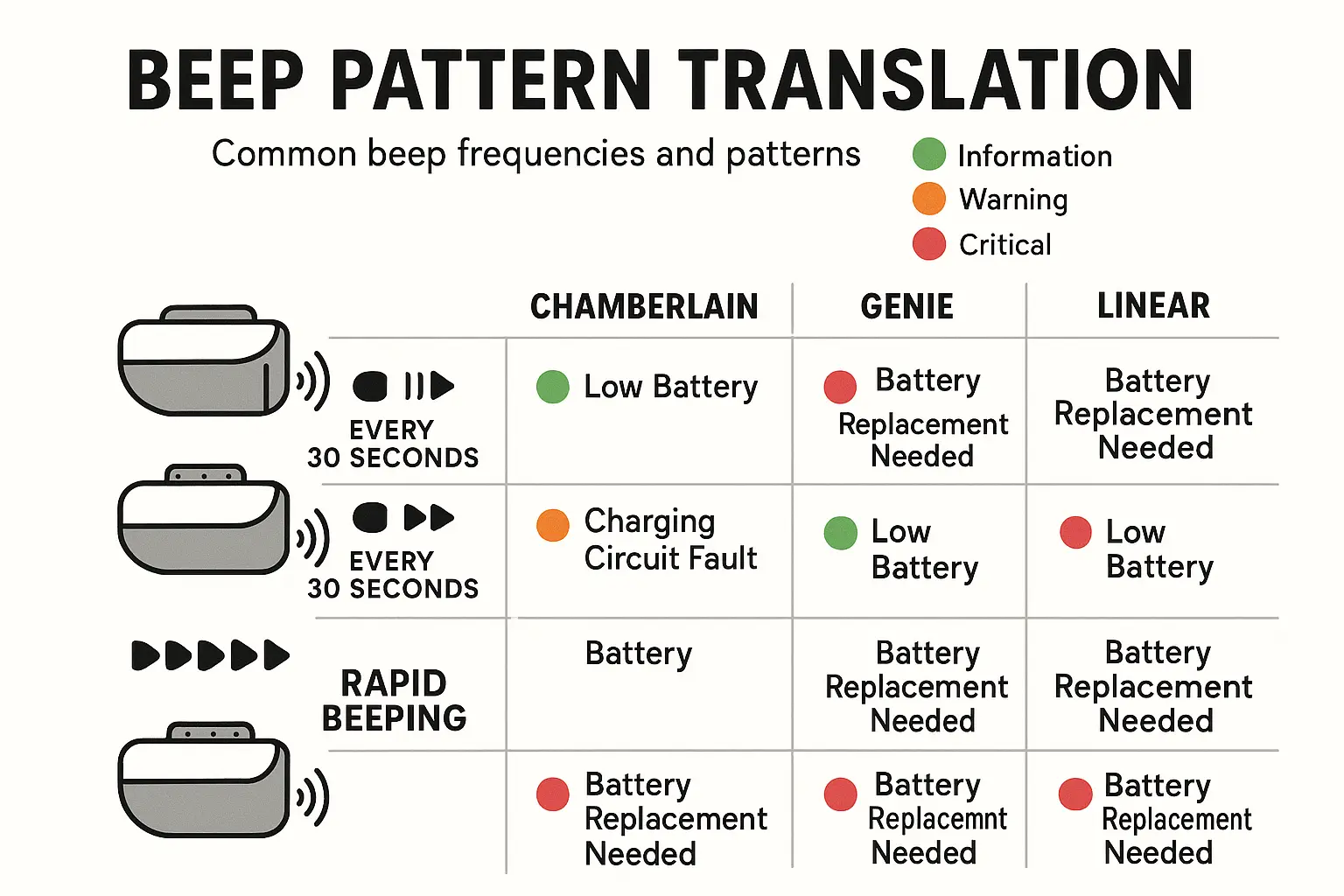
If your ceiling unit starts emitting a persistent, annoying beep, it is likely trying to communicate a battery issue. Use this quick reference guide to diagnose the issue before calling for emergency garage door repair:

This chart serves as a quick diagnostic tool to identify the meaning behind different garage door opener beep patterns, reducing confusion and panic during power outages.


The HBW1573 and Remote Battery Myth


A frequent trap for homeowners occurs when they look at the back of their hand-held remote control, spot the FCC ID HBW1573, and attempt to purchase an “HBW1573 battery” to fix their dead ceiling unit.

In reality, HBW1573 is simply the FCC registration number for the Chamberlain/LiftMaster 3-button remote transmitter (such as the 373LM). If your hand-held remote is dead, it does not require an expensive 12V SLA backup battery; it simply needs a standard 3V CR2032 or CR2016 Lithium Coin Cell. To replace it, slide a flat screwdriver into the side seam of the remote, pry the casing open, swap the coin battery, and snap it back together.


DIY Maintenance: How to Maximize Battery Lifespan


Sealed Lead-Acid (SLA) backup batteries do not last forever, but their lifespan depends heavily on two critical environmental factors:

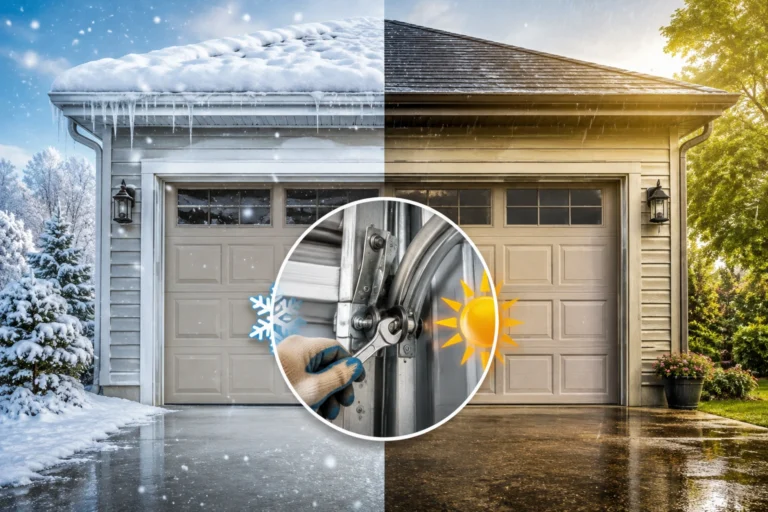
  1. Thermal Degradation: Standard SLA batteries operate optimally at 77°F (25°C). For every 15°F increase in ambient garage temperature—a common issue in poorly insulated Connecticut garages during summer—the chemical lifespan of the battery is cut in half. Keeping your garage insulated can prevent a 3-year battery from failing in under 18 months.
  2. Spring Balance and Door Tension: A balanced door should require less than 10 pounds of force to open manually. If your springs are out of adjustment, the motor must pull harder. This extra resistance draws excessive current, dropping a battery’s emergency capacity from 20 continuous cycles down to fewer than 5.

For homeowners requiring professional inspection, scheduling a routine checkup with a technician specializing in garage door repair new haven ensures your springs, motor, and backup systems are fully optimized.


Frequently Asked Questions


Does cold weather affect my garage door backup battery?

Yes. Extreme cold reduces the chemical activity inside sealed lead-acid batteries, temporarily lowering their overall capacity. If your garage is uninsulated during Connecticut winters, the battery may drain faster under load. Regularly checking the battery’s charge state before winter storms hit is highly recommended.

How often do I need to replace my opener's backup battery?

Under normal conditions, a standard 12V 5Ah SLA backup battery lasts between three and five years. However, high garage temperatures, frequent power outages, or operating an unbalanced door can accelerate wear, requiring replacement sooner.

Can I install a battery backup myself?

If your DC motor is pre-wired for a plug-and-play battery, you can often slide the battery into the integrated compartment and connect the wire harness yourself. However, if your system requires mounting external housing units or testing motor voltage, contacting a professional for garage door repair stamford ensures the work is completed safely and remains fully compliant with manufacturer warranties.

Contact / Request a Call