What High Humidity Actually Does to Your Garage Door (Based on 100+ Humid-Climate Repairs)


Published: Aug 10, 2026

Have you noticed it? That subtle groaning sound your garage door makes on a steamy summer morning. The way it seems to stick a little on its way up, or how the bottom edge doesn’t quite meet the concrete like it used to. These aren’t just quirks of an aging door; they’re often the first whispers of a silent saboteur at work: humidity.

Especially in humid climates, the constant moisture in the air is waging a two-front war on your garage door—attacking its wooden panels and its metal hardware simultaneously. Many homeowners are caught by surprise when these subtle symptoms escalate into warped panels, rusted-out springs, and costly repairs.

But what if you could understand this invisible force and turn the tables? This guide will walk you through the science of humidity’s effects, how to diagnose the damage, and the exact steps to take to protect your door, transforming you from a concerned homeowner into a proactive guardian of your home’s largest moving part.
The Science Behind the Struggle


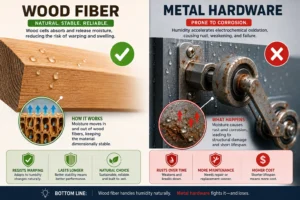
To effectively combat humidity, we first need to understand how it operates on different materials. Think of it as knowing your enemy. It’s not just “water in the air”; it’s a specific scientific process that targets wood and metal in very different ways.

Why Wood Warps: A Thirsty Material

Imagine a wooden garage door panel as a tightly packed bundle of microscopic straws. These are the wood fibers. When the air is humid, these fibers do what they are naturally designed to do: they absorb moisture directly from the air.

As they “drink” this moisture, the fibers swell and expand. This process isn’t uniform across the entire door. The side facing the humid outdoors might absorb more moisture than the side facing your drier garage. The bottom of the door, closer to damp ground, will likely swell more than the top. This uneven expansion is what causes the wood to bend, twist, and warp, leading to gaps, sticking, and a compromised seal.

What High Humidity Actually Does to Your Garage DoorWhy Metal Rusts: A Chemical Attack

For your door’s metal hardware—the springs, rollers, hinges, and tracks—humidity acts as a catalyst for a chemical reaction called oxidation. In simpler terms: rust.

Moisture in the air provides the perfect electrolyte-rich environment for oxygen to “attack” the iron in the steel components. This process forms iron oxide (rust), a flaky, brittle substance that corrodes the metal. At first, it might just be surface rust, causing squeaking and jerky movements. But left unchecked, it can weaken critical parts like torsion springs, leading to a potential failure that is both dangerous and expensive to fix.


Caption: Understanding how humidity scientifically impacts both wood panels and metal hardware is the foundation to effective garage door maintenance in humid environments.

A Tale of Two Problems - Diagnosis & Action


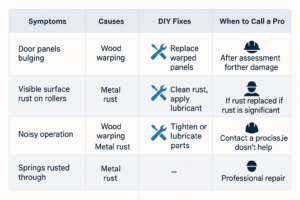
Now that you know the “why,” let’s get into the “how.” Identifying the problem early is key. Use the chart below to diagnose what’s happening with your door and determine the best course of action.

Caption: Quickly evaluate garage door humidity damage symptoms alongside causes and get clear guidance on effective DIY solutions versus professional repair needs.

Garage Door Humidity three-column chartPart 1: Taming Warped Wood Panels

A slightly warped door isn’t always a death sentence. The key is determining the severity.

  • How to Identify: Stand inside your garage with the door closed during the day. Do you see light peeking through the sides or bottom? Place a long, straight level against the panels. Is there a significant gap between the level and the door?
  • DIY Fixes for Minor Warping: If the warping is minimal (less than a quarter-inch gap), your priority is to prevent it from getting worse. Wait for a dry spell, then thoroughly clean the door and apply a high-quality exterior-grade sealant or paint, paying close attention to the bottom edge and any cracks. This creates a barrier against future moisture absorption.
  • When to Call a Pro: If the door is visibly bowed, struggles to move, or has gaps large enough to compromise security and insulation, a DIY fix won’t suffice. A professional can assess whether a reinforcement strut can correct the issue or if you need to explore how to repair a garage door panel to save the rest of the door.

Part 2: Defeating Rust on Metal Hardware

Rust is more than a cosmetic issue; it’s a direct threat to your door’s functionality and safety.

  • How to Identify: Look for orange or brown discoloration on your springs, hinges, roller stems, and tracks. Listen for grinding or high-pitched squealing during operation.
  • DIY Fixes for Surface Rust: For light surface rust, disconnect the opener for safety. Use a wire brush and a cloth with a bit of white vinegar to scrub away the rust. Wipe the area clean and dry it completely. Afterward, apply a lithium- or silicone-based garage door lubricant to protect the metal.
  • When to Call a Pro: Never attempt to remove rust from or adjust high-tension torsion or extension springs yourself. These components are under extreme tension and can cause serious injury. If you see deep, pitted rust on the springs or cables, it’s a sign of structural weakness. This requires an immediate professional inspection. Proper garage door spring maintenance is critical for safety.

The Ultimate Humid-Climate Maintenance Routine


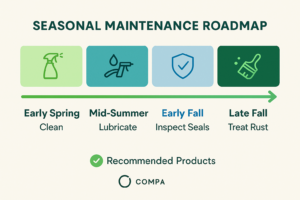
The best way to manage humidity is to be proactive. Instead of reacting to problems, follow a simple seasonal schedule to keep your door in peak condition year-round.

A clean, visually appealing seasonal checklist infographic.Caption: Follow this clear, seasonal maintenance roadmap to keep your garage door wood panels and metal hardware protected throughout humid months.
  • Early Spring (Before the Heat Hits): This is your prep phase. Wash the entire door to remove corrosive winter salt and grime. Inspect the weatherstripping at the bottom and sides for cracks or gaps. And most importantly, lubricate all moving metal parts. If you’re wondering how often should you lubricate your garage door, a good rule of thumb is at least twice a year, and spring is a critical time.
  • Mid-Summer (During Peak Humidity): Perform a quick visual inspection. Look for any new signs of warping or rust. Operate the door and listen carefully for any new noises. This is a check-up, not a full-service appointment.
  • Early Fall (As Humidity Drops): Now is the time to seal in protection for the winter. Touch up any chipped paint or sealant on your wood door to prevent moisture from seeping in. Clear any leaves or debris from the tracks.

Your Garage Door's Health Toolkit


Knowing what to do is one thing; doing it correctly is another. When it comes to lubrication—your number one defense against rust—precision matters.

A common mistake homeowners make is using the wrong product.

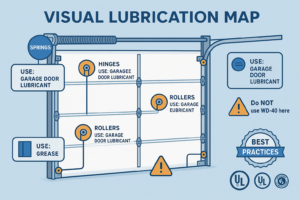
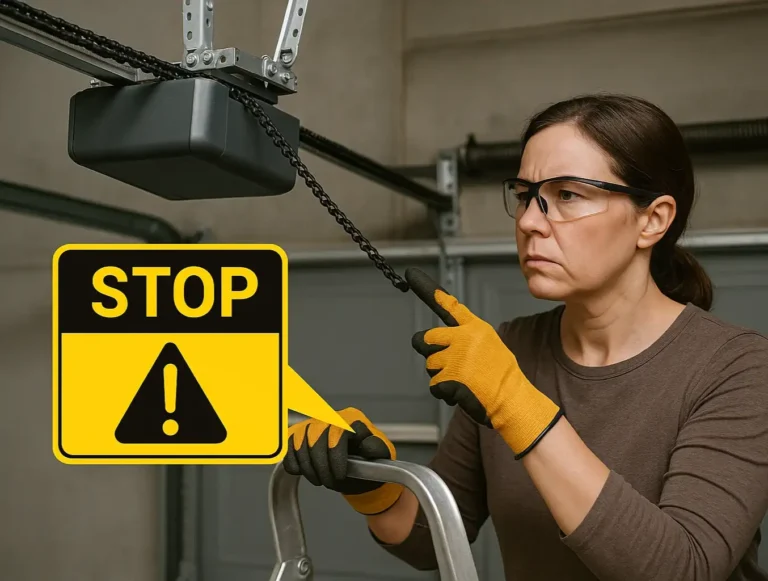
A diagram of a garage door with arrows pointing to key lubrication pointsWarning: Never use a penetrating oil like WD-40 on your garage door rollers or hinges. It can strip away existing grease and attract dust and grime, making the problem worse over time. Stick to a dedicated garage door lubricant spray with a silicone or white lithium grease base.
Use this map to ensure you’re hitting all the right spots.

Caption: This lubrication map ensures you target all essential hardware points correctly, avoiding common mistakes and maximizing the lifespan of your garage door components.

Before lubricating, taking a few minutes for a thorough cleaning of your garage door tracks will ensure the lubricant can do its job without interference from grit and debris.

Frequently Asked Questions (FAQ)


Is a little rust on my garage door springs normal?

While a tiny amount of surface discoloration can occur, it should never be considered “normal” or ignored. Surface rust is the first stage of corrosion. It creates friction, which puts extra strain on your opener motor and can lead to premature spring failure. Clean and lubricate it immediately as a preventative measure.

Can I just paint over a warped wood panel?

Painting over a warped panel without addressing the cause is like putting a bandage on a broken arm. It might hide the problem, but it won’t fix it. You must ensure the wood is completely dry first. If the warping is severe, painting over it will seal the panel in its bent shape and won’t correct the operational issues.

What is the best garage door material for humid areas?

If you’re considering a new door, material choice is your best defense. While wood offers timeless beauty, it requires the most maintenance in humid climates. Steel doors are a popular, low-maintenance option, but look for a multi-layered system with a baked-on finish to resist rust. Vinyl and fiberglass composite doors are excellent choices as they are impervious to moisture and will not warp or rust. Exploring the best garage door material for coastal homes can provide deeper insights into weather-resistant options.

How does humidity affect my garage door opener?

High humidity can also wreak havoc on the sensitive electronics inside your garage door opener. Moisture can condense on the circuit board, leading to short circuits, erratic behavior (like the door opening on its own), or complete failure. A well-sealed and ventilated garage can help mitigate this risk.

By understanding the forces at play and adopting a proactive maintenance routine, you can protect your garage door from the damaging effects of humidity. A few minutes of inspection and care each season can save you from major headaches and expenses down the road, ensuring your door operates safely and smoothly for years to come.

Contact / Request a Call