Professional Garage Door Multi-Point Diagnostic Process Step-by-Step Guide


Published: Aug 4, 2026

Over 89% of US homeowners rely on their garage door as the primary entryway to their home. When your door begins to vibrate, emit grinding noises, or hesitate during operation, it is easy to view these signs as minor inconveniences. However, these symptoms are often early warnings of mechanical wear that can lead to sudden failures.

While many online platforms advertise cheap diagnostic specials, a professional garage door tune up requires a methodical, physics-based evaluation. Low-cost coupon deals often serve as diagnostic loss-leaders designed for high-pressure upselling. A true preventative tune-up is a detailed process requiring 45 to 60 minutes of meticulous labor to inspect, calibrate, and secure your entire door assembly.
Interactive Blueprint: The Professional 5-Point Checklist Exposed


Steps To Siagnose Garage Doors

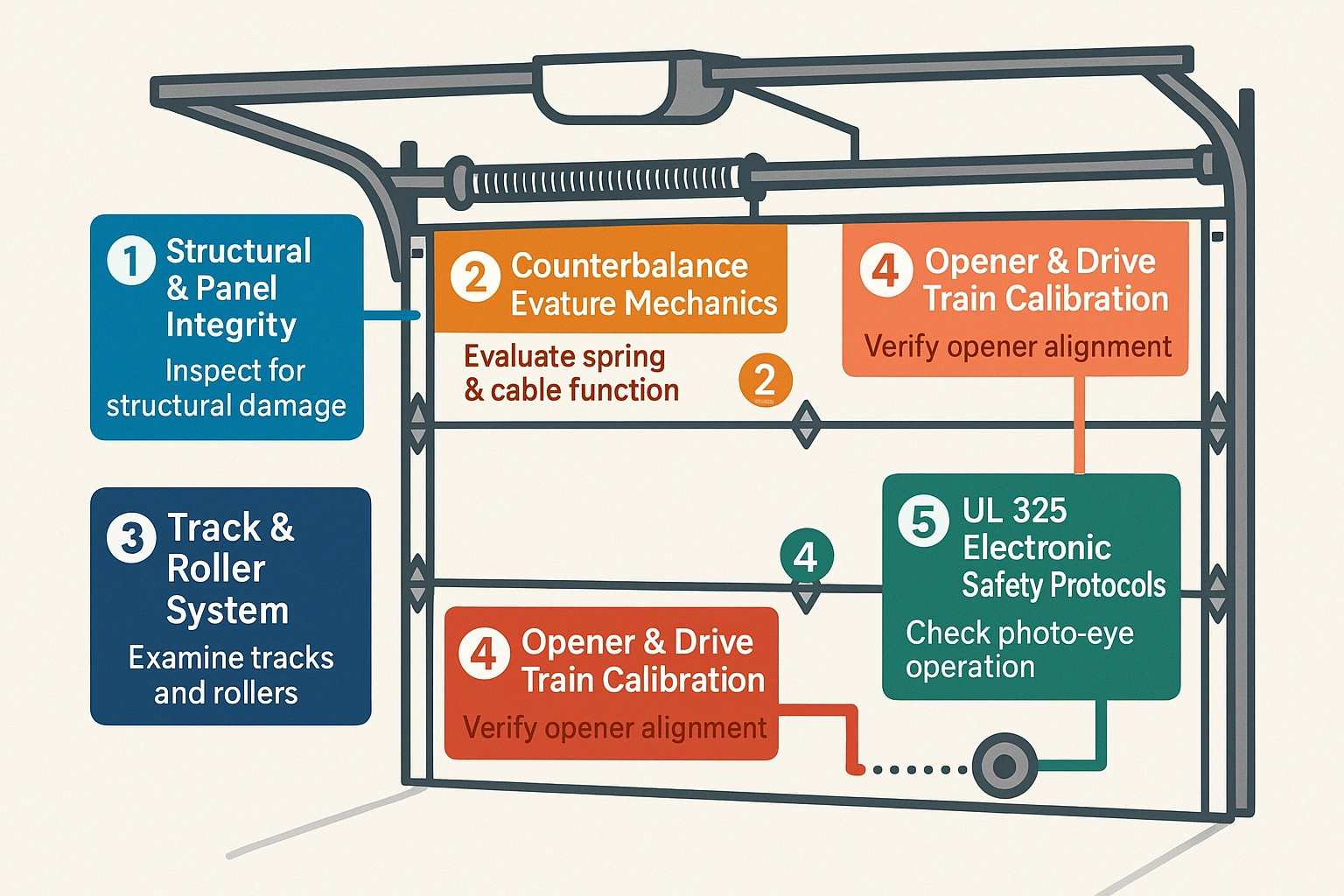
A professional garage door inspection systematically evaluates five critical mechanical zones to prevent premature component failure:

  • Zone 1: Structural & Panel Integrity: Technicians check for panel sag, micro-fractures around hinge attachment points, structural strut deflection, and weatherstripping elasticity.
  • Zone 2: Counterbalance Mechanics: This involves checking the torsion shaft level, spring tension balance, winding cone safety, and lifting cables for fraying. Understanding broken garage door spring symptoms helps identify steel fatigue before a dangerous break occurs.
  • Zone 3: Track & Roller System: Verification of vertical and horizontal track plumb, tightening of bracket fasteners, and measuring roller stem play. Technicians determine when to replace garage door rollers by assessing bearing degradation and wobble.
  • Zone 4: Opener & Drivetrain Calibration: Inspection of the drive belt or chain tension, gear assembly wear, and necessary garage door opener adjustment to correct limit switch drift.
  • Zone 5: UL 325 Safety Protocols: Testing photoelectric eye height (maximum 6 inches off the floor), laser alignment, and validating the automatic safety reverse force settings.

The Physics of Wear: Why Parts Fail


The Physics of Wear

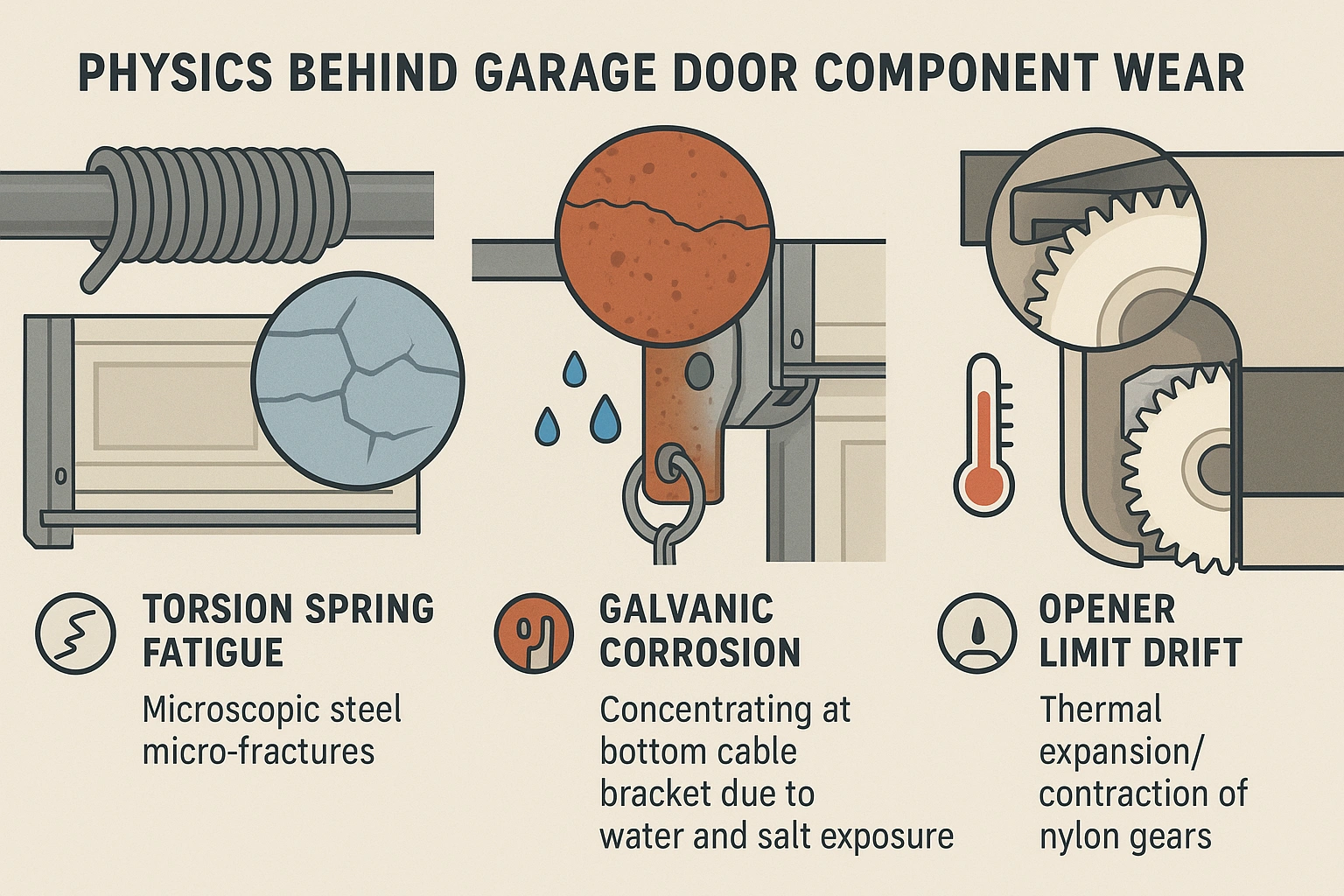
Garage door components operate under extreme mechanical stress and environmental exposure. Understanding the physical forces at play explains why subtle signs of wear require professional diagnostic attention:

Galvanic and Environmental Corrosion

Lifting cables run along the wettest areas of your garage floor. Road salt, moisture, and pet chemicals pool at the bottom bracket, initiating galvanic corrosion. This reaction degrades the steel cable strands from the inside out, often hidden from casual view until the cable snaps.

Opener Limit Drift

As seasonal temperatures fluctuate, the internal nylon gears inside your opener motor expand and contract. Over time, this thermal cycling causes “limit drift,” shifting the door’s stop points. This can cause the door to slam into the floor or strain against the header, damaging the top panels and the motor gear teeth.

Spring Steel Micro-Fractures

Torsion springs endure intense torsional stress every time the door moves. Standard builder-grade springs are rated for approximately 10,000 cycles (5–7 years of normal use). Over time, the steel develops micro-fractures, degrading the spring’s lifting force and placing extra strain on your electric opener.


DIY vs. Pro: The Safety Line in the Sand


Owner Friendly VS Professional Garage Door Repair

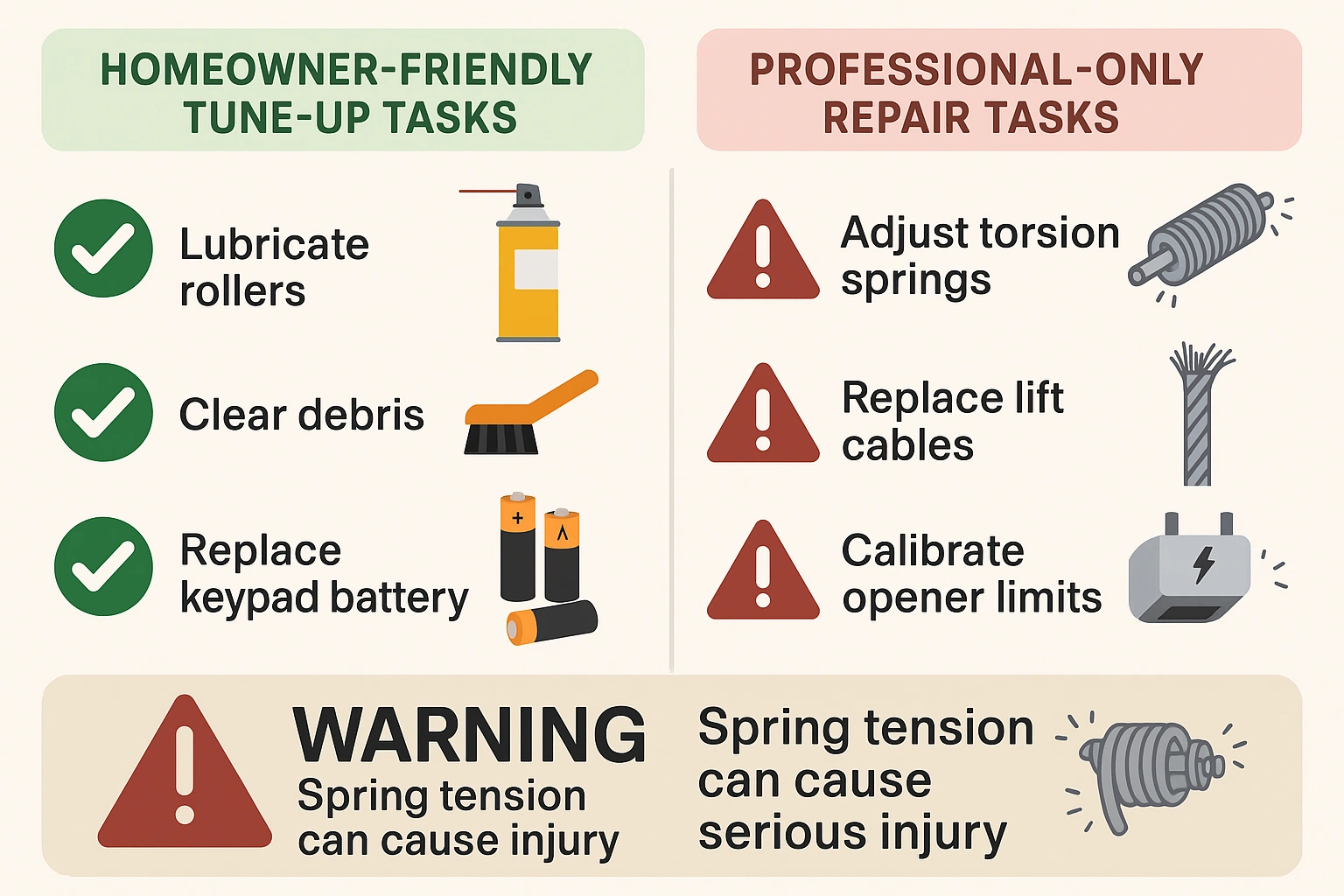
According to the US Consumer Product Safety Commission (CPSC), garage door systems cause over 16,000 injuries annually. Torsion springs and bottom brackets store over 300 pounds of tension, which can cause severe injury if released incorrectly.

Homeowners can safely handle basic maintenance tasks, such as clearing track debris, inspecting rollers, and learning how often to lubricate garage door components to prevent premature wear. However, any adjustments involving springs, bottom brackets, or structural cables must be left to trained professionals.


Regional Environmental Factors


Environmental conditions directly affect how your garage door wears. In Connecticut, cold winters and coastal humidity create unique maintenance challenges. Road salt carried into the garage accelerates metal rust, while temperature swings can warp track alignments and compromise weather seals. Regular professional diagnostic checks help catch these weather-related issues before they cause system failures.


Protect Your Home’s Primary Entryway


Don’t wait for a broken spring or snapped cable to trap your car inside. Booking a professional multi-point diagnostic check ensures your system operates safely, quietly, and reliably. Reach out to our team today to schedule an expert inspection with a clear, honest evaluation of your door’s performance.

Frequently Asked Questions


Why does my garage door make a loud popping sound when opening?

This sound usually points to dry or binding spring coils, worn-out bearings, or roller wheels sticking in the tracks. It indicates that the system is straining and needs professional lubrication and alignment.

How often should my garage door safety sensors be tested?

You should test your photoelectric safety sensors monthly. Simply place an object in the door’s path and try to close it; the door should instantly reverse. A technician will check the electrical connections, alignment, and housing during a standard inspection.

What is the typical life expectancy of high-cycle springs?

Standard builder-grade springs last for about 10,000 cycles. Upgraded high-cycle springs are engineered to last between 25,000 and 75,000 cycles, offering a much longer service life for busy households.


Contact / Request a Call