When a garage door cable snaps unexpectedly, it rarely happens without warning. Homeowners often attribute sudden cable breaks to defective wire, but the true culprit is frequently sitting at the top of the torsion shaft: a worn cable drum. Torsion assemblies rely on precision engineering, and understanding how subtle component wear leads to catastrophic failure is essential for timely intervention.
Worn Garage Door Drums: Early Signs Before Your Cable Snaps
Published: Oct 20, 2026
Immediate Safety Protocols
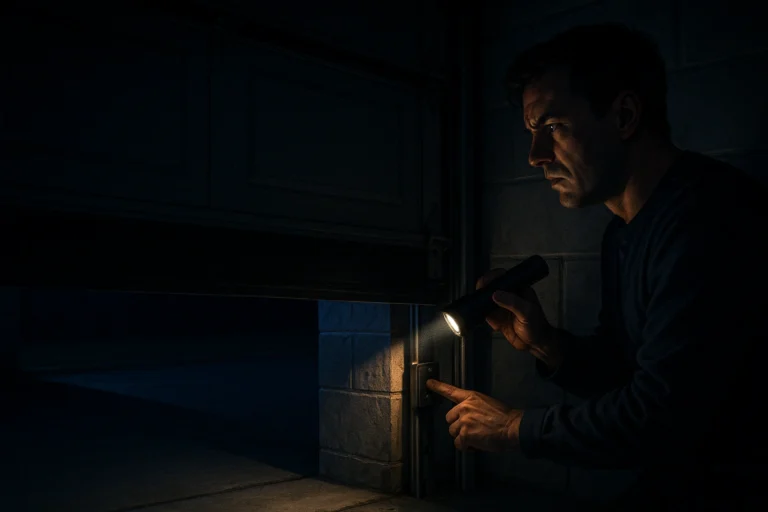
If your garage door is jerking, hanging unevenly, or making harsh metallic grinding noises near the top corners, stop operating it immediately. Never disconnect the emergency release cord while the door is open or visibly unbalanced, as the full weight of the door can drop without warning. Given the extreme mechanical forces stored in the system, recognizing why garage door springs are dangerous is crucial before conducting any visual checks.
The Silent Mechanics: How a Worn Drum Destroys Steel Cables
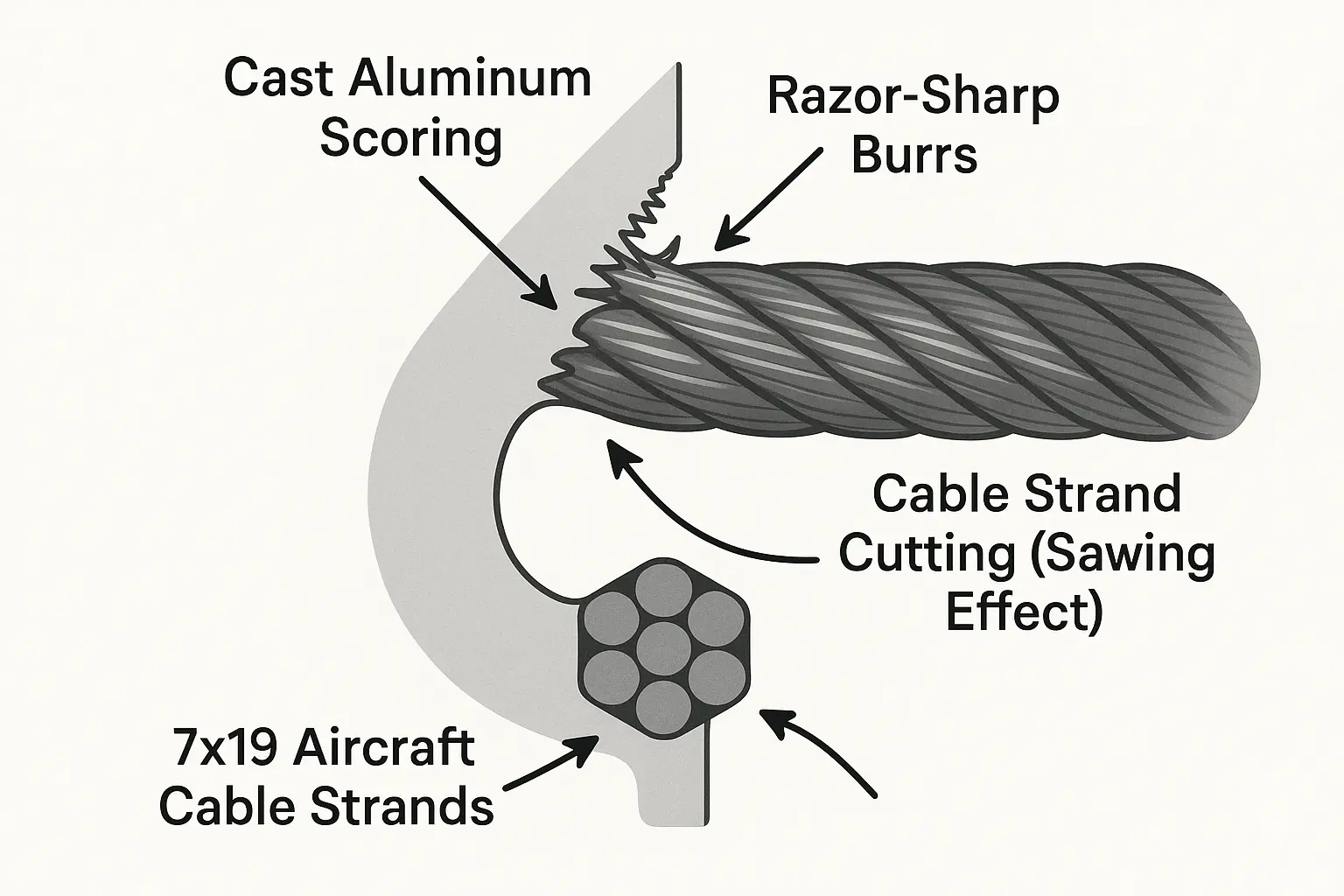
Garage door drums are cast from relatively soft aluminum alloys (such as standard 400-8 or 400-12 lift models), whereas lift cables are composed of heavy-duty 7×19 galvanized steel aircraft wire. Over an average lifespan of 8 to 15 years (roughly 10,000 to 15,000 door cycles), grit, off-angle friction, or minor shaft misalignment cause the steel cable to wear down the softer aluminum spiral grooves.
This friction creates razor-sharp aluminum ridges, scoring, and burrs within the channels. Each time the door cycles, these sharp metal burrs act like a miniature saw, progressively severing individual steel strands in the cable. Over time, set screw slippage can also lead to shaft wobble and keyway ovalization, accelerating strand fatigue and forcing the cable off track.
Early Warning Signs of Worn Drums
Recognizing early warning signs allows you to address underlying mechanical issues before suffering an unexpected strand break:
- Fine Silver Filings: Microscopic aluminum dust accumulating on end bearing plates directly beneath the drums.
- First-Foot Grinding or Clicking: Acoustic popping near the top tracks during the initial 12 inches of door lift.
- Top-Entry Cable Whiskering: Fraying concentrated where the cable seats into the drum groove, rather than near bottom brackets. Addressing general garage door cable problems early prevents total failure.
- Groove Ridge Riding: The cable rides along the wall of the spiral channel instead of resting flat in the groove.
- Top-Corner Slack: Visible cable sagging when the door is fully raised, often explaining why a garage door cable keeps coming off drum.
- Micro-Jerking Movement: Subtle hitching or shuttering as the motor begins lifting the door panel weight.
Self-Assessment Diagnostic Checklist
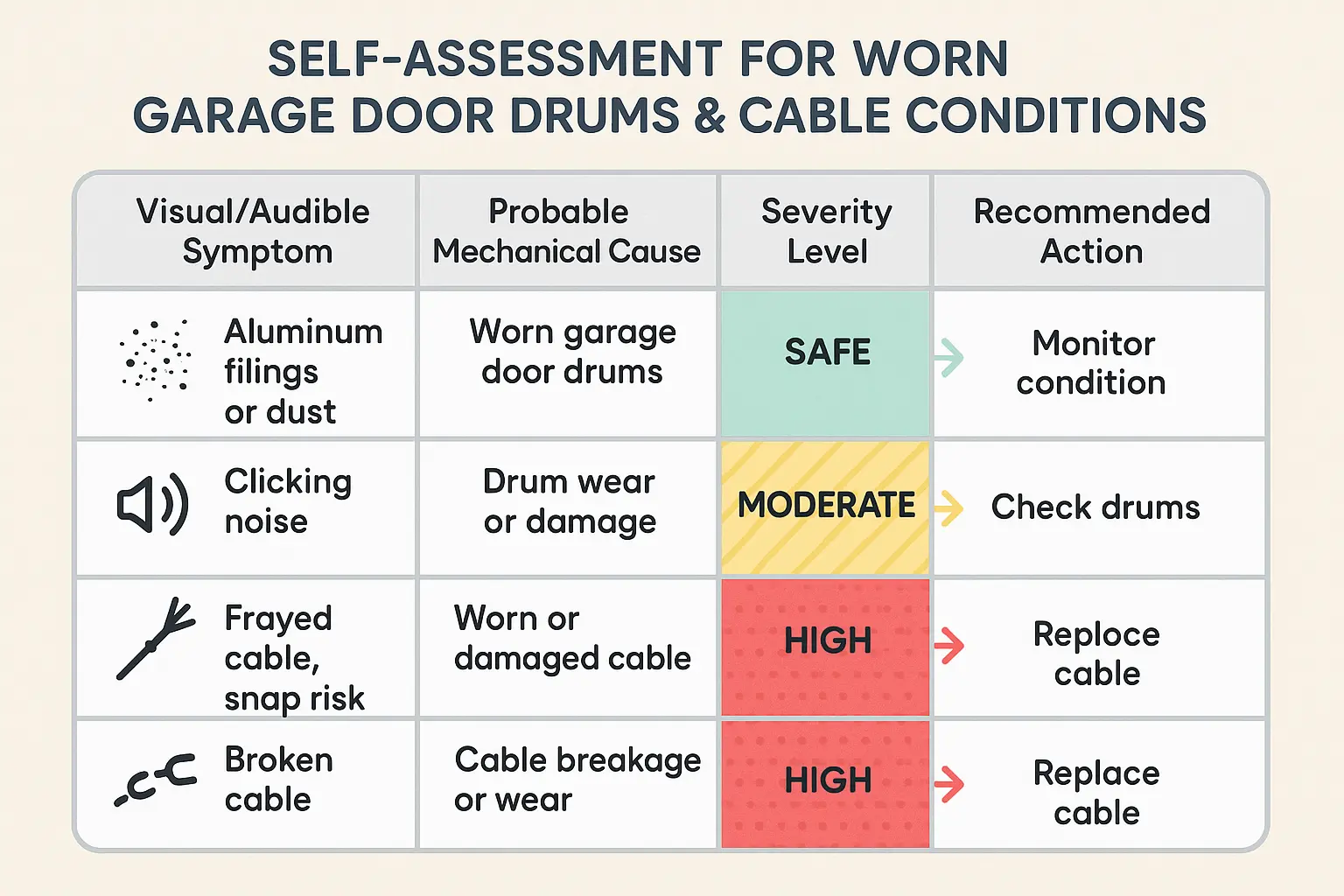
Use this evaluation matrix to assess hardware condition and determine the appropriate action level.
| Visible / Audible Symptom | Mechanical Cause | Severity Level | Action Required |
|---|---|---|---|
| Silver dust on shaft bearings | Aluminum groove scoring friction | Moderate | Schedule professional evaluation |
| Cable whiskering at top drum | Burred aluminum grooves cutting wire | High (Imminent failure) | Cease door use; replace cable & drum |
| Rhythmic popping during lift | Cable cross-wrapping or jumping | High | Re-align shaft & replace worn drum |
| Door tilted 2+ inches when closed | Drum set screw slippage / unbalanced tension | Severe | Emergency service required |
Repair Scope and Cost Optimization
Replacing cables ($150–$350) without replacing scored drums ($200–$300) is a costly mistake; grooved aluminum will ruin brand-new steel wire within months. Because replacing either component requires unwinding high-tension springs, smart homeowners bundle service. Combining springs, drums, and cables into a full system overhaul ($350–$600 total) saves $150–$220 in duplicate labor costs. Understanding all essential components of a garage door helps ensure long-term reliability.
Professional vs. DIY Safety Boundaries
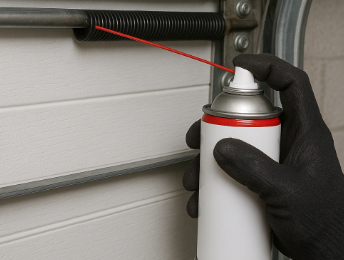
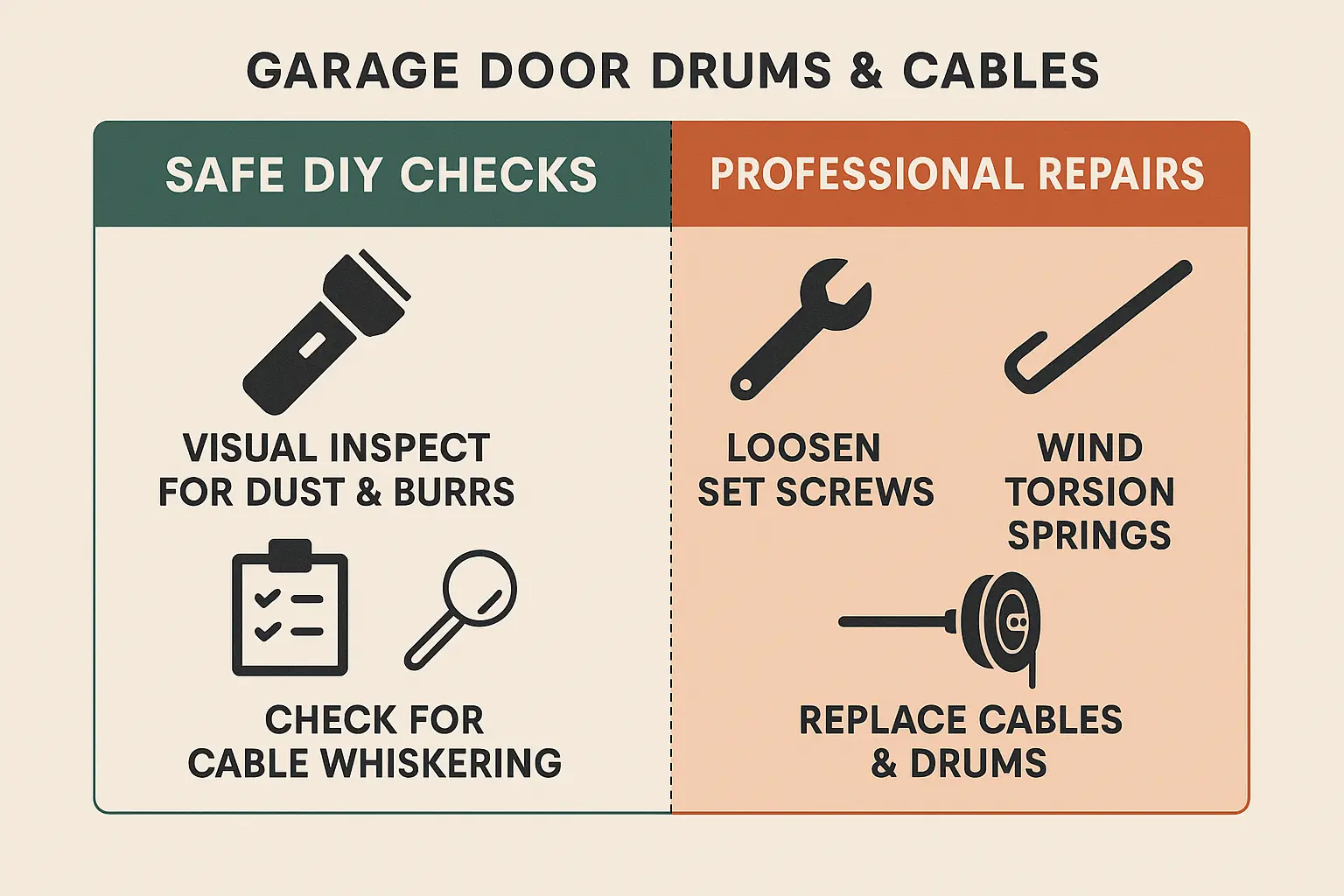
Visual inspections and routine maintenance are safe DIY tasks. However, adjustments involving set screws, shaft bearings, or garage door torsion spring winding require specialized winding bars and professional expertise. Preventative care like knowing how often should you lubricate your garage door (using silicone spray on springs, while keeping drum grooves dry) and preventing garage door rust extends overall lifespan—especially in high-humidity coastal environments where wear rates increase by 30% to 50%.
Frequently Asked Questions
Can I replace garage door cables without replacing worn cable drums?
Replacing cables while leaving burred or scored aluminum drums in place will severely shorten the life of your new cables. The sharp ridges in the worn drum grooves will quickly cut into the new steel strands, leading to premature failure within months.
How do I know if my garage door cable issue is caused by the drum or the bottom bracket?
Examine where the cable fraying occurs. Fraying or “whiskering” located near the top corners indicates friction caused by burred drum grooves or shaft misalignment. Fraying near the bottom of the door usually stems from coastal moisture, rust, or bottom bracket corrosion.
Is it safe to tighten a loose cable drum set screw myself?
No. Cable drums sit directly under severe torque from the torsion spring system. Loosening or tightening set screws without properly securing and unwinding the torsion spring can cause violent unwinding, risking severe physical injury or property damage.