main logo

The Vacation Security Blueprint: Smart Garage Remote Access And Monitoring


Published: Jul 24, 2026

Preparing for an extended vacation often brings a familiar anxiety: did you actually close the garage door? For decades, homeowners relied on legacy remote clickers, but today's sophisticated security environment requires a much stronger approach. Standard remotes are highly vulnerable to "code grabbing" tactics, and they offer zero feedback when you are miles away.

Transitioning to modern garage door security is the logical next step. However, the current smart home market is undergoing a major shift. To truly secure your home, you must look past generic reviews and understand how to build a redundant, fail-safe remote monitoring system.
The 2026 Smart Garage Security Landscape


Modern smart garage systems have evolved far beyond basic remote control. Rather than simply trying to replace garage door opener remote units, savvy homeowners are now building complete access control hubs.
Understanding the critical difference between cloud-first and local-first smart garage solutions helps vacationers choose systems that maintain security and control, even during internet outages or cloud service shutdowns.

The "Cloud-First vs. Local-First" Vacation Dilemma

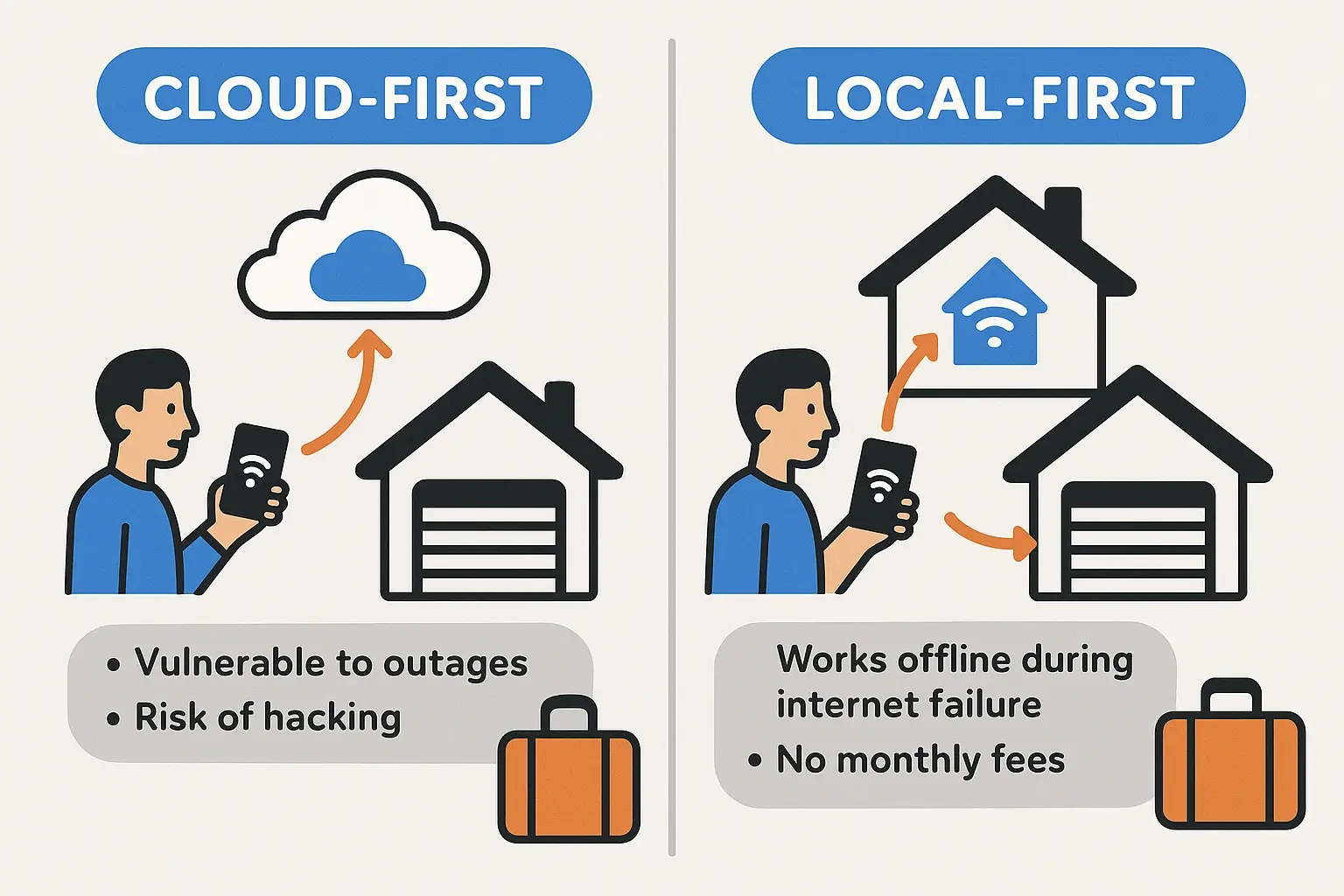
When choosing how to convert garage door opener to smart setups, you will face a critical architecture choice: cloud-dependent systems versus local-first controllers.

Cloud-first systems rely entirely on the manufacturer's servers to process commands. If your internet connection drops or the company's servers experience an outage, you lose both access and visibility. Local-first systems process your commands within your home network, maintaining security operations even during external internet disruptions.

Understanding the critical difference between cloud-first and local-first smart garage solutions helps vacationers choose systems that maintain security and control, even during internet outages or cloud service shutdowns.

The Great Ecosystem Guide


Ecosystem compatibility is currently the primary battleground in smart home security. Major industry shifts have caught many homeowners off guard, highlighting why careful planning is essential.


The Chamberlain/myQ Backlash

In late 2023, Chamberlain Group (which controls over 60% of the North American market through Chamberlain, LiftMaster, and Craftsman) systematically blocked third-party API integrations. This decision instantly broke native connections for millions of Home Assistant, Hubitat, and Homebridge users. Today, reaping the advantages of wi-fi enabled garage door openers from these brands requires navigating paid subscription walls or installing hardware bypasses.


Why Nexx Garage is Bricked

In another cautionary tale, security researchers uncovered severe vulnerabilities in Nexx Smart Garage controllers that allowed unauthorized remote opening. After Nexx failed to resolve these issues, their cloud services shut down completely, leaving thousands of devices permanently bricked. This case highlights why a local fallback protocol is a non-negotiable security feature for vacation monitoring.

The 3 Pillars of Fail-Safe Vacation Garage Security


To achieve absolute peace of mind while away, your system should rely on three technical pillars.


Pillar 1: Biometric and Smartphone Access Control

Ditch static PIN codes. Modern access control relies on virtual keys with temporary, scheduled permissions for house sitters or delivery drivers, backed by multi-factor authentication.

However, avoid relying solely on standard GPS geofencing. Phone-based GPS drift can easily trick your system into thinking you have returned, opening your garage door automatically while you are asleep or miles away.
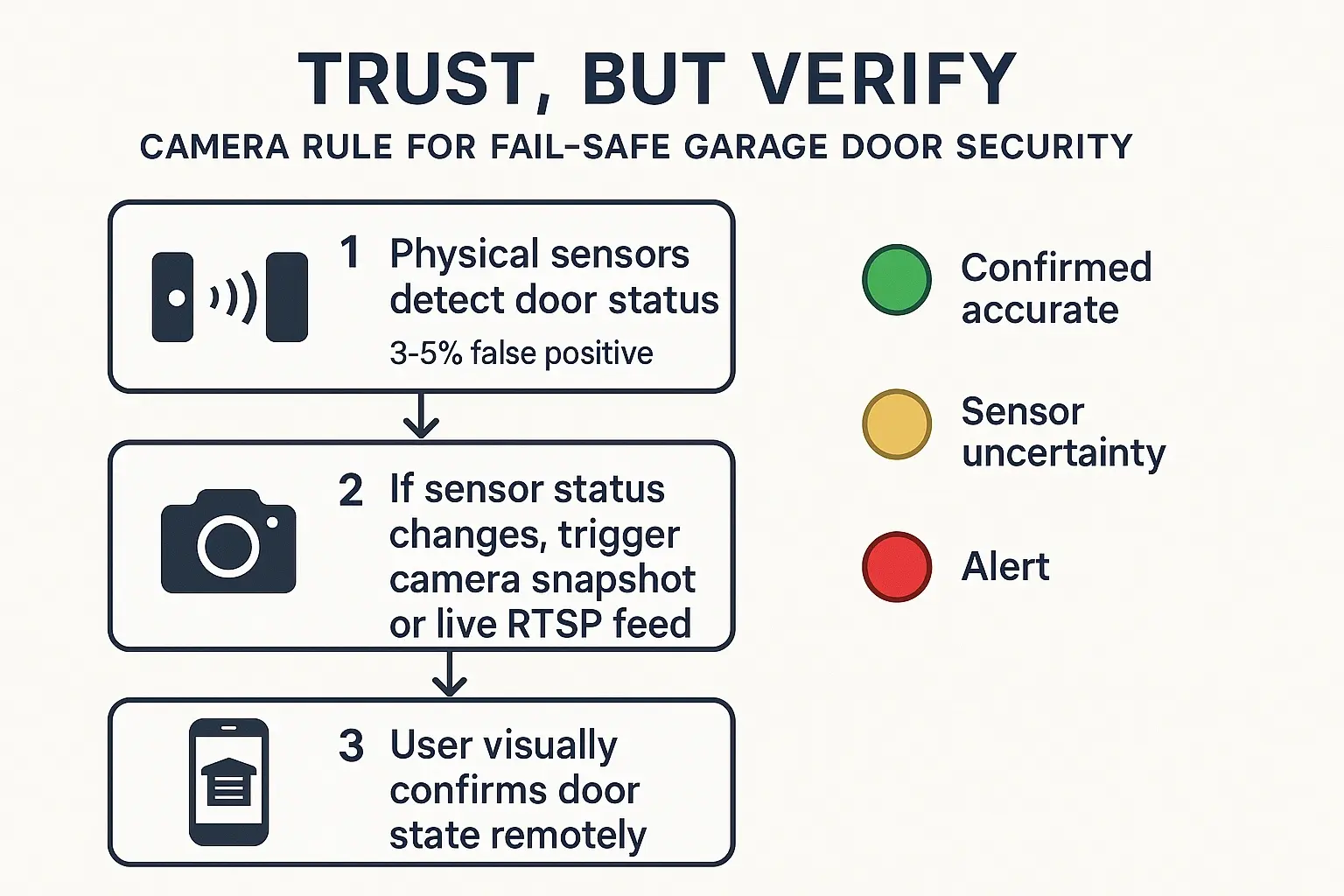
Combining sensor data with real-time visual confirmation drastically reduces false alarms and strengthens vacation garage remote monitoring reliability.


Pillar 2: Redundant Physical Sensors vs. Visual Verification

Most smart controllers rely on a single tilt or magnetic sensor. However, high winds and track vibrations cause a 3–5% false reporting rate.

To prevent false alarms, implement the Visual Verification Rule: always pair your digital sensor with an independent, local camera feed to physically confirm the door's position.


Pillar 3: Local Control

Your security system must continue to run locally if your wider internet connection goes down, keeping your physical access points locked and secure.

Combining sensor data with real-time visual confirmation drastically reduces false alarms and strengthens vacation garage remote monitoring reliability.

In-Depth Comparative Analysis


If you want to make my garage door smart, you have several excellent hardware paths to choose from.

Tailwind iQ3 (Best Overall Retrofit): Widely considered the gold standard for vacation security. It bypasses GPS drift issues entirely by utilizing a patented vehicle-active Bluetooth connection, ensuring the door only opens when your specific car is nearby.

RATGDO (Best Local/Open-Source): The ultimate solution for Chamberlain/LiftMaster owners. This small control board wires directly into your motor, bypassing the myQ cloud restrictions to restore local offline control.

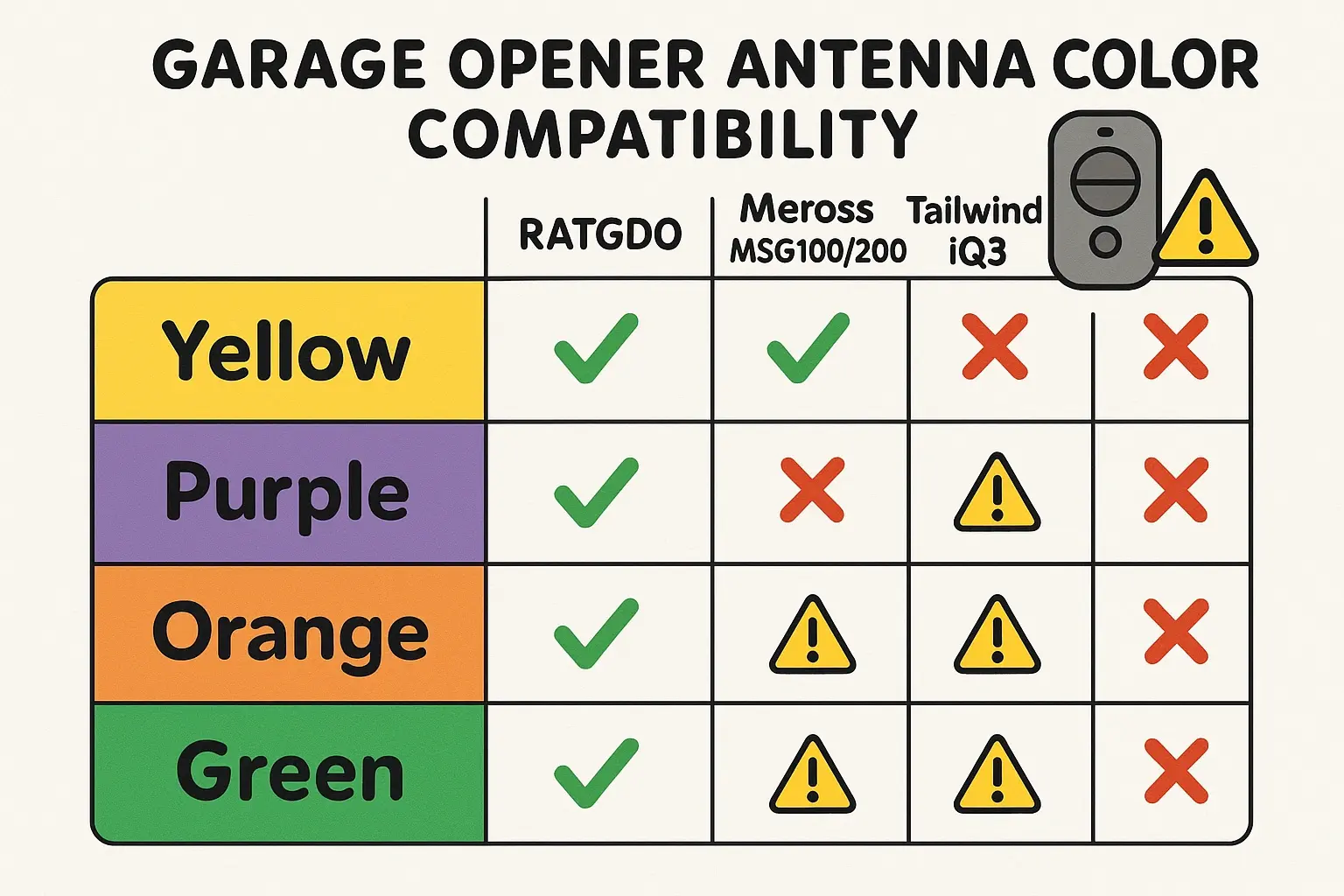
Meross MSG100/200 (Best Budget HomeKit): An affordable, highly reliable retrofit. However, it requires a dry-contact adapter to work with high-security yellow learn button systems.
The Yellow-Learn-Button Decoder chart helps users instantly identify which smart retrofit solutions are compatible with their garage opener frequency, avoiding costly mistakes during installation.


The Yellow-Learn-Button Decoder

Before purchasing any retrofit system, look up at your opener motor to find the antenna wire and learn button. Unlike legacy systems where understanding what is a dip switch garage door opener was the standard, modern high-security openers utilize encrypted rolling codes. Knowing your specific garage door learn button color is essential for choosing compatible smart hardware.

The Yellow-Learn-Button Decoder chart helps users instantly identify which smart retrofit solutions are compatible with their garage opener frequency, avoiding costly mistakes during installation.

FAQ


Will a smart controller work with my existing opener?

Yes, most "dumb" openers can be retrofitted. However, newer openers with yellow learn buttons (Security+ 2.0) require a compatible smart controller or a dry-contact adapter bridge.

What happens if my home loses Wi-Fi while I am away?

With a cloud-first system, you will lose remote access and status updates. A local-first system will continue running scheduled automated rules locally, but you won't receive remote alerts until your internet connection is restored.

Can hackers exploit my smart garage door?

Cloud-dependent brands are vulnerable to server-side exploits. You can significantly minimize this risk by utilizing local-first hardware, putting your smart devices on an isolated Wi-Fi subnet, and disabling automated GPS-based opening.

Securing Your Home with Confidence


Building a truly secure smart garage door system requires combining the right hardware with precise, professional setup. While evaluating the best garage doors 2025 has to offer, remember that proper installation is key to ensuring your physical security matches your digital defenses.

If you want to upgrade your home's security, professional liftmaster garage door opener repair and custom setup can resolve any compatibility issues. Contact a premier garage door opener installation service today to design a reliable, secure remote monitoring system tailored to your home.

You may also like