Saltwater Flooding Damage on Shoreline Garage Doors: Diagnostic & Replacement Guide


Published: Nov 16, 2026

Coastal storm surges and tidal flooding present shoreline property owners with a critical decision: can a saltwater-submerged garage door system be safely repaired, or does it require complete replacement? Unlike freshwater flooding, saltwater introduces destructive electrochemical reactions that compromise high-tension mechanical components and door panel cores long after surface water dries.

Understanding the unique chemical impact of saline exposure empowers home and property owners to make safe, cost-effective decisions.
Emergency 24-Hour Protocol & Safety Warnings


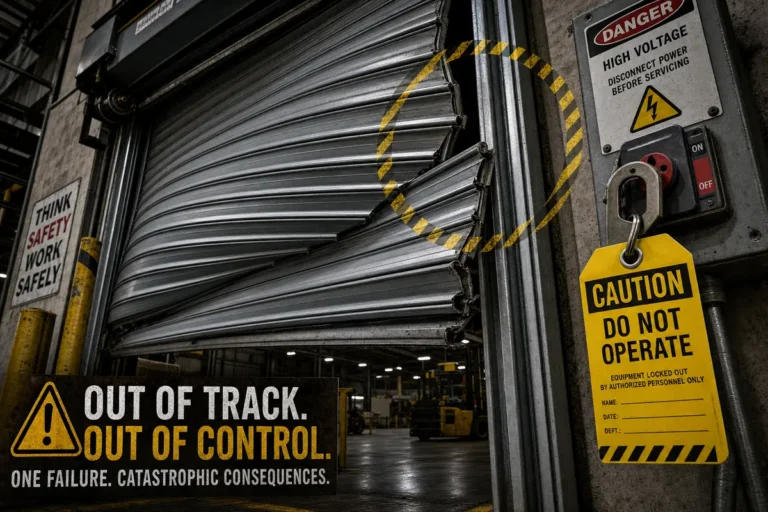
Before performing a post-flood assessment, property owners must address immediate mechanical hazards. Torsion springs under severe tension become highly dangerous when exposed to saline water due to hydrogen embrittlement and rapid stress-corrosion cracking.

  • Never operate a submerged spring: Avoid manually lifting or electronically operating a door if the springs, drums, or cables were submerged. Corroded springs can snap violently under normal operating tension.
  • Avoid high-pressure washing: While flushing salt residue is essential, using a high-pressure washer forces salt crystals deep into roller bearing races, bottom bracket joints, and internal panel seams. Use a gentle, low-pressure fresh water flush instead.
Still stuck? Get it fixed today.
24/7 emergency service from licensed local technicians.
Call (860) 362-3018

The Hidden Science: Why Saltwater Destroys Garage Doors Differently Than Freshwater


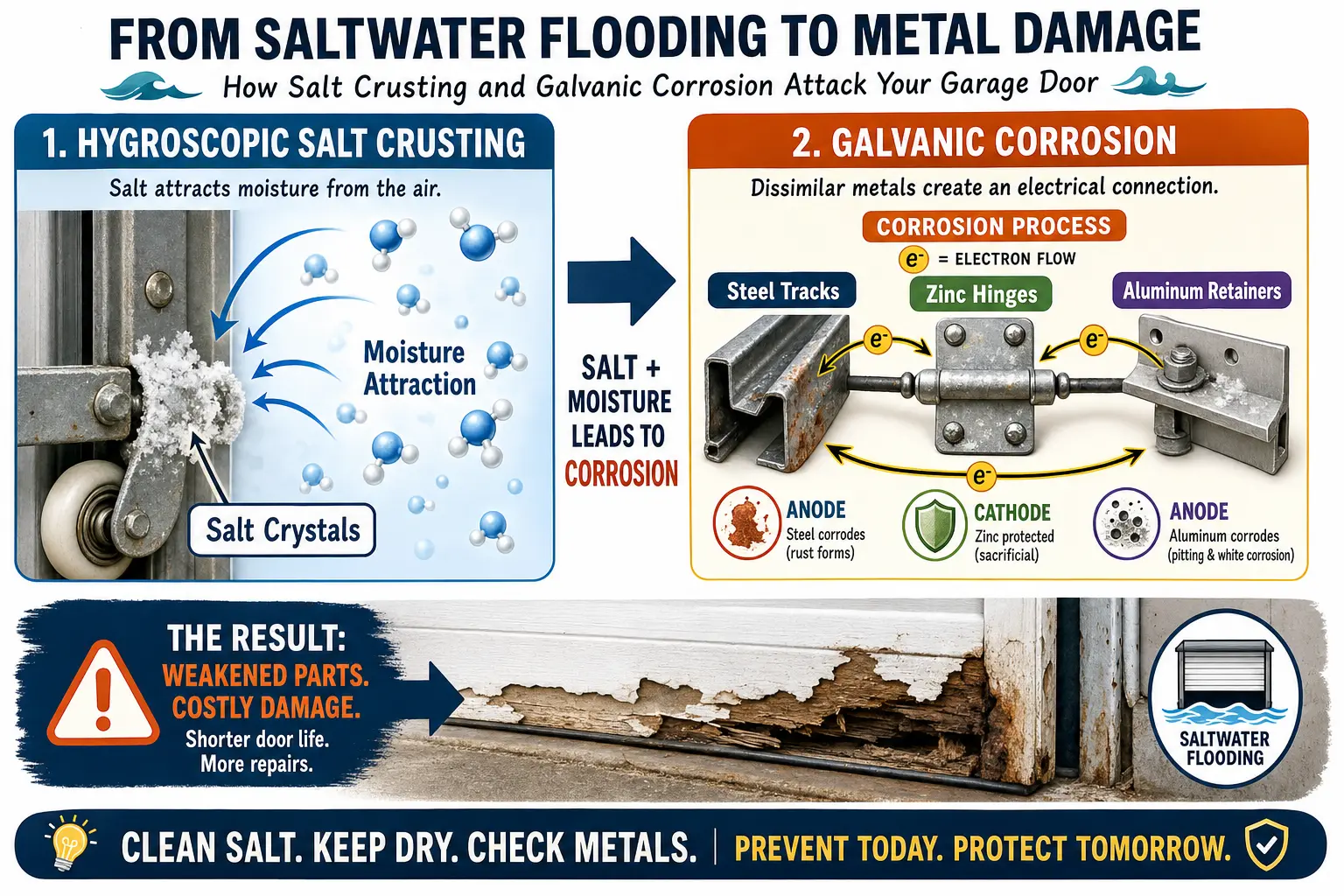
Visualizing the hidden chemical forces: Hygroscopic salt crusting prolongs moisture retention, while galvanic corrosion accelerates metal damage in flooded shoreline garage doors.

Saltwater accelerates ferrous metal oxidation by 10x to 25x compared to freshwater because dissolved sodium and chloride ions vastly increase the water’s electrical conductivity.

The primary driver of long-term shoreline damage is hygroscopic salt crusting. Sodium chloride ($text{NaCl}$) absorbs atmospheric water vapor whenever relative humidity reaches 75%, while Magnesium Chloride ($text{MgCl}_2$) pulls moisture at just 32% relative humidity. Microscopic salt crusts left behind after flooding continuously draw moisture out of coastal air, keeping metal components in a state of perpetual active corrosion even on dry, sunny days.

Furthermore, galvanic corrosion occurs rapidly as conductive saltwater bridges dissimilar metals within the door assembly—such as steel tracks, zinc-plated hinges, and aluminum bottom retainers.

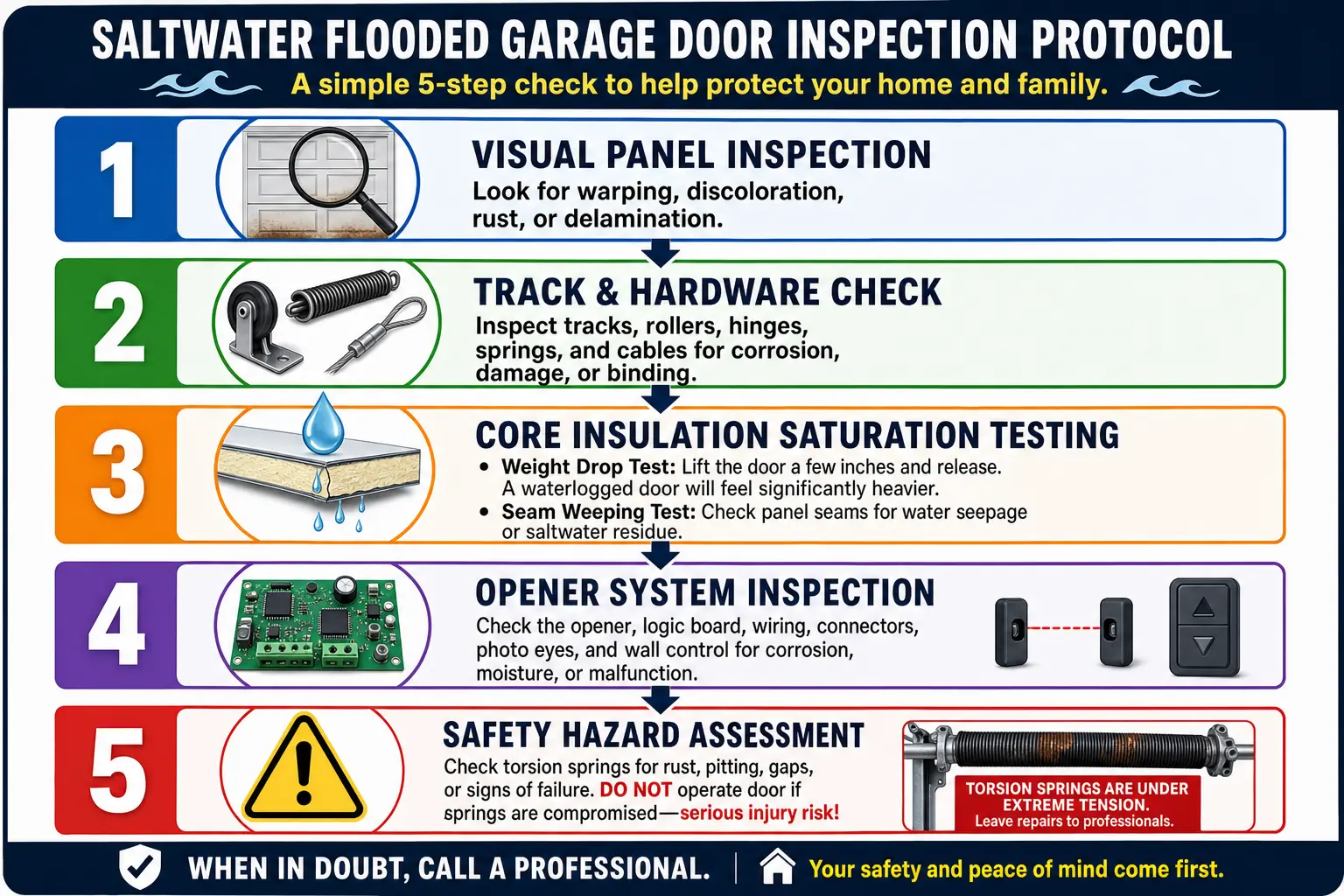
Step-by-Step Post-Flood Damage Inspection Protocol


A clear diagnostic guide: Follow these essential steps to evaluate saltwater damage on your garage door and prioritize repairs or replacement.

Evaluating structural damage requires inspecting three critical zones:

  1. Insulated Panel Saturation: Submerged polyurethane or polystyrene sandwich panels absorb and retain 40 to 120 lbs of saltwater within their core foam. Inspect the bottom panel seam for weeping liquid or unhook the opener system to check for extreme door weight imbalance.
  2. Track & Hardware Integrity: Check roller bearings, lift cables, and track jambs for white zinc-carbonate crusting or severe binding.
  3. Electric Opener Systems: If floodwaters reach the logic board, motor housing, or safety sensor wiring, circuit board destruction is typically immediate and permanent.

Understanding how humidity affects garage door operation illustrates why trapped saline moisture within panels continues to cause internal rot and motor gear stripping over time.

The MOFU Decision Matrix: Repair vs. Replace


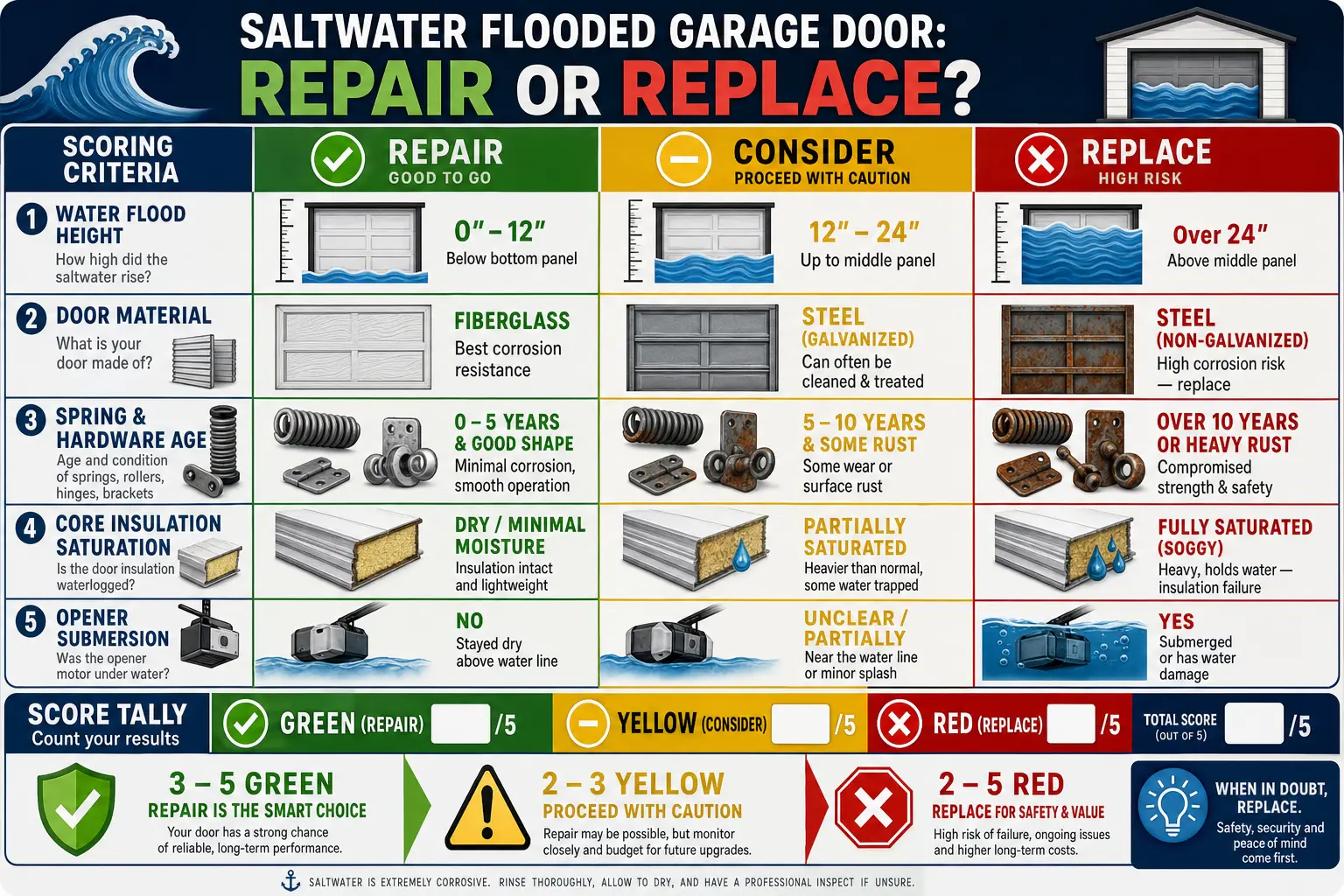
Simplify decision-making with this 5-point scoring matrix that balances repair costs against hidden damage risks for saltwater-flooded garage doors.

To determine whether repair is structurally and economically sound, evaluate your system against this 5-point checklist:

  • Flood Height: Submersion exceeding 12 inches almost always requires panel replacement due to core insulation saturation.
  • Door Material: Single-layer non-insulated steel doors can occasionally be washed and retrofitted with new hardware; insulated sandwich panels cannot be thoroughly dried.
  • Hardware Condition: Corroded high-tension torsion springs must be replaced immediately.
  • Opener Submersion: Any opener motor head submerged in salt water presents electrical fire hazards and requires replacement.
  • Structural Imbalance: Doors weighed down by internal trapped salt water will strip motor gears and risk cable failure.

If your system scores high in damage severity, scheduling professional 24 hour garage door repair prevents further structural risk. Homeowners can also browse our comprehensive 24 hour garage door repair resources for maintenance guides.

Coastal Engineering and Replacement Buyer's Guide


When replacing a coastal door, selecting materials rated for high-salinity environments ensures long-term performance:

  • Fiberglass (GRP / Glass Reinforced Polyester): Top choice for coastal environments. Completely immune to salt rot, rust, and moisture absorption.
  • Marine-Grade Anodized Aluminum: Rustproof and lightweight, making it ideal for modern glass-panel architectural designs.
  • Vinyl Composite (PVC Exterior): High impact resistance with full salinity immunity and strong thermal efficiency.
  • Hardware Upgrades: Specify 304 or 316 stainless steel torsion springs, powder-coated tracks, and sealed stainless steel roller bearings.

According to FEMA Technical Bulletin 3 and DASMA 108 standards, garage doors up to 16 feet wide represent the largest unreinforced structural opening in a home. Installing wind-load rated, salt-resistant door systems protects structural building integrity during severe coastal storm events.

Frequently Asked Questions


Can I use a pressure washer to rinse saltwater off my garage door?

No. High-pressure water forces salt deposits into sealed bearing races, bottom bracket pivot points, and internal panel joints. Flush components using low-pressure fresh water and a mild salt-neutralizing wash instead.

Why does my garage door feel heavy after drying post-flood?

Insulated steel doors trap saltwater within their internal polyurethane or polystyrene foam cores. This trapped fluid can add 40 to 120 pounds of dead weight, exceeding opener motor capacity and causing spring failure.

Does standard homeowners insurance cover saltwater flood damage to garage doors?

Standard homeowners policies generally exclude damage caused by rising storm surges or surface tides. Coastal saltwater flood damage typically requires coverage through the National Flood Insurance Program (NFIP) or specific flood insurance endorsements.


For professional post-flood diagnostic evaluations and coastal door installations, reach out to our certified technicians for expert garage door repair stamford ct to safeguard your property.

Contact / Request a Call