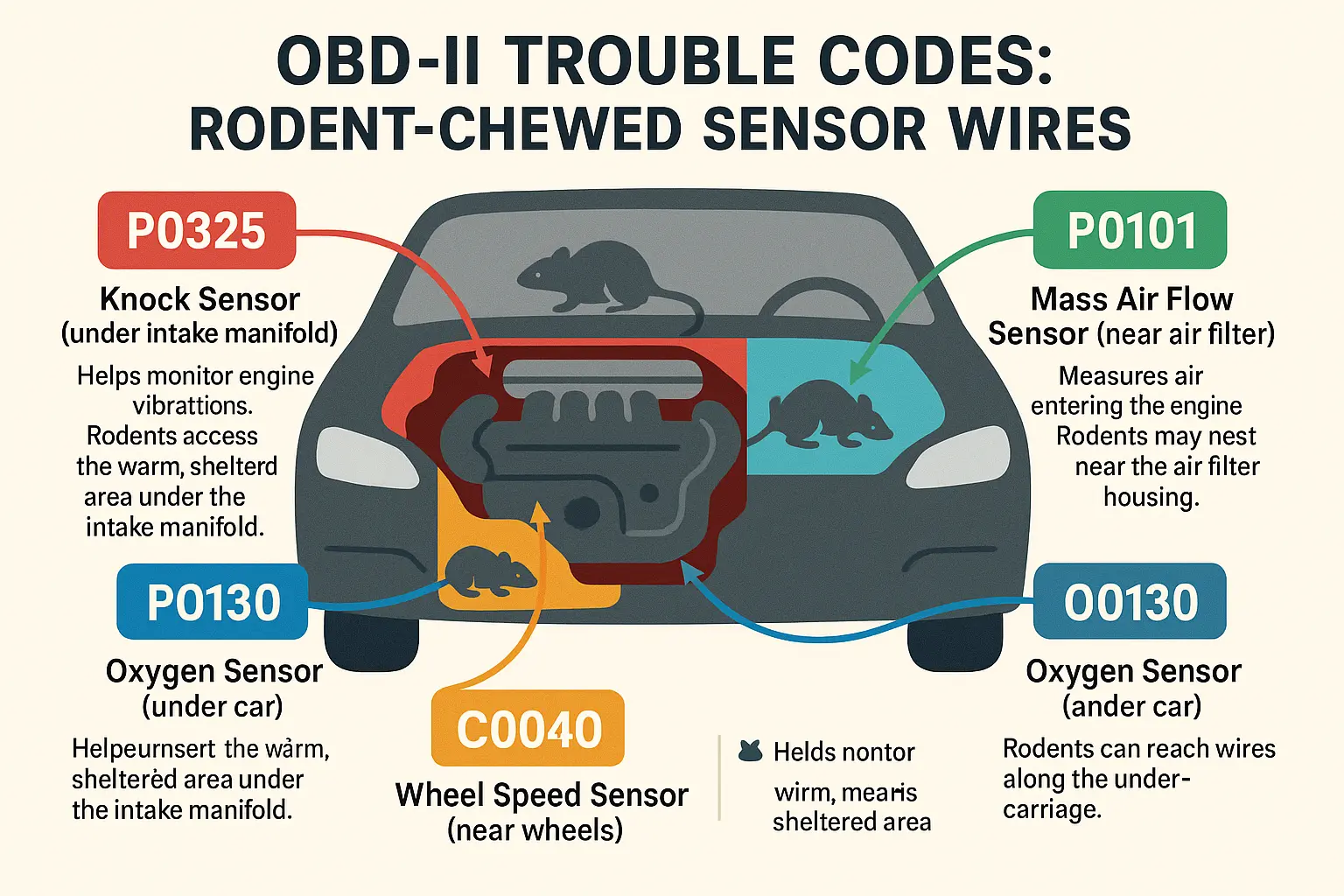
Repairing delicate sensor wires presents a unique obstacle: The Resistance Paradox. Sensors communicate using minor fluctuations in voltage and electrical resistance. If you use cheap plastic crimps or simple twist-and-tape methods, moisture will enter the joint, creating resistance spikes that trigger persistent check engine lights.
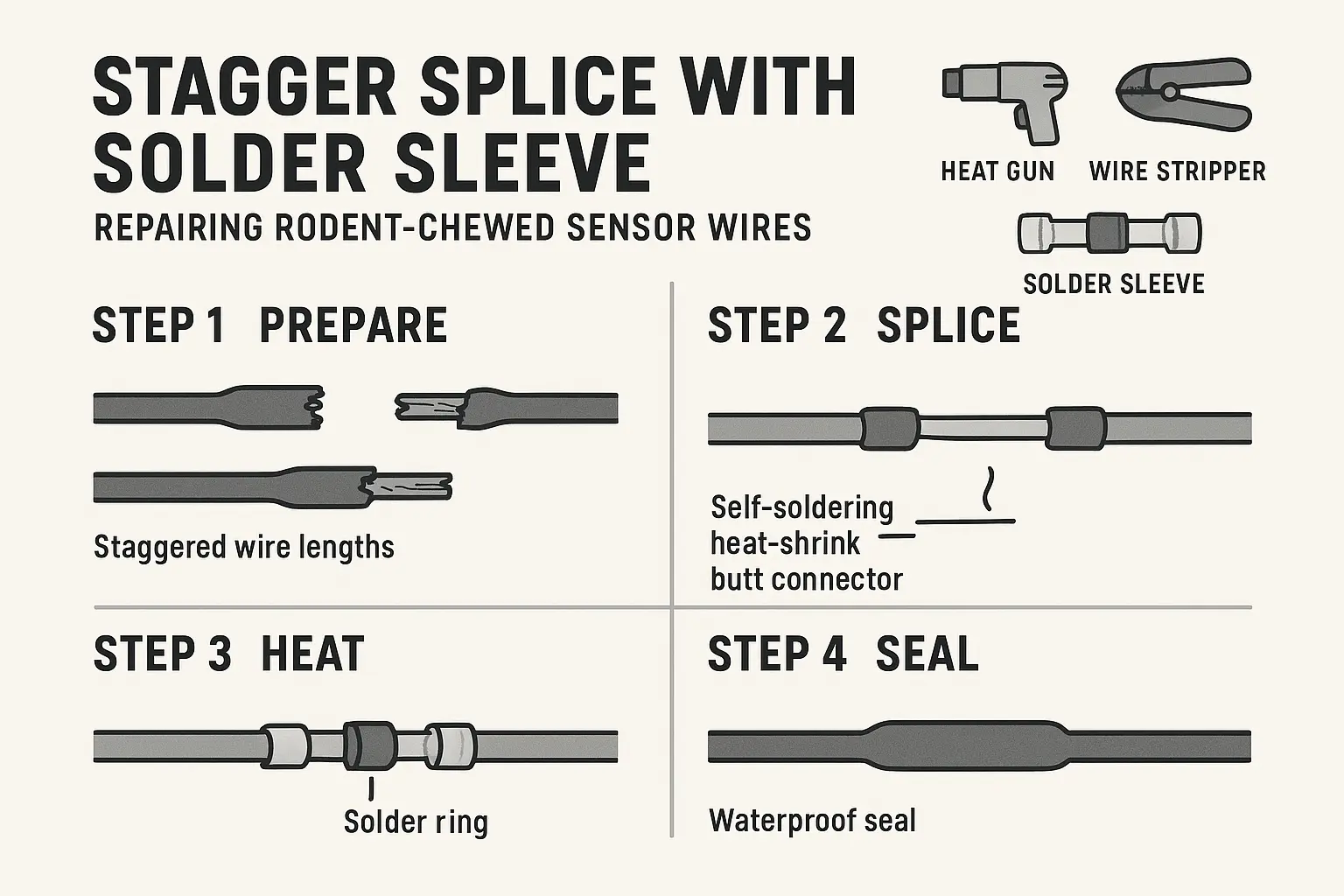
To repair your wires professionally, utilize Self-Soldering Heat-Shrink Butt Connectors (Solder Sleeves) and a professional stagger splicing technique:
- Prep the Wire: Strip 1/4 inch of insulation from the broken wire ends.
- Stagger Your Splices: If repairing multiple adjacent wires, cut them at staggered lengths. This prevents a bulky, bulging harness joint.
- Slide and Solder: Slip a solder sleeve over one end, join the copper strands, center the solder ring over the joint, and apply heat. The solder melts while the outer tubing shrinks and seals.
- Inspect the Connection: If the plug itself is chewed, buy a matching “pigtail connector” instead of a whole harness.
Before working on the electrical components, verify your power source is disconnected. For complex issues, you may also need to conduct a large electric garage door failure analysis or consult manual system diagnostics to trace power drops.