When evaluating attached garage safety, most homeowners rely on basic precautions like turning off engines before entering. However, modern lifestyles—with remote-start systems, quiet hybrid powertrains, and multi-use garages—demand a more rigorous setup. Protecting your home from carbon monoxide (CO) requires moving beyond manual memory and implementing a system combining safe daily habits, smart opener technology, and physical envelope sealing.
Attached Garages and Carbon Monoxide: Door and Opener Habits That Help
Published: Nov 4, 2026
The Physics of Garage Fumes and Infiltration
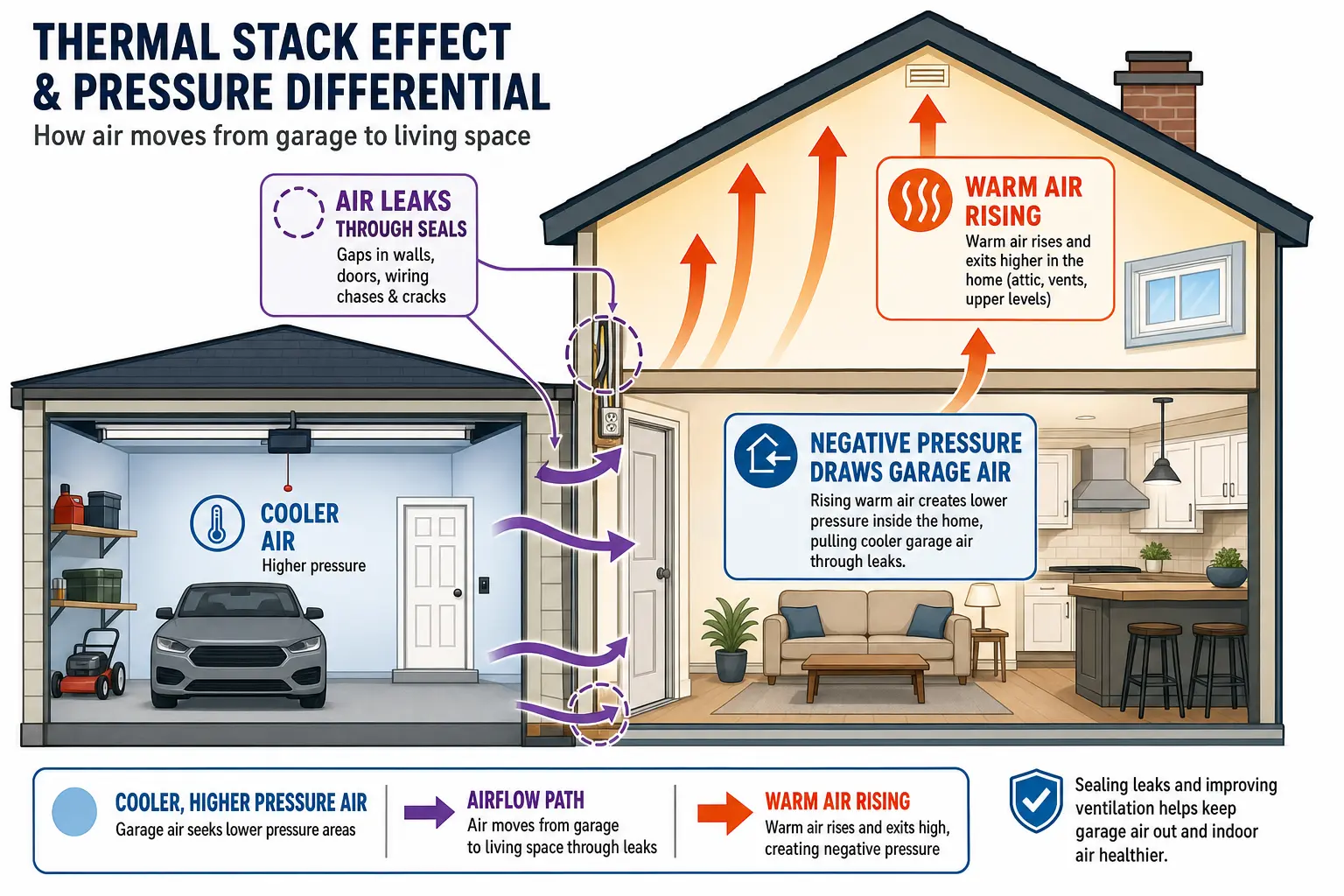
Understanding airflow dynamics reveals why fumes migrate so easily into conditioned living spaces. According to research by the National Institute of Standards and Technology (NIST), 10% to 30% of the air inside a home with an attached garage is drawn directly from the garage space. This transfer is driven by the “stack effect”—where indoor winter heating creates upward thermal buoyancy, pulling unconditioned garage air through wall penetrations, attic spaces, and access doors.
Vehicle cold starts compound this vulnerability. Environmental studies confirm that a cold engine releases up to 80% of its total ride CO emissions during the first 120 seconds, before the catalytic converter reaches its operating temperature (~600°F). In a closed two-car garage, an idling car reaches lethal CO concentrations (>1,000 PPM) in under 5 minutes.
A common misconception is that cracking the door open 1 to 2 feet safely clears exhaust. In reality, partial door openings trap warm, rising exhaust fumes against upper framing and ceiling joists—creating a concentrated CO plenum that migrates directly into bonus rooms above.
Still stuck? Get it fixed today.
24/7 emergency service from licensed local technicians.
Essential Garage Door & Opener Habits
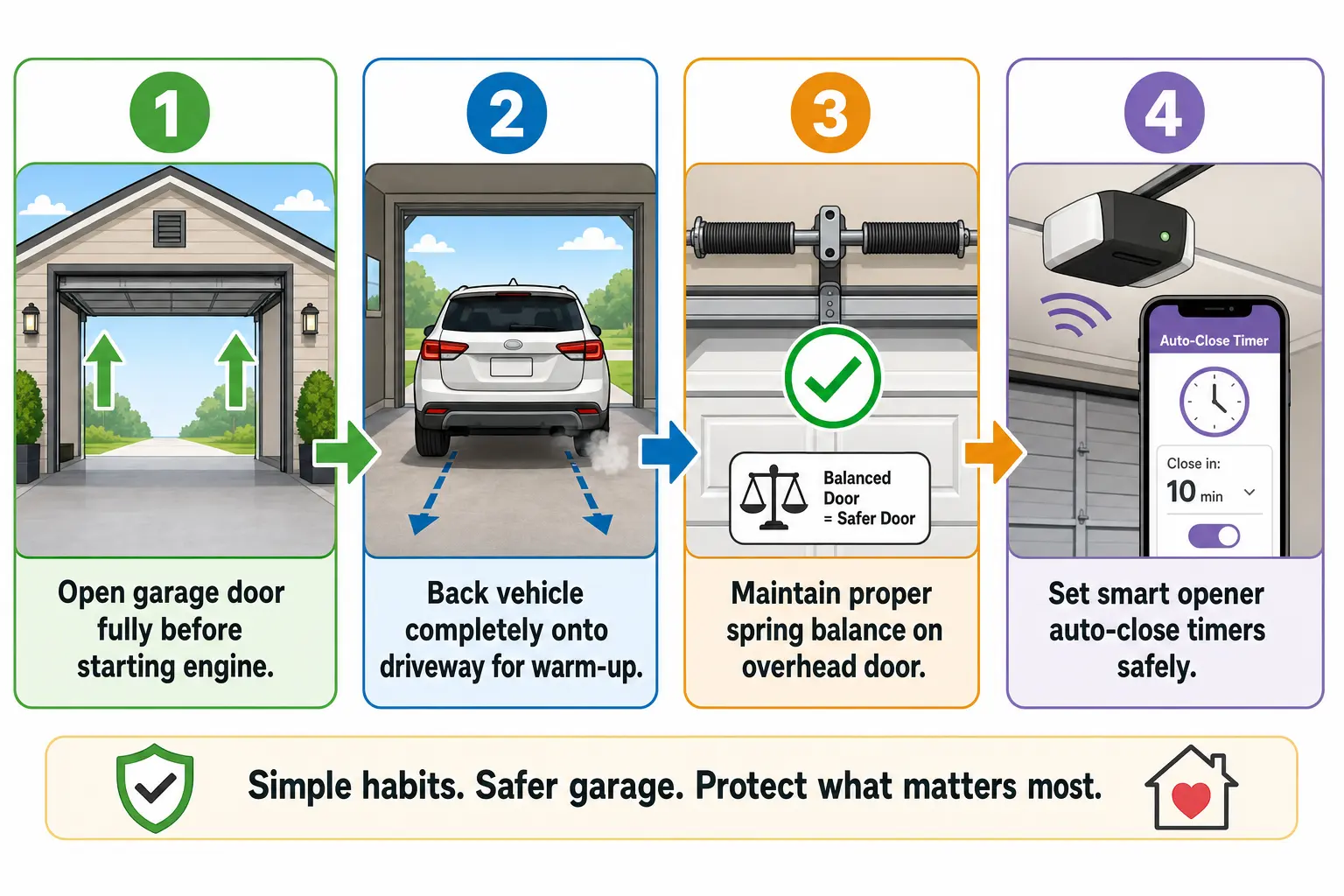
Eliminating risk requires strict operational rules backed by reliable hardware:
- 100% Door Elevation Before Ignition: Never turn a key or trigger remote-start until the overhead door is completely open. Immediately roll the vehicle onto the driveway before warming up.
- Mechanical Balance Inspections: An improperly counterbalanced overhead door can slowly drift downward under its own weight, narrowing the exhaust exit. Regular servicing ensures your opener and spring system hold the door securely extended.
- Smart Opener Schedules: Utilize smart openers (such as LiftMaster or Chamberlain myQ systems) to set auto-close timers and receive open-door status notifications on your phone, avoiding accidental overnight gaps while preventing premature closure during vehicle movement.
Smart Opener Tech and Architectural Upgrades
Technology and proper envelope sealing provide a crucial safety net when habits fall short. Upgrading to smart home integration allows Z-Wave CO detectors (like the Kidde CO120X relay) to trigger dedicated exhaust fans or alert your phone the instant fumes spike.
Architecturally, the entry door between your garage and house must act as a barrier. Installing a self-closing, 20-minute fire-rated door with perimeter bottom drop-seals protects against gas intrusion and ensures strict compliance with local building and fire code mandates. Furthermore, ensure HVAC ductwork is sealed and no return vents pull air from the garage environment.
Per NFPA 72 standards, carbon monoxide detectors should never be placed inside unconditioned garages, as dust and ambient temperatures outside 32°F to 104°F cause sensor failure. Instead, install detectors on the living side of the entry wall (within 10 feet) and outside all bedroom areas. If you suspect structural alignment or opener safety issues, contacting a certified technician for 24 hour garage door repair ensures your opening mechanisms function safely.
Comprehensive MOFU Hardware & Habit Decision Matrix
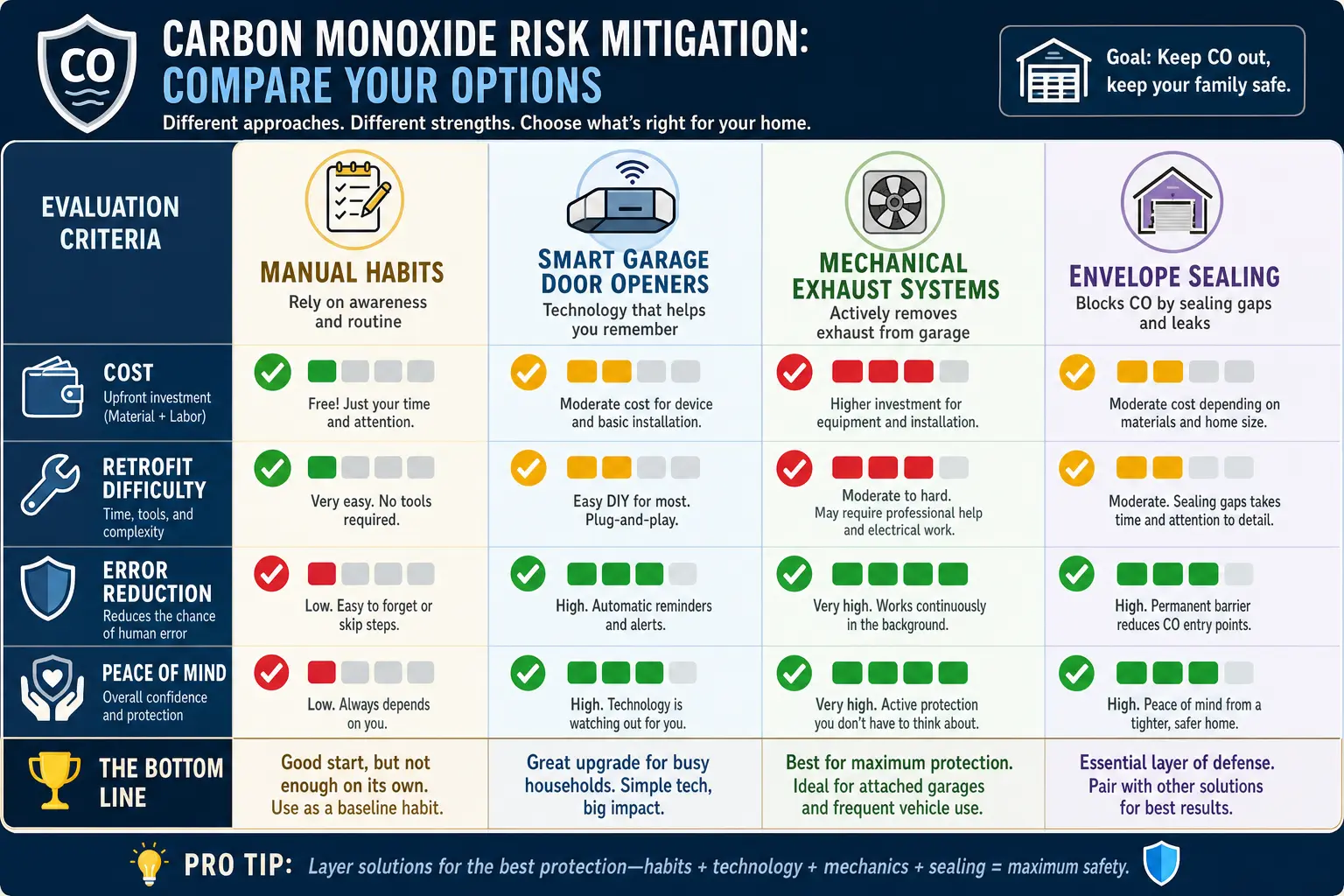
Evaluating hardware retrofits alongside daily habits allows you to choose the right layers of defense:
| Solution Approach | Cost Range | Retrofit Difficulty | Error Reduction | Key Benefit |
|---|---|---|---|---|
| Strict Driver Habits | $0 | Low | Moderate | Stops source emission inside structure |
| Smart Opener System | $150 – $350 | Low – Moderate | High | Prevents forgotten doors & sends real-time alerts |
| Entry Envelope Sealing | $100 – $400 | Moderate | High | Blocks stack effect infiltration into living area |
| Automated CO Relay Fan | $300 – $800 | Moderate – High | Very High | Active automated exhaust evacuation |
Frequently Asked Questions
Is it safe to warm up a car with the garage door open?
No. Even with the overhead garage door fully open, cold engine starts produce high concentrations of carbon monoxide that become trapped near the garage ceiling. Thermal pressure dynamics draw these dangerous fumes straight into adjacent rooms and attic spaces. Always back your vehicle completely onto the driveway before idling.
Should you put a carbon monoxide detector in the garage?
No. Standard residential CO alarms (UL 2034) are designed solely for conditioned indoor spaces between 32°F and 104°F. Unconditioned garage environments subject detectors to extreme temperatures, humidity, and exhaust dust, causing premature sensor failure or constant nuisance trips. Place detectors inside the home within 10 feet of the garage entry door.
How does carbon monoxide get from the garage into the house?
Carbon monoxide travels into living areas through the building “stack effect.” Warm air rising through the house creates negative pressure on lower levels, pulling garage air through unsealed entry door gaps, electrical junction boxes, wall pass-throughs, and ceiling joists into the living space.