Condo and Townhouse Garage Doors: Who Fixes What


Published: Oct 7, 2026

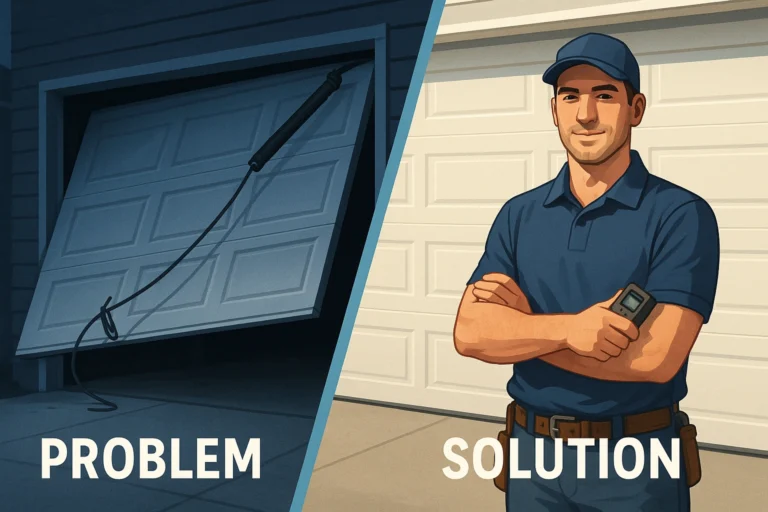
Imagine pulling out of your garage on a busy morning, hearing a sudden metallic snap, and finding yourself trapped. If you live in a condominium or a townhouse, your immediate concern isn’t just about getting your car out—it is about who is legally and financially responsible for the fix.

Unlike a single-family home where you own and maintain every structural element, community associations introduce a web of shared ownership rules. Because a garage door functions as a structural outer shell that maintains community aesthetics but serves only one resident’s private vehicle, it sits directly in a legal grey area.

Introduction: The Great Garage Door Grey Area


This grey area often leaves homeowners feeling stuck between a unresponsive HOA board and an active mechanical failure. If you need immediate assistance to secure your home or release a trapped vehicle, utilizing a professional emergency garage door service is often the first logical step while the paperwork is sorted out.
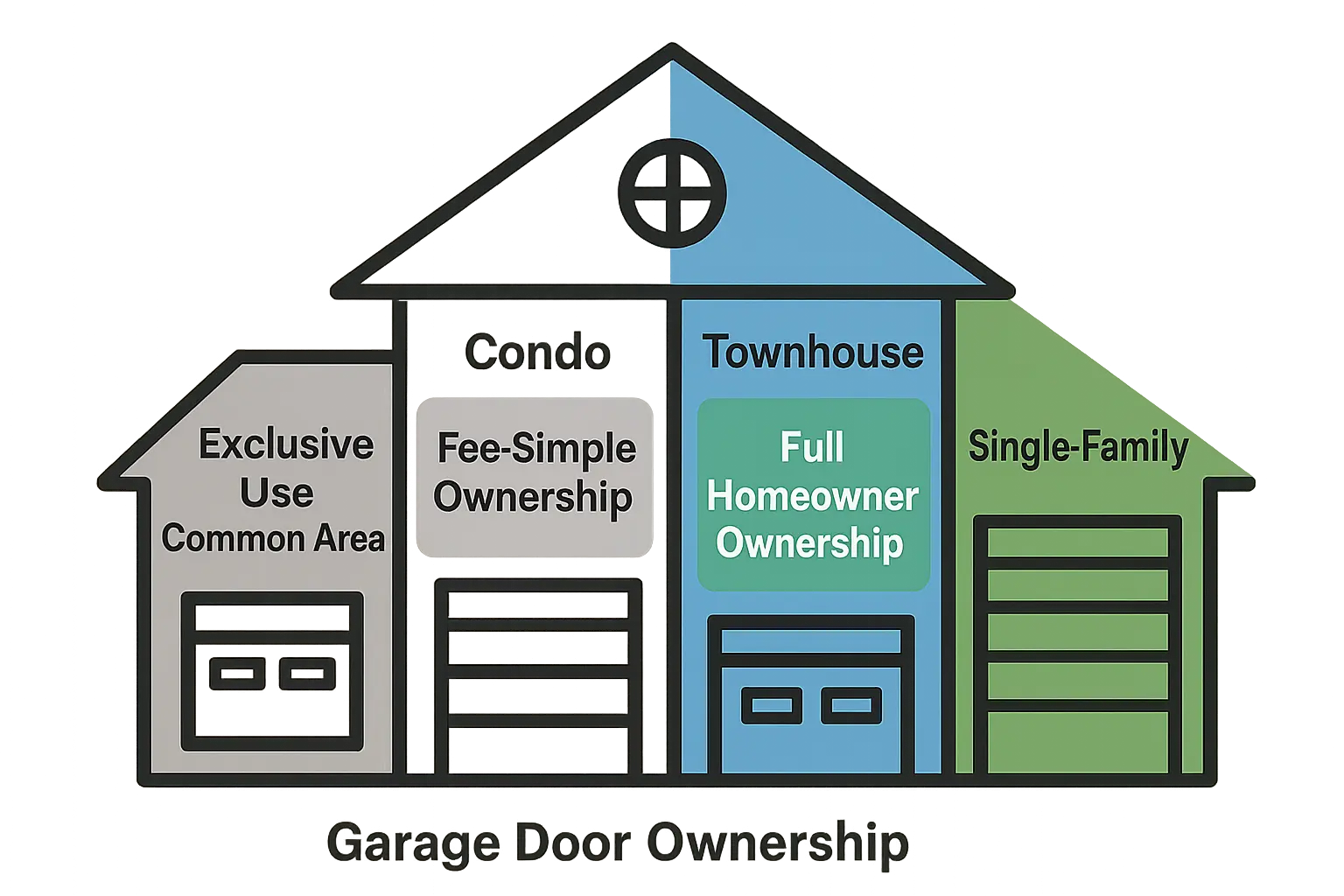
This visual clarifies how garage door ownership differs between Condos, Townhouses, and Single-Family homes, highlighting the legal grey area and who typically holds responsibility.

To understand who pays for what, we must look at how property ownership is legally structured in your community’s Covenants, Conditions, and Restrictions (CC&Rs).

  • Condominiums (Airspace Ownership): In a condo, you own the interior airspace of your unit. The exterior structure is owned collectively. Under statutory defaults like California Civil Code Section 4775, the HOA is legally responsible for the repair and replacement of “Exclusive Use Common Areas” (EUCAs)—which typically includes the exterior of your garage door. The unit owner, however, remains responsible for basic upkeep.
  • Townhouses (Fee-Simple Ownership): Townhouse owners usually own the physical structure, including the garage. However, the HOA often holds an easement or a “covenant to maintain” to keep the community visually uniform.
  • Single-Family HOAs: You own the entire structure and its mechanical systems. The HOA’s only role is enforcing aesthetic standards, such as ensuring your choice of color matches approved garage door color matches.

Additionally, if you live in a coastal or storm-prone region, local building codes may dictate that replacement doors meet FEMA wind-load standards of 140 to 180 mph, which requires specialized structural integrity.

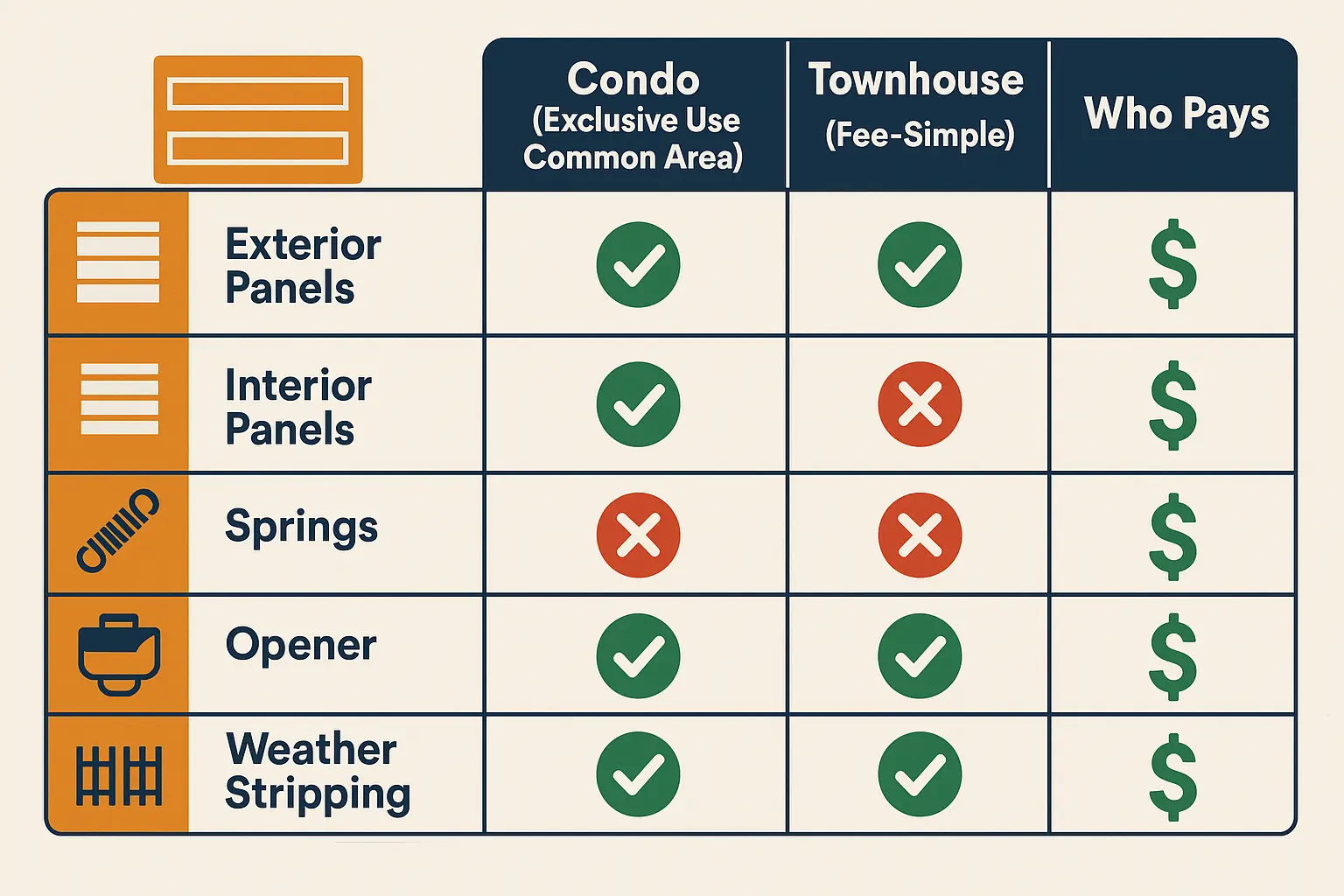
Component-by-Component Responsibility Matrix


To cut through generalities, we must analyze the individual garage door parts to establish who is responsible for repairs.

This matrix simplifies understanding of who fixes and pays for each garage door part depending on property type, serving as a quick reference tool during disputes or repairs.

Garage Component Condo / EUCA Status Townhouse Status Primary Financial Responsibility
Exterior Panels (Dents/Rot) HOA (Structural & Aesthetics) Owner (Subject to HOA approval) HOA (Unless owner negligence caused damage)
Torsion Springs Owner / EUCA (Depends on CC&Rs) Owner Owner (Usually classified as mechanical)
Opener Motor & Sensors Owner (100% Internal/Mechanical) Owner Owner
Cables and Tracks Owner (Mechanical upkeep) Owner Owner
Weather Stripping Owner (Routine maintenance) Owner Owner

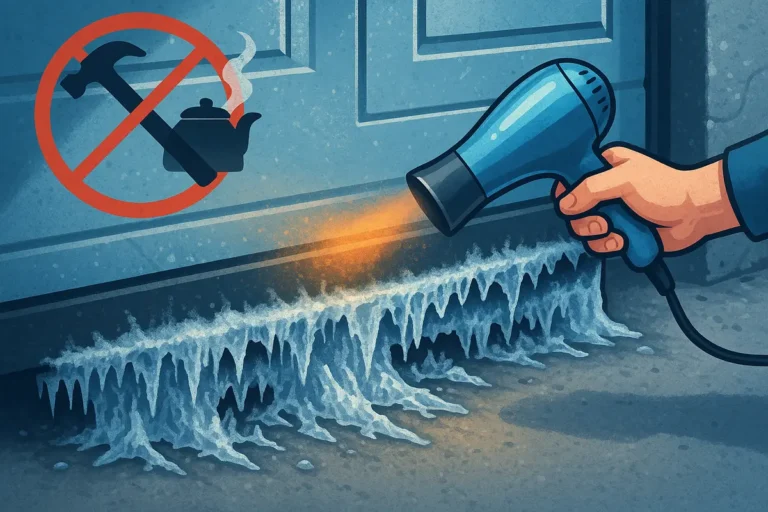
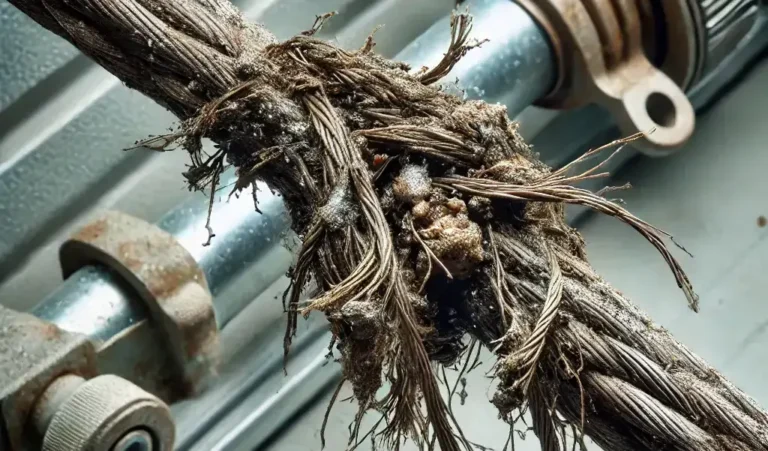
While the HOA might manage the replacement of an aged panel to keep the community uniform, resolving a broken garage door spring or fixing persistent garage door cable problems almost always falls to the individual homeowner. To prevent premature wear on these mechanical components, homeowners should know how often should you lubricate your garage door to extend the life of the system.

Critical Scenarios: Who Pays When Things Go Wrong


Scenario A: Your Car Hits the Garage Door

If a family member or guest crashed into garage door panels, the financial burden falls on the homeowner. Even in a condo where the exterior panel is considered a common element, you must pay for the damage because you caused it. You will need to coordinate with a professional service to see if you can learn how to repair a garage door panel safely or if a complete section replacement is required.

Scenario B: Mechanical Failure Traps Your Vehicle

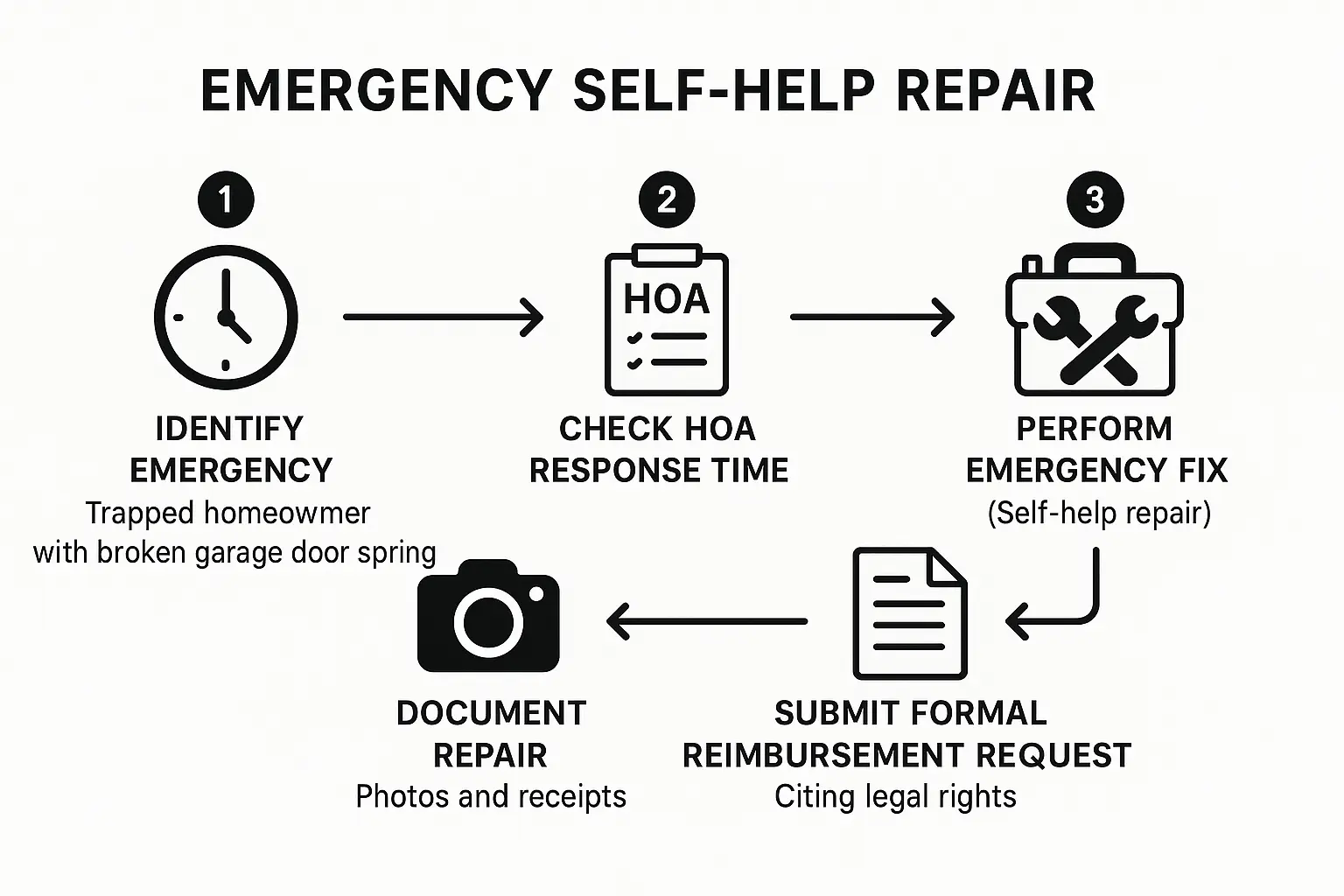
If a safety sensor fails or you hear a loud garage door motor clicking sound and the door refuses to budge, this is a mechanical issue. Because this involves the internal drive mechanism, the financial responsibility is yours. If your car is trapped inside, you may need to execute emergency self-help steps to bypass the motor.

This flowchart guides readers through the emergency self-repair process, empowering trapped homeowners to safely fix garage doors and reclaim costs legally.

How to Resolve an HOA Garage Door Dispute


If your HOA board is refusing to repair a damaged exterior panel that clearly falls under their responsibility, follow these steps to protect yourself:

  1. Analyze Your CC&Rs: Locate the definitions of “Separate Interest” versus “Exclusive Use Common Area.” Look specifically for language regarding exterior doors.
  2. Document Everything: Take photographs of the damage, note any secondary damage (like water intrusion), and log the timeline of your communication.
  3. Submit a Formal Request: Send a written maintenance request quoting your CC&R guidelines or state property statutes.
  4. Initiate Dispute Resolution: If the board refuses to act, request Internal Dispute Resolution (IDR). This is a structured, cost-free meeting designed to resolve disputes without formal litigation.

Always ensure that any technician you hire carries a Certificate of Insurance (COI) and proper licensing to meet your HOA’s administrative guidelines.

Frequently Asked Questions


Can I repair my HOA garage door panel myself?

You should not attempt structural repairs on exterior panels yourself. According to industry data, over 60% of all HOA disputes stem from unapproved exterior alterations. Performing unauthorized work can lead to fines, and uncertified work can void manufacturer warranties or violate local wind-load compliance codes.

What should I do if my garage door fails on a weekend?

If a failure occurs during non-business hours and poses a security risk or traps your vehicle, you can hire an emergency repair service. Document the failure, take photos, and keep all receipts. If the CC&Rs state the failed component was the HOA’s responsibility, you can submit the bill for reimbursement.

Is the HOA responsible for a broken garage door spring?

Generally, no. Even in condominiums, the mechanical components (springs, cables, and openers) that serve only your individual unit are classified as separate property or maintenance items for which the unit owner is financially responsible.

Contact / Request a Call