When evaluating home safety, the garage door is often overlooked. Yet, it is typically the largest and heaviest moving object on a property. If your garage door opener was manufactured before 1993, or if you are constantly struggling with misaligned photo-eyes, you are navigating a landscape of hidden liability, physical danger, and regulatory non-compliance. Understanding the UL 325 standard is not just about keeping up with technical jargon—it is about knowing when a system is no longer safe to operate and making an informed decision to protect your home.
UL 325 Explained: Why Openers Without Safety Sensors Must Be Retired
Published: Sep 28, 2026
The Danger of "Mechanical Only" (The Pre-1993 Trap)
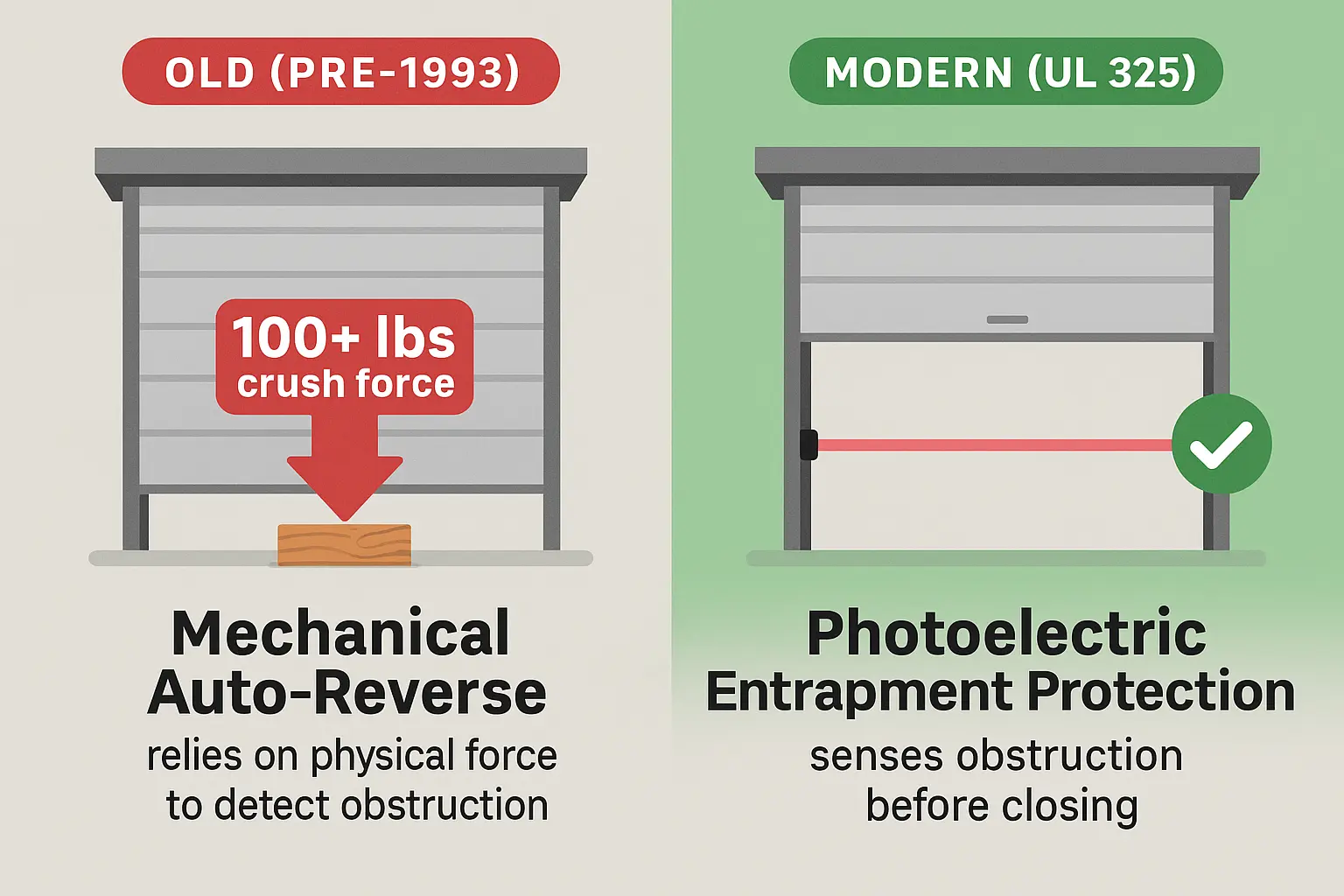
Before January 1, 1993, automatic residential garage door openers relied entirely on mechanical resistance to trigger a reversal. To stop and reverse, the downward-moving door had to physically strike an object with substantial force. Over time, internal plastic gears degrade and system lubrication fails. Homeowners often respond by turning force adjustment screws to high limits just to get a sticky door to close, which can adjust garage door travel so forcefully that the safety reversal feature is completely neutralized.
The consequences of this mechanical dependency are stark. Historical data from the U.S. Consumer Product Safety Commission (CPSC) reveals that between 1982 and 1992, automatic garage door entrapment caused at least 54 to 60 child fatalities. CPSC tracking also indicated that up to 40% of pre-1993 automatic openers had auto-reverse mechanisms that were either broken or adjusted to a crush force so high they failed to reverse under critical weight. Today, the CPSC estimates that garage door system failures and impacts still send approximately 30,000 people to emergency rooms annually. This makes prioritizing safety features like a pet friendly garage door opener a vital move for every modern household.
UL 325 Explained: The 1993 Paradigm Shift
On January 1, 1993, the federal government enacted Public Law 101-608, codifying the ANSI/CAN/UL 325 standard into a mandatory federal consumer safety rule (16 CFR Part 1211). This legal milestone shifted the industry standard from physical impact reversal to Monitored Entrapment Protection.
In technical terms, “Monitored” means the opener’s logic board continuously sends and checks for a pulsing electronic signal from the photoelectric eye sensors. If the infrared beam is broken, out of alignment, or disconnected, the motherboard blocks the downward travel of the door immediately. If your current system is failing, scheduling a diagnostics check is critical to determine if you have garage door safety sensors not working or if the entire control board has reached the end of its operational lifespan.
Debunking the "Retrofitting" Myth
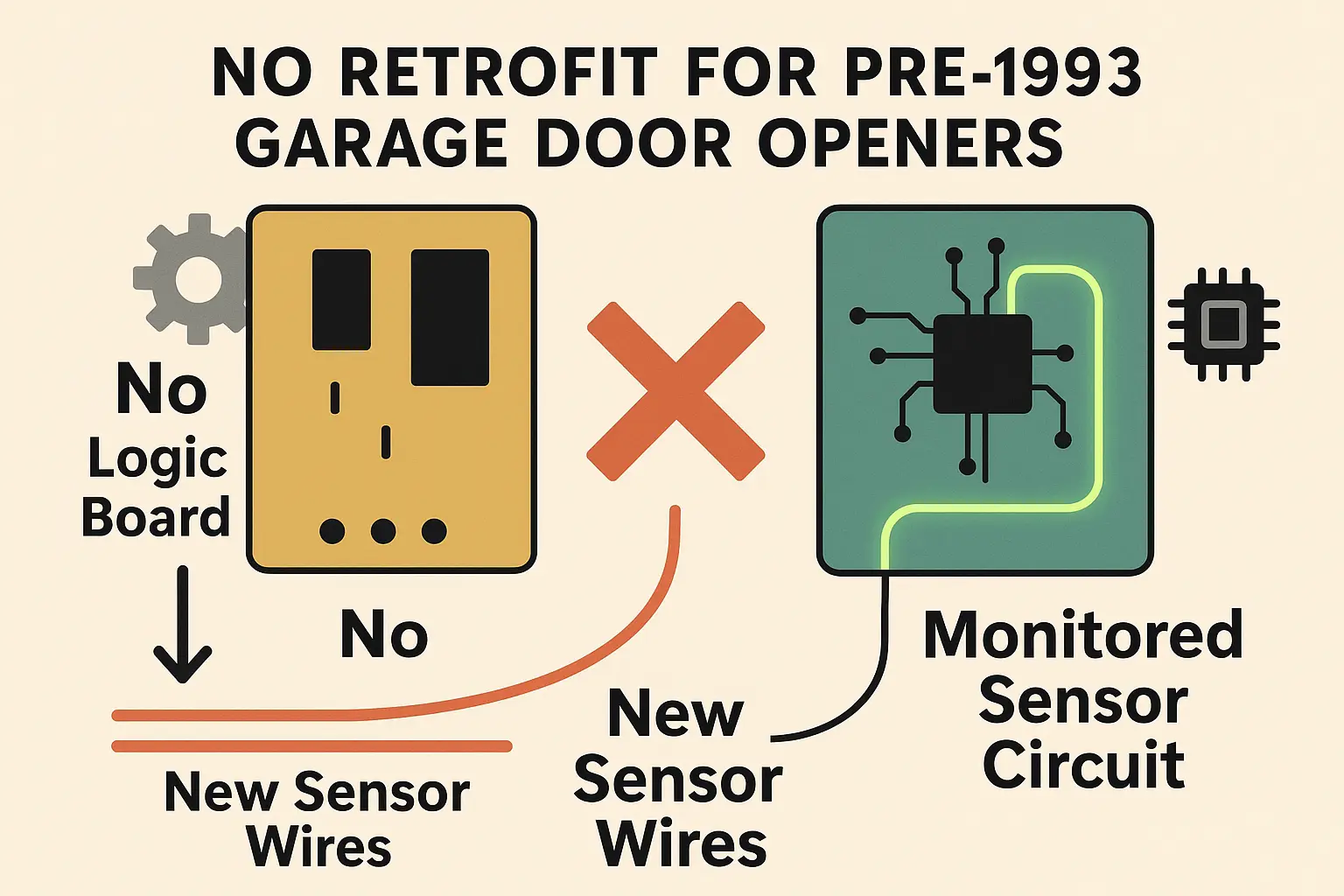
Many homeowners ask if they can simply buy a cheap pair of aftermarket photo-eyes and wire them to an older, pre-1993 motor head to save money. Unfortunately, this is a technical impossibility.
Legacy garage door openers do not possess microprocessors or the internal monitoring logic boards required to manage a supervised safety circuit. They are physically incapable of recognizing or receiving the modern electronic handshake of a safety sensor. Consequently, retrofitting is not an option; the only path to safety compliance is a complete system replacement. When safety is on the line, attempting temporary bypasses is a major risk, and a professional garage door opener repair diagnostic is the fastest way to confirm whether a modern replacement is required.
Real Estate, Insurance, and Legal Liability Flashpoints
Keeping an obsolete opener active introduces steep liabilities, particularly for home sellers and landlords:
- The Home Inspection Trap: Certified home inspectors immediately flag pre-1993 openers as material safety defects. Selling a home with a non-compliant system can stall negotiations, affect appraisal values, or completely halt a real estate transaction.
- The Landlord Liability Nightmare: Operating a rental property with a non-UL 325 compliant opener exposes owners to catastrophic negligence claims. If an injury occurs on a pre-1993 system, property insurance providers may void coverage entirely because the property housed an outlawed, non-compliant device.
The 2-Minute DIY Garage Safety Test
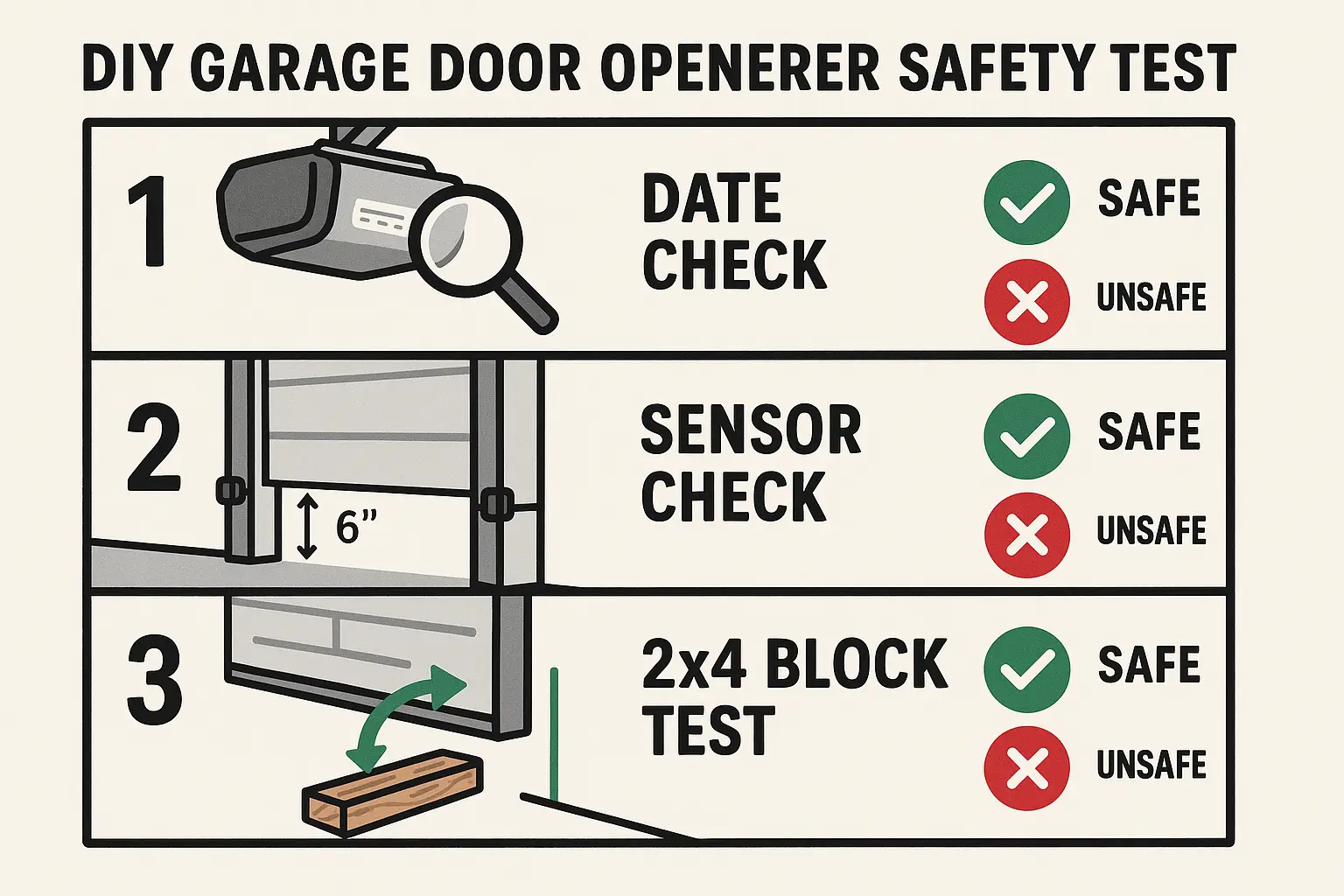
To quickly verify if your garage door opener is legally compliant and operating safely, execute this simple three-step test:
- The Date Check: Locate the manufacturer label on your opener motor. If the manufacture date is before January 1, 1993, the unit is legally obsolete and must be retired.
- The Sensor Check: Verify you have photo-eyes installed no higher than 6 inches above the garage floor. If your door operates without these sensors, the unit is unsafe.
- The 2×4 Block Test: Lay a 2×4 piece of wood flat on the garage floor directly under the door’s path. Activate the door to close. Upon striking the wood, the door must reverse within two seconds. If it continues trying to crush the wood, immediately seek a professional garage door tune up to assess the safety systems.
Modern Upgrades: Beyond Basic Safety
Investing in a UL 325 compliant replacement also unlocks modern convenience and robust home security. Modern systems offer integrated smart technologies, which allow you to verify what is a wifi garage door opener can do for remote scheduling, temporary guest access, and real-time alerts.
These modern systems feature mandatory pre-close alarms (audible beeps and flashing lights) designed to protect children and pets from unexpected remote closures. Upgrading to a modern garage door replacement also introduces secure rolling codes that protect against signal-grabbing break-ins, giving you complete peace of mind.
Frequently Asked Questions
Can I bypass my garage door sensors if they keep misaligning?
No. Under modern UL 325 compliance, a garage door opener will not close if the safety sensors are bypassed or disconnected. The internal logic board relies on a continuous, monitored signal to operate. Bypassing them is a major safety risk and indicates a system malfunction that requires professional correction.
Will a pre-1993 garage door opener fail a home inspection?
Yes. Home inspectors are trained to identify pre-1993 non-sensor models as hazardous. These systems will be flagged as immediate safety defects in the inspection report, which can delay property sales and expose sellers to mandatory repair or replacement requests.
Why can't I just retrofit my legacy garage door opener with new photo-eyes?
Legacy openers manufactured before 1993 do not have the microprocessor-based motherboard needed to support monitored safety circuits. They lack the necessary electronic terminal ports and programming to interact with photoelectric sensors, meaning a complete system replacement is the only viable path.
Don’t leave your property’s safety to chance. If your garage system is out of date, experiencing sensor issues, or failing safety tests, contact our local team for experienced new haven garage door repair services. Let us help you transition your garage into a secure, fully compliant space.