Broken Spring on a Weekend: Getting Your Car Out Safely


Published: Sep 24, 2026

A loud, explosive bang from your garage on a Saturday morning usually means one thing: your garage door spring has snapped, trapping your car inside. It is a highly stressful, time-sensitive emergency. However, reacting in a panic can lead to severe physical injury, vehicle damage, or costly mechanical destruction. To navigate this situation safely and cost-effectively, you need a clear, professional protocol.
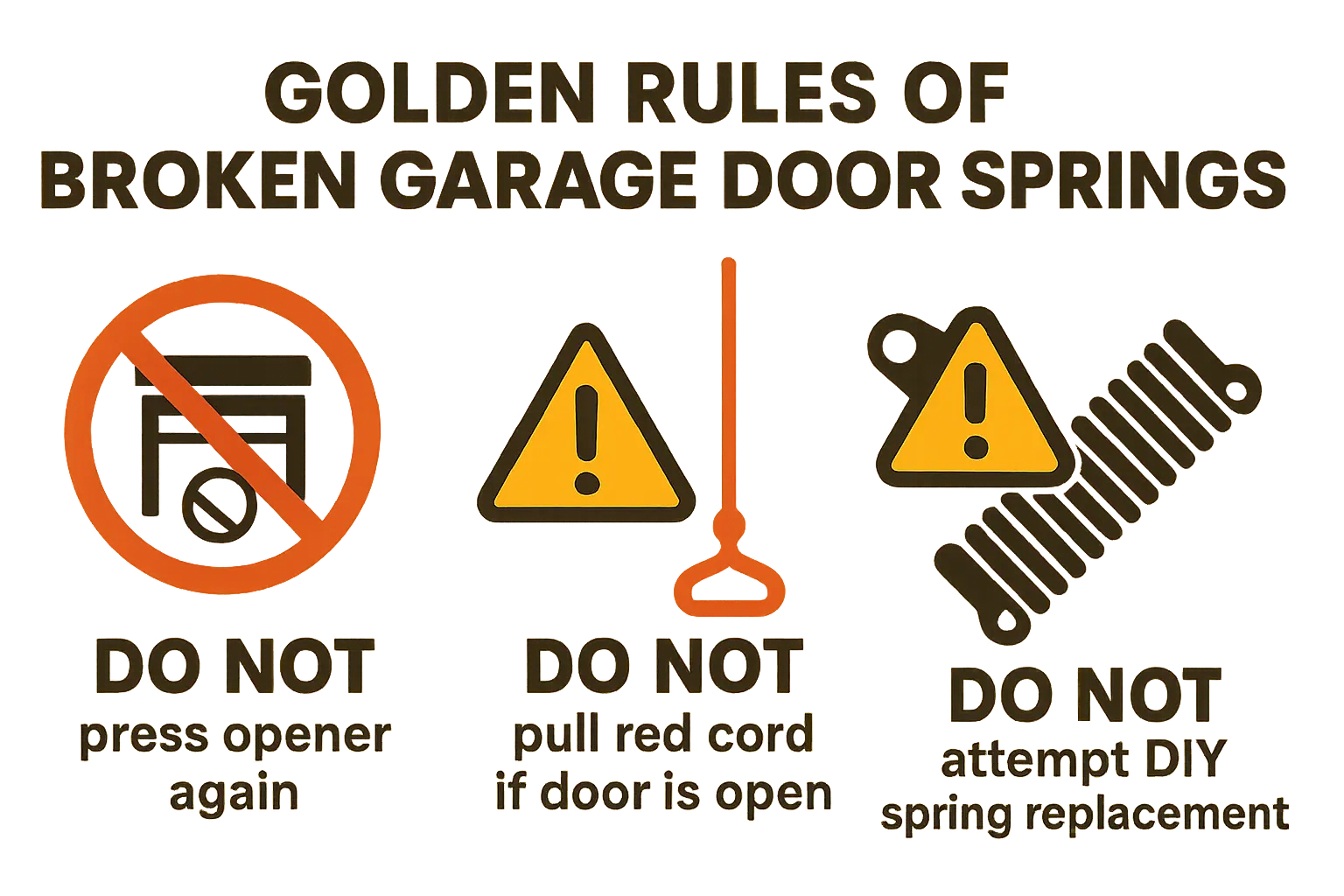
The Golden Rules of Broken Garage Door Springs: Follow these safety-first steps immediately to protect yourself and your vehicle when your garage door spring breaks.

Before taking action, establish your immediate triage rules:

  • Do NOT press the automatic opener button again. Automatic openers are only designed to lift 10 to 15 pounds of counterbalanced weight. Without the spring, the motor faces the full, unmitigated deadweight of the door, which can easily trigger a large electric garage door failure analysis scenario, stripping the drive gears instantly and adding $350 to $500 in motor replacement costs.
  • Do NOT pull the red emergency cord if the door is partially open. Pulling the cord releases the trolley lock, immediately transferring 150 to 300+ pounds of deadweight to gravity. The door will crash down at terminal velocity like a guillotine.
  • Do NOT attempt to replace the spring yourself. High-tension steel springs store lethal torque and should only be handled by certified professionals.

If your vehicle is trapped, your primary goal is to learn how to open garage door with broken spring safely using a controlled, physical extraction protocol.
Understanding the Lifespan of Your Springs


Garage door springs do not last forever. They are engineered and rated by “cycles”—with one cycle representing a single opening and closing of the door. Standard builder-grade springs are rated for 10,000 cycles, which translates to roughly 7 to 10 years of use for an average family.

Over time, daily wear, temperature fluctuations, and environmental moisture cause the steel to degrade. Understanding whether you have a torsion spring vs extension spring system is key, but both types eventually succumb to micro-corrosion and snap under tension. Keeping up with regular garage door spring maintenance is the best way to prevent sudden weekend failures, but once a break occurs, physical extraction must be done with extreme care.

The Safe Manual Extraction Protocol


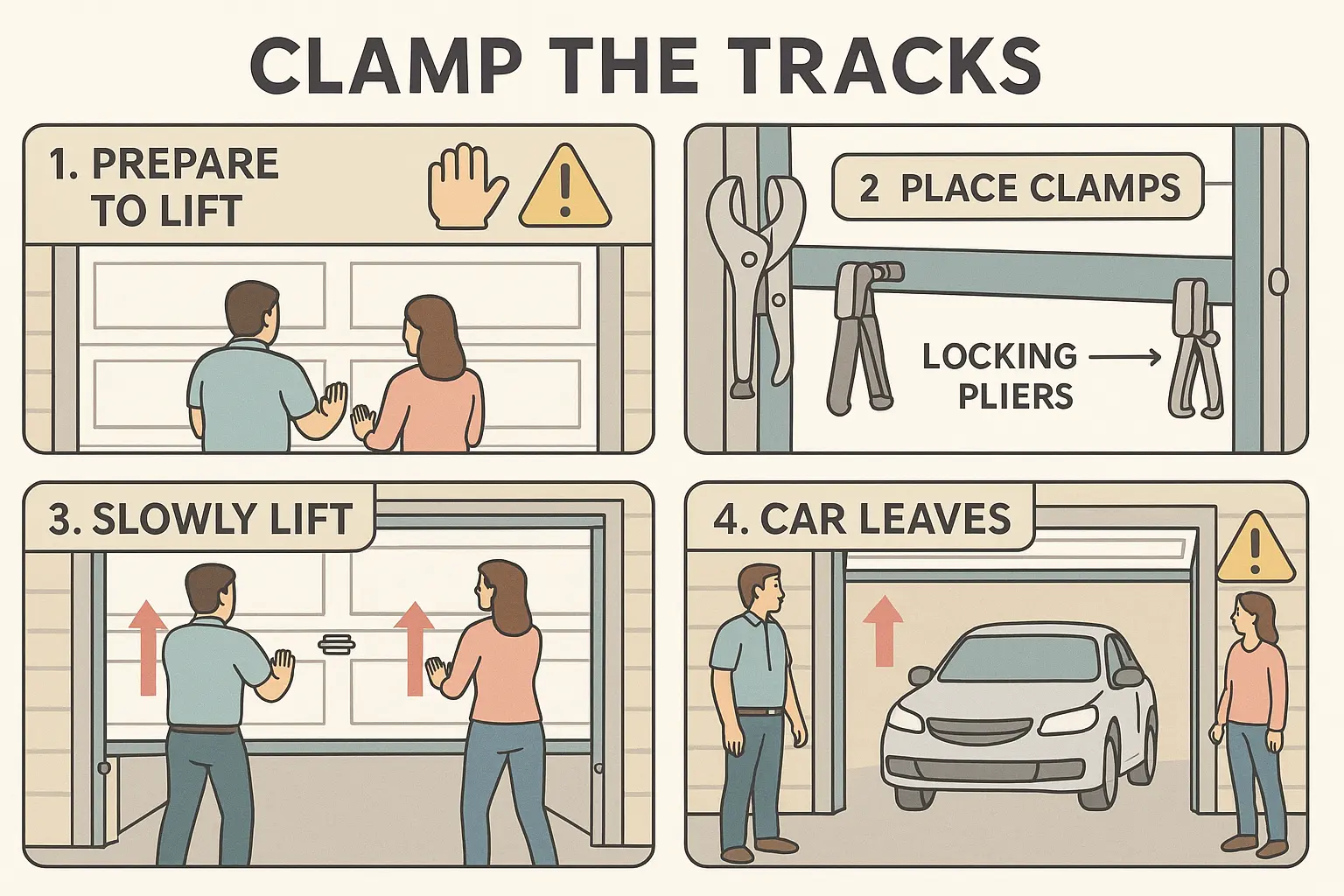
If you must retrieve your vehicle immediately to get to work or handle an emergency, you can manually lift the door. This protocol requires at least two capable adults. Never attempt this alone.

  1. Prep and Disconnect: Ensure the garage door is in the fully closed position. Pull the red emergency release cord straight down to disengage the automated opener carriage. (To re-engage the system later, you can learn how to reset garage door opener after pulling red cord).
  2. The Coordinated Lift: Stand at the center of the door with your partner. Bend your knees, keep your back straight, and lift slowly and evenly. Keep the door level to prevent it from binding or slipping in the tracks.
  3. The Locking Clamp Hold: Once the door is fully open, have your partner place two heavy-duty locking pliers (Vise-Grips) or C-clamps on the metal tracks directly beneath the bottom rollers on both sides. This acts as a physical steel stop, preventing the 200+ lb door from dropping.
  4. Vehicle Extraction: Quickly and carefully back your vehicle out of the garage. Ensure all spotters and bystanders remain clear of the door path during motion.
  5. The Controlled Descent: Have your partners hold the door’s weight securely, carefully remove the clamps, and guide the door back down to the closed position manually. Do not let go or allow it to free-fall.

Safe Extraction Protocol: Follow these four critical safely steps to manually open a garage door with a broken spring and retrieve your vehicle without injury or damage.

Evaluating the Weekend Financial Dilemma


Once your car is safely parked in the driveway, you face an economic decision: pay a weekend emergency premium or wait until Monday business hours.

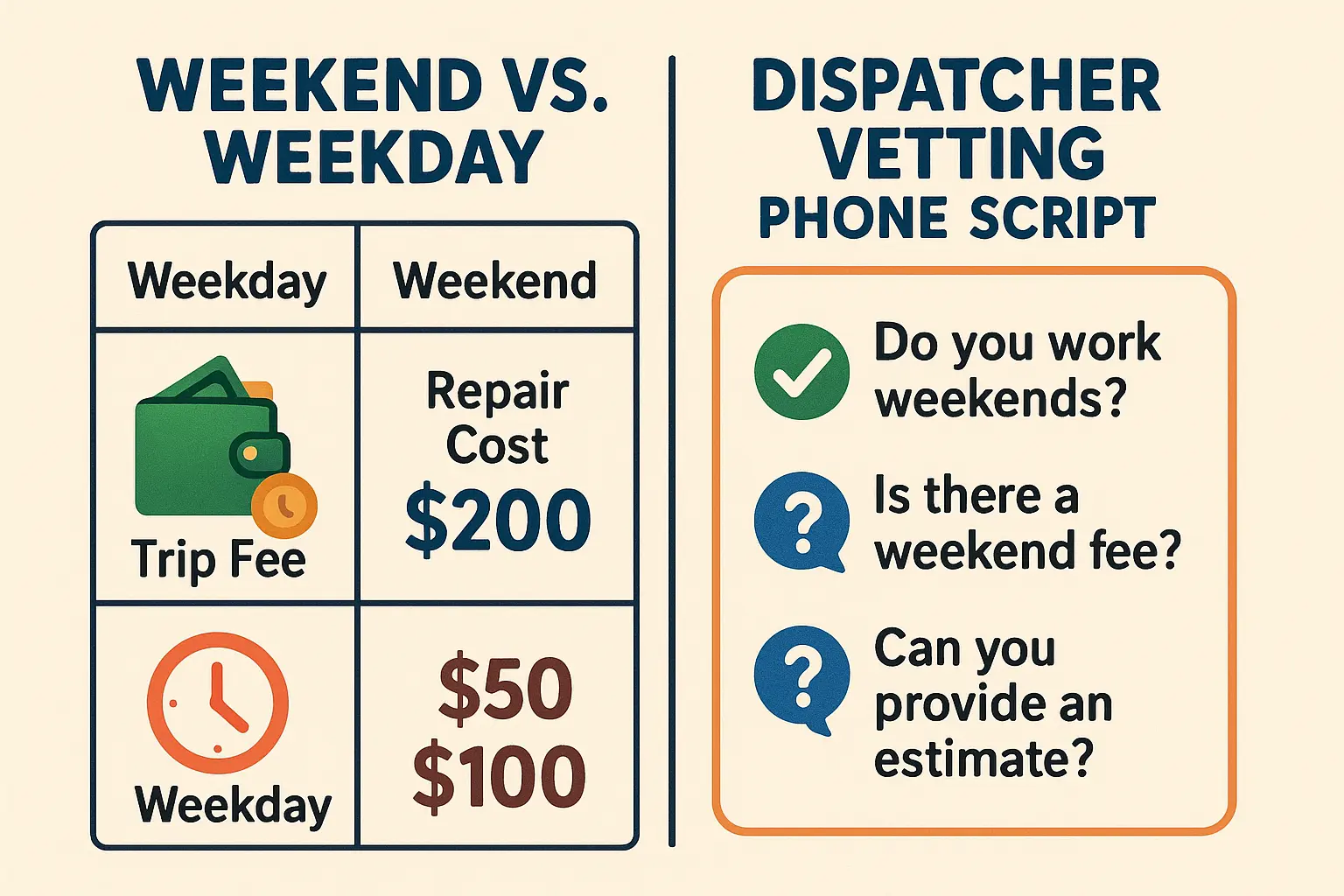
According to nationwide industry invoicing databases, the average emergency garage door repair costs approximately $612. Standard weekend or after-hours trip fees often add a $75 to $200 surcharge on top of standard labor rates.

If you successfully executed the manual lift protocol, you can utilize the “One-Way Ticket” strategy: leave your car parked outside, keep the garage door safely lowered and locked, and wait until Monday to schedule standard garage door torsion spring repair connecticut. This avoids emergency surcharges entirely.

However, if you cannot lift the door or require immediate resolution, you will need to call an emergency garage door service. To avoid predatory pricing or bait-and-switch fees, use this screening script when calling local dispatchers:

  • “Is your weekend emergency fee a flat trip rate, or is it stacked with after-hours hourly fees?”
  • “Do you stock standard replacement springs on your service truck today to guarantee a single-visit repair?”
  • “Will the technician provide a complete, binding written quote before starting any work?”

Additionally, ask if a garage door cable replacement near me is bundled in the quote, as snapped springs often damage or fray the adjacent lift cables.

Weekend Dispatch Vetting & Cost Comparison: An easy reference to understand emergency fees and confidently vet repair services before calling, saving money under pressure.

Making a Confident, Safe Decision


At 24H Garage Doors (operating legally as Y & A Garage Doors LLC), we have provided professional, transparent residential and commercial garage door services across Connecticut since 2016. Founded by Mr. Yaacov M. Atia, our team is built on promptness, safety, and upfront communication. Whether you choose to wait for weekday rates or need an immediate emergency team dispatched to your driveway, we are here to provide clear pricing and reliable expertise.

Frequently Asked Questions


Can I use my automatic opener to lift the door just once with a broken spring?

No. Doing so will likely destroy your opener motor. Standard openers are designed to lift very little weight, relying on the springs to do the heavy lifting. Forcing the motor to lift a deadweight of up to 300 pounds will strip the gears and cost you hundreds of additional dollars in motor repairs.

What is the average cost of a weekend emergency spring repair?

The average emergency garage door repair cost is around $612. Weekend, holiday, or after-hours calls usually incur an additional dispatch fee or trip surcharge ranging from $75 to $200 on top of standard labor and material costs.

Why did my garage door spring snap suddenly on the weekend?

Springs degrade gradually based on their cycle life (usually 10,000 cycles). Rapid temperature drops make high-tension steel brittle, while moisture and salt air cause micro-fissures that weaken the metal, causing the final snap to occur suddenly under tension.

Contact / Request a Call