Professional vs. DIY Garage Door Tune-Up: What You Need to Know


Published: Sep 7, 2026

Every homeowner eventually faces the same dilemma: your garage door begins to squeak, shimmy, or move with a sluggish reluctance. Is this a minor issue you can resolve with a quick trip to the hardware store, or does it require professional attention?

While a $15 silicone spray can is tempting, the mechanics of a modern overhead door system are highly complex. Data from the National Electronic Injury Surveillance System (NEISS) and the U.S. Consumer Product Safety Commission (CPSC) reveal that garage doors are responsible for 20,000 to 35,000 emergency-room-treated injuries annually. These incidents include approximately 7,500 pinch or crush injuries and 2,000 severe crushing accidents caused by falling doors. Additionally, clinical studies published by the National Institutes of Health (NIH) document catastrophic ocular and facial trauma resulting from high-velocity kinetic energy released by snapped springs.

Evaluating the division between safe DIY maintenance and specialized professional service is critical to protecting your physical safety, your home warranty, and your wallet.
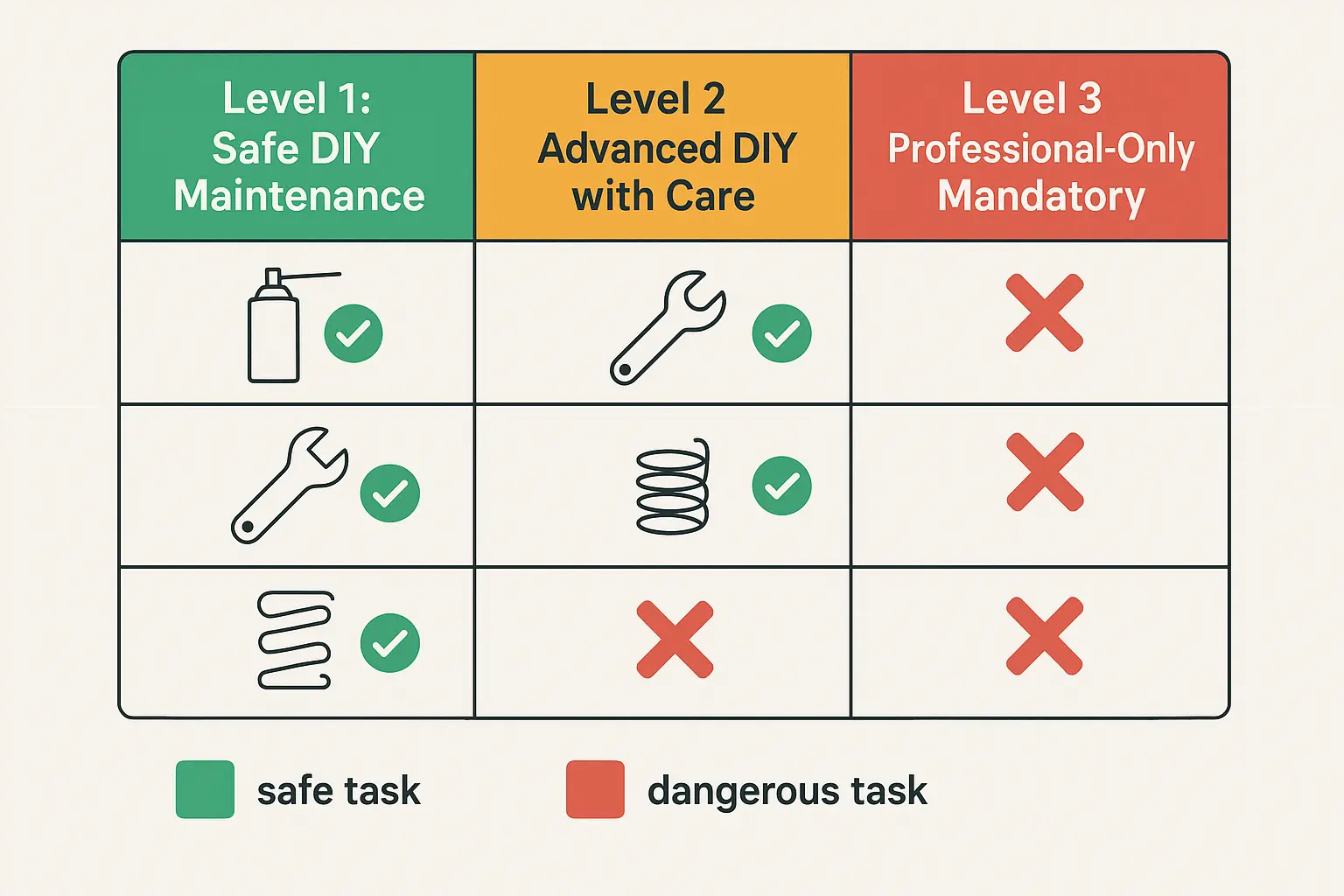
The DIY vs. Professional Safe Bounds Matrix


Understanding where to draw the line between a weekend project and a mandatory service call prevents costly mistakes. Simple cleaning and topical lubrication are perfectly safe for homeowners. However, components under extreme mechanical tension or integrated with system electronics require specialized tools and diagnostic expertise.

This visual matrix clarifies which garage door maintenance tasks homeowners can safely perform themselves and which require professional expertise, helping reduce confusion and prevent costly mistakes.

Attempting to adjust a high-tension torsion system yourself is incredibly dangerous. If you suspect structural damage, scheduling a professional garage door torsion spring repair connecticut is the safest path forward. Similarly, managing frayed lines should always be handled via garage door cable replacement near me rather than attempted as a DIY project.

Step-by-Step Guide: Safe DIY Garage Door Maintenance


For the tasks that fall safely within the homeowner’s domain, a structured maintenance routine can significantly extend the lifespan of your system.

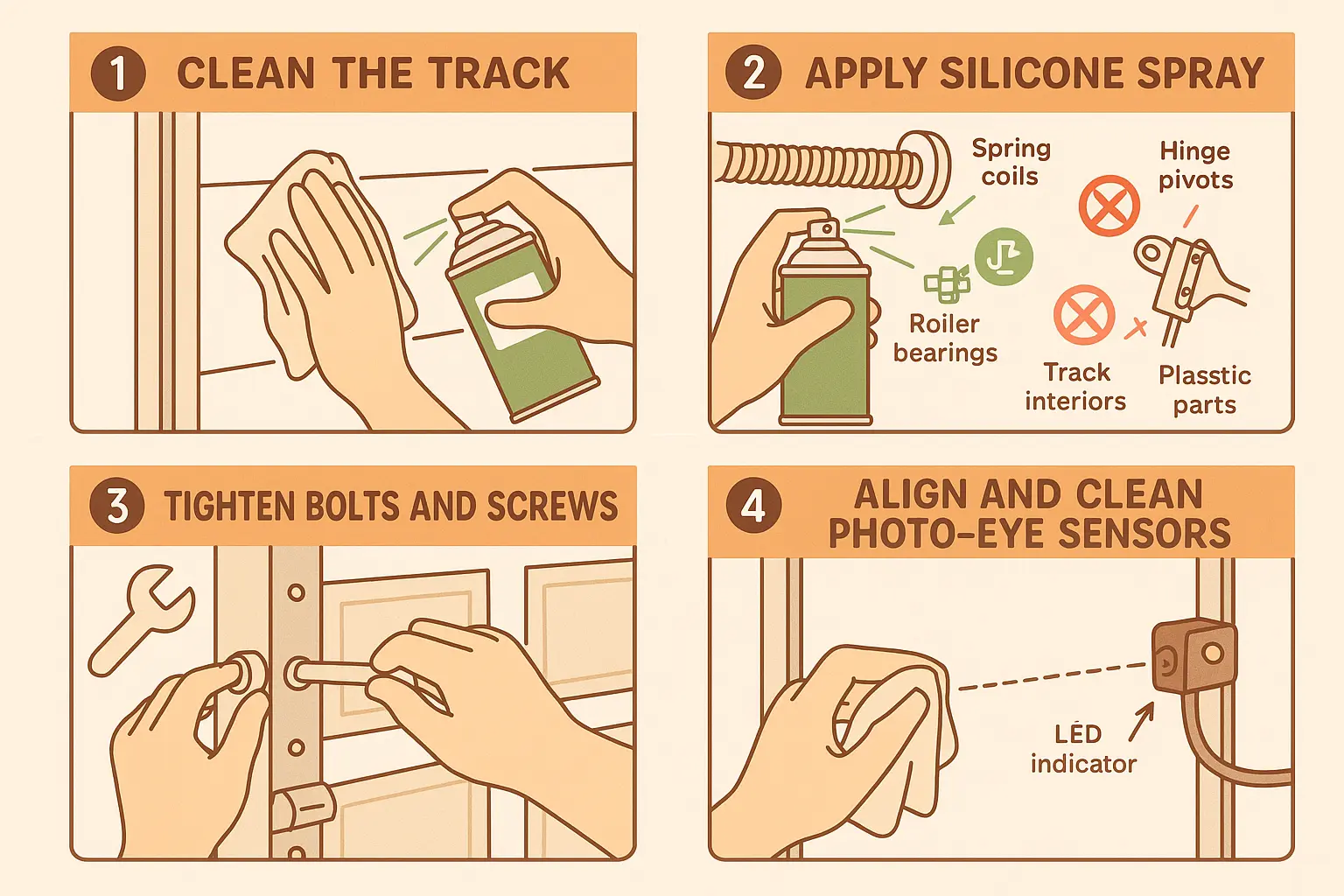
Follow these four accessible steps to safely maintain your garage door yourself, improving door performance without risking damage or voiding warranties.

To complete a safe, basic tune-up, follow these steps:

  • Track Cleaning: Wipe the interior of the metal tracks using a clean microfiber cloth and mild household degreaser or brake cleaner. Do not apply grease or heavy oil inside the tracks, as this accumulates abrasive dirt and jams the rollers.
  • Targeted Lubrication: Apply a dedicated silicone-based or lithium-based garage door spray to the roller bearings, hinge pivot points, and the outer metal coils of the springs. Avoid WD-40, which acts as a solvent and strips away vital factory grease.
  • Hardware Inspection: Check the structural fasteners along the track and hinges. Using a basic wrench, snug down any bolts that have vibrated loose over time, taking care not to over-tighten and strip the metal.
  • Photo-Eye Sensor Alignment: Clean the lenses of your safety sensors with a soft cloth. Ensure both photo-eyes are aligned exactly 6 inches above the garage floor. If the indicator lights are blinking or solid amber/green, adjust the brackets until they display a steady, uninterrupted beam.

Self-Diagnostic Test: Is Your Door Balanced?


A simple manual test can help you assess your system’s health. This diagnostic check evaluates the health of your spring counterbalance system:

  1. Close the garage door completely.
  2. Disconnect the automatic opener by pulling the red emergency release cord down and back.
  3. Manually lift the door halfway up and release it.

A balanced door will hover in place, supported by the physics of the springs. If the door crashes downward, the springs have lost their tension. If the door shoots violently upward, the springs are wound too tightly. In either scenario, operating the door puts immense strain on your opener. Do not attempt to correct this imbalance yourself. Instead, call a local technician for reliable 24 hour garage door repair to restore proper tension safely.

Warranties and Homeowner Liability


Before you attempt to repair components yourself, consider the financial and legal protections built into your equipment warranties.

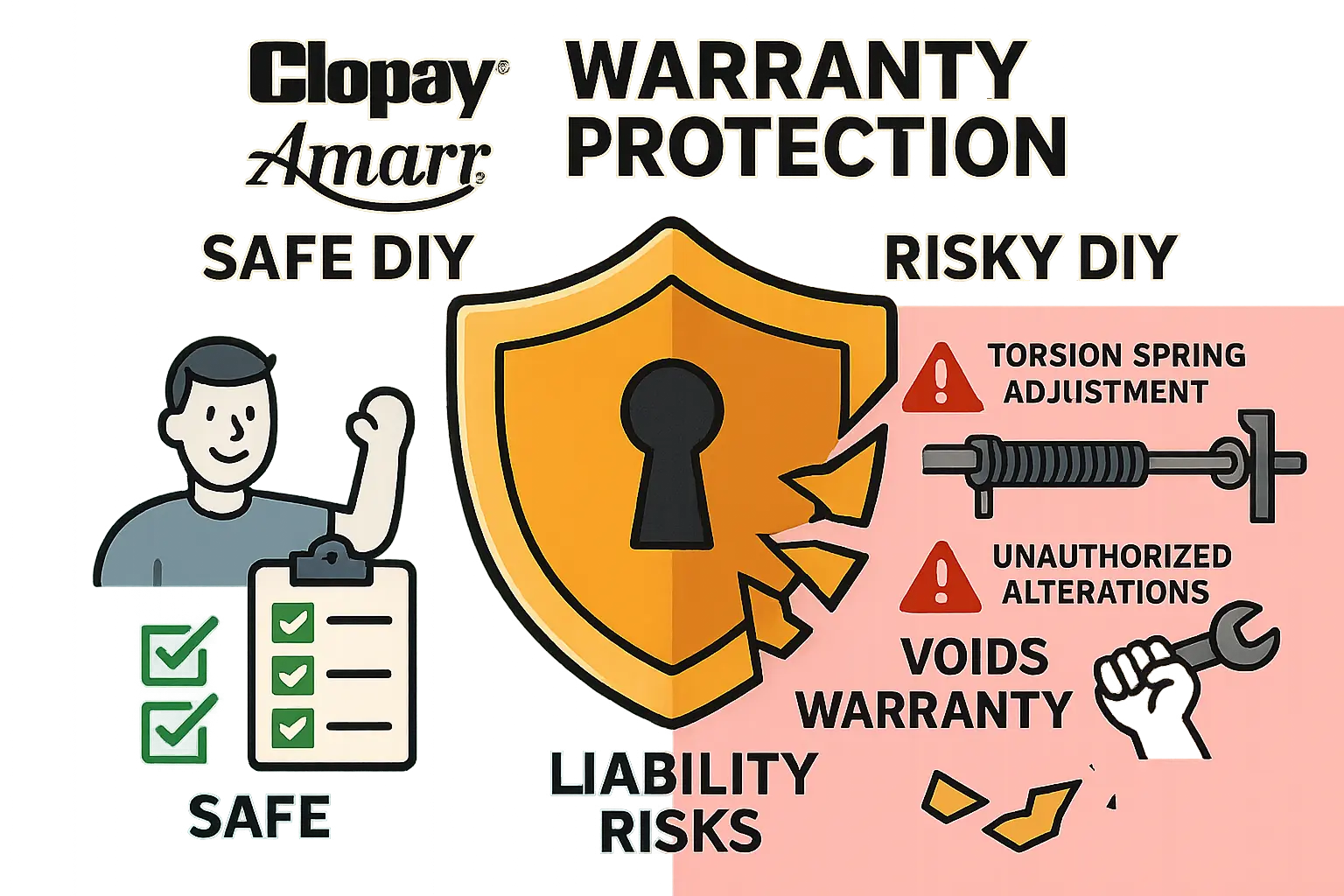
Understanding your garage door warranty: This infographic shows how sticking to recommended DIY tasks protects your warranty, while unauthorized repairs can void coverage and increase liability risks.

Leading industry manufacturers like Clopay, Wayne Dalton, and Amarr explicitly state in their warranty terms that structural coverage is voided by “unauthorized service, adjustment, or alteration.” If you attempt a DIY torsion adjustment and damage the door panels or track, the manufacturer will deny your claim.

Furthermore, having a professional service invoice serves as documented “proof of regular maintenance” for your homeowner’s insurance carrier. If an unmaintained door fails and damages your vehicle or home, insurance companies may deny coverage if they find evidence of amateur, uncertified alterations.

The Anatomy of a Professional Tune-Up


When you hire an expert, you are paying for comprehensive safety verification. A legitimate professional tune-up typically costs between $100 and $240, depending on the complexity of your system.

Reputable local providers conduct a complete 25-point inspection. This process includes testing the UL 325-mandated automatic reversing mechanisms (established in 1993), measuring opener amperage draw, checking for garage door tracks bent under structural load, and carrying out precision component service.

Be cautious of “$29 flat-rate” local specials advertised online. These deals are often used as bait-and-switch tactics by uncertified operators to gain access to your home, perform a superficial inspection, and demand immediate replacement of expensive parts. Paying an honest, flat-rate fee for a certified technician ensures that crucial parts like worn rollers receive genuine broken rollers repair or that your system gets a reliable garage door drum replacement near me using high-quality components.

If you suspect mechanical wear, need an opener evaluated via garage door opener repair, or require a complete new garage door installation near me, trust our local experts to handle the work safely and efficiently.

Frequently Asked Questions


Does DIY garage door maintenance void my manufacturer warranty?

Yes, in many cases. Leading manufacturers explicitly exclude coverage for defects or structural damage caused by unauthorized DIY adjustments or repairs. Relying on professional service invoices protects your warranty status.

What happens if my garage door fails the manual balance test?

If your door fails to hold its position at the midpoint of its travel, the spring counterbalance system is either fatigued or over-tensioned. This issue places extreme stress on your opener and requires immediate professional calibration.

Why should I avoid using standard WD-40 on my garage door tracks?

Standard WD-40 is a degreaser and solvent rather than a long-term lubricant. It strips away the system’s factory grease and leaves behind a sticky residue that attracts dirt, dust, and abrasive debris, eventually clogging the bearings.


Ready to ensure your family’s home remains safe, quiet, and secure? Reach out to the certified team at 24 7 garage doors today to schedule a comprehensive, flat-rate tune-up and safety inspection.

Contact / Request a Call