Understanding the Structural Risks of an Impacted Garage Door: A Critical Decision Guide


Published: Sep 3, 2026

It happens in a split second. A car slips out of gear, or you mistake the gas pedal for the brake, and there is a sudden, heavy impact against your garage door. In the immediate aftermath, the structural damage might look like a simple cosmetic nuisance—a bent panel or a door that has slipped slightly out of alignment.

However, a garage door is not a passive barrier like a bedroom closet door. It is a highly tensioned counter-balanced machine. When an impact forces a door off its tracks, it creates an unstable mechanical system holding hundreds of pounds of kinetic energy. Attempting to force the door or perform a quick DIY fix can lead to catastrophic system failure or severe personal injury.
The 10-Minute Post-Impact Emergency Protocol


If you have just backed into your garage door, take these immediate steps to secure your home and prevent further damage:

  1. Stop and Turn Off the Engine: Ensure everyone in the vehicle is safe and keep the car in park.
  2. Hands Off the Remote: Do not attempt to close or open the door using the automatic wall button or remote control. Forcing a twisted door can burn out your motor, strip internal gears, or pull the door entirely out of the tracking system.
  3. Do Not Pull the Red Emergency Release Cord: If the door is stuck halfway open, pulling this release disconnects the door from the safety trolley. If the counterbalancing system is compromised, the door can crash down instantly with the force of a 200-pound guillotine.

The Physics of the Danger: Anatomy of Tension


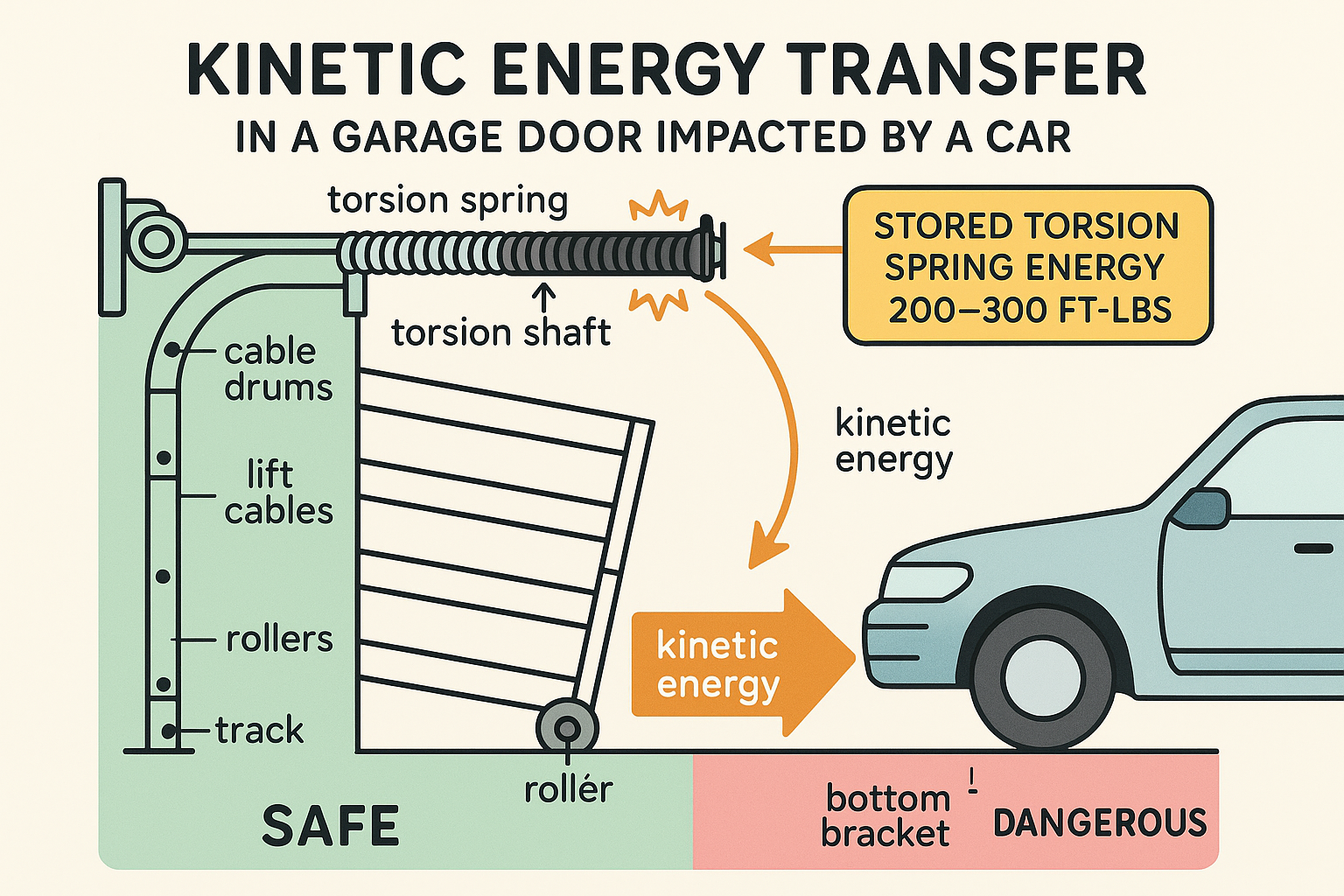
This image reveals how a garage door's torsion spring stores massive energy that transfers through cables and brackets, explaining why an impacted door is a hidden mechanical hazard.

To understand why an impacted garage door is hazardous, you must understand how energy is distributed across the system.

The weight of a standard residential garage door is neutralized by a torsion spring system. This spring is wound tightly, storing between 200 and 300 foot-pounds of active torque. This immense force is transferred from the spring through a solid steel shaft, onto the cable drums, and down to the bottom brackets via high-tension aircraft-grade cables.

According to the U.S. Consumer Product Safety Commission (CPSC) and the National Electronic Injury Surveillance System (NEISS), garage door structural failures lead to over 16,300 emergency room-treated injuries annually. Among these, more than 2,200 are severe crushing injuries caused by falling doors, and over 7,500 are painful pinching injuries from misaligned components.

When a vehicle strikes a panel, the door’s width bends and shortens, pulling the rollers inward and twisting the steel tracking. This imbalance can cause a cable to jump its drum, transferring 100% of the active tension onto a single spring or cable. If a compromised component snaps, steel shrapnel can fly off at speeds exceeding 100 mph, causing severe injury. For safe restoration, always rely on professional garage door torsion spring repair connecticut.


The "Is It Safe?" Visual Self-Assessment


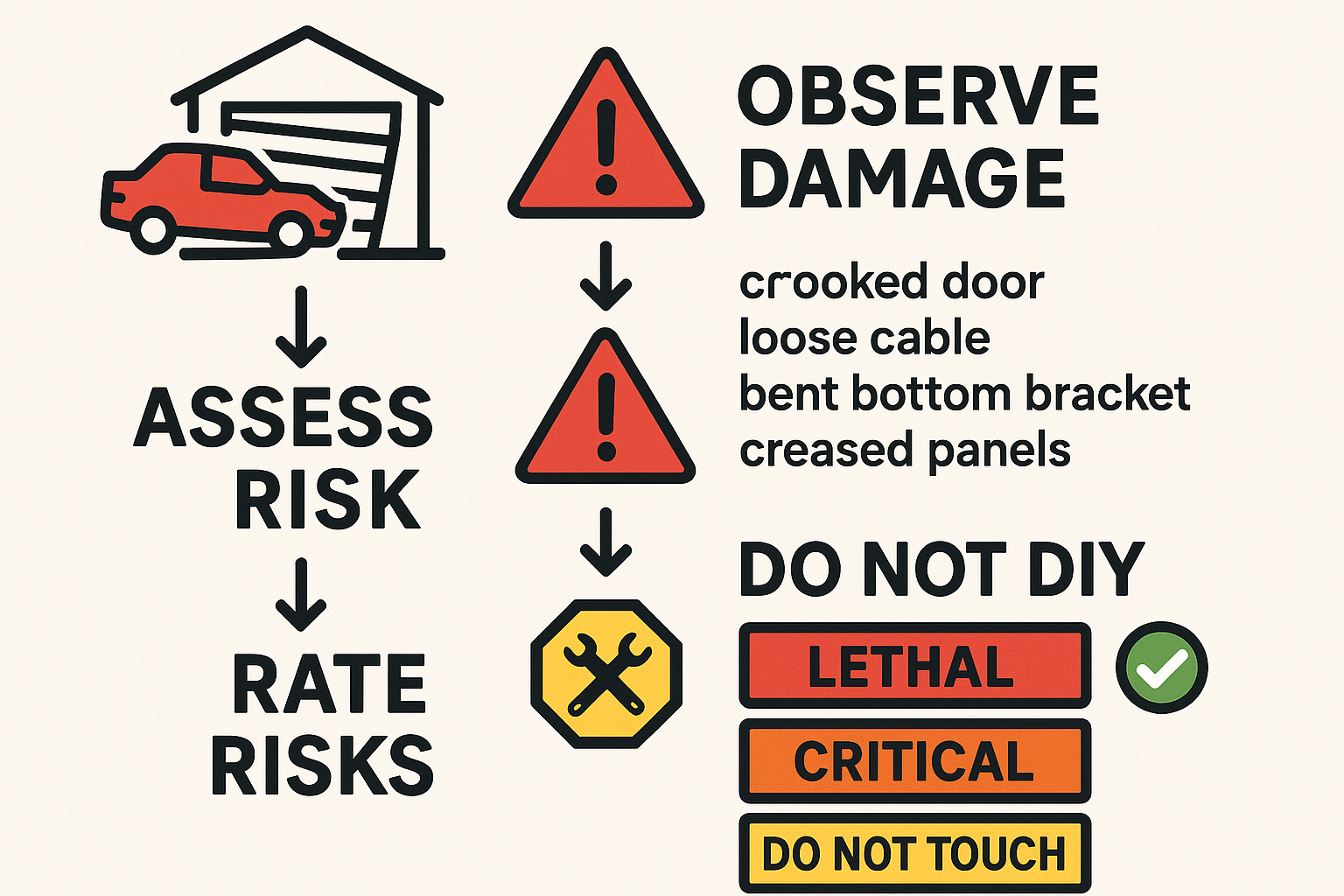
Step-by-step visual guide to help identify if a garage door is safe to handle or poses mechanical hazards after impact, guiding users away from dangerous DIY attempts.

Before touching any component of a damaged door, use this visual checklist to evaluate structural integrity:

Interactive Risk Checklist Section – ‘Is It Safe?’ Visual Self-Assessment

  • Is the door visibly crooked? If one side is sagging, a cable has likely slipped or snapped, creating a highly unstable weight imbalance.
  • Are the steel cables loose or frayed? Any slack in the lift cables indicates that the tension system is no longer supporting the load evenly.
  • Are the bottom brackets bent or pulling away? These brackets are the anchors for the high-tension system. Never attempt to adjust or unbolt them yourself.
  • Are the tracks warped? Misaligned tracks can bind the rollers, causing the door to freeze or fall. A professional garage door track alignment is required to safely restore smooth operation.

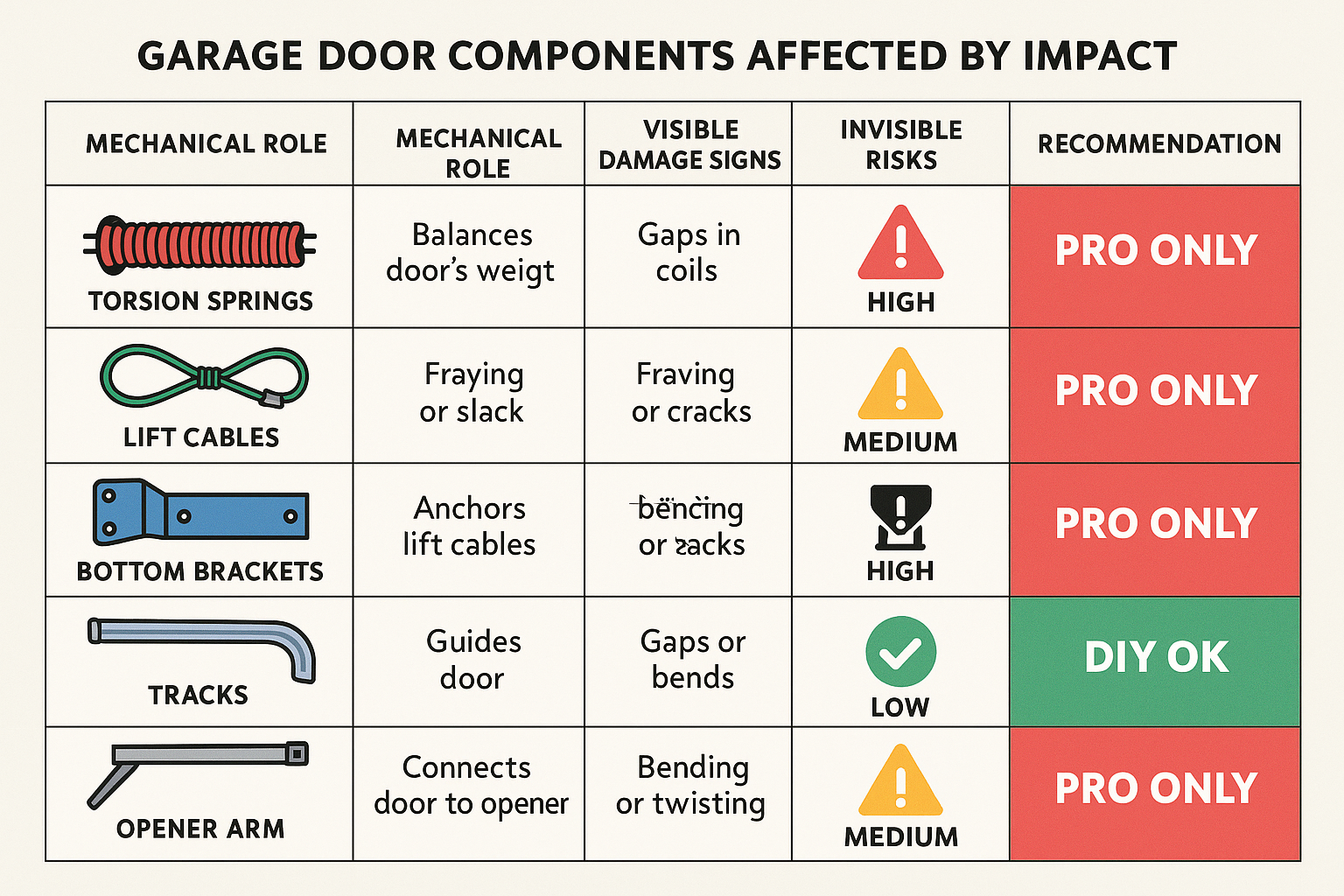
Component Damage & Risk Matrix


This visual memory aid breaks down each garage door component, showing how to spot damage, assess risk, and decide why professional repairs are essential.

When a vehicle strikes a garage door, the damage often extends beyond what is visible on the surface. Understanding the roles of individual components helps clarify why professional repair is necessary.

Component Damage & Risk Matrix Section

  • Horizontal & Vertical Tracks: An impact can easily warp or bend the tracking. Operating a door on a bent garage door track can lead to the door binding or falling. Professional realignment is critical to ensure structural safety.
  • Lift Cables & Drums: When tracks bend, cables can lose tension and unravel. Operating a door with compromised cables risks a sudden, dangerous drop.
  • Door Panels: Bent or buckled panels compromise the door’s structural shell. If you notice structural bending, seeking a professional broken garage door panel repair will restore structural integrity. Depending on the damage, installing structural reinforcement struts can stabilize the panels—learn more about what is a strut on a garage door to see if this option fits your repair needs.
  • Track Alignment: If an impact has pushed the system out of alignment, getting a professional garage door off track repair ensures the door is realigned, balanced, and safe for daily use.

Insurance & Financial Decision Matrix


When resolving damage from a car impact, navigating the financial aspects is a key part of the process.

  • Who Pays? If you back into your own garage door, your homeowners insurance typically covers the structural damage to the door (under Dwelling coverage), while your auto insurance handles the vehicle repairs. If someone else hits your door, their auto liability insurance should cover the full cost of the repair or replacement.
  • Repair vs. Replace: If the door is relatively new and only a single panel is damaged, a targeted panel replacement is often the most cost-effective path. However, if multiple sections are creased or the track frame is severely warped, a complete system replacement is the safer, more reliable option. This also offers an opportunity to upgrade to a modern, insulated model that improves your home’s energy efficiency.

Frequently Asked Questions


Can I use a rubber mallet to hammer a bent track back into shape?

We do not recommend this. Garage door tracks are precisely engineered to guide rollers under high tension. Hammering them can weaken the steel, create rough spots that bind the rollers, or cause the track to suddenly buckle under the door’s weight.

Is it safe to leave my garage door half-open overnight after an impact?

Leaving a compromised door partially open is highly dangerous. The unbalanced weight puts continuous strain on the remaining cables and springs, which can fail without warning. It also leaves your home vulnerable to security risks. Contact a professional for emergency garage door repair to secure your home immediately.

How do I know if my door needs a single panel replaced or a full replacement?

If the structural damage is isolated to one section and your door model is still in production, a single-panel replacement is highly practical. However, if the impact has twisted the tracking frame, damaged the opener, or buckled multiple panels, a full replacement is safer and more cost-effective.

Contact / Request a Call