Before we dive into materials and styles, let’s get the basics right. The conversation around insulated doors always starts with two things: R-value and the type of insulation used.
What Is R-Value? A Simple Analogy
R-Value is a measure of thermal resistance. In simple terms, it tells you how well a material stops the flow of heat. The higher the R-value, the better the insulation.
Think of it like a thermal blanket for your garage. A thin sheet provides a little warmth (a low R-value), while a thick, high-tech winter quilt provides a lot (a high R-value). For a garage door, a higher garage door r value means less of that blistering summer heat gets in and less of your home’s precious warmth escapes in the winter.
The “Good, Better, Best” Scale of Garage Door Insulation
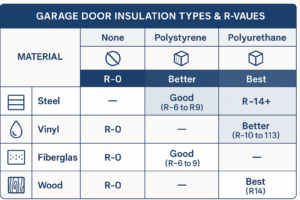
R-values for garage doors typically range from R-6 to R-18 or higher. To make it simple, we can break them down into three practical tiers:
- Good (R-6 to R-9): This is the entry-level for insulation. These doors feature a single layer of polystyrene insulation and are a significant upgrade from a non-insulated door. They are best for attached garages in mild climates where the primary goal is to reduce extreme temperatures and dampen noise.
- Better (R-10 to R-13): This is the sweet spot for many homeowners. These doors often use thicker polystyrene or more efficient polyurethane insulation. They offer a noticeable improvement in temperature control, making them ideal for moderate climates or for people who use their garage as an occasional workshop or gym.
- Best (R-14 and up): This is the premium tier. These doors almost always use high-density, injected polyurethane insulation. They are designed for homeowners in extreme hot or cold climates, those with heated or cooled garages, or anyone with a bedroom or living space directly above the garage. The investment here pays off in maximum energy savings, superior soundproofing, and a remarkably durable door.
The Two Main Players: Polystyrene vs. Polyurethane
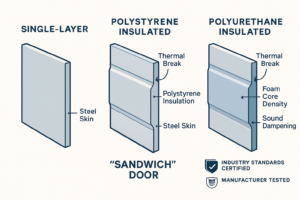
Not all insulation is created equal. The two dominant garage door insulation types are polystyrene and polyurethane. Understanding the difference is key to knowing what you’re paying for.
Polystyrene:
- How it’s made: This is the same type of rigid foam insulation you might see in a disposable coffee cup or a shipping cooler. For garage doors, it’s cut into large sheets and glued to the inside of the door panels.
- Pros: It’s a cost-effective way to achieve good insulation levels (typically in the R-6 to R-9 range).
- Cons: Because it’s glued in, there can be small air gaps that reduce its overall effectiveness. It doesn’t add much structural strength to the door.
Polyurethane:
- How it’s made: This is a liquid foam that is injected between the steel panels of the garage door, where it then expands and hardens.
- Pros: This injection process fills every single crack and crevice, creating a seamless, airtight bond. This makes it a much more effective insulator, achieving higher R-values in the same amount of space (R-12 to R-18+). It also makes the door significantly stronger, quieter, and more resistant to dents.
- Cons: It’s a more premium material, so doors with polyurethane insulation come at a higher price point.
Key Takeaway: For basic temperature moderation, polystyrene is a great choice. For maximum energy efficiency, durability, and quiet operation, polyurethane is the superior option.