Protect Your Garage Door From CT Weather With a Seasonal Tune-Up


Published: Aug 7, 2026

We’ve all had that moment of dread. It’s 6 AM on a January morning in Hartford, a Nor’easter is brewing, and your garage door groans, shudders, and refuses to open. Or maybe it’s a humid August afternoon in Stamford, and the door sticks and scrapes its way shut.

If this sounds familiar, you’re not alone. Your garage door—the largest moving part of your home—takes a special kind of beating from Connecticut’s dramatic, four-season climate. But the good news is that most of these frustrating issues are preventable.

This guide isn’t a generic checklist. It’s a specific, season-by-season playbook for Connecticut homeowners. We’ll explore why our weather is so tough on your door and provide a clear, actionable plan to keep it running smoothly all year long.

The 3 Enemies of a Connecticut Garage Door


Understanding Connecticut’s unique climate threats

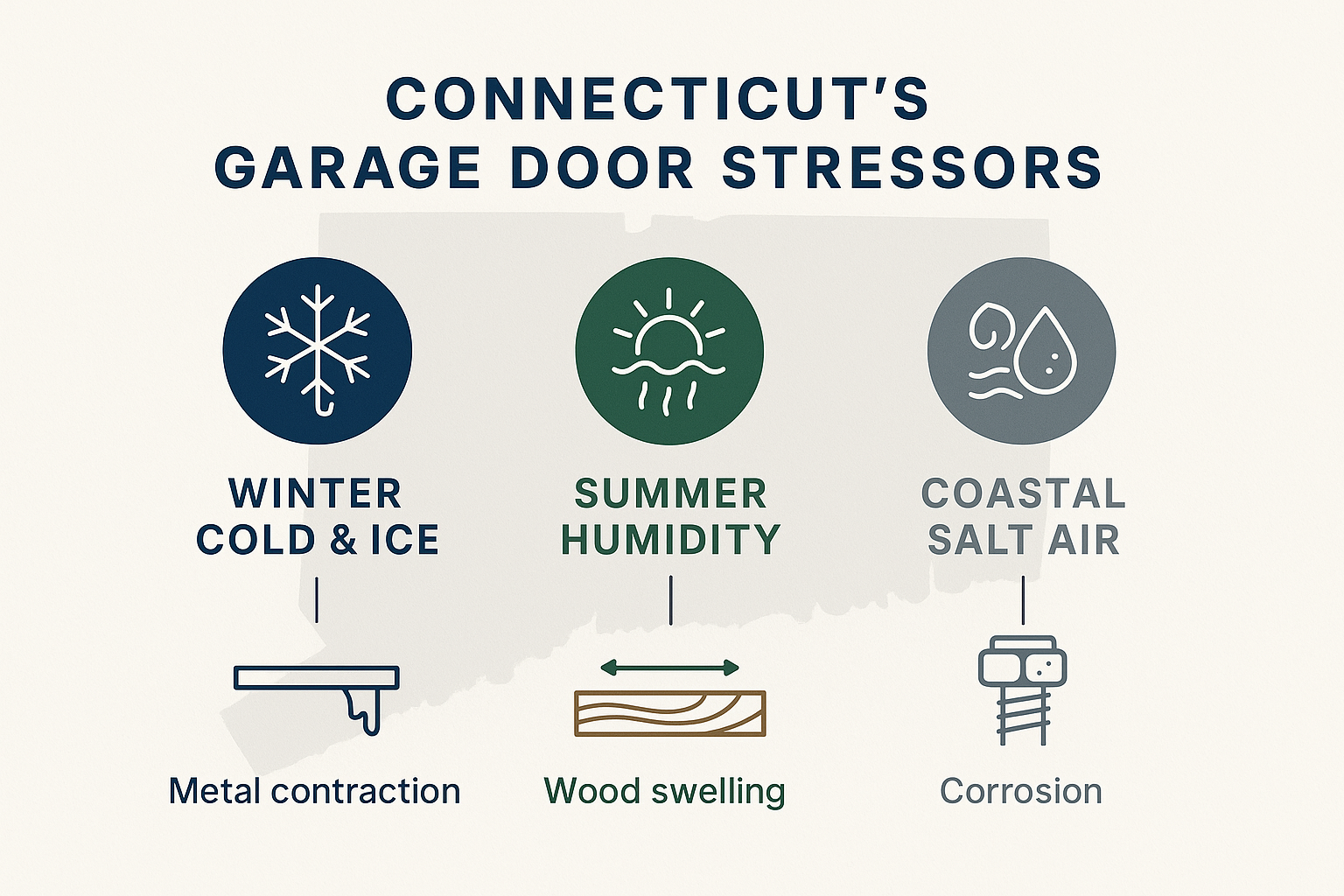
Before touching a single tool, it’s crucial to understand what you’re up against. Your garage door is in a constant battle with three uniquely Connecticut adversaries.

1. Winter Cold & Ice

When temperatures plummet, metal contracts. The steel in your tracks, springs, and rollers shrinks, which can cause binding and friction. The lubricant that kept things moving in October can harden into a thick, sticky sludge, forcing your opener to work overtime. Worse yet, melting snow can refreeze overnight, literally gluing your weather seal to the concrete driveway, creating a seal you can’t break without risking damage.

2. Summer Humidity

Connecticut summers aren’t just hot; they’re humid. Wooden garage doors are especially vulnerable, as they absorb moisture from the air and swell. This expansion can cause the door to rub against the frame, leading to scraping, sticking, and chipped paint. For steel doors, constant moisture creates the perfect environment for rust to begin its slow, destructive march across panels and hardware.

3. Coastal Salt Air

If you live anywhere near the Long Island Sound, from Greenwich to Stonington, you have a third enemy: salt. The same salty air you enjoy at Hammonasset Beach is a highly corrosive agent that aggressively attacks metal parts. Torsion springs, cables, and rollers are particularly susceptible to rust, which weakens their integrity and can lead to a sudden, dangerous failure. For coastal homes, choosing the best garage door material for coastal homes is the first line of defense, but maintenance is key to longevity.

Your Four-Season Connecticut Tune-Up Checklist


Seasonal tune-ups differ by climate effects

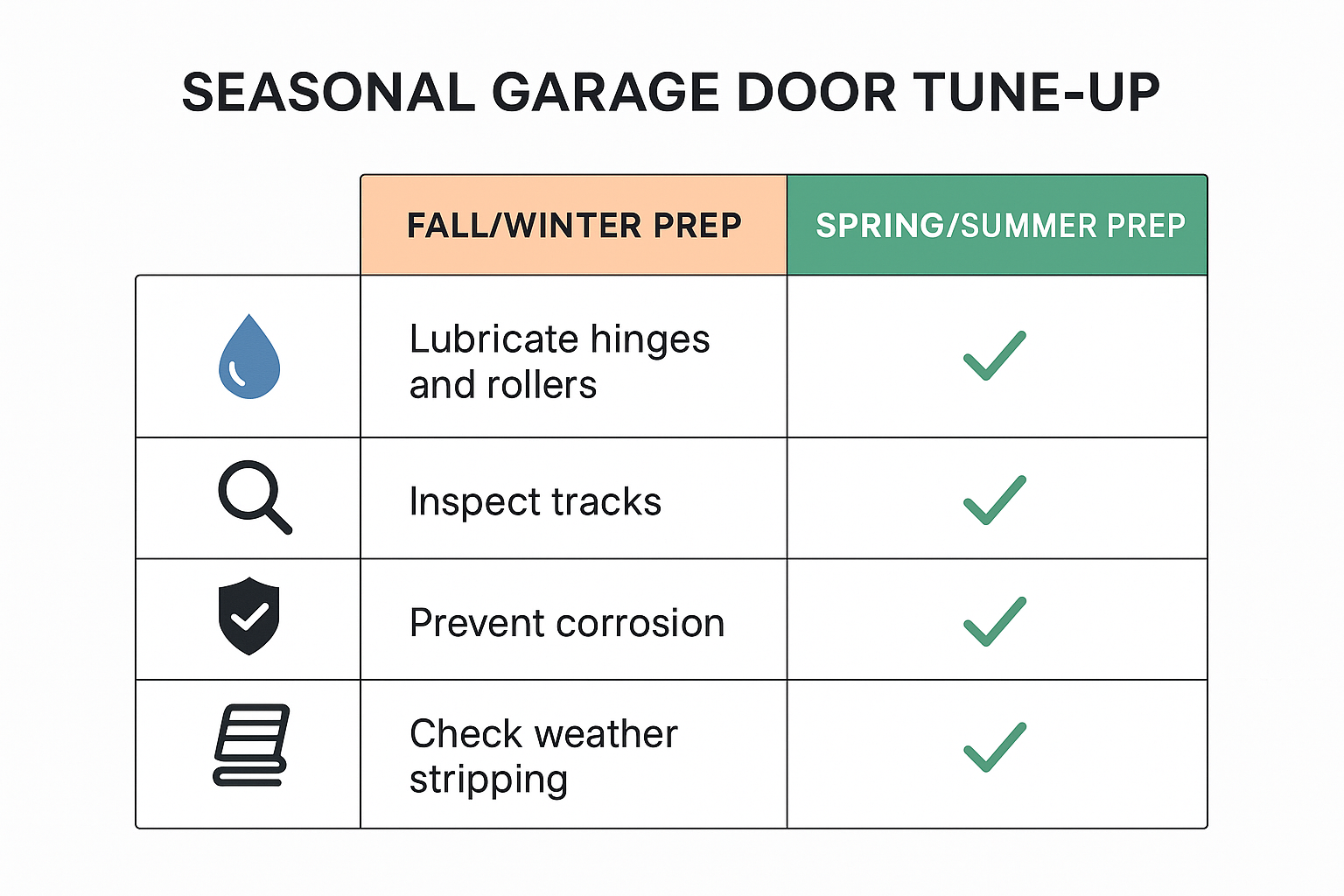
A proactive approach is the secret to a reliable garage door. Instead of one generic tune-up, think of it as two distinct prep sessions: one for the cold and one for the heat. A proper garage door tune up is your best defense against seasonal failures.

Fall/Winter Prep (October/November)

Your goal here is to prepare for the deep freeze.

  1. Lubricate All Moving Parts: This is the most critical step. Clean the tracks first, then apply a high-quality, silicone or lithium-based spray lubricant to hinges, rollers (avoid the nylon part), and springs. Do not use WD-40! It’s a solvent, not a long-term lubricant, and will attract dust and gunk up in the cold.
  2. Inspect the Weather Seal: Check the rubber seal at the bottom of your door for cracks, brittleness, or gaps. A compromised seal lets in cold air, snow, and rodents. A fresh, pliable seal is also less likely to freeze to the ground.
  3. Test Safety Sensors: Place a 2×4 board flat on the ground in the door’s path. When the door comes down and touches it, it should immediately reverse. If it doesn’t, the sensors may need cleaning or realignment—a crucial safety check before winter weather makes them even more finicky.

Spring/Summer Prep (April/May)

Your mission is to clean away winter’s damage and prepare for humidity.

  1. Wash the Door and Hardware: Get all the salt, sand, and grime from winter off your door panels, tracks, and hardware. For coastal homes, this is non-negotiable to prevent corrosion. A simple mix of mild soap and water works perfectly. The process of cleaning garage door tracks is essential for smooth operation.
  2. Perform a Balance Test: With the door closed, pull the emergency release cord. You should now be able to lift the door manually with one hand. It should stay open around halfway up without you holding it. If it slams down or shoots up, the springs are unbalanced and need professional adjustment.
  3. Tighten All Hardware: The vibrations of daily use can loosen nuts and bolts. Go around with a socket wrench and tighten any loose hardware on the roller brackets and hinges.

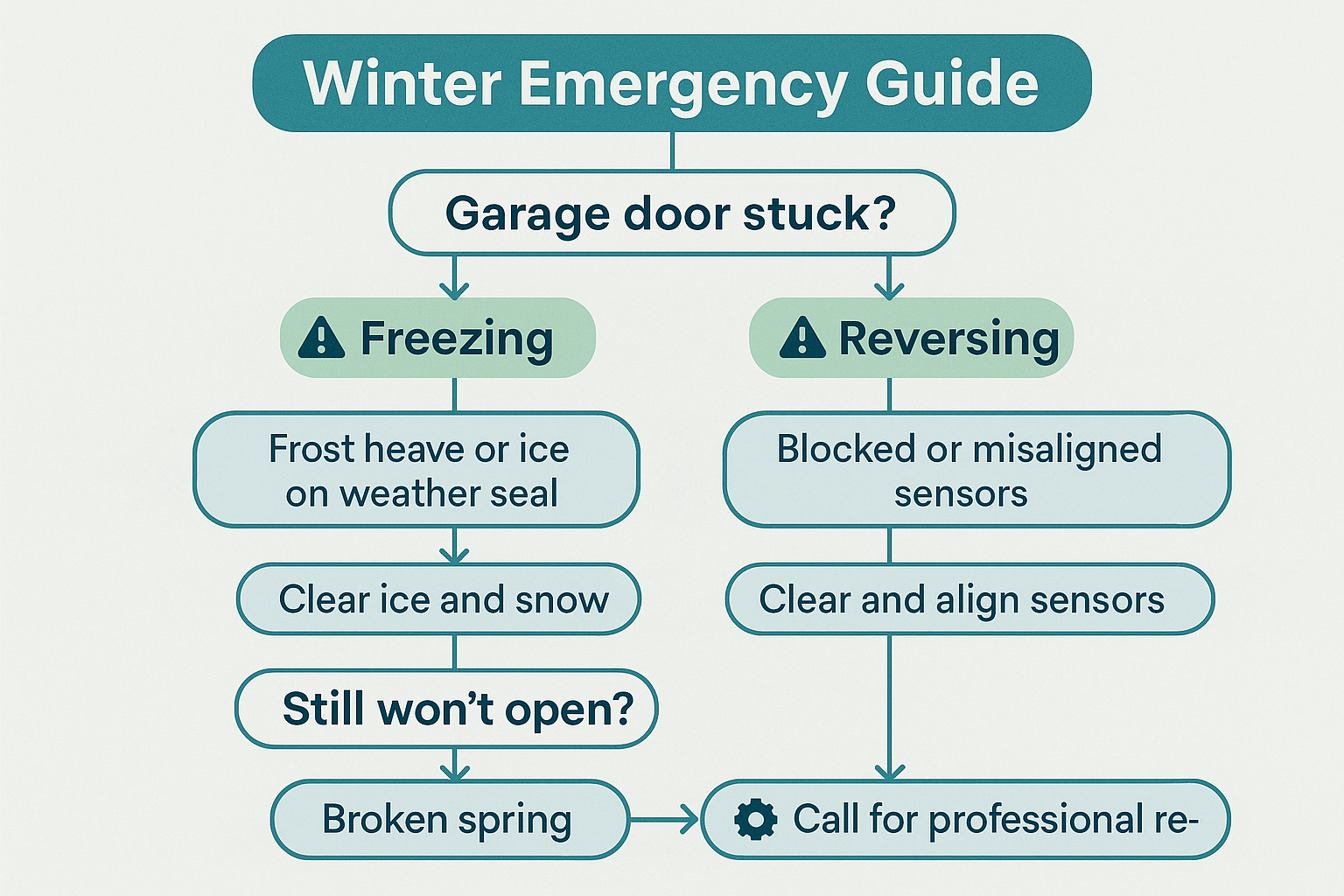
The Winter Emergency Guide: Quick Fixes for Common Problems


Navigate winter garage door emergencies

Even with perfect prep, Connecticut winters can throw you a curveball. Here’s how to handle the most common cold-weather emergencies.

  • Problem: My door reverses and won’t close.
    • The Cause: This is the most frequent cold-weather complaint. The cold can affect the electronics of your photo-eye sensors. Even direct, low-angle winter sunlight can trick the sensors into thinking something is blocking the path.
    • The Fix: First, check that nothing is physically blocking the sensors. Then, take a soft cloth and wipe the lenses of both sensors to clear away any frost or condensation. Ensure they are perfectly aligned (both green lights should be solid). These are common winter garage door problems that a quick check can often solve.
  • Problem: The door is frozen to the driveway.
    • The Cause: Meltwater has pooled at the bottom of the door and frozen solid overnight.
    • The Fix: Do not keep hitting the opener button! You can burn out the motor or strip the gears. Instead, pour hot water along the seal to melt the ice. If it’s severely frozen, a heat gun or hair dryer on a low setting can help. Once open, clear all ice and snow from the area where the door rests.
  • Problem: The door makes a loud grinding or screeching noise.
    • The Cause: The metal parts have contracted in the cold and the lubricant isn’t doing its job, causing metal-on-metal friction.
    • The Fix: This is a cry for help. The noise indicates extreme strain on the system. Apply a silicone-based lubricant to the hinges and rollers. If the noise persists, it could be a sign of a more serious issue with the springs or opener, and it’s time to call a professional.

Your Toolkit for Success


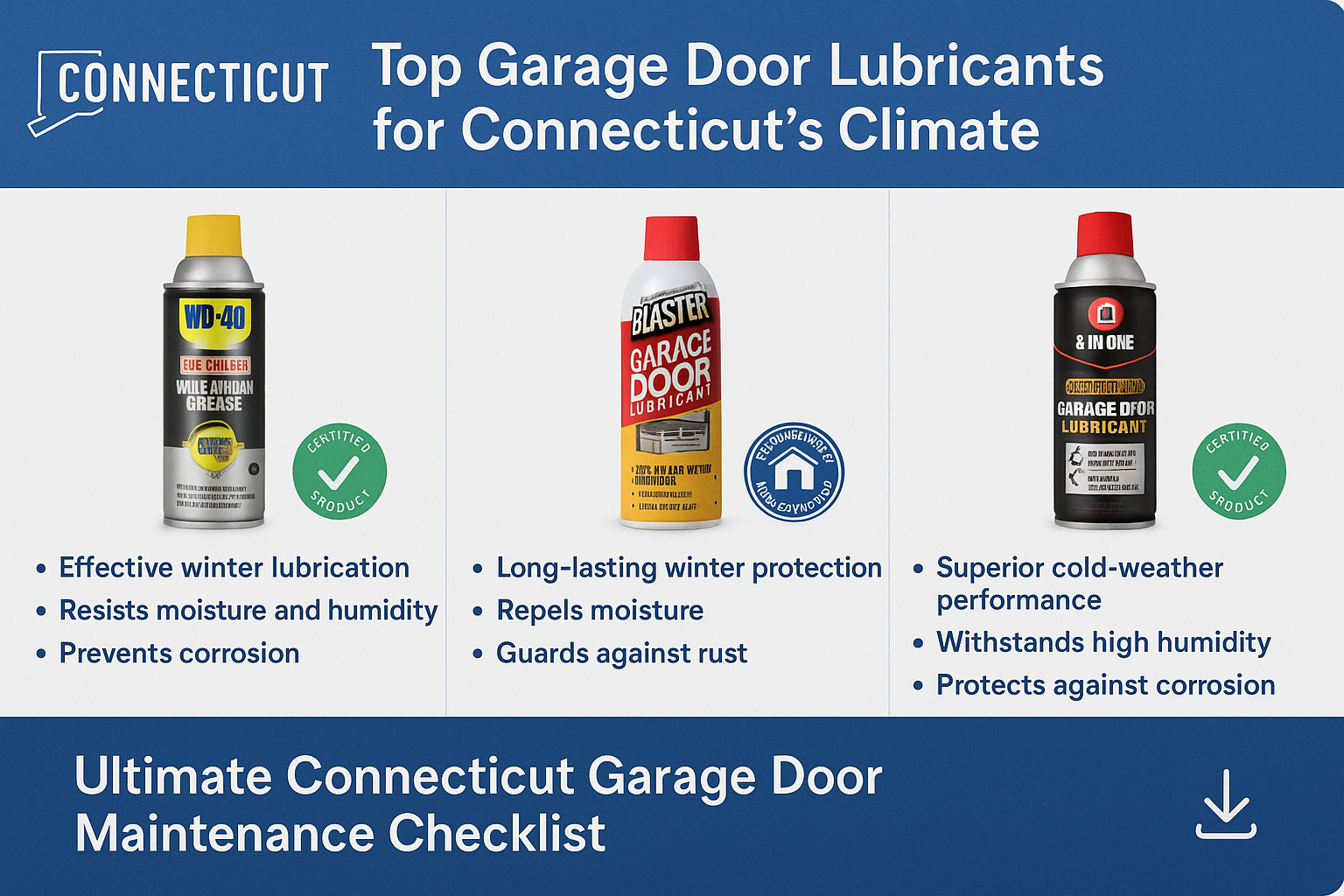
Choose lubricants proven for Connecticut weather

Having the right products and knowing your limits are just as important as the checklist itself.

CT Homeowner Mistake #1: Using the Wrong Lubricant

We mentioned it before, but it’s worth repeating: WD-40 is not a garage door lubricant. It’s a water displacer and degreaser. It can actually strip away existing grease and attract dirt, making your problems worse over time. For Connecticut’s cold winters, you need a lubricant that won’t gum up.

  • Best Choice: Silicone-based spray lubricant. It stays slick in low temperatures and repels moisture.
  • Good Choice: White lithium grease. It’s thicker and great for hinges and bearings, providing long-lasting protection.

Know When to Call a Professional

You can safely perform most of the maintenance on this list. However, two parts of the system are under extreme tension and should only be handled by a trained professional:

  1. Torsion Springs: (The large springs mounted above the door).
  2. Lift Cables: (The high-tension cables on either side that do the lifting).

These components are responsible for lifting hundreds of pounds and can cause serious injury or death if they snap or are handled improperly. The inherent garage door spring danger is not worth the risk of a DIY repair.

Your Path to a Hassle-Free Garage Door


Your garage door doesn’t have to be a source of seasonal stress. By understanding the unique challenges of Connecticut’s climate and adopting a simple, twice-a-year maintenance routine, you can ensure it works safely and reliably when you need it most.

Bookmark this guide and use the checklists as your roadmap. And when you run into an issue that feels too big to handle, or if you need help with a sudden breakdown, don’t hesitate to seek professional help. A reliable team can provide 24 hour garage door repair to get you out of a jam, ensuring your home is secure and your day gets back on track.

Frequently Asked Questions


What is a garage door tune-up, exactly?

It’s a comprehensive inspection and service of your entire garage door system. This includes lubricating moving parts, tightening hardware, testing safety features, and checking the balance—all the steps outlined in our seasonal checklists.

How often should I perform a tune-up in Connecticut?

Because of our drastic seasonal shifts, we recommend a full tune-up twice a year: once in the late fall to prepare for winter and once in the mid-spring to recover from it.

Is a professional garage door tune-up worth it?

For many homeowners, yes. A professional can spot subtle signs of wear and tear you might miss, and they have the right tools and expertise to perform delicate adjustments safely. A professional garage door tune-up can often prevent a small issue from becoming a costly emergency repair down the line.

Contact / Request a Call