Securing Your Garage Windows: A Complete Guide
Published: Jun 18, 2026
That small window in your garage? It's not just a source of light. For a burglar, it’s a welcome mat and a free toolkit, all rolled into one. Many homeowners meticulously secure their front doors and main windows, but that often-overlooked pane of glass in the garage becomes the path of least resistance.
A startling number of residential burglaries begin with a simple garage break-in. Once inside, an intruder doesn't just have access to your stored belongings; they have a private, concealed space filled with tools—ladders, crowbars, screwdrivers—they can use to patiently work on breaking into your main house.
This guide is your first step toward closing that security gap. We'll walk you through everything from understanding your specific window's weaknesses to choosing the right solutions, transforming this vulnerable spot into a fortified part of your home's defense.
Why Your Garage Window is a Bigger Target Than You Think
- Low Visibility: Garages are often located on the side or back of a house, shielded from street view by fences or landscaping. This gives intruders the privacy they need to work without being seen.
- Perceived Weakness: Factory-installed garage windows, especially on older models, often have simple latches and thin, single-pane glass that can be broken quietly and easily.
- The Tool Cache: As we mentioned, your garage is a treasure trove. A successful entry gives a burglar the tools they need for their next job: getting into your home.
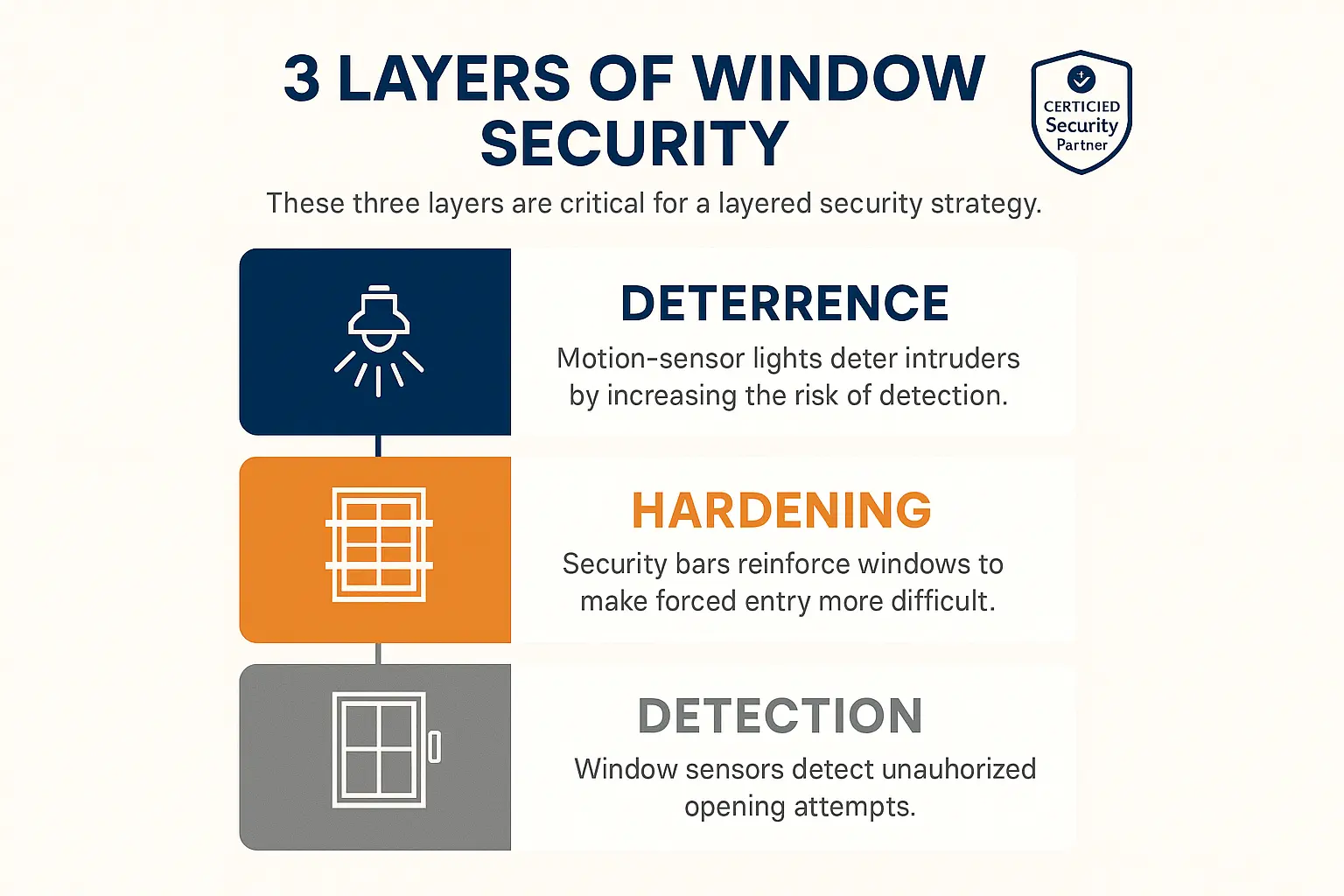
Foundation: The 3 Layers of Window Security
- Deter: This layer is all about making your garage look like a tough target. Think visible deterrents like security bars, warning stickers, or even a well-placed motion-activated light. The goal is to make a potential intruder think twice and move on.
- Harden: This is the physical reinforcement of the window itself. It's about making it harder and noisier to break through. Security films, stronger locks, and reinforced frames are all part of this layer.
- Detect: This layer is your alarm system. If an intruder manages to bypass the first two layers, a detection system immediately alerts you (and potentially the authorities) to the breach. Glass break sensors are a key component here.
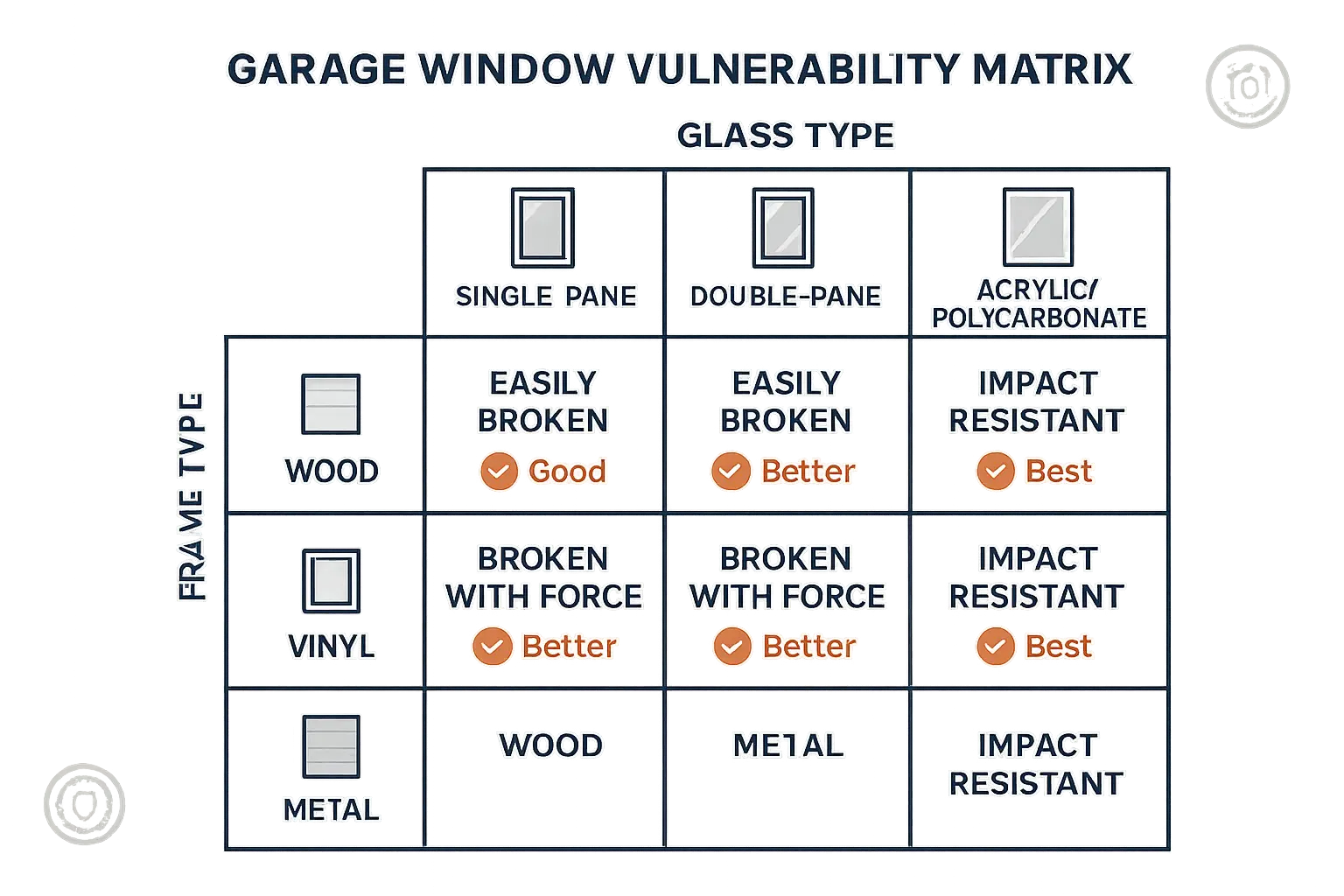
Building: Assess Your Vulnerability (The Matrix)
- Standard Glass & Modern Frame: This is a common combination. The primary vulnerability is the glass itself, which can be easily shattered. The factory latch is often a weak point.
- Obscure/Frosted Glass & Modern Frame: The privacy is a double-edged sword. While people can't see in, it also conceals an intruder from view as they attempt to break the glass or pry the frame.
- Standard Glass & Older Wooden Frame: This is a high-risk combination. The wood can be soft, rotted, or easily pried open. The glazing putty holding the glass may be old and brittle, allowing the entire pane to be removed quietly.
- Obscure/Frosted Glass & Older Wooden Frame: This combines all the vulnerabilities: a weak, pryable frame, brittle glazing, and the privacy that allows a burglar to work undetected. This type of window requires a robust, layered security approach.
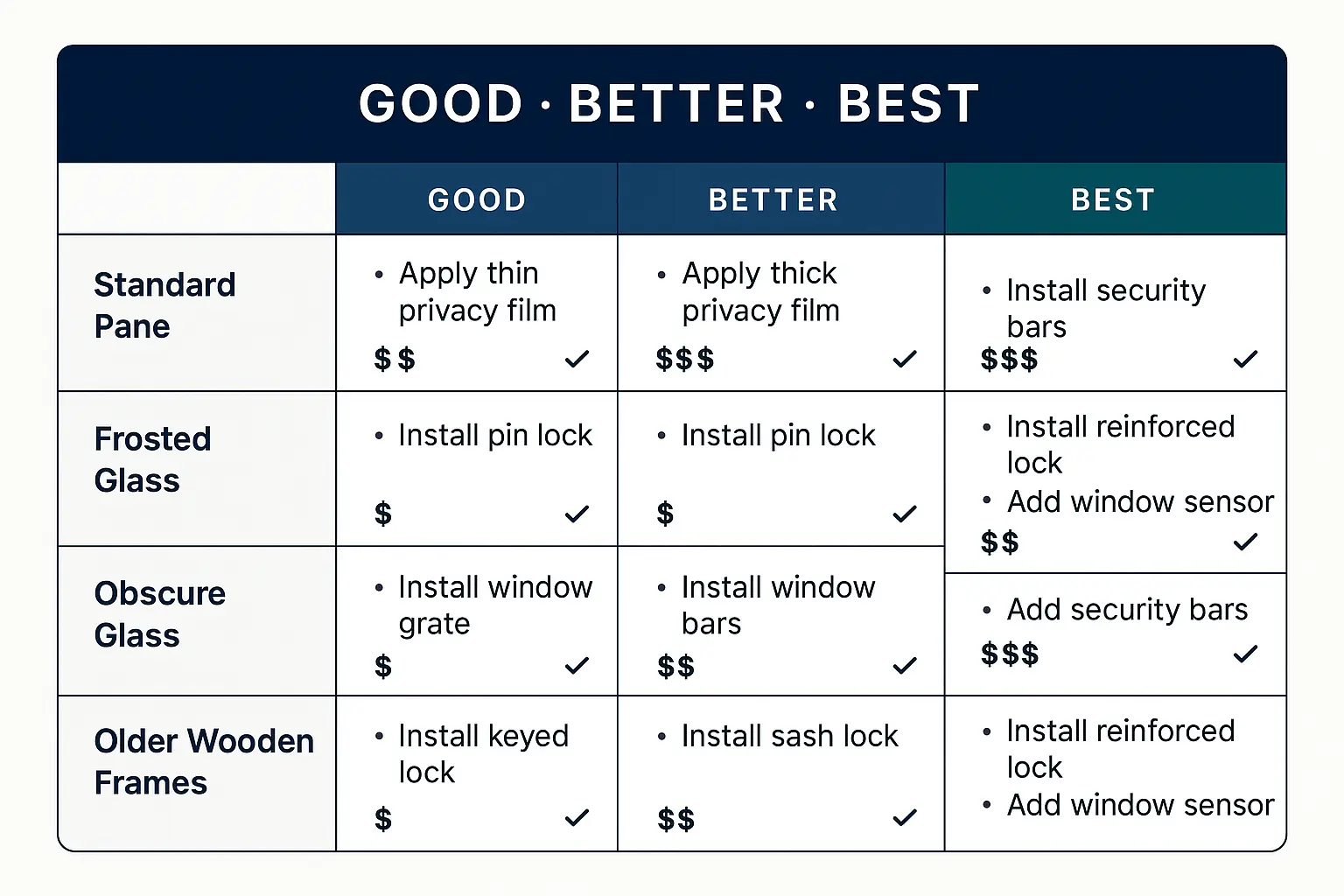
Mastery: Tailored Solutions for Every Window
Security Films: The Invisible Barrier
- Good (Privacy Film): A simple frosted or mirrored film can act as a visual deterrent, preventing people from seeing valuable items inside. It offers minimal security but is a good first step.
- Better (DIY Security Film): Thicker, shatter-resistant films are available at most hardware stores. They offer a significant upgrade in strength over standard glass.
- Pro Tip: For obscure or textured glass, you must apply the film to the exterior smooth side for it to adhere properly. Ensure you purchase a film rated for exterior use. - Best (Professionally Installed Security Film): Professional-grade films are thicker and are often installed with an attachment system that bonds the film to the window frame, preventing the entire pane from being pushed in.
Bars & Grates: The Physical Deterrent
- Good (Decorative Grilles): Less industrial-looking grilles can add a visual deterrent without making your home look like a fortress. They offer moderate resistance.
- Better (Heavy-Duty Security Bars): Solid steel bars, properly anchored to the building studs (not just the window frame), provide an exceptional level of physical protection.
- Best (Bars with Quick-Release Mechanism): For safety, the best installations include an interior quick-release mechanism. This ensures you can escape in case of a fire while maintaining maximum security.
Upgraded Locks & Hardware: The First Line of Defense
- Good (Secondary Latch): Adding a simple keyed sash lock or a Charley bar adds a second locking point that can foil a simple prying attempt.
- Better (Window Pin Locks): These are fantastic for wooden or vinyl double-hung or sliding windows. You drill a small hole through the inner frame and partially into the outer frame, then insert a hardened steel pin. It's nearly impossible to open the window without removing the pin from the inside.
- Best (Multi-Point Locking System): For casement or awning windows, replacing the standard operator with a multi-point locking system that secures the window at the top, bottom, and side offers the highest level of forced-entry resistance.
Alarms & Sensors: The Digital Watchdog
• Good (Contact Sensor): A simple contact sensor will trigger an alarm if the window is opened. It's effective but won't alert you if the glass is broken and the window remains closed.
• Better (Glass Break Sensor): These sensors are specifically designed to detect the sound frequency of shattering glass, triggering the alarm the moment a break occurs. This is a crucial component for window security.
• Best (Layered Sensors): The ultimate solution combines a contact sensor on the frame with a glass break sensor nearby. This can be integrated with a larger system that includes a garage door security sensor, creating a comprehensive electronic perimeter for your garage.
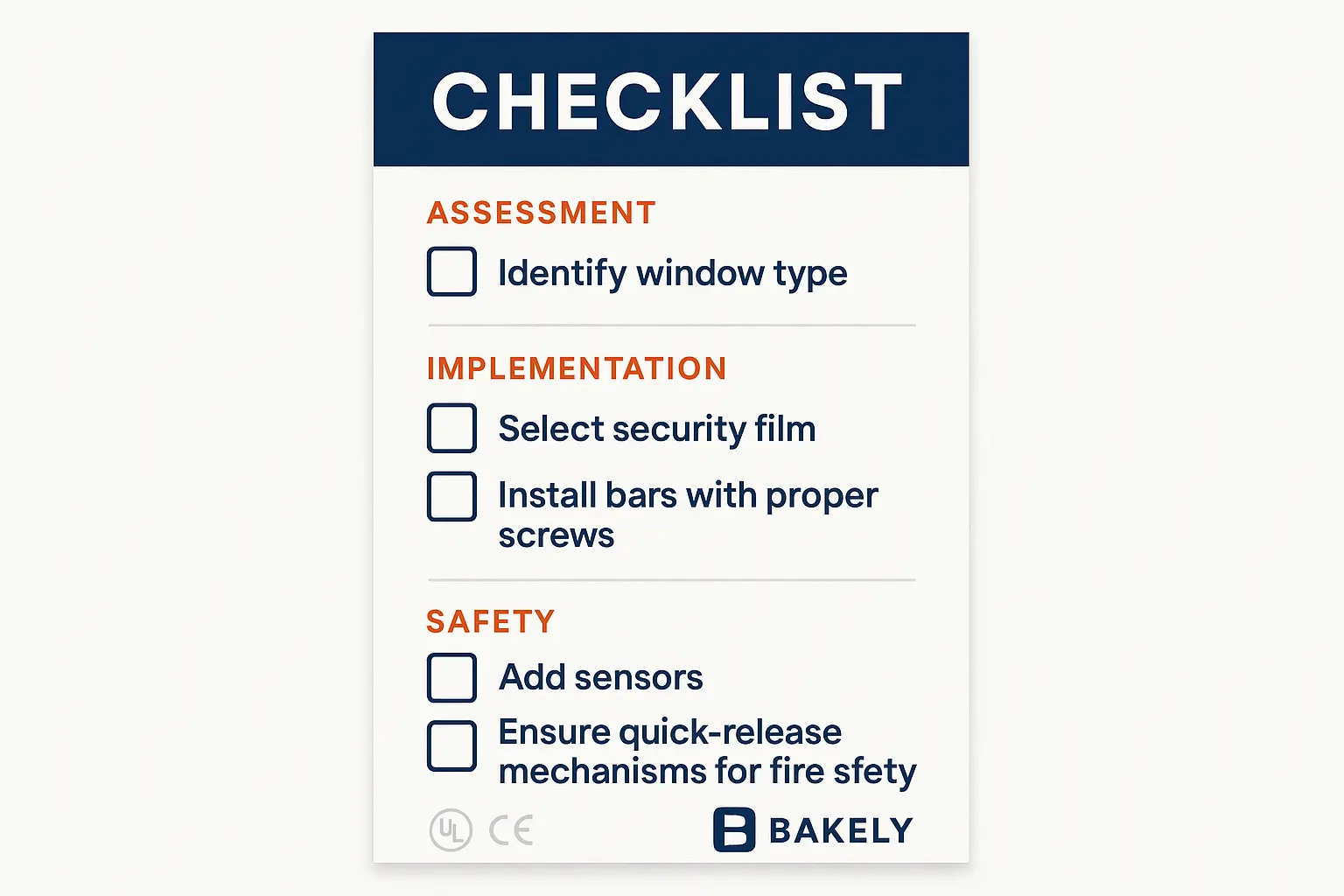
Action: Your Quick-Start Security Checklist & Fire Safety Warning
Frequently Asked Questions (FAQ)
What's the cheapest way to secure my garage window?
Can I install security film myself?
Are security bars a fire hazard?
How do I secure a window that has a built-in air conditioning unit?
Your Garage: The Gateway to Your Home
Start today by walking out to your garage and using our vulnerability matrix. A few simple, smart upgrades can provide significant security and priceless peace of mind.
You may also like