Your Ultimate Guide to Low-Headroom Track Systems
Published: Jan 29, 2026
You’ve found the perfect home, but there’s one catch: the garage. Maybe it’s a charming older house with low ceilings, a modern build that prioritized living space over garage height, or a basement garage with ductwork right where the door should go. You’re facing a common but frustrating problem: you don’t have enough vertical space—or "headroom"—for a standard garage door.
Before you give up on your dream of a functional, automatic garage, there's an elegant engineering solution you need to know about. It’s called a low-headroom track system, and it’s designed specifically for spaces like yours. This guide will walk you through everything you need to know, transforming you from problem-aware to solution-confident.
First Things First: What is Headroom and Why It’s a Big Deal?
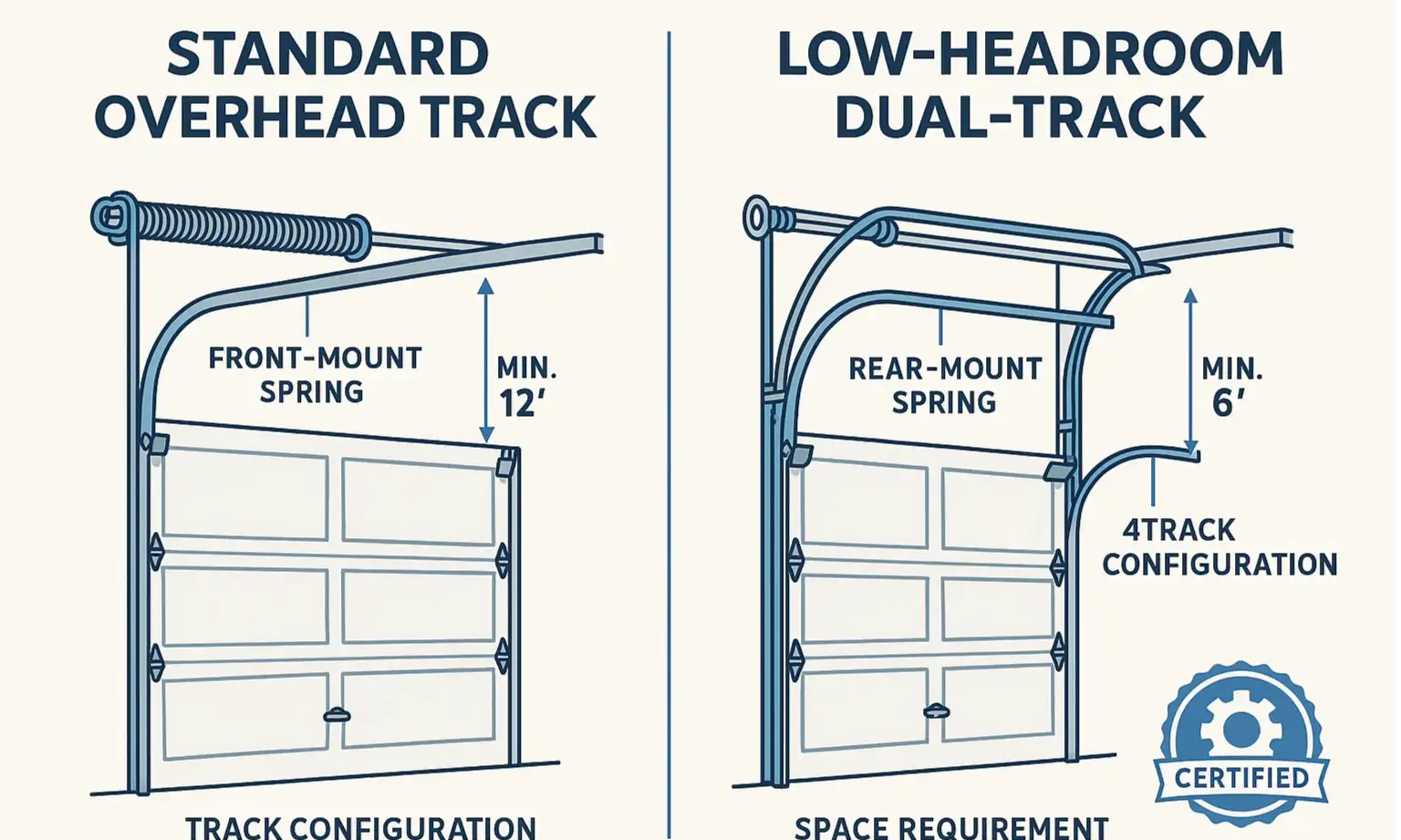
How to Measure Your Headroom (The Right Way)
- Close your garage door.
- Measure the distance from the very top of the door opening to the lowest point on your ceiling directly above it.
- Note any obstructions, like pipes, support beams, or lighting fixtures, and measure to the bottom of those if they are lower than the ceiling.
Introducing the Low-Headroom Track System
- The inner track guides the top section of the door.
- The outer track guides the lower sections.
Not All Kits Are Created Equal: Your Low-Headroom Options
Front-Mount vs. Rear-Mount Systems
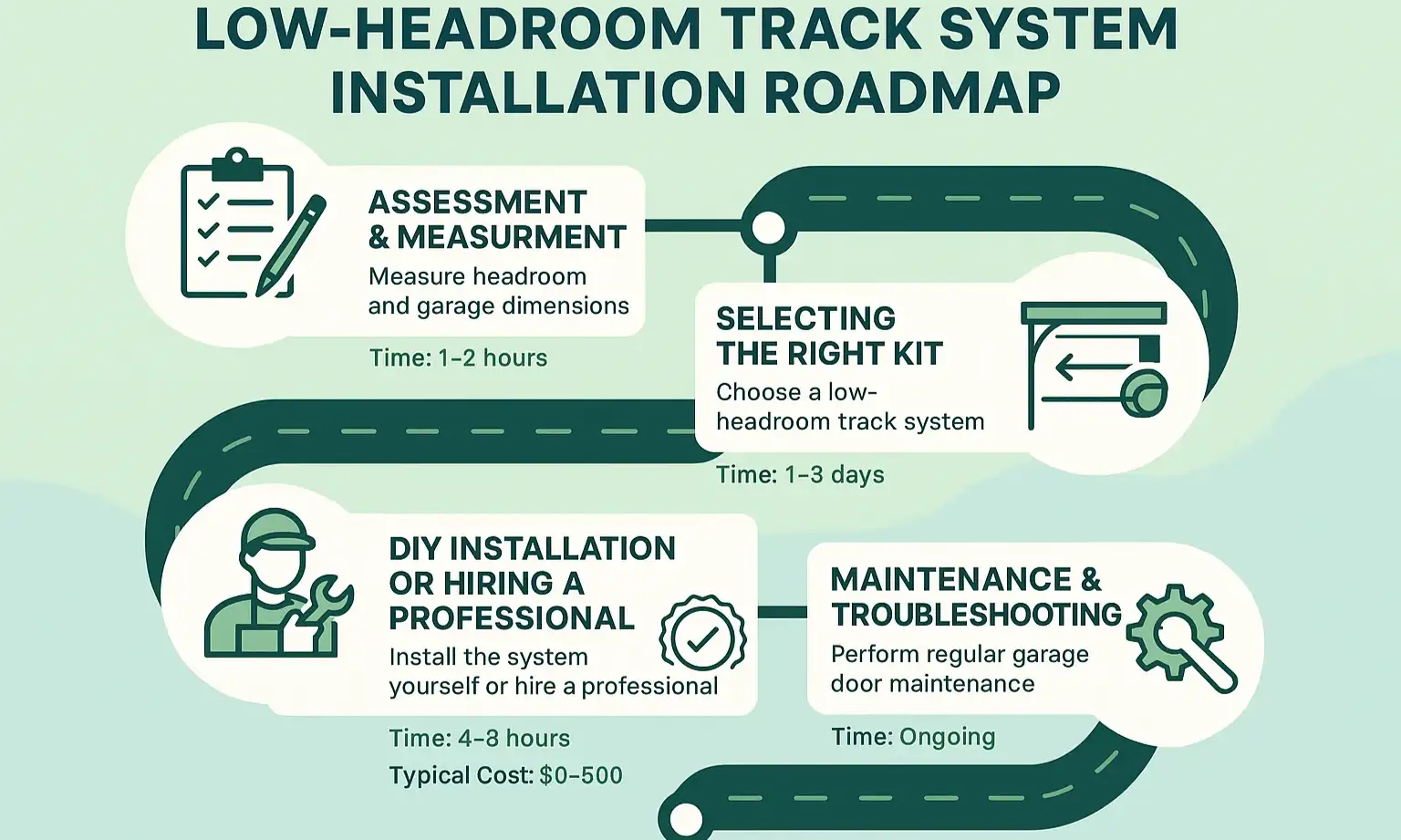
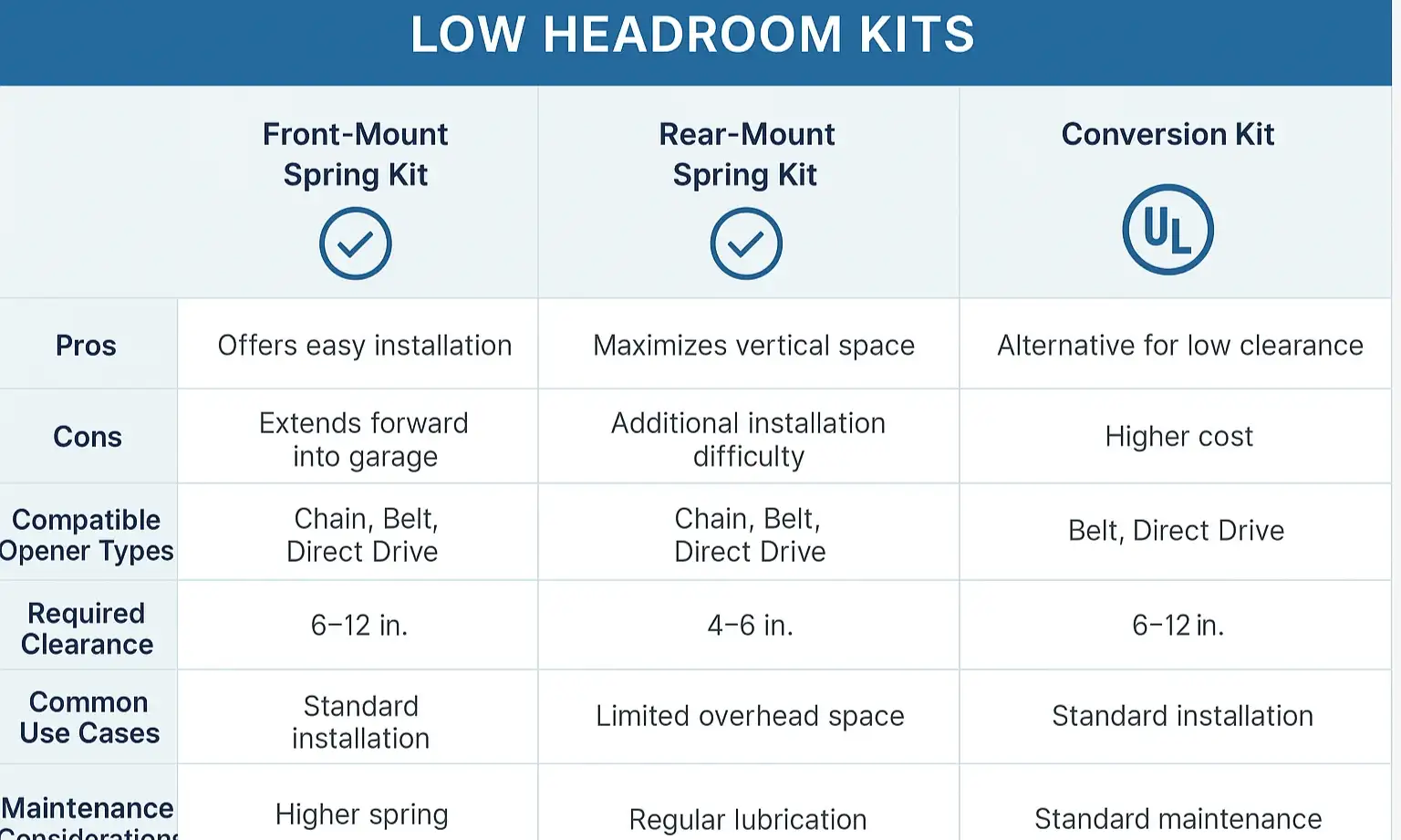
- Front-Mount Low Headroom (FMLH): In this setup, the torsion spring is still mounted on the front wall above the door, but it's positioned much lower and closer to the opening, often requiring a special mounting plate. This is common for situations where you have a little bit of headroom (maybe 9-12 inches) but not enough for a standard setup.
- Rear-Mount Low Headroom (RMLH): For garages with extremely limited headroom (as little as 4 inches), this is the go-to solution. The torsion spring is moved to the back of the horizontal tracks, near the garage ceiling. This completely frees up the space above the door opening.
Bringing It Home: Installation, Costs, and Openers
Installation & Cost Overview
- Assessment: A professional will confirm your measurements and identify the exact kit needed for your door’s weight and size.
- Installation: The process involves installing the dual tracks, special end plates, and either a front-mount or rear-mount spring system.
- Cost: Low-headroom hardware kits typically add a few hundred dollars to the total cost of a garage door installation. While it's an extra investment, it's the key to making an otherwise unusable space functional.
A Note on Garage Door Openers
Keeping It Smooth: Common Low-Headroom Track Problems
- Door Rubbing: The top panel may rub against the door frame if the quick-turn radius isn't perfectly set.
- Cable Issues: The longer cables required for rear-mount systems need to be monitored for fraying.
- Opener Strain: A misaligned track can put extra strain on the opener, which might manifest as a garage door chain loose or other motor issues.
Need more information?
Get a free quote
Frequently Asked Questions
How much headroom do I actually need for a low-headroom track?
Can I use any garage door with a low-headroom kit?
Do low-headroom systems cost more?
Are these systems less reliable than standard tracks?
Your Next Step
You may also like