After a Garage Door Falls: The Post-Failure Hardware Inspection Protocol


Published: Nov 6, 2026

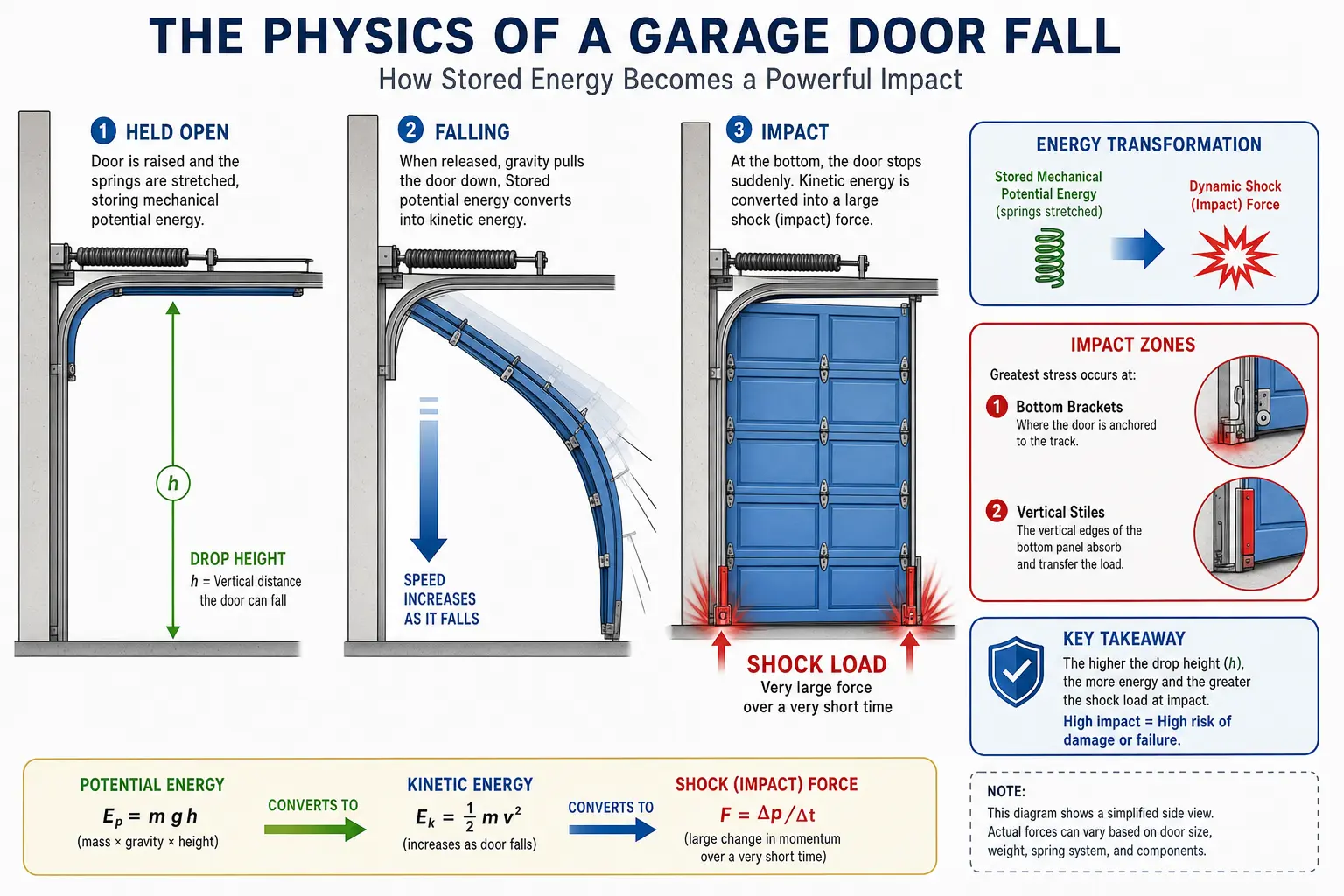
When a heavy overhead garage door suddenly free-falls or drops out of its tracks, the impact is more than an annoying inconvenience—it is a violent mechanical event. A standard double steel residential door weighing 150 to 280 pounds (or custom wood models exceeding 350 to 450 pounds) dropping from an eight-foot height generates 1,200 to over 2,500 foot-pounds of dynamic shock force upon striking the concrete floor.

Over 75% of catastrophic door drops stem from a snapped torsion spring or a sheared lift cable. According to U.S. Consumer Product Safety Commission (CPSC) data, overhead door incidents account for 20,000 to 30,000 emergency room visits annually, driven largely by structural crushes and high-tension spring strikes. Evaluating whether your system requires targeted component replacement or complete structural overhaul demands a disciplined, DASMA-aligned inspection framework.
Immediate Safety Lockout: Securing the Hazard Zone


Before conducting any visual triage, you must neutralize potential kinetic and mechanical hazards. A partially fallen door rests in an unstable equilibrium where micro-shifts can trigger secondary drops or explosive tension release.

  • Disconnect Opener Power: Immediately unplug the motor unit to prevent accidental remote activation. Attempting to run the trolley after a drop strips internal drive gears.
  • Do Not Pull the Manual Emergency Release: If the door is stuck halfway down, pulling the emergency release disengages the carriage from the rail, causing an immediate secondary free-fall.
  • Respect High-Tension Red Zones: Bottom roller brackets and torsion spring winding cones hold extreme stored energy even after cables go slack. Never loosen or remove bottom bracket bolts without professional tension-relief protocols.
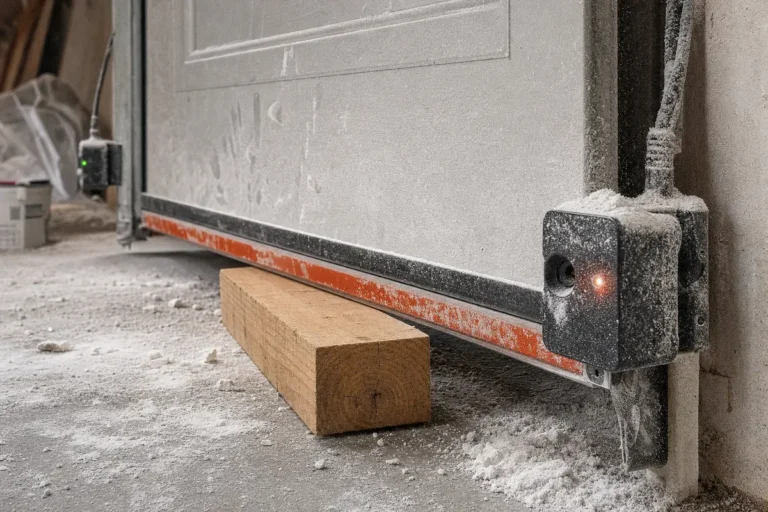
  • Immobilize the Tracks: Secure C-clamps directly onto the vertical tracks underneath the lowest intact roller to lock the assembly in place.
Still stuck? Get it fixed today.
24/7 emergency service from licensed local technicians.
Call (860) 362-3018

Anatomy of a Drop: How Dynamic Shock Damages Garage Hardware


Understanding how a garage door's stored mechanical energy transforms into damaging shock forces upon falling helps visualize why critical components like bottom brackets and panel stiles sustain serious impact stress.

When primary failure occurs—such as broken garage door springs snapping under cycle fatigue—the entire load instantly shifts to remaining components. This violent energy transfer propagates micro-cracks across aluminum hardware, twists steel tracks, and elongates hinge fastener holes.

Understanding the distinction between the initiating failure point (e.g., frayed cable loops requiring immediate garage door cable replacement near me) and consequential structural damage helps property owners make objective, cost-effective restoration choices.

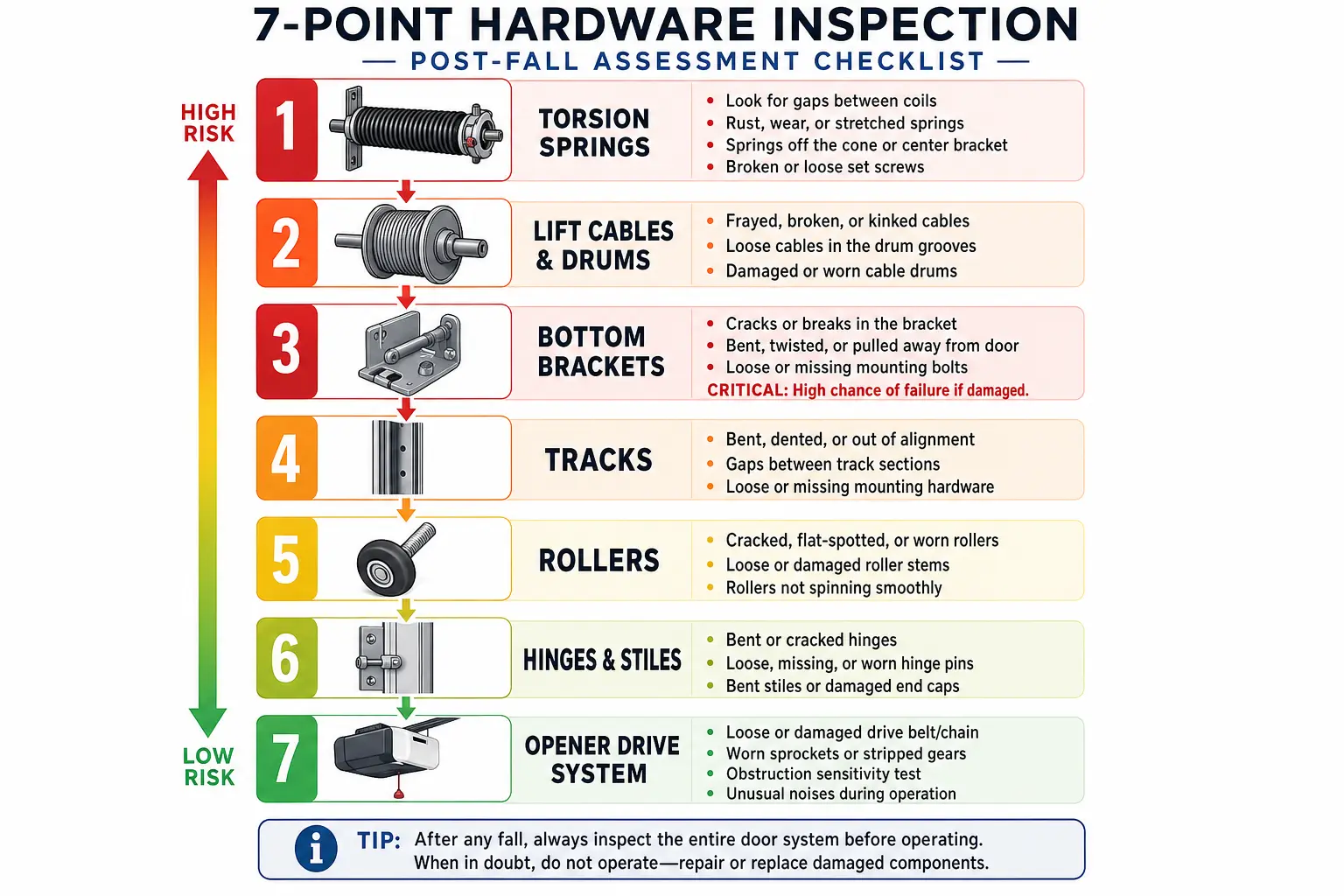
Systematic 7-Point Hardware Inspection Checklist


A clear, ordered inspection flow guides users through the critical components to examine after a garage door fall, prioritizing safety and effective damage assessment.

Perform this visual evaluation from a safe distance, documenting hardware integrity against DASMA Technical Data Sheets (TDS-160/164).

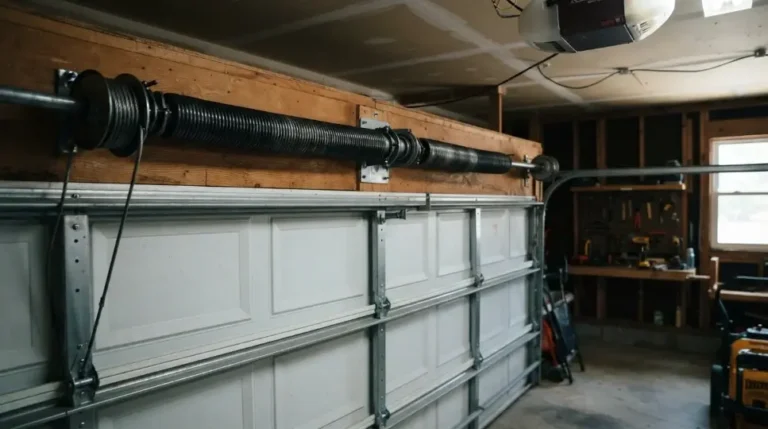
  1. Torsion Assembly & Center Bearing: Inspect the spring coils for clean break gaps (typically 1 to 2 inches wide). Check the center bearing plate for hairline fracture lines caused by shaft deflection.
  2. Lift Cables & Aluminum Drums: Look for severe cable fraying or mechanical bird-caging. Examine cable drums for flange notches where runaway steel aircraft cables gouged soft aluminum during the fall; damaged drums require professional garage door drum repair.
  3. Bottom Brackets & Fasteners: Check where lift cables attach. Look for sheared sheet metal screws or bent bracket corner buttons.
  4. Track Rails & Mounting Jam Brackets: Check vertical and horizontal radius curves. Impact shock often forces track lips open or shears wall rivets, making expert garage door track repair necessary.
  5. Rollers & Stems: Inspect roller stems for 15-degree bends or popped ball bearing casings. If stems are distorted, schedule broken rollers repair to avoid future binding.
  6. Hinges & Section End Stiles: Examine hinges #1 through #4 for ovalized pin holes or stress fractures along steel bend radii.
  7. Opener Drive & Carriage J-Arm: Inspect the J-arm attachment point at the top door section. Check if sudden dynamic drop force stripped internal nylon motor gears or buckled the steel drawbar trolley, signaling a need for targeted garage door opener repair.

Hardware Integrity Evaluation: Repair vs. Replace Decision Matrix


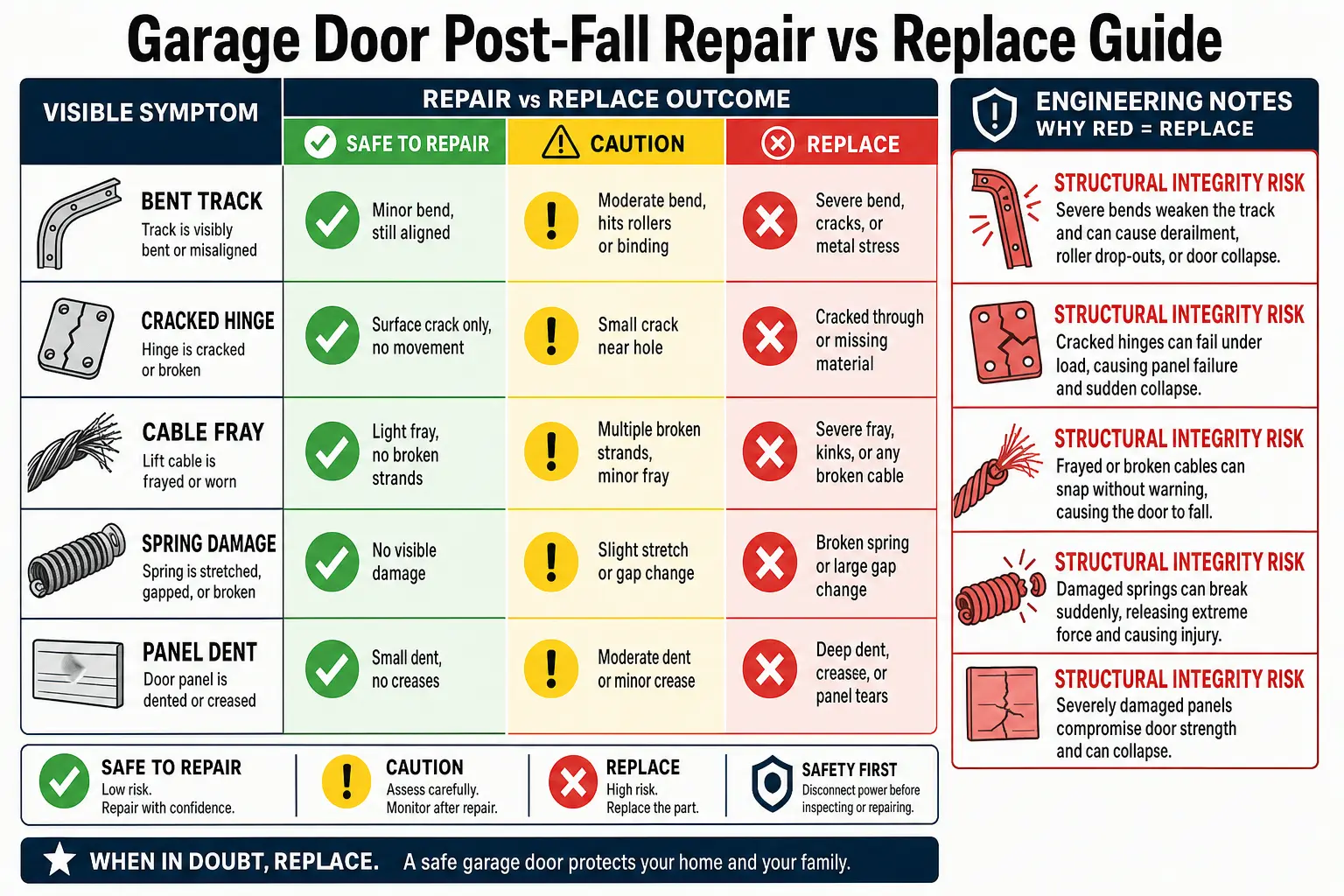
This Repair vs. Replace matrix empowers readers to quickly relate visible damage signs to safe actions, promoting confident, informed decisions after a garage door failure.

Evaluating structural integrity requires applying the Rule of 50%: if repair costs exceed half the price of a new system—or if key structural elements suffer permanent section buckling—replacement provides greater long-term reliability.

Visual Symptom post-Drop Structural Risk Level Recommended Engineering Action Typical Cost Range
Minor track misalignment, loose rollers Low Professional track realignment & standard garage door tune up $125 – $250
Snapped spring, sheared cable, bent stem Medium / High Full mechanical component overhaul (Springs, cables, rollers, drums) $450 – $850
Single cracked section panel, good frame Medium Targeted broken garage door panel replacement $350 – $700
2+ Buckled panel struts, bent track curves Critical Complete system garage door replacement $1,200 – $2,800+

When evaluating initial labor scope, standard single-track adjustments carry a modest garage door off track repair cost, whereas complex structural drops demand comprehensive technician safety testing before returning the door to daily service.

Frequently Asked Questions


Can I manually pull my garage door back onto its track after a drop?

No. Never attempt to force a dropped garage door back onto its rails using leverage or mallets. Fallen doors remain under uneven spring tension. Manually shifting a misaligned section can release stored mechanical energy, causing severe crushing injuries or causing the door to drop completely.

How do I tell if my garage door opener motor sustained gear damage during the crash?

If the motor hums without moving the chain or belt, or if you hear a high-pitched grinding sound, the internal nylon drive sprocket has likely stripped. This occurs when sudden dynamic force jerks the trolley carriage against stationary motor gears during impact.

When is complete door replacement better than component repair post-fall?

If two or more panel sections suffer structural strut buckling, panel joint delamination, or severe center-stile tearing, full replacement is strongly recommended. Attempting to repair multiple buckled sections often costs more than installing a new, high-efficiency door assembly.

Contact / Request a Call