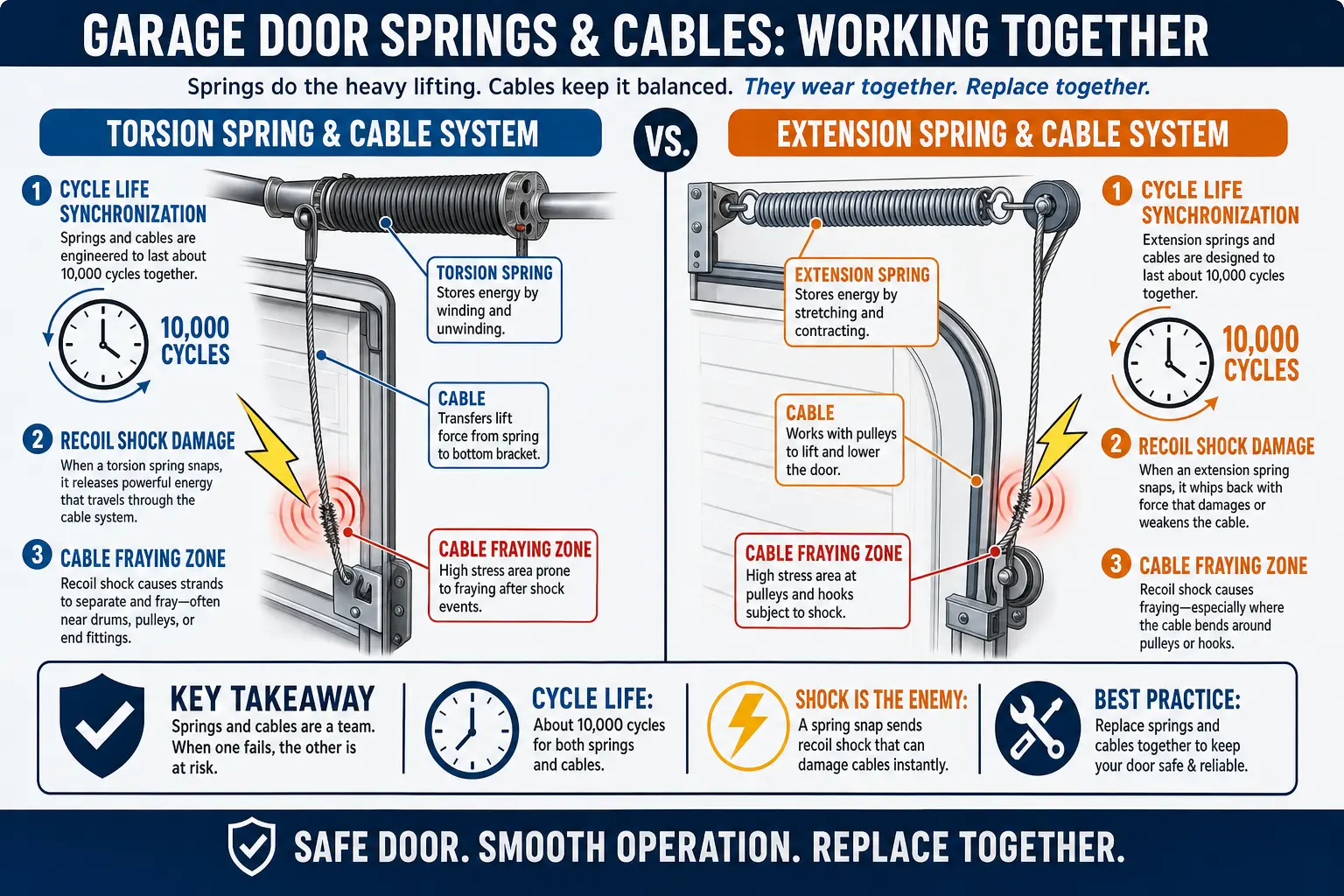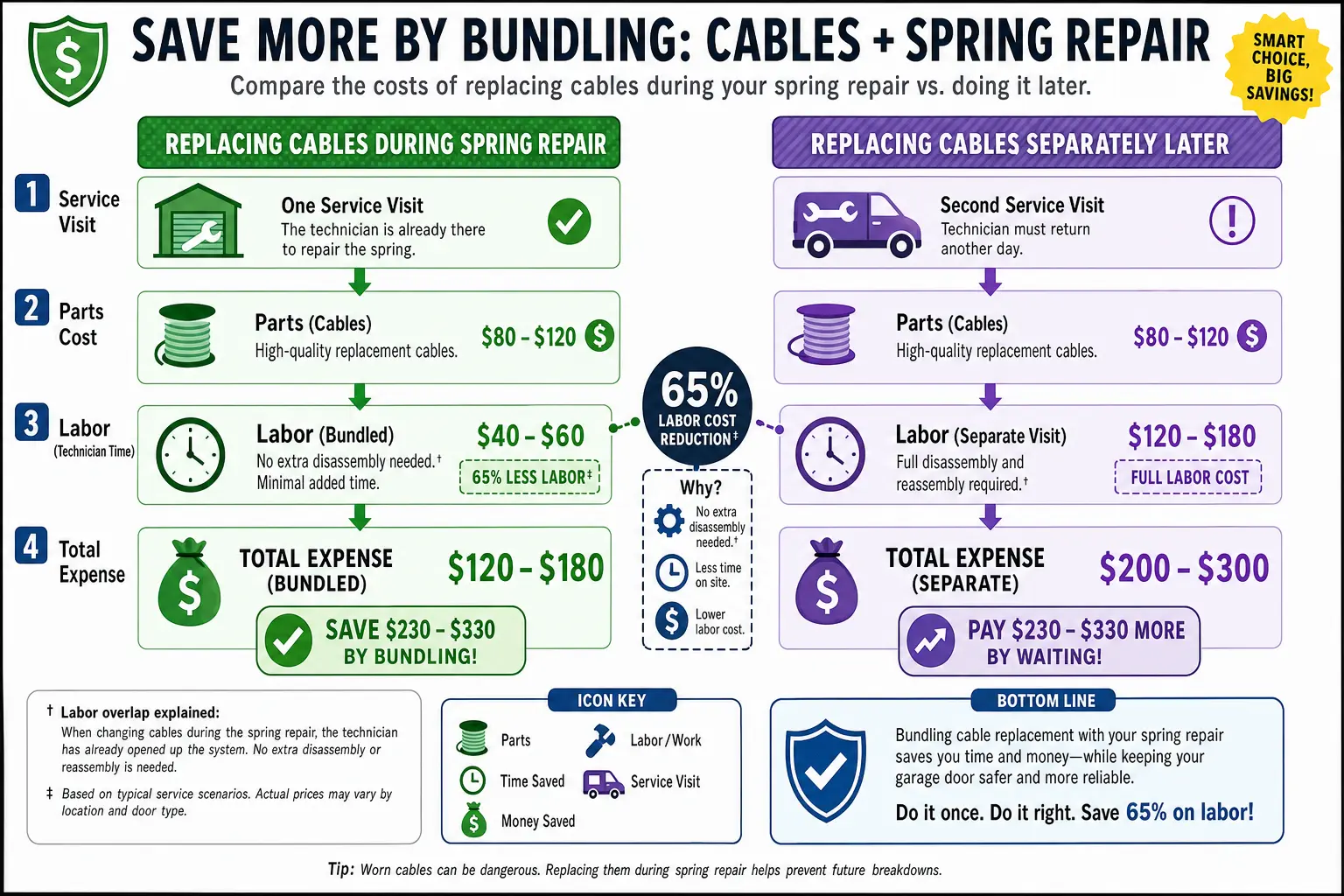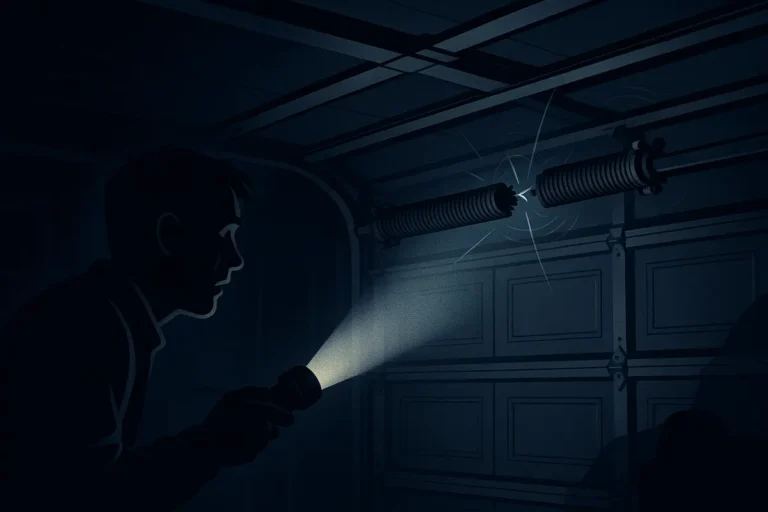
Technicians recommend replacing garage door cables during a spring repair to eliminate safety hazards from sudden door drops, ensure balanced lifting, and save homeowners from paying for a second high-tension service call. Because torsion springs and lift cables age at roughly the same rate under constant heavy load, installing fresh cables alongside new springs—especially for Connecticut homeowners dealing with harsh seasonal wear—protects your door hardware and extends the life of the entire counterbalance system.
Key Reasons Technicians Recommend Replacing Cables During Spring Service:
-
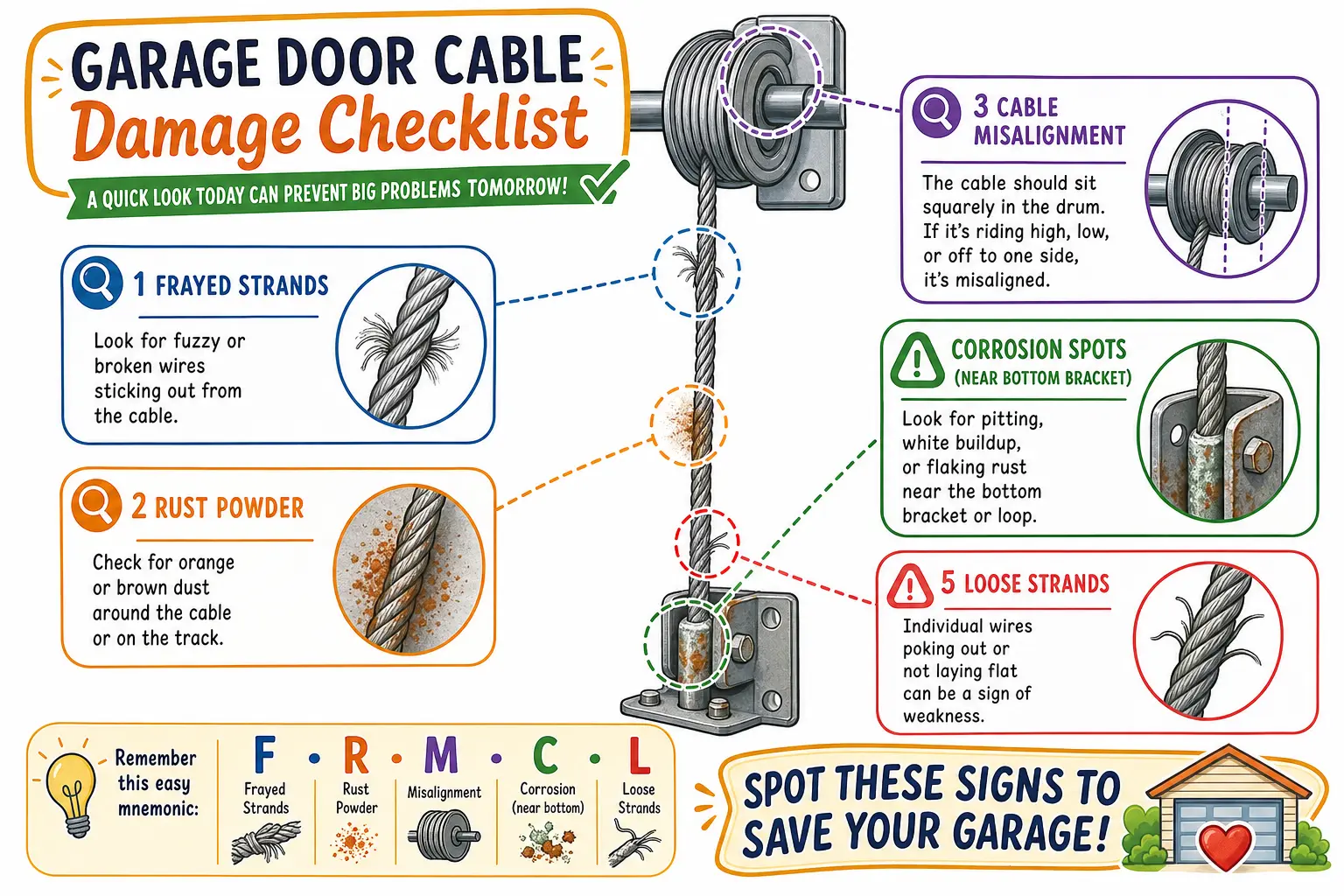
Eliminates sudden drop and injury risks: Springs and lift cables support the full weight of the door under extreme tension; corroded, frayed, or fatigued cables can snap unexpectedly and cause a heavy door to slam down.
-
Addresses collateral damage from spring failure: When a spring snaps, cables often lose tension, unspool from the drums, or absorb sudden shock—damage that can lead to crooked travel, bent tracks, or opener strain if old cables are reused.
-
Maintains level travel and proper door balance: Pairing fresh cables with newly calibrated springs ensures even lifting force on both sides so the door moves smoothly without binding or stalling.
-
Reduces labor costs and repeat high-tension work: Safely swapping cables requires unwinding the torsion spring system with specialized tools; replacing both components in a single visit avoids duplicate labor fees and future safety risks.