Why Technicians Recommend Replacing Garage Door Cables During a Spring Repair


Published: Nov 24, 2026

Technicians recommend replacing garage door cables during a spring repair to eliminate safety hazards from sudden door drops, ensure balanced lifting, and save homeowners from paying for a second high-tension service call. Because torsion springs and lift cables age at roughly the same rate under constant heavy load, installing fresh cables alongside new springs—especially for Connecticut homeowners dealing with harsh seasonal wear—protects your door hardware and extends the life of the entire counterbalance system.

Key Reasons Technicians Recommend Replacing Cables During Spring Service:

  • Eliminates sudden drop and injury risks: Springs and lift cables support the full weight of the door under extreme tension; corroded, frayed, or fatigued cables can snap unexpectedly and cause a heavy door to slam down.

  • Addresses collateral damage from spring failure: When a spring snaps, cables often lose tension, unspool from the drums, or absorb sudden shock—damage that can lead to crooked travel, bent tracks, or opener strain if old cables are reused.

  • Maintains level travel and proper door balance: Pairing fresh cables with newly calibrated springs ensures even lifting force on both sides so the door moves smoothly without binding or stalling.

  • Reduces labor costs and repeat high-tension work: Safely swapping cables requires unwinding the torsion spring system with specialized tools; replacing both components in a single visit avoids duplicate labor fees and future safety risks.
The Honest Truth: Upsell or Genuine Safety Necessity?


It is completely reasonable to question additional repair recommendations during an emergency visit. Homeowners often worry about predatory pricing. However, in the vast majority of spring repairs, replacing cables simultaneously is grounded in mechanical reality and long-term cost protection rather than sales tactics.

Springs and cables function as a single interconnected counterbalance system. When one component fails or undergoes maintenance, the structural integrity of the other is directly impacted.

Still stuck? Get it fixed today.
24/7 emergency service from licensed local technicians.
Call (860) 362-3018

The 5 Mechanical Reasons Cables & Springs Must Be Replaced Together


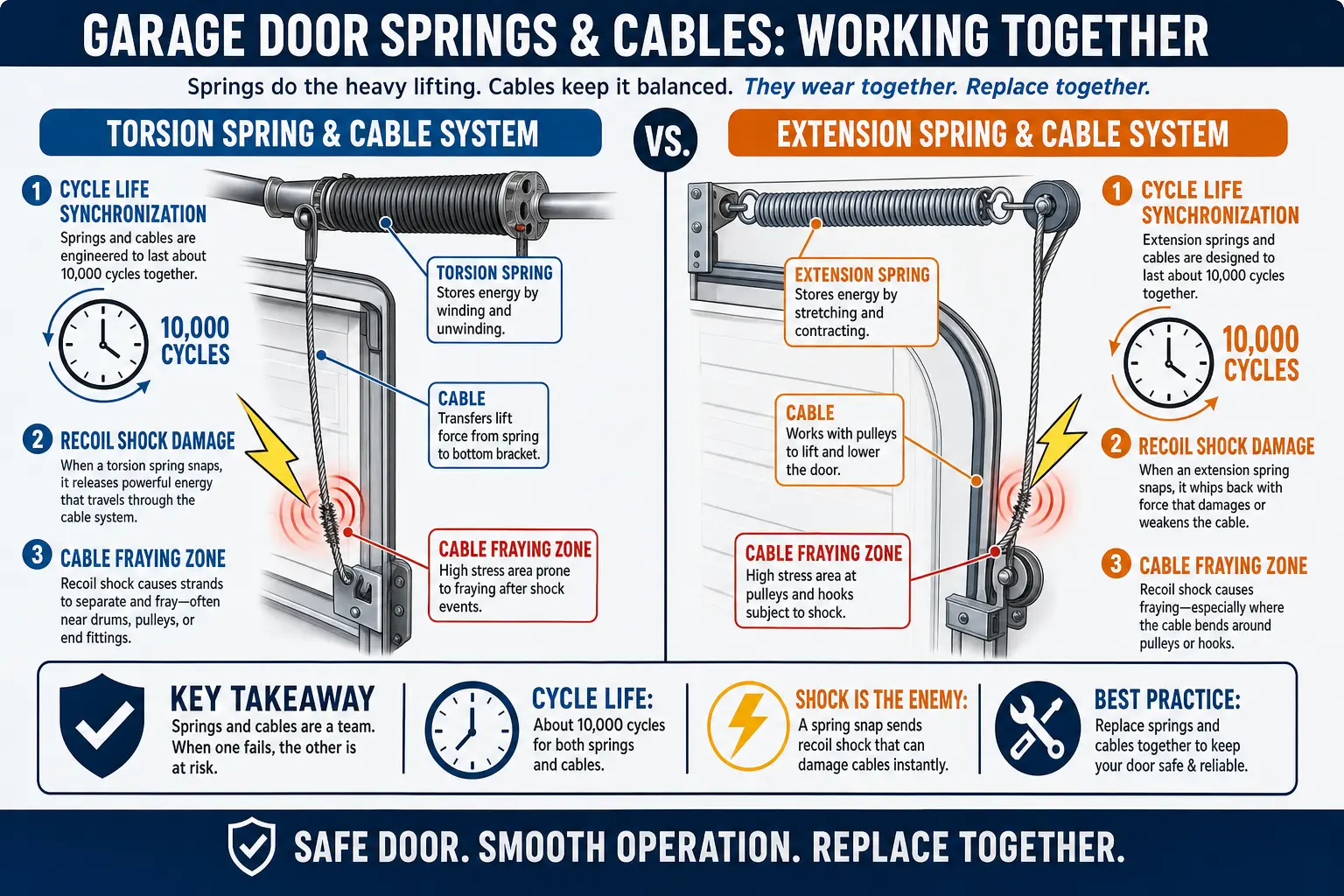
This infographic visualizes why garage door springs and cables share the same lifecycle and how spring snapping transfers damaging recoil energy to cables, explaining the necessity of simultaneous replacement.

1. Synchronized 10,000-Cycle Lifespans

Standard torsion springs are engineered for roughly 10,000 cycles (around 7 to 10 years of typical residential use). Aircraft-grade galvanized steel lift cables operate under the exact same cycle stress, flexing and wrapping around cable drums with every door movement. Leaving old cables paired with new springs creates an immediate structural mismatch.

2. Kinetic Recoil Shock Damage

When a torsion spring snaps under more than 200 pounds of torque, it releases massive kinetic energy instantly. This violent recoil causes the cable to rapidly unspool, slap against the metal header frame, and suffer severe strand deformation or internal micro-kinking.

3. Hidden Bottom-Bracket Corrosion

Over 80% of cable fraying happens at the bottom fixture bracket. Positioned inches from the garage floor, this area is exposed to road salt, standing water, and humidity. Corrosion remains hidden under spring tension but becomes clearly visible once tension is relieved.

4. Uneven Stretch and Cable Fatigue

As cables age under constant stress, steel strands stretch. Placing a brand-new spring with full tension on aged cables can cause uneven door travel, off-track errors, or sudden strand failure.

5. Extension Spring Safety Systems

In extension spring setups, safety cables run through the center of the springs to catch flying metal fragments if a spring breaks. Replacing damaged safety cables prevents serious property damage or injury.

The Economics: Labor Overlap Math (Save $150–$250)


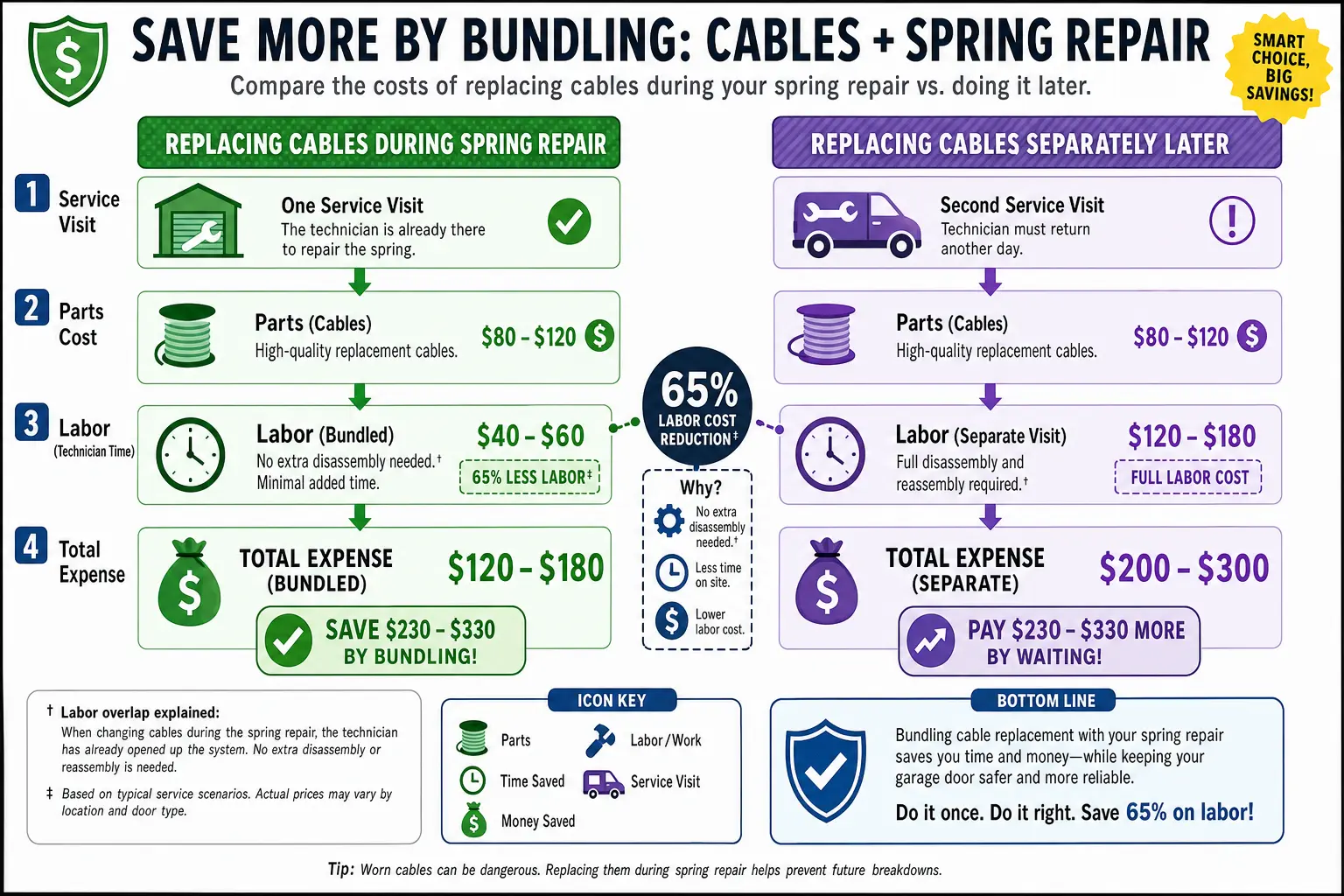
This cost comparison guide breaks down how bundling cable replacement with spring repair significantly reduces labor charges, saving homeowners $150 to $250.

The primary reason to address cables during spring service is labor overlap economics. To replace a spring, the technician must already unwind high-tension springs, slide off torsion drums, and disassemble the center shaft assembly.

If you replace cables while the system is already disassembled, you only pay for the raw hardware. If you wait 6 months until the old cable snaps, you will incur an entirely separate service trip, resetting labor charges overall.

When scheduling a professional 24 hour garage door spring replacement, bundling these services preserves system alignment while reducing overall maintenance costs.

How to Inspect Your Cables Yourself (Visual DIY Verification Guide)


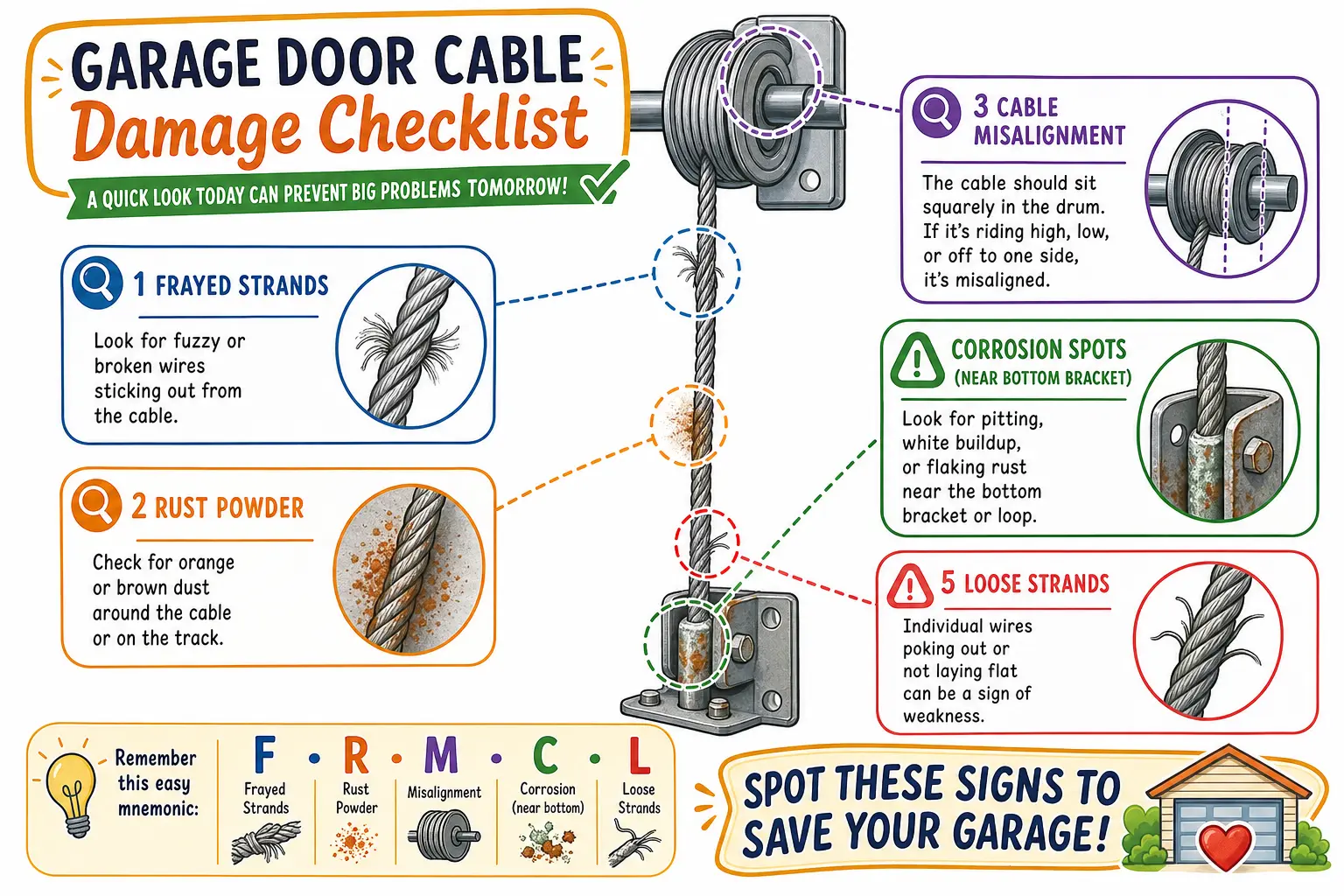
This visual checklist helps homeowners identify critical warning signs on garage door cables to verify technician recommendations and ensure safety before repair.

You do not have to take a contractor’s word blindly. Look for these visual indicators to verify if cable replacement is justified:

  • Fraying Strands: Individual wire fibers popping out from the braided steel cable.
  • Rust and Reddish Powder: Signs of internal oxidation weakening structural capacity.
  • Kinks or Flattened Spots: Deformities caused by recoil shock from a snapped spring.
  • Slack or Uneven Tension: Spooling unevenly on the aluminum drums during door travel.

Contractor Red Flags: How to Spot a Dishonest Quote


An ethical technician will show you the physical wear on your cables and explain the labor overlap savings clearly. Red flags include high-pressure tactics claiming your door will immediately collapse without clear visual proof, charging hundreds of dollars in extra labor for bundled cable installation, or refusing to outline parts versus labor costs on the written estimate.

Frequently Asked Questions


Can I replace just one cable if only one is frayed?

No. Cables wear out under identical cycle stresses and door weights. Replacing only one cable leaves uneven stretching, causing the door to operate off-balance, bind in the tracks, or put unnecessary strain on the opener.

What happens if I keep my old cables with new springs?

Reusing fatigued cables risks unexpected cable snapping under the fresh torque of new springs. This can cause the door to crash down crookedly, damage tracks, or require an expensive emergency service visit.

How long do new garage door cables last?

High-grade galvanized aircraft cables typically last 10,000 cycles, matching the lifespan of standard residential torsion springs (approximately 7 to 10 years under average daily use).

Contact / Request a Call