How Garage Dust Damages Your Door: Track And Roller Maintenance


Published: Aug 12, 2026

Ever notice a fine layer of dust, pollen, or grit coating everything in your garage? If you live near a construction site, on an unpaved road, or simply endure heavy pollen seasons, you know the battle is constant. But that harmless-looking dust is doing more than just making your car dirty—it’s actively wearing down the most critical parts of your garage door.

Most homeowners think a quick spray of lubricant is the answer. In a dusty environment, that’s one of the worst things you can do. You’re unintentionally creating a gritty, sandpaper-like substance that grinds away at your door’s rollers and tracks with every single cycle.

This guide will change the way you think about garage door maintenance. We’ll move beyond generic advice and give you a specific playbook for protecting your door in high-debris environments, helping you save money on repairs and extend the life of your system.

The Anatomy of Movement: Understanding Tracks and Rollers


Before we dive into the solution, let’s get acquainted with the key players. Think of your garage door system like a skeleton: the tracks are the rigid bones that provide the path, and the rollers are the joints that allow for smooth, controlled movement.

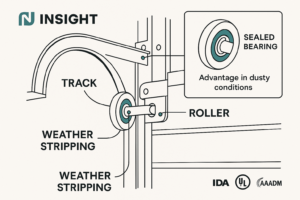
An illustration showing a close-up of a garage door track with a roller inside.Understanding your garage door components is key to effective maintenance—sealed bearings and focused lubrication keep your door running smoothly in dusty settings.

  • Tracks: These are the metal channels your door runs along. Their only job is to guide the rollers. They are like the concrete medians of a highway—they keep things in their lane, but they aren’t the road itself.
  • Rollers: These are the wheels that fit inside the tracks, allowing the door to move up and down. They bear the door’s weight and are in constant motion.

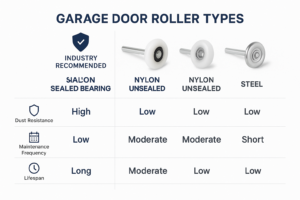
Not all rollers are created equal, and for a dusty garage, the difference is critical:

  • Steel Rollers: These are often the standard, but their unsealed bearings are vulnerable. Dust and grit can easily work their way inside, causing friction and rapid wear.

A high-quality studio photograph of four different types of garage door rollers arranged neatly on a clean, neutral background.

  • Nylon Rollers: A significant upgrade. They are quieter and smoother, but the real advantage comes from the bearings.
  • Nylon Rollers with Sealed Bearings: This is the gold standard for harsh environments. The bearings (often labeled 6200-2RS) are sealed, creating a physical barrier that prevents contaminants from getting inside and destroying the mechanism from within.

The "Grinding Paste" Effect and Why Cleaning First Matters


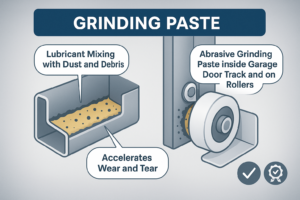
An infographic with a split-screen design. Here’s the “aha moment” that most homeowners miss. When you spray a lubricant like grease or oil into a dirty garage door track, you aren’t helping. You are mixing that sticky lubricant with pollen, dust, sand, and grit.

This combination creates a viscous, abrasive sludge we call “grinding paste.”

Instead of reducing friction, this paste actively works against your door, accelerating the wear and tear on your rollers. It’s like pouring sand into a machine’s gears. This is why a simple cleaning routine is the most powerful tool you have to prevent garage door repairs.

The Masterclass: A 3-Step Guide to a Dust-Free System


Ready to do it right? This process focuses on removing debris before applying any lubricant, ensuring you’re helping, not hurting.

Step 1: Safety First

Before you begin, you must disengage your system to work on it safely.

  1. Close the Garage Door: This takes tension off the springs and cables.
  2. Unplug the Garage Door Opener: This prevents anyone from accidentally opening the door while you’re working.
  3. Clamp the Track: For extra security, place a C-clamp or locking pliers on the track just above one of the bottom rollers to physically prevent the door from moving.

Step 2: The Deep Clean

This is the most important step. Your goal is to get the tracks and rollers completely free of debris.

  1. Vacuum: Use a shop vacuum with a narrow brush attachment to suck out all the loose dust, cobwebs, and grit from inside the entire length of the tracks.
  2. Wipe Down: For caked-on grime, use a rag lightly dampened with a degreaser or brake cleaner. Spray the cleaner on the rag, not directly into the track. Wipe the inside of the track until it’s spotless. You’ll be amazed at what comes off. For more details on this process, you can find a guide to clean garage door tracks and other components here.
  3. Clean the Rollers: Wipe down each roller individually, paying special attention to the stems where they meet the hinges.

Step 3: Lubricate with Precision (Not in the Tracks!)

This is where most people get it wrong. You should not lubricate the garage door tracks. A slippery track doesn’t help the rollers do their job; it just attracts more dust.

Instead, apply a high-quality silicone or white lithium grease spray to the moving metal parts that actually bear a load:

  • Roller Bearings: Aim the spray straw directly into the bearings at the center of each roller. A small burst is all you need. If you have sealed bearings, you can skip this.
  • Hinges: Lightly spray each pivot point on the hinges that connect your door panels.
  • Springs and Bearing Plates: A light coating on the torsion springs and the bearing plates at either end will prevent rust and reduce noise.

Work the door up and down manually a few times to distribute the lubricant evenly. The difference in sound and smoothness should be immediate.

Maintenance Schedule and Prevention Plan for Harsh Environments


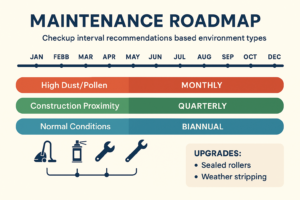
Generic advice like “lubricate every six months” doesn’t apply when your garage is a dust bowl. Your environment dictates your maintenance schedule.

An infographic-style chart titled 'Harsh Environment Maintenance Schedule.' It features three columns: 'Environment Type' (e.g., Heavy Pollen Season, Near Construction, Gravel Road), 'Frequency' (e.g., Every 3 Months, Monthly Check, Quarterly Deep Clean), and 'Key Actions' (e.g., Wipe Tracks & Rollers, Vacuum Debris, Check Seals). Each row provides a clear, actionable maintenance plan tailored to a specific high-debris scenario.

  • During Heavy Pollen Season: Plan for a track and roller wipe-down every 3-4 months.
  • Living Near a Construction Site: Perform a quick visual inspection and vacuuming monthly.
  • On a Gravel or Dirt Road: A full clean and targeted lubrication is best done quarterly.

To reduce the amount of debris getting in, consider these preventative upgrades:

  • Upgrade Your Rollers: If you have old metal rollers, deciding when to replace garage door rollers with sealed nylon ones is the single best investment you can make for longevity in a dusty environment.
  • Improve Your Bottom Seal: A worn-out or cracked rubber seal at the bottom of your door is an open invitation for dust. Replacing it can make a huge difference.

Your Path to a Smoother, Longer-Lasting Door


By shifting your focus from simply lubricating to cleaning first, you can conquer the challenges of a dusty environment. You’re no longer just quieting a squeak; you’re performing essential preventative maintenance that protects your investment.

If you’ve performed a deep clean and still hear grinding noises or notice your door struggling, it may indicate a more serious issue like worn-out rollers or track misalignment. In these cases, or if you’re not comfortable performing this maintenance yourself, don’t hesitate to reach out to a professional. A trained technician can diagnose underlying problems and ensure your door operates safely and efficiently for years to come.

Frequently Asked Questions


Why is my garage door so loud and jerky?

The number one cause of a noisy, jerky door is dirty and unlubricated rollers and hinges. The grinding and popping sounds are often the rollers struggling to move over a track filled with debris. Sometimes, jerky movement can be mistaken for an issue with the opener’s limits, but cleaning the tracks should always be your first step.

What is the best lubricant for garage doors?

Avoid standard WD-40, which can attract dust and strip away existing grease. Look for a spray specifically designed for garage doors, typically a silicone or white lithium grease-based formula. These lubricants spray on as a liquid to penetrate tight spaces and then set into a thicker grease that stays put and repels dirt. You’ll want to review guidance on how often should you lubricate your garage door to keep it in top shape.

How do I know if my rollers are bad and need replacing?

Look for visible signs of wear. If your rollers are cracked, wobbly on their stems, or don’t spin freely, it’s time for a replacement. A good way to know how to tell if garage door rollers are bad is by listening; worn-out bearings will make a rumbling or grinding noise as the door moves.

Contact / Request a Call