That Loud Bang: 7 Signs Your Garage Door Spring is Failing
Published: Mar 4, 2026
It’s a sound you can’t ignore. A sudden, sharp BANG from the garage that echoes through the house, sounding like a firecracker or something heavy falling. Your first instinct might be to rush out and see what happened. But if that sound was a failing garage door spring, the most important thing you can do next is understand what not to do.
Many homeowners are surprised to learn that the springs—not the automatic opener—do the heavy lifting. They are tightly wound coils of steel that hold an immense amount of stored energy to counterbalance the door's weight, which can be anywhere from 150 to 500 pounds.
When a spring fails, that energy is released instantly and violently.
Think of a wound torsion spring as holding the potential energy of a dropped sledgehammer. It’s this power that makes a broken spring one of the most dangerous situations a homeowner can face. This guide will help you safely identify the warning signs and know exactly what to do—and what to avoid.
The Muscle Behind the Door: Understanding Torsion vs. Extension Springs
Torsion Springs
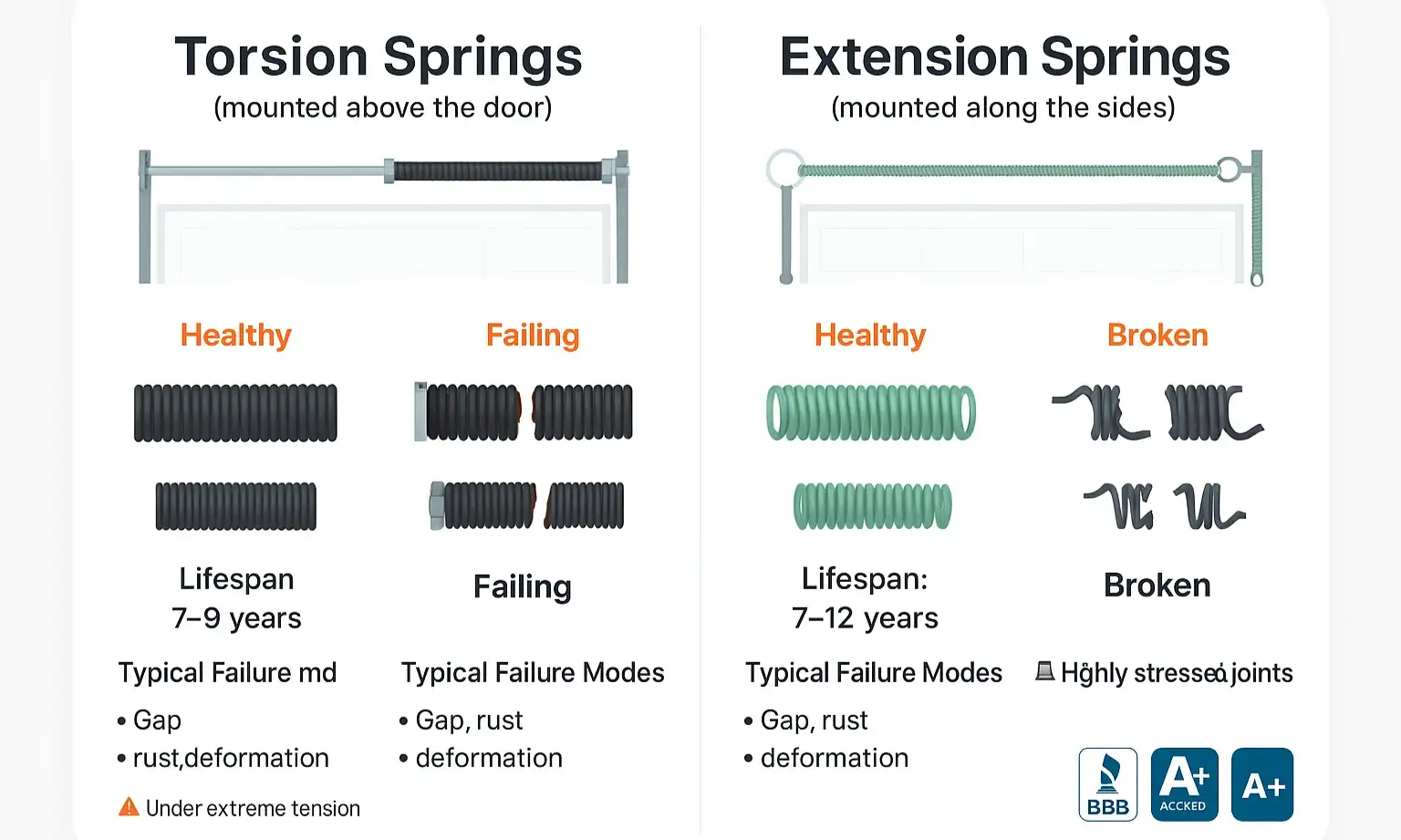
- Location: Mounted on a metal bar directly above the closed garage door.
- How They Work: These thick, powerful springs twist (or "torque") to store energy. As the door closes, cables attached to the bottom corners of the door wind around a drum, which in turn winds the spring. When the door opens, the spring unwinds, using its stored energy to lift the door's full weight.
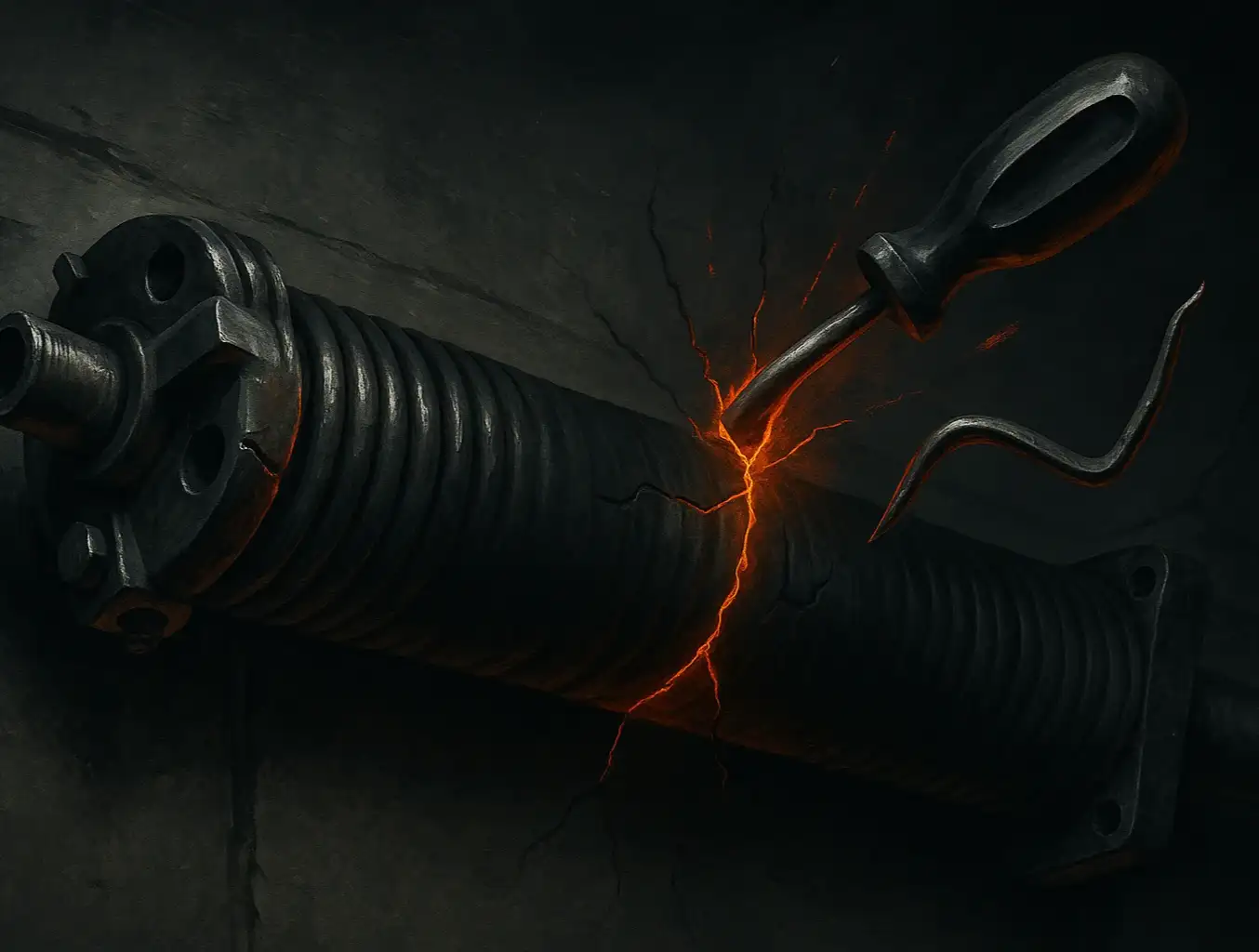
- Failure Sign: The most common sign is a clean break, which creates a visible 2-3 inch gap in the coil. This is often accompanied by the loud "bang" you may have heard.
Extension Springs
- Location: Two long, thinner springs running parallel to the horizontal tracks on each side of the door.
- How They Work: These springs work by stretching and contracting. As the door closes, they extend, storing energy like a massive rubber band. They often have a safety cable running through their center to prevent them from flying across the garage if they break.
- Failure Sign: A broken extension spring will often be visibly dangling or hanging out of place. You might see a broken loop at one end or notice that one spring is much more stretched out than the other, causing the door to look crooked.
7 Telltale Signs of a Failing Garage Door Spring
1. The Obvious Gap in the Spring
2. The Door Feels Extremely Heavy
3. The Door Opens Crooked or Unevenly
4. You See Loose or Dangling Cables
5. The Automatic Opener Strains or Fails
6. The Door Slams Shut
7. Visible Rust or Corrosion
The Danger Zone: Why You Must Not Touch a Failing Spring
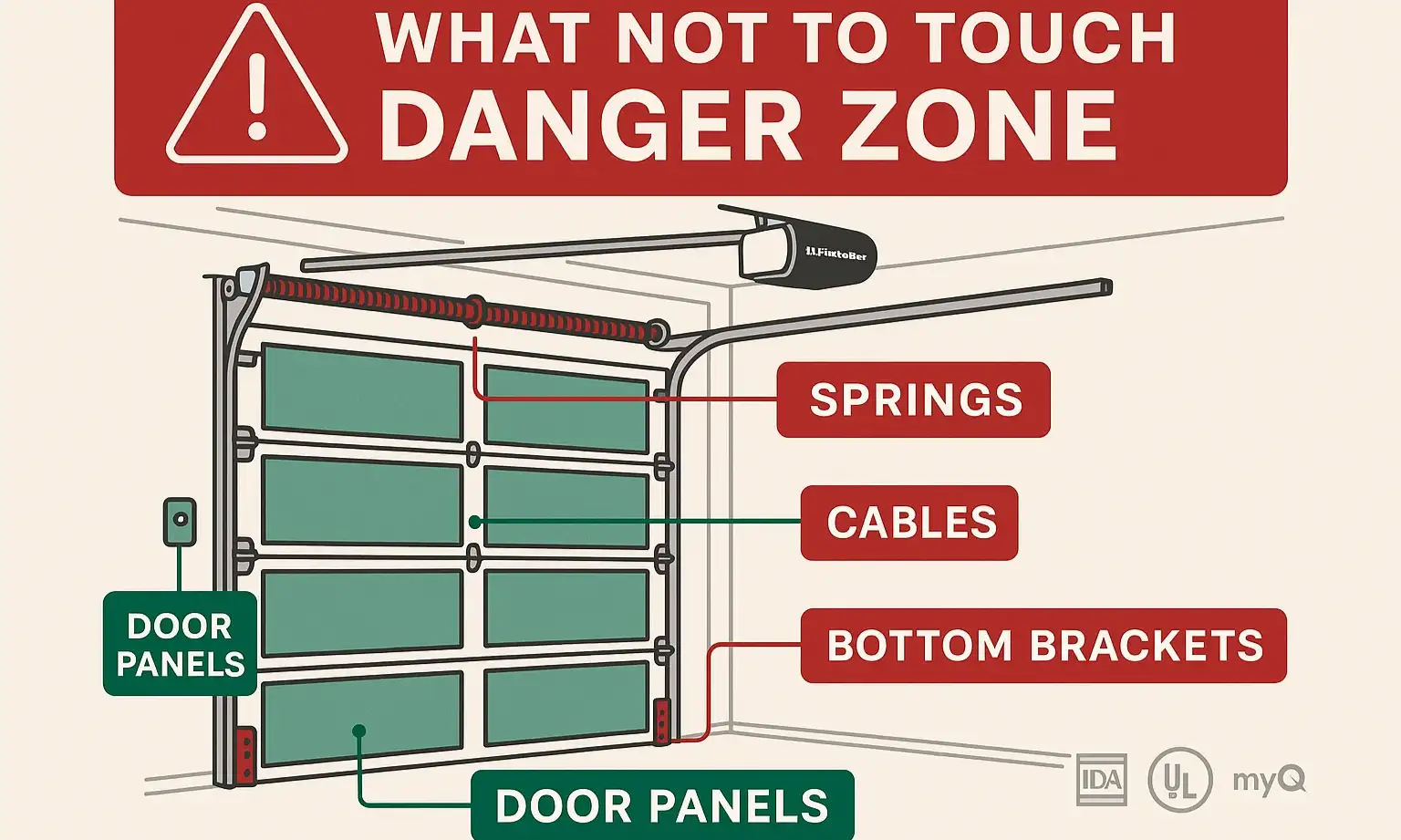
A Homeowner's Safety Protocol
- DO NOT operate the garage door opener.
- DO NOT try to lift the door manually.
- DO NOT touch or try to adjust the springs, cables, drums, or bottom brackets.
- DO keep children, pets, and vehicles away from the door.
- DO unplug the garage door opener from the wall to prevent accidental use.
- DO call a qualified garage door technician immediately.
Need more information?
Get a free quote
You've Identified a Problem. Here Are Your Next Safe Steps.
- Stop and Secure: Follow the safety protocol above. Your immediate goal is to prevent any further damage or injury.
- Inspect from a Distance: Confirm what you see. Is there a gap in the torsion spring? Is an extension spring dangling? This information will be helpful when you call a professional.
- Call a Professional Technician: This is not a DIY job. Search for a reputable company that specializes in services like garage door torsion spring repair in Connecticut. A trained technician has the specialized tools, knowledge, and experience to replace the springs safely and correctly.
- Ask About Replacing Both Springs: If your door has two springs (as most do), and only one broke, it is standard practice to replace both at the same time. They were installed together and have been through the same number of cycles. The second spring is likely near the end of its lifespan and could break soon after the first is replaced, forcing you to pay for another service call.
Frequently Asked Questions About Garage Door Springs
Can I still open my garage door if the spring is broken?
Why did my garage door spring break?
Is it safe for me to attempt the repair myself?
You may also like