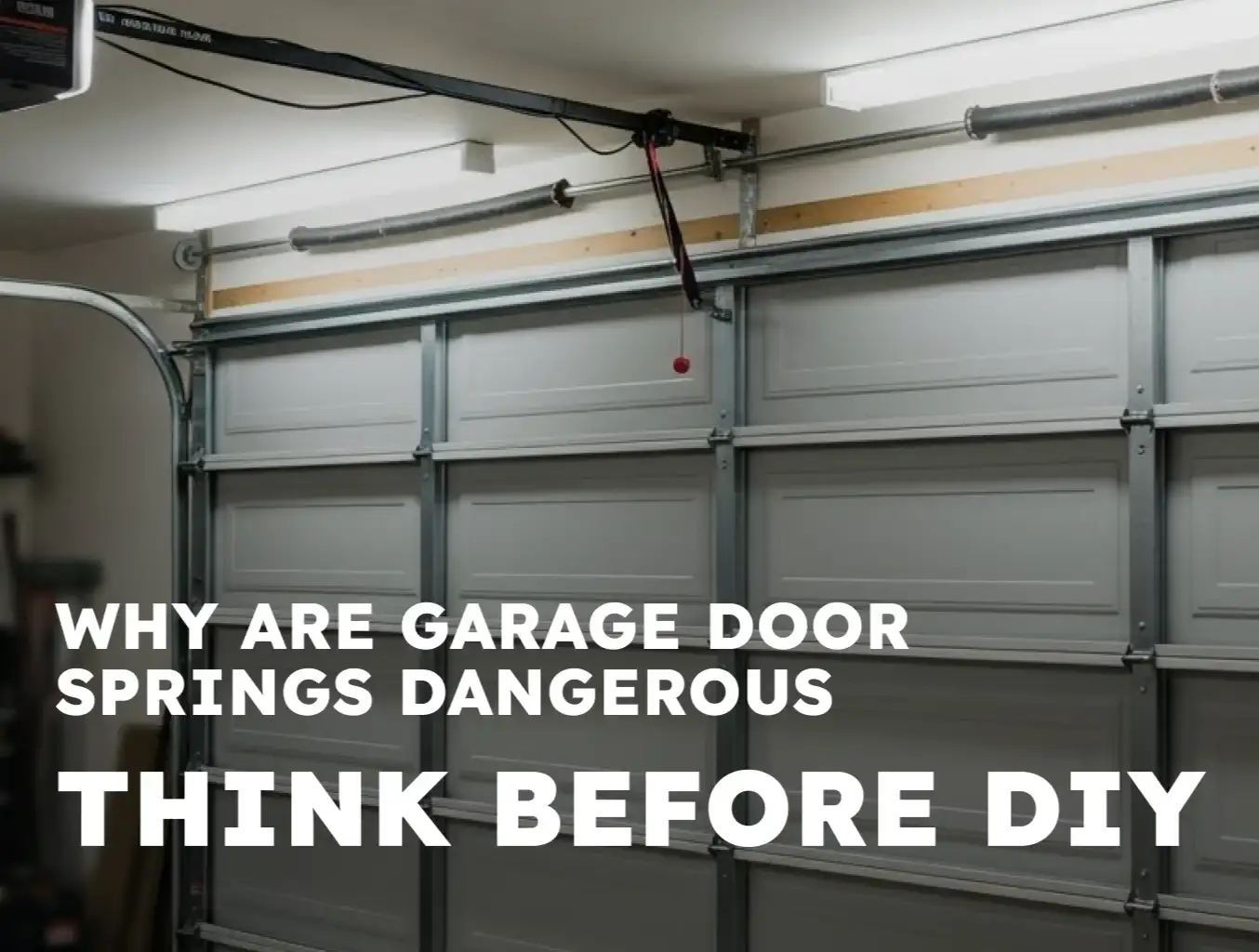
A Tale of Two Springs: The Hidden Dangers of Your Garage Door
Published: Jan 9, 2026
Every year, an estimated 20,000 to 30,000 people are injured by their garage doors. It’s a shocking number for an appliance we use daily without a second thought. While we might worry about a door closing on something, the most severe risks are often hidden in plain sight, coiled tightly in the springs that do the heavy lifting.
You’ve likely landed here because you’re a curious homeowner. Maybe your garage door is acting up, and you’re wondering, "Can I fix this myself?" You've probably heard there are two main types of springs—torsion and extension—but the difference seems purely mechanical.
The truth is, understanding the difference isn't just about mechanics; it's about safety. Torsion and extension springs fail in dramatically different ways, and each presents a unique, significant danger to the unprepared DIYer. This isn't a simple repair; it's a rendezvous with hundreds of pounds of stored energy. Let's break down what that energy looks like and why it demands respect.
The Two Kinds of Power: Twisting vs. Stretching
- Torsion Springs: Think of a torsion spring like a tightly twisted rope. It runs on a metal shaft directly above the garage door opening. As the door closes, cables unwind, causing the spring to wind up, storing rotational energy (torque). When you open the door, this spring unwinds, and its stored energy does the heavy lifting. The danger here is concentrated in the twisting force.
- Extension Springs: Imagine a giant, powerful rubber band. Extension springs run alongside the horizontal tracks of the door. As the door closes, these springs stretch out, storing potential energy. When the door opens, the springs contract, pulling the door up. The danger here is in the raw, unrestrained stretch.
The Anatomy of Danger: Torsion Springs
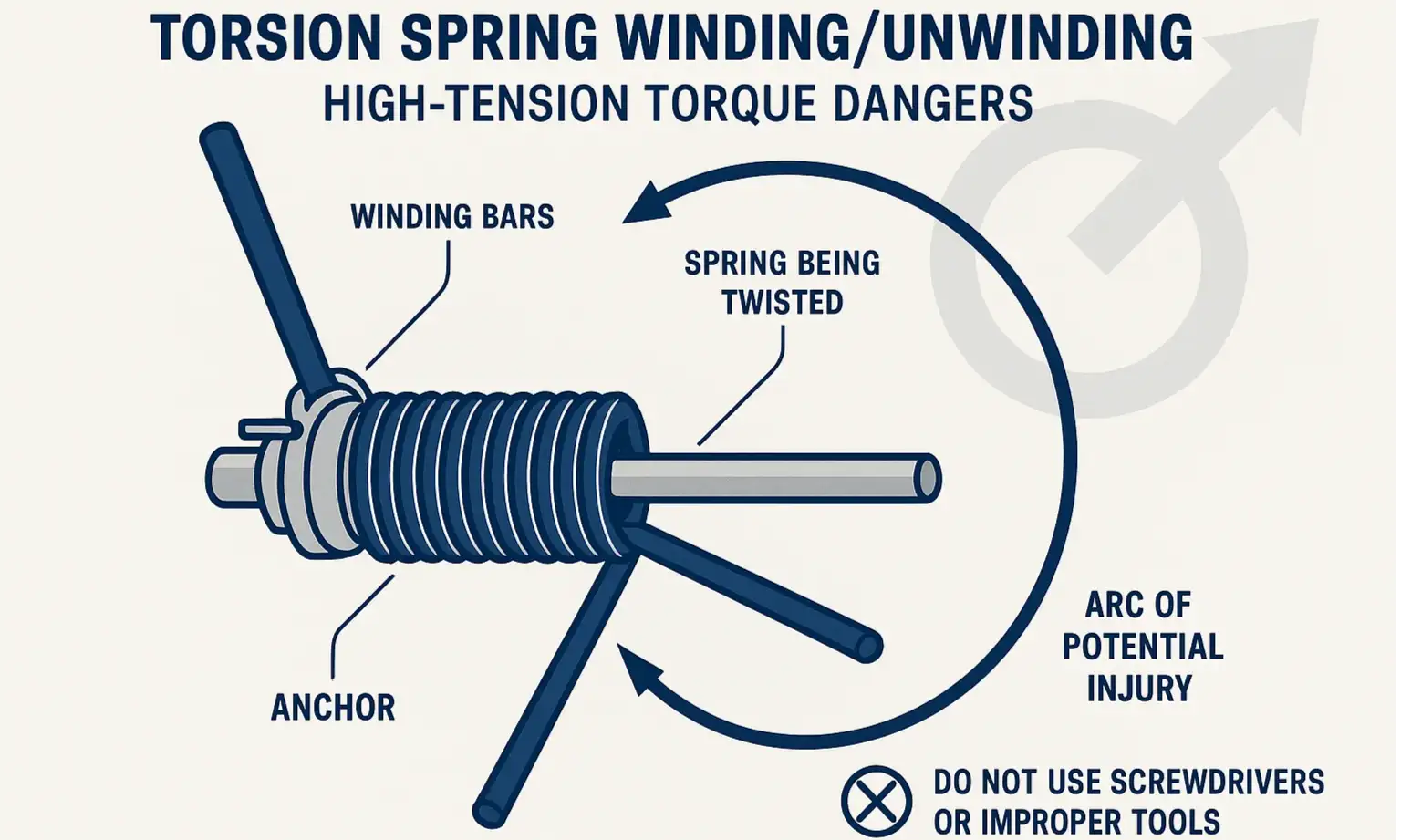
The winding process: a high-stakes operation
- The Wrong Tools: The most common and dangerous mistake is using screwdrivers, rebar, or any other metal rod instead of proper winding bars. These tools are not designed to hold that much torque. They can slip out, or worse, shatter under the force.
- The Slip and Strike: If a winding bar slips out of your hand or the winding cone, the energy is released instantly. The remaining bar becomes a projectile, whipping around with enough force to cause severe blunt force trauma, break bones, or cause fatal head injuries.
The Anatomy of Danger: Extension Springs
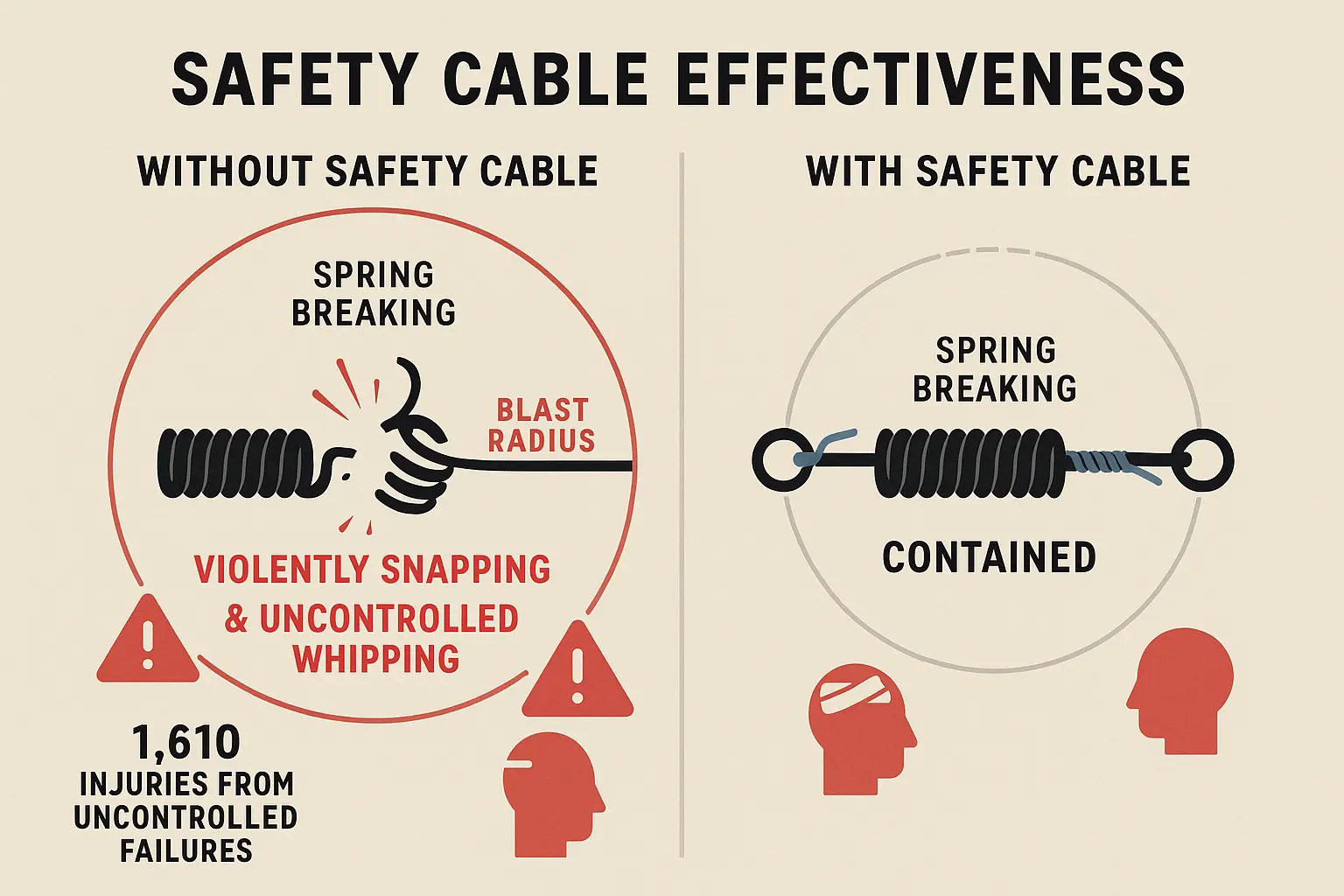
The breakage: a high-velocity projectile
- The uncontained whip: A broken spring can fly across your garage at high velocity, easily denting a car, punching through drywall, or causing severe personal injury, including lacerations and open globe eye injuries.
- The role of safety cables: This is precisely why extension springs must have a safety cable running through the center of them. This simple steel cable is designed to contain the spring if it breaks, preventing it from flying free. However, many older homes lack them, and DIY installers often forget or improperly install them, rendering them useless.
Mastery: Safety Comparison Matrix
Primary Danger
Failure Mode
DIY Risk Level
Essential Safety Gear
Common Injuries
Action: The DIY Safety Checklist
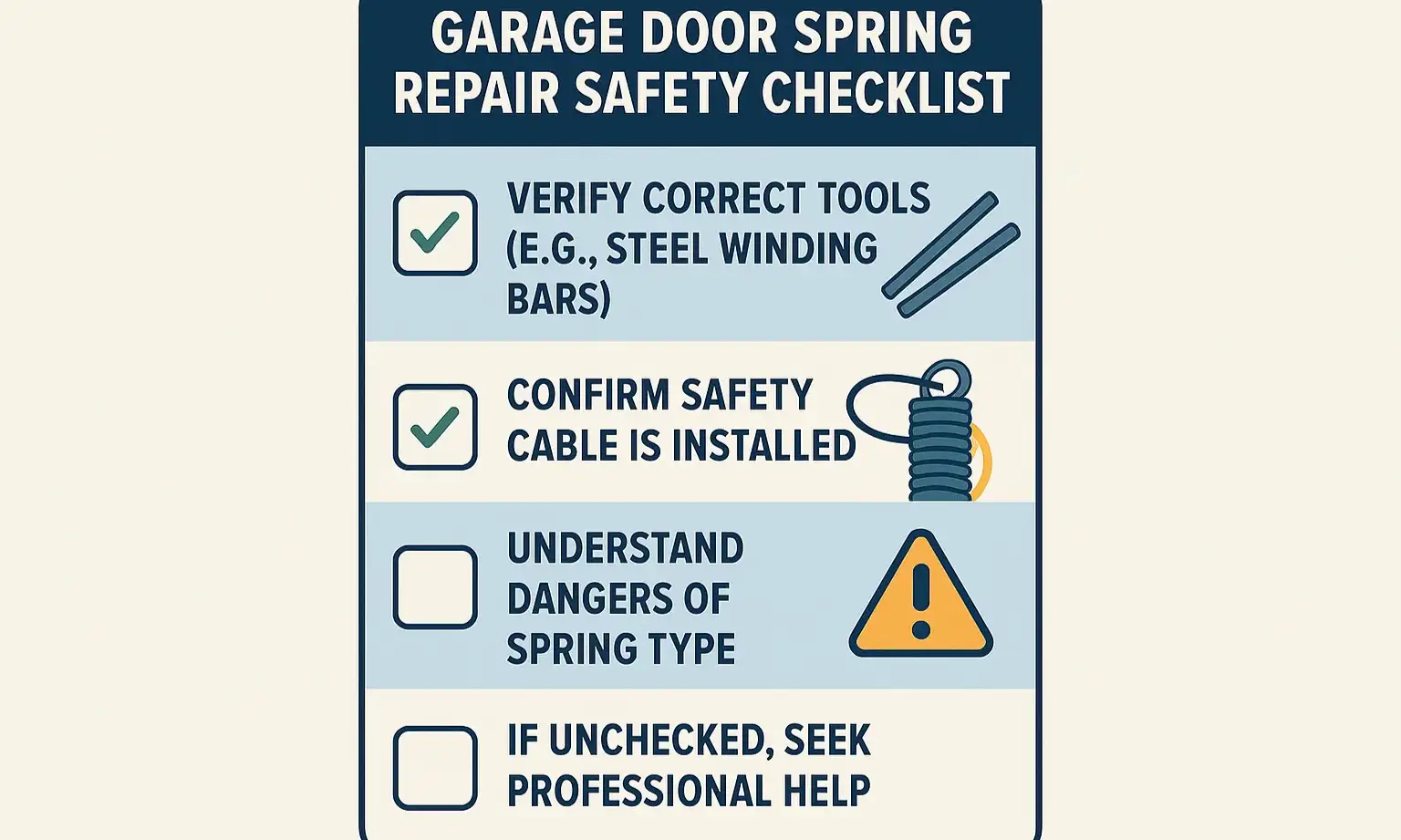
- Tool Check: Do you own a pair of solid steel winding bars designed specifically for your spring's winding cone diameter? (If the answer is no, stop here.)
- Knowledge Check: Do you know the exact number of quarter-turns required to safely wind your new spring? (Over-winding can lead to premature failure.)
- System Check: Have you identified every part of the system, including the lift cables, drums, and bottom brackets, which are also under extreme tension?
- Safety Cable Check (for Extension Springs): If you have extension springs, do you have new safety cables ready to be installed through the center of the new springs?
- Environment Check: Is your workspace clear? Have you ensured no people, pets, or valuable items are anywhere near the garage door while you work?
- Risk Acceptance: Are you fully aware that a single mistake during this process can lead to severe, life-altering injury?
Your next step is a safe one
Frequently Asked Questions
Can I replace a garage door spring myself?
Which spring system is safer overall?
My extension springs don't have safety cables. Is that a big deal?
How do I know what kind of spring I have?
You may also like