The Ultimate Guide to Pedestrian Garage Doors
Published: Feb 17, 2026
You’ve probably done it a hundred times. You need to grab a rake from the garage, so you press the button, wait for the entire overhead door to rumble its way open, slip inside, and close it again. It feels like a lot of work (and noise) just to get one small thing.
That’s when the thought strikes: “What if I could just have a small door inside my big garage door?”
This brilliant idea, known as an integrated pedestrian door (or wicket door), promises incredible convenience. But as many homeowners discover, it introduces a world of cost, complexity, and critical safety considerations. Is it the perfect solution for your home, or a design trap you should avoid?
This guide cuts through the confusion. We’ll give you the unbiased facts, explain the non-negotiable safety features, and break down the real costs so you can decide if a walk-through garage door is truly right for you.
What Exactly Is a Pedestrian Garage Door? Decoding the Terminology
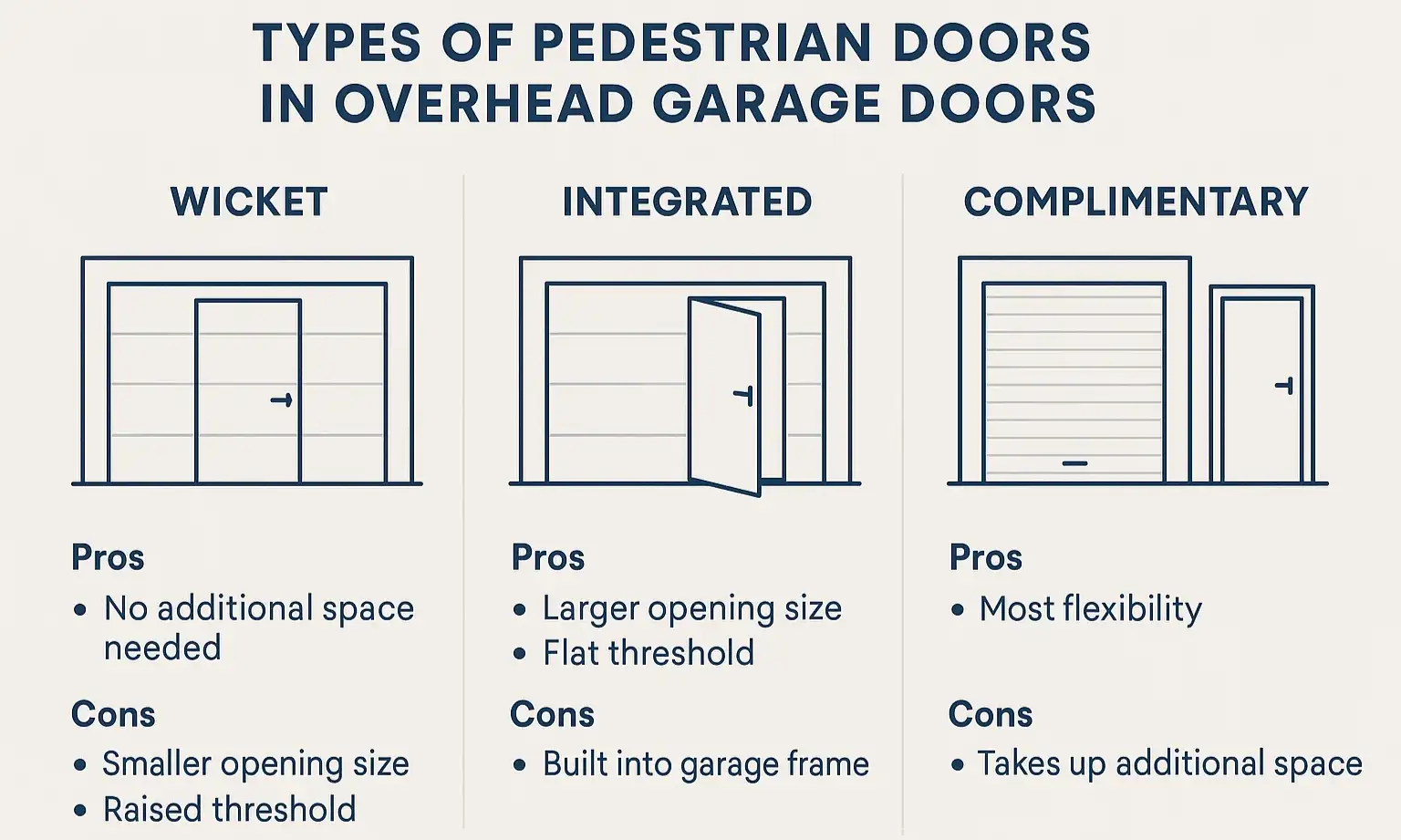
- Wicket Door (Door-in-Door): This is what most people picture—a smaller door cut directly into a section of the main overhead garage door. It’s the most integrated and complex option.
- Integrated Door: This door is built into the garage door's stationary frame, but not into the moving panels themselves. It offers walk-through access without affecting the structure of the main door. This is a less common, custom solution.
- Complimentary Door: This is simply a standard entry door installed in the wall next to the garage door. It’s a separate structure, offering the safest and often most cost-effective way to add walk-in access.
The Unbiased Pros and Cons of a Wicket Garage Door
The Clear Advantages (The "Pros")
- Unmatched Convenience: Quickly access your garage on foot to grab tools, bring in groceries, or take out the trash without opening the entire door.
- Energy Savings (in theory): By not lifting the massive main door, you reduce the amount of heated or cooled air that escapes from your garage and home, potentially lowering energy bills.
- Access During Power Outages: If the garage is your only entry point and the power is out, a wicket door with a manual lock provides reliable access. Your automatic opener won't work, but your feet will.
- Reduced Wear and Tear: Using the small door for foot traffic saves cycles on your garage door opener's motor and springs, which can extend their lifespan.
- Perfect for Storage-Only Garages: If you use your garage more like a workshop or storage shed and rarely park a car inside, a wicket door makes it function like a normal room.
The Significant Drawbacks (The "Cons")
- High Cost: This is the biggest hurdle. A factory-installed wicket door can add anywhere from $1,500 to over $4,000 to the price of a new garage door, sometimes doubling the total cost.
- Structural Complexity: Cutting a hole in a garage door panel weakens it. These doors require significant reinforcement around the opening, which adds weight and complexity.
- Potential for Energy Loss: While you save energy by not opening the main door, the wicket door itself creates a break in the insulation. This can lead to a lower overall R-value and create drafts if not sealed perfectly.
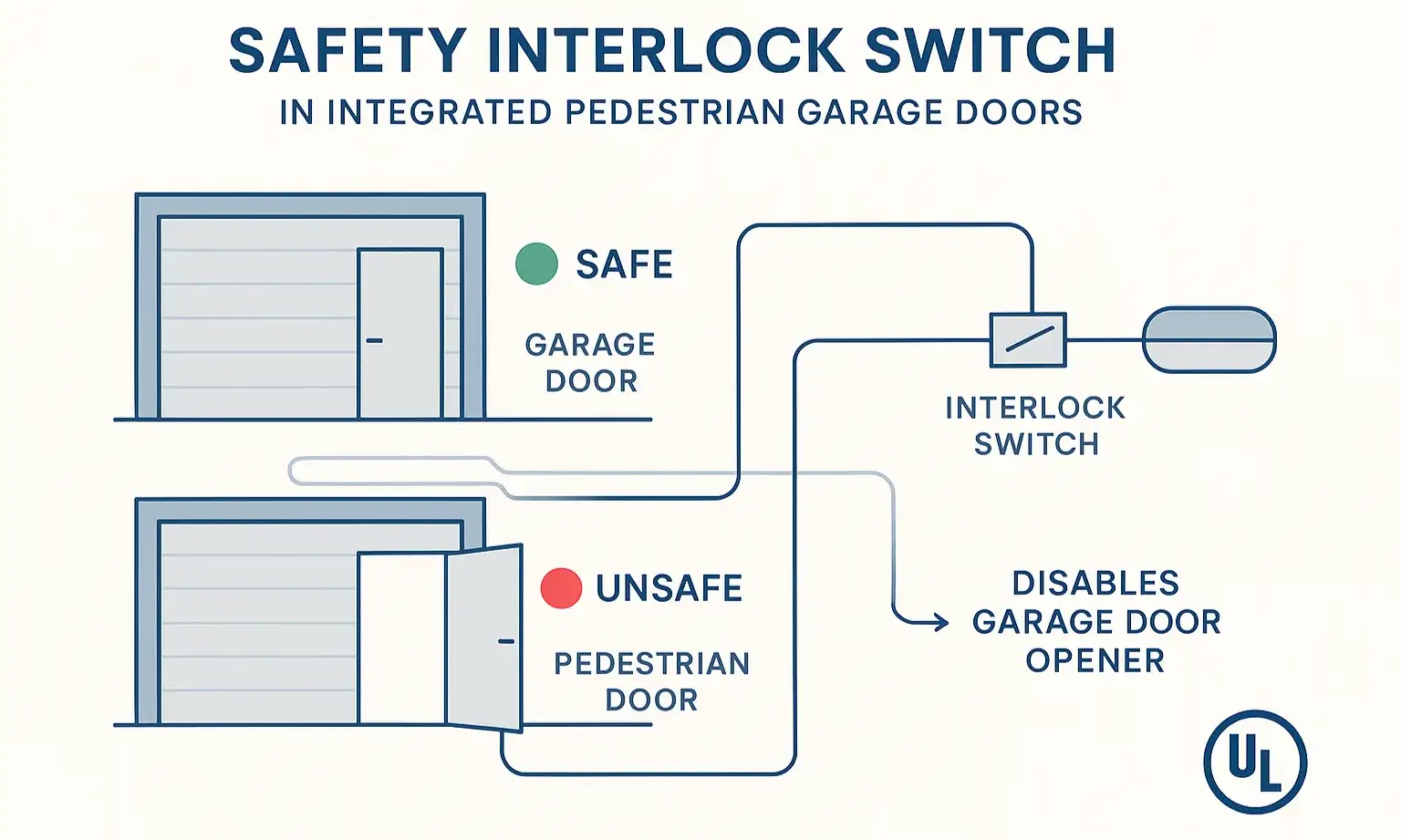
- Mandatory Safety Systems: A wicket door introduces a serious safety risk. If someone tries to open the main garage door while the wicket door is ajar, it can cause catastrophic damage. This requires a special safety feature we’ll cover next.
- Aesthetic Limitations: The frame around the wicket door can interrupt the clean lines of a modern garage door design. It also requires a high threshold at the bottom that you must step over, which can be a trip hazard.
The Critical Details You Absolutely Cannot Ignore
a. Safety First: The Non-Negotiable Interlock Switch
b. The Cost Breakdown: Why Are Wicket Doors So Expensive?
- The Wicket Door Kit: The pre-fabricated door, frame, hinges, and lock.
- Panel Reinforcement: Extra struts and stronger materials are needed to support the garage door panel that has been cut.
- The Safety Interlock System: The switch and wiring are essential add-ons.
- Professional Labor: Installation is more complex and time-consuming than a standard door. Finding a qualified technician who can handle the structural and electrical components is key.
- Threshold and Weather-Stripping: A high-quality, well-sealed system is needed to prevent drafts and water intrusion.
c. Installation & Retrofitting: The "Can You Add One Later?" Question
- Structural Integrity: Your existing door panels were not designed to have a large section removed. Cutting into them can compromise their strength and lead to sagging or buckling.
- Warranty Void: Doing this will almost certainly void your garage door’s manufacturer warranty.
- Safety Risks: Ensuring a perfect fit, proper reinforcement, and a correctly installed interlock switch on a door not designed for it is extremely difficult and risky.
Need more information?
Get a free quote
Is a Pedestrian Door Right for You? A Decision Checklist
- You frequently enter and exit your garage on foot.
- Your garage has no other entry door.
- You use your garage as a primary workshop, gym, or studio.
- The high cost is within your budget for a new door system.
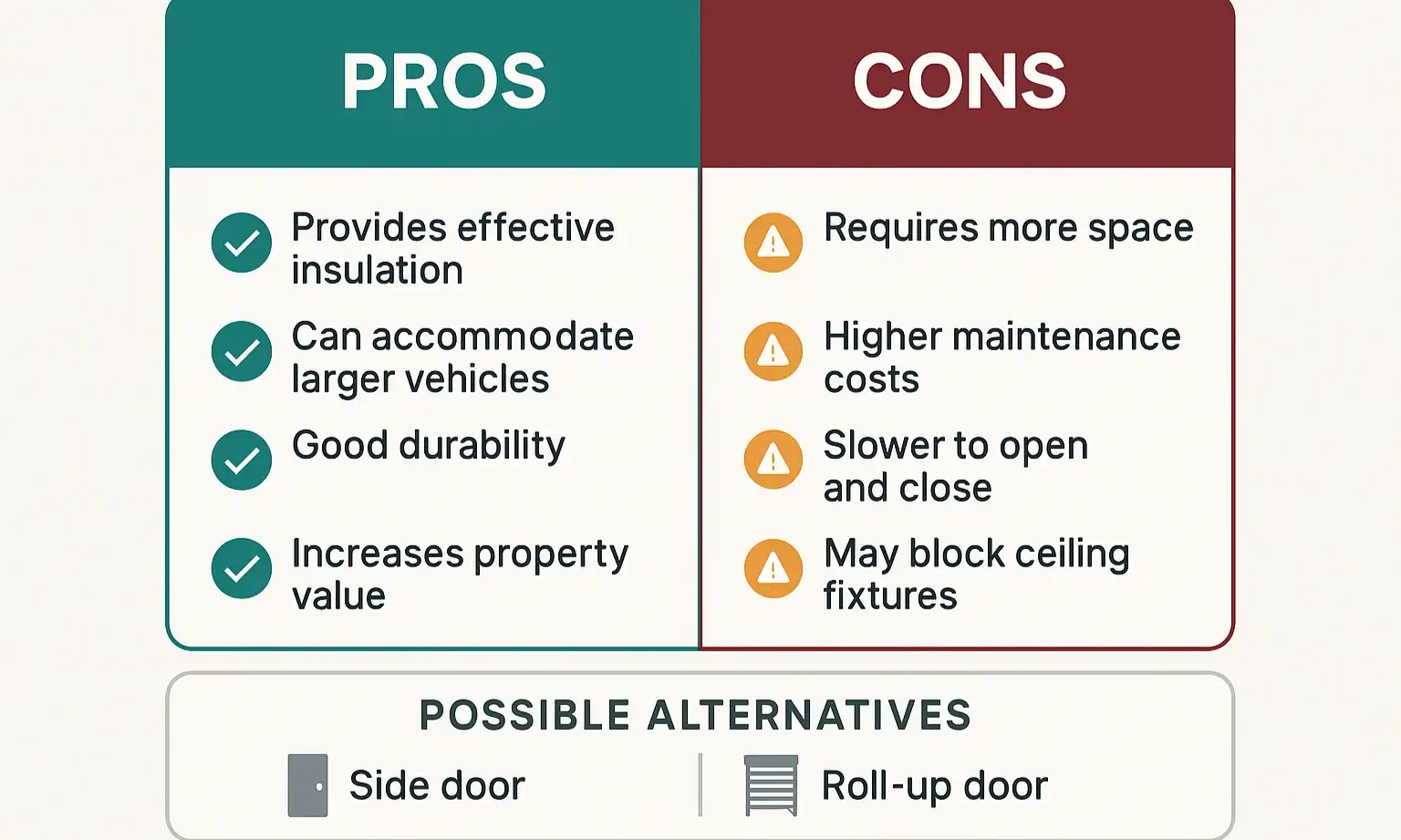
- You are on a tight budget.
- You have space to install a standard, complimentary entry door on a side wall.
- You prioritize the clean, uninterrupted aesthetic of your garage door.
- You were hoping to add one to your existing door.
Frequently Asked Questions
Does a wicket door affect my garage door opener?
What is the minimum garage door size for a wicket door?
Are wicket doors secure?
Can I get a wicket door with windows?
You may also like