Flush Panel vs. Recessed Panel Overhead Garage Doors
Published: Jan 16, 2026
You’ve spent months curating the perfect look for your modern home. The clean lines of the roof, the texture of the siding, the minimalist window frames—every detail works in harmony. But then there’s the garage door. It’s a vast surface, often covering up to 40% of your home's facade, yet it can feel like an afterthought.
Choosing the right garage door isn’t just about function; it's a defining architectural decision. For modern homes, the choice often boils down to two dominant styles: flush panel and recessed panel. While they might seem similar at first glance, the difference between them is the difference between a home that looks good and a home that looks designed.
This guide is your coffee-shop conversation with an expert. We’ll break down what these styles are, why they matter, and how to choose the one that elevates your home's modern aesthetic from ordinary to exceptional.
Beyond Flat or Textured: Defining the Two Pillars of Modern Design
The Flush Panel: A Statement in Simplicity
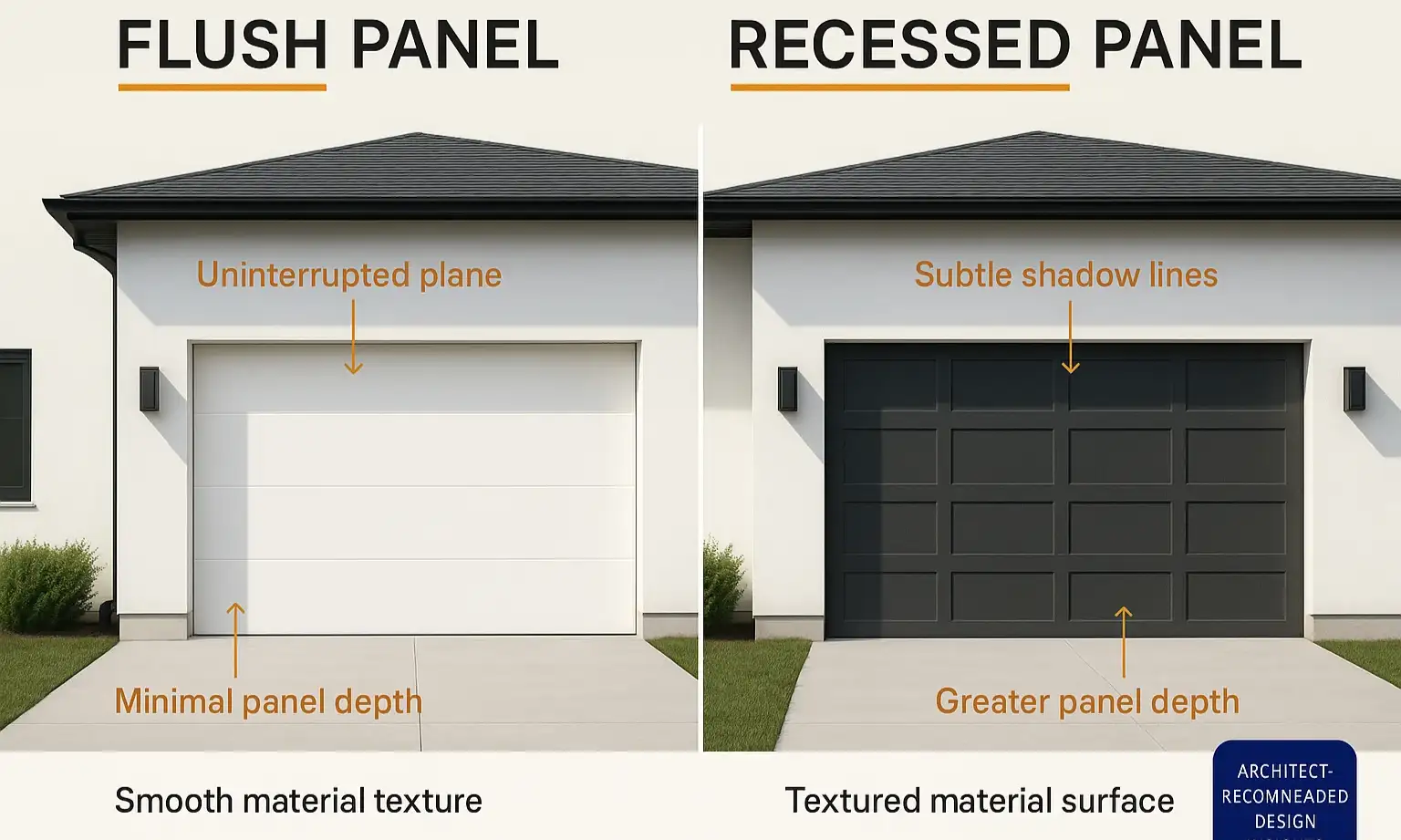
- The Aesthetic: It’s the ultimate in minimalism. By eliminating all visual noise, a flush panel door allows the material, color, and surrounding architecture to take center stage. It creates a seamless, uniform look that feels sophisticated and intentionally understated.
The Recessed Panel: Depth Through Discipline
- The Aesthetic: This style adds depth and texture without sacrificing a modern feel. The clean lines of the recesses provide visual interest and rhythm, breaking up the large surface of the door in a structured, orderly way. It’s a nod to classic shaker design, but refined for contemporary tastes.
Side-by-Side Visual Comparison
The Aesthetic Deep Dive: Why Panels Matter for Modern Homes
Best for Sleek Minimalism (Scandinavian, Japandi): Flush Panels
Best for Textured Modernism (Modern Farmhouse, Industrial): Recessed Panels
The Mid-Century Modern Chameleon: A Case for Both
- For Purity: A flush panel door in a warm wood grain or a classic MCM color (like teal or orange) honors the style’s origins in simplicity and organic forms.
- For Geometric Echo: A long, recessed panel door can echo the strong horizontal lines and rectangular forms found in MCM window arrangements and rooflines, creating a cohesive, rhythmic facade.
Mastery: Materials, Construction & The Details That Matter
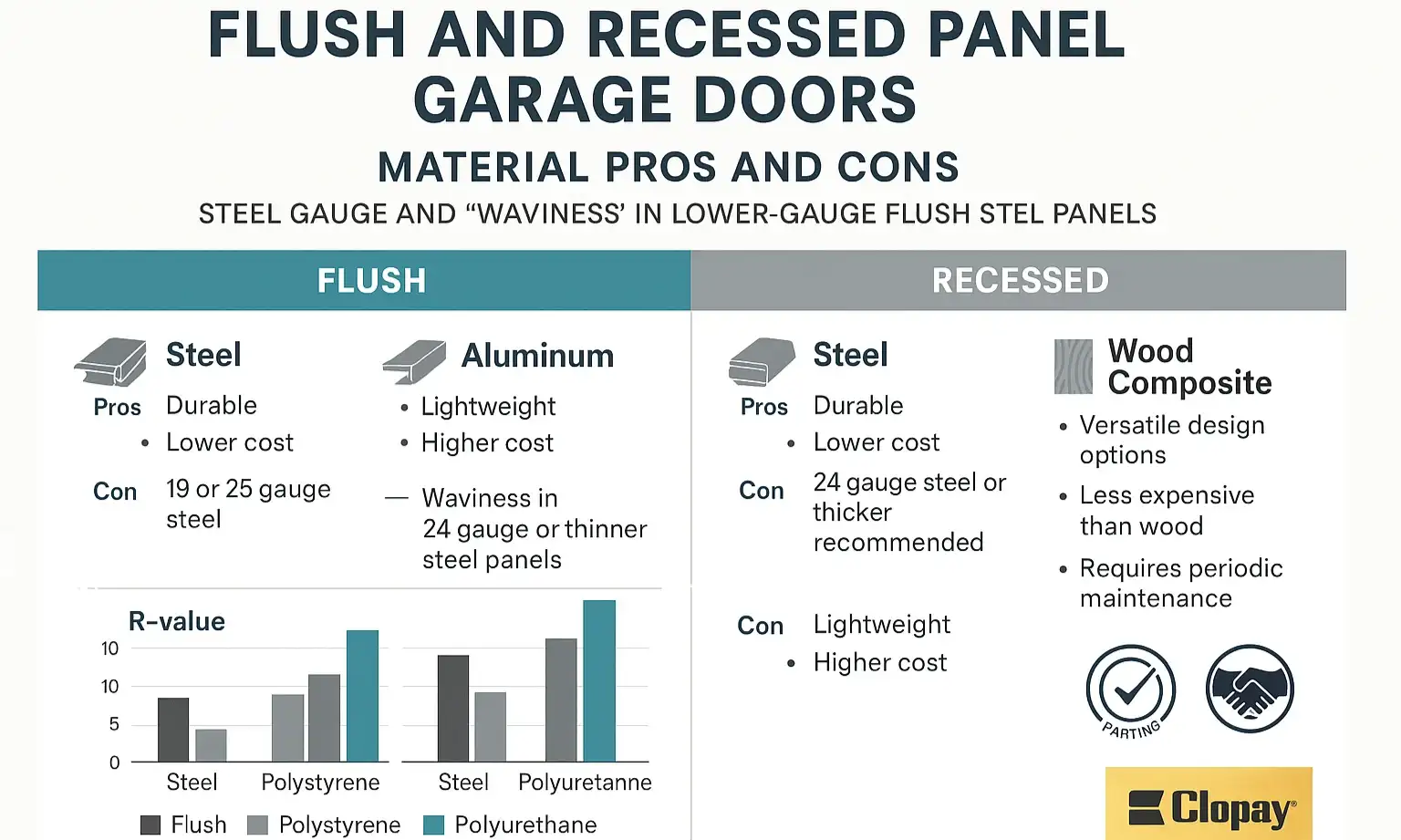
The Material Question: Steel, Aluminum, and Wood Composites
- Steel: The most popular choice for its durability and versatility. It can be finished with a smooth texture for flush panels or embossed with a wood-grain texture for recessed panels.
- Aluminum: Often used with glass panels for a striking, light-filled look. It's lightweight and corrosion-resistant, perfect for a sleek, contemporary feel.
- Wood Composite: Offers the warmth and beauty of wood without the high maintenance. It's a stable and often well-insulated option that works well with both panel styles.
Insulation's Impact on Comfort and Durability
Your Decision Checklist: Flush or Recessed?
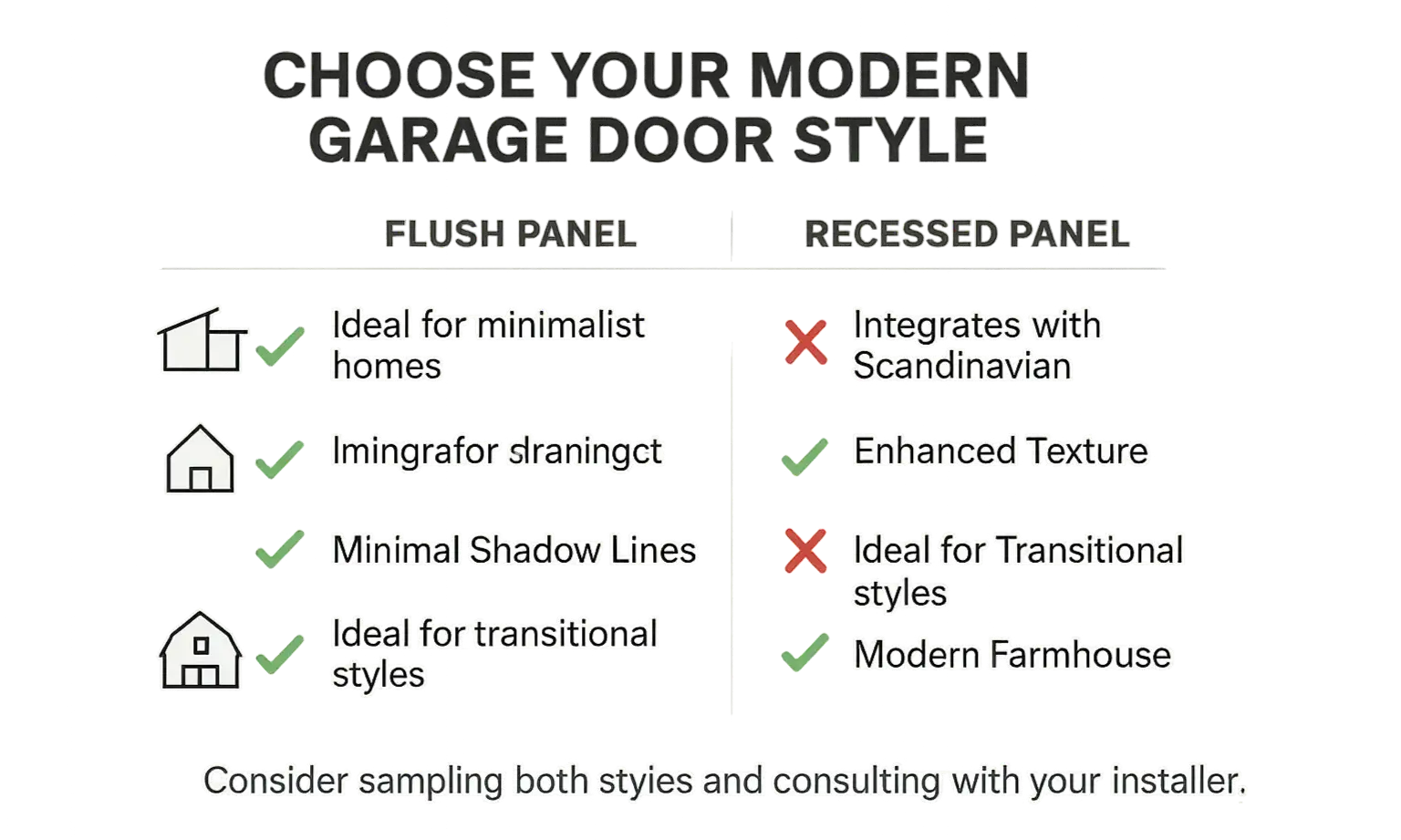
Choose a Flush Panel Door if...
- Your home's design is strictly minimalist, Scandinavian, or Japandi.
- You want the door to blend in seamlessly rather than stand out.
- The primary materials of your home (like smooth stucco or sleek metal siding) are best complemented by an unbroken surface.
- You are aiming for the cleanest, most uncluttered look possible.
Choose a Recessed Panel Door if...
- Your home is a Modern Farmhouse, Industrial, or Transitional style.
- You want to add subtle texture and visual interest without ornamentation.
- Your home features other geometric lines (like board-and-batten siding or gridded windows) that the panels can echo.
- You want a door that feels contemporary but with a nod to classic craftsmanship.
Frequently Asked Questions
Are flush panel doors more expensive than recessed panel doors?
Which style is easier to maintain?
Can I get windows in both flush and recessed panel doors?
Does "long panel" or "short panel" apply to both styles?
Your Home's Façade, Redefined
You may also like