Why DIY Garage Door Spring Tools Fail
Published: Feb 4, 2026
You’re thinking about replacing your own garage door springs. You're capable, you've watched a few videos, and it seems like a straightforward way to save a few hundred dollars. The online guides make it look manageable, a series of simple steps. But the most critical safety factor—the one that separates a successful repair from a trip to the emergency room—isn't about the spring itself. It's about the piece of steel you hold in your hand.
Most "danger" warnings focus on the spring's power, which is absolutely a real concern. However, they miss the more immediate point of failure: the tools. This guide isn't here to scare you with worst-case scenarios. Instead, we're going to have a practical talk, like a knowledgeable friend over coffee, about the physics of why common DIY tools are mechanically guaranteed to fail under the unique stress of a torsion spring.
The Science of Stored Energy: What's Happening in That Spring?
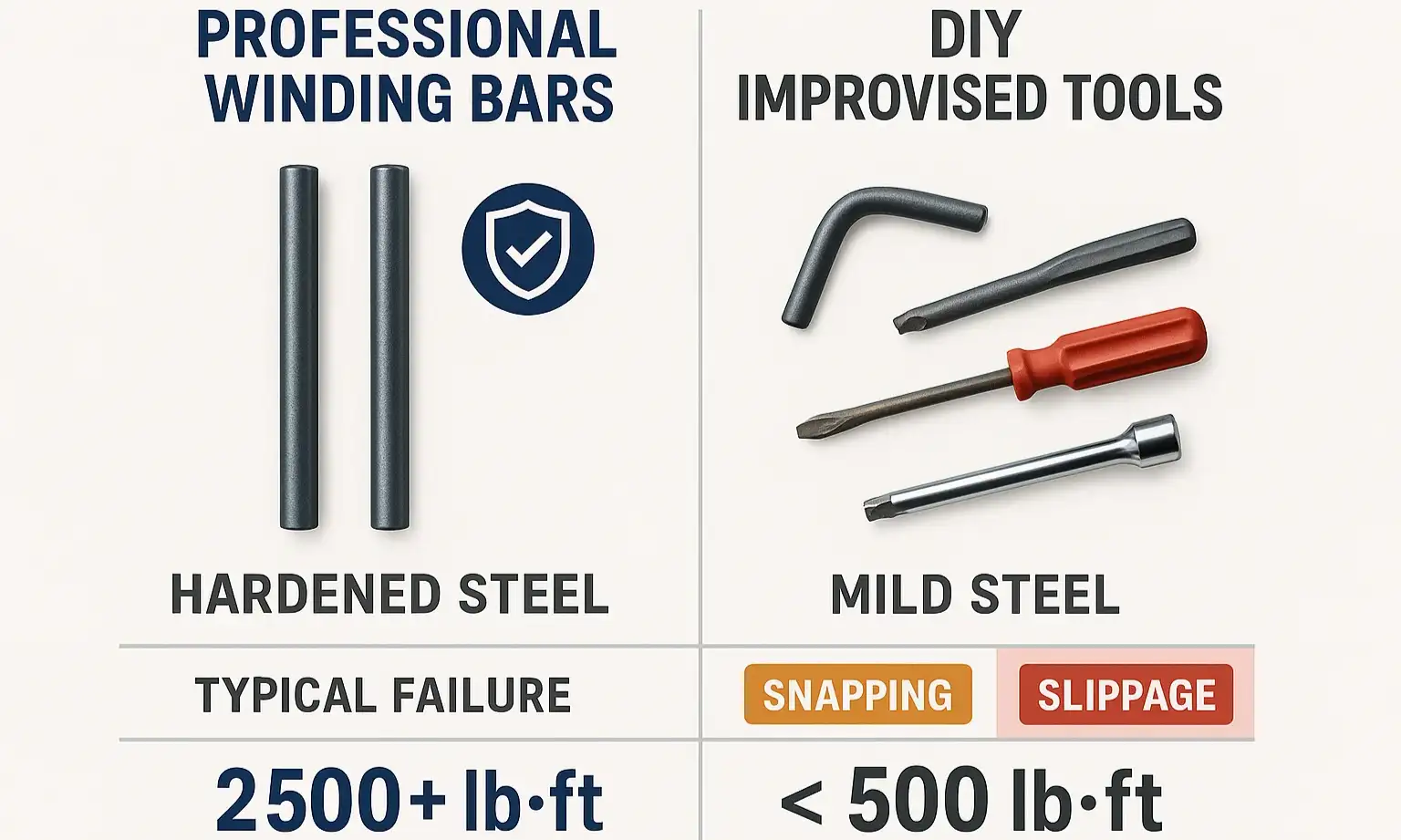
The Tool Dilemma: Professional Winding Bars vs. Common Substitutes
Professional Tool: Hardened Steel Winding Bars
Common Substitute #1: Screwdrivers
- Shank Weakness: The metal shaft of a screwdriver is designed for downward pressure and moderate twisting, not the hundreds of foot-pounds of sideways torsional force from a spring. It will snap, often without warning.
- Handle Failure: The plastic or rubber handle provides a point of leverage that can break, or worse, cause the metal shank to slip and rotate inside it.
Common Substitute #2: Hardware Store Steel Rods or Rebar
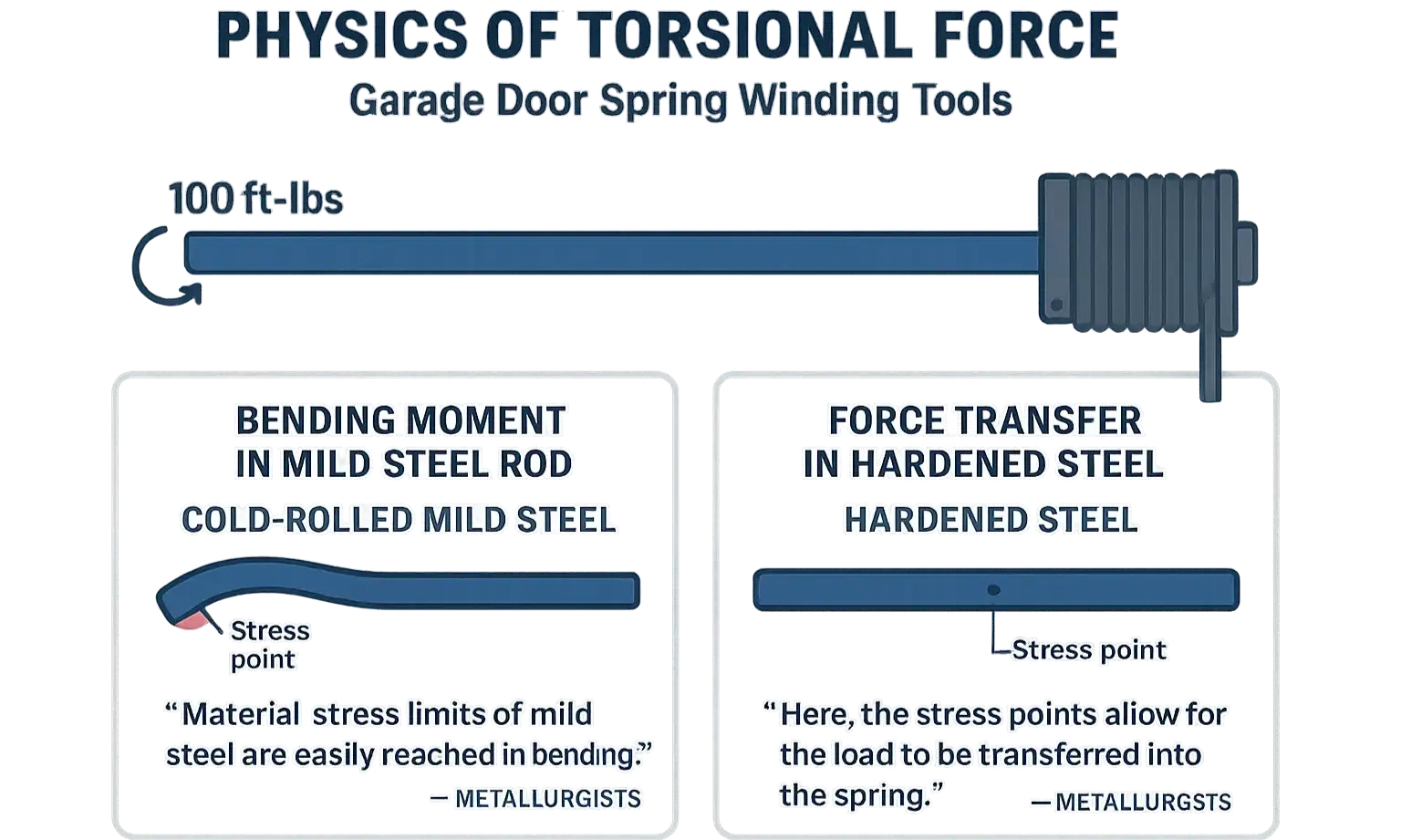
- Material Science Matters: The rods you find at a hardware store are typically mild or "cold-rolled" steel. This metal is relatively soft and designed to be bent and shaped. Under the torsional load of a garage door spring, it will bend.
- The Bend and Slip: As the rod bends, your grip becomes compromised. Your hand slips off, and the remaining bar, still under the full force of the spring, becomes a high-speed projectile. It will spin violently until it hits something—the ceiling, your car, or you.
Common Substitute #3: Socket Wrenches and Ratchets
- Leverage vs. Torsion: A ratchet is designed to tighten a bolt, which involves turning against static friction. It is not designed to hold back the massive, sustained, unwinding kinetic energy of a torsion spring.
- Gear Failure: The internal gear mechanism of a ratchet can shatter under this type of load, causing the handle to release instantly and whip around with incredible force.
The "Aha" Moment: Visualizing the Physics of Failure
The Safe Decision: Two Paths Forward
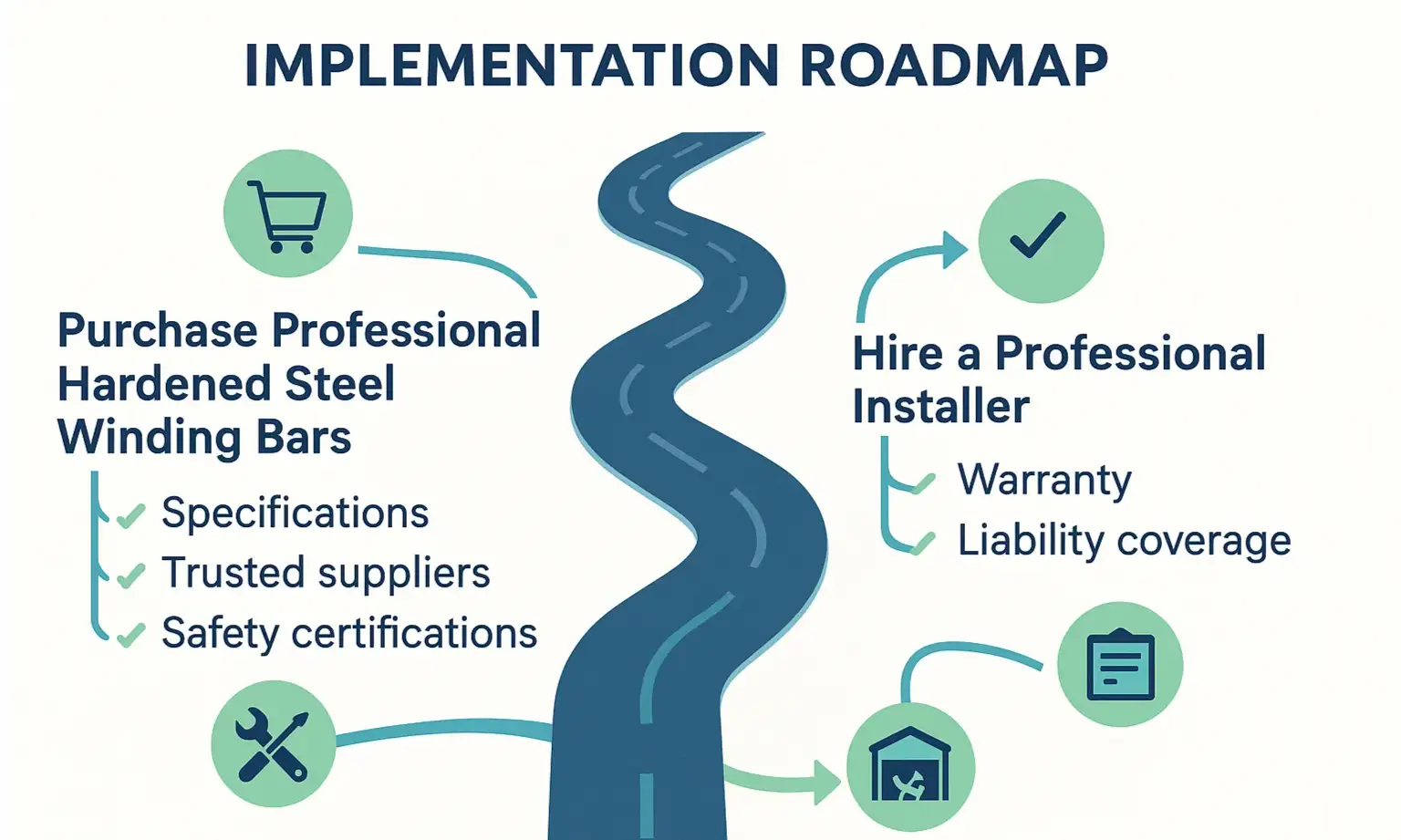
- Commit to Professional Tools: If you are set on doing the repair yourself, do not compromise on tools. Purchase a set of proper, hardened steel winding bars that match the diameter of your spring's winding cone (usually 1/2" or 5/8"). Do not use any substitute, no matter how strong it seems.
- Hire a Professional Technician: The safest and most efficient option is to call a professional. They already have the correct tools, the extensive training, and the experience to do the job safely. For residents in Connecticut, a professional garage door torsion spring repair in Connecticut ensures the work is done right, without risk to you or your property.
Need more information?
Get a free quote
Frequently Asked Questions
Why can't I just use a long piece of rebar? It seems strong.
What is a winding bar actually made of?
At what point does a hardware store steel rod bend?
Are the "DIY kits" sold online safe?
Your Next Step in Garage Door Safety
You may also like