The Dangers of Aging Garage Door Springs
Published: Apr 6, 2026
It’s a sound you’ll never forget. A sudden, sharp BANG from the garage that’s so loud it makes you jump. You check the cars, look for fallen objects, but find nothing out of place. Nothing, that is, until you try to open the garage door and it either refuses to budge or lifts just a few inches before groaning to a halt.
If this has happened to you, you’ve likely just experienced a spring failure. While it’s a common problem, the real danger isn't just the inconvenience of a stuck door. The true risk lies in the science of why it broke—and what that means for your safety, especially with older, fatigued springs that haven't failed yet. This is your guide to understanding the silent threat building tension above your head.
The Unseen Force: What Your Garage Door Springs Actually Do
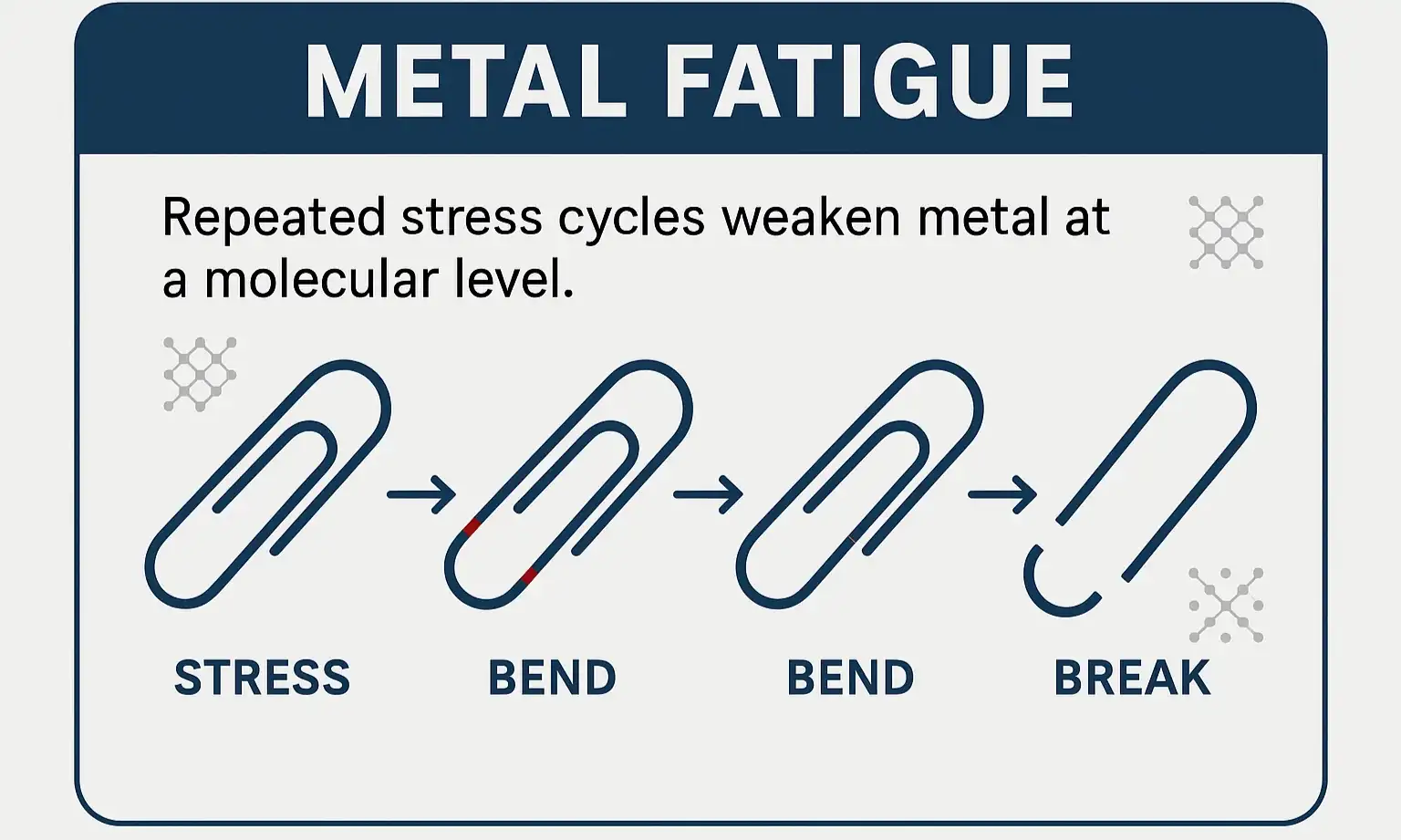
The Paperclip Analogy: Understanding Metal Fatigue
How to Spot a Spring on the Brink of Failure
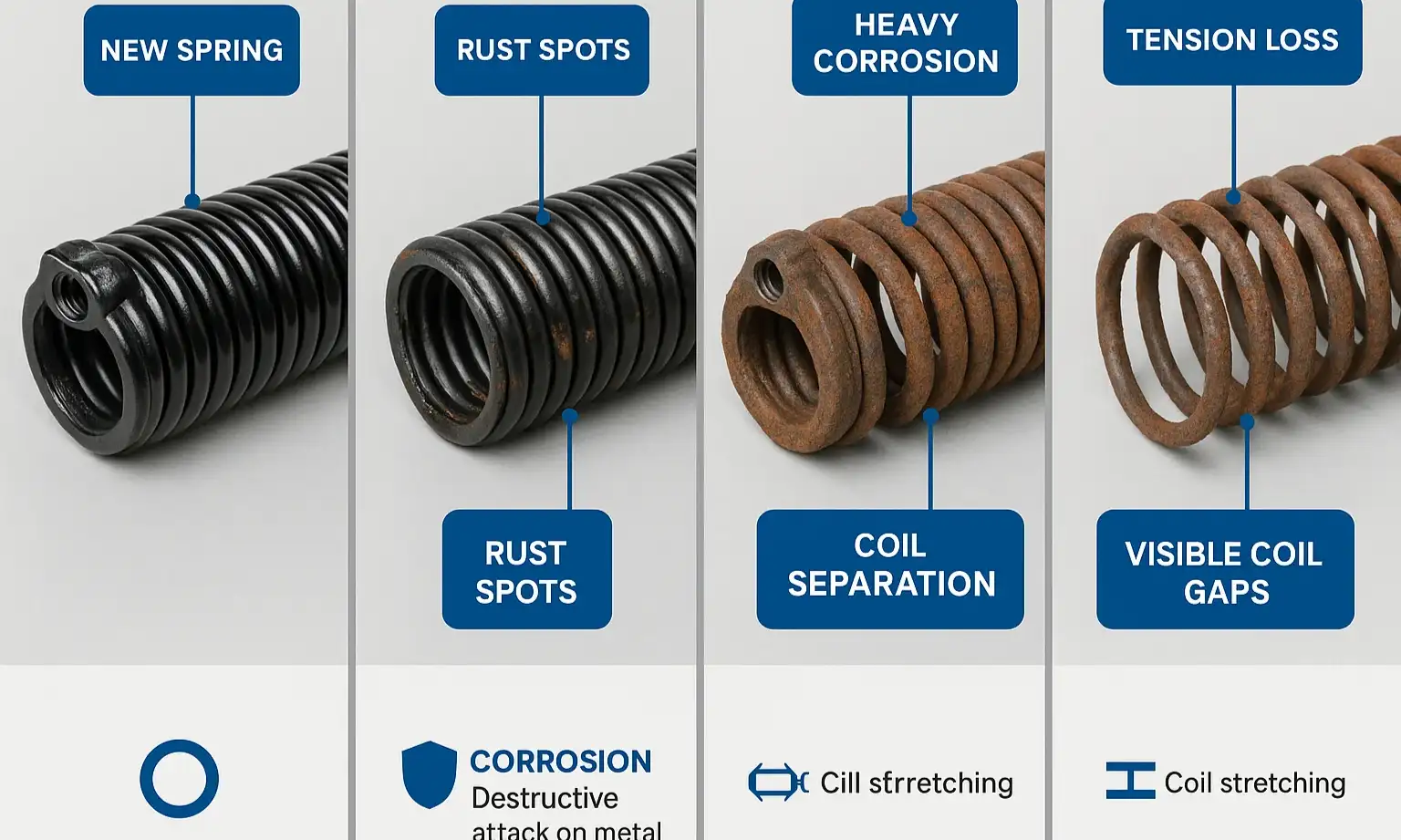
- Visible Rust or Corrosion: Rust isn’t just a cosmetic issue. It creates friction between the coils, causing the spring to wear out faster. Corrosion can also pit the metal, creating weak points where a fracture is likely to begin.
- Visible Gaps in the Coils: When a torsion spring is new and unwound, the coils are tightly packed together. As it ages and weakens, you might notice small but visible gaps between the coils, even when the door is closed. This is a tell-tale sign of metal fatigue.
- The Door Feels Heavy: Try lifting your garage door manually (after pulling the emergency release cord). If it feels extremely heavy, your springs are no longer doing their job of counterbalancing the weight. This is one of the clearest warning signs of a failing garage door spring.
- The Door Opens Crooked: If you have two springs and one is more fatigued than the other, it can cause the door to lift unevenly, often looking lopsided as it moves.
More Than an Inconvenience: The Real Risks of a Broken Spring
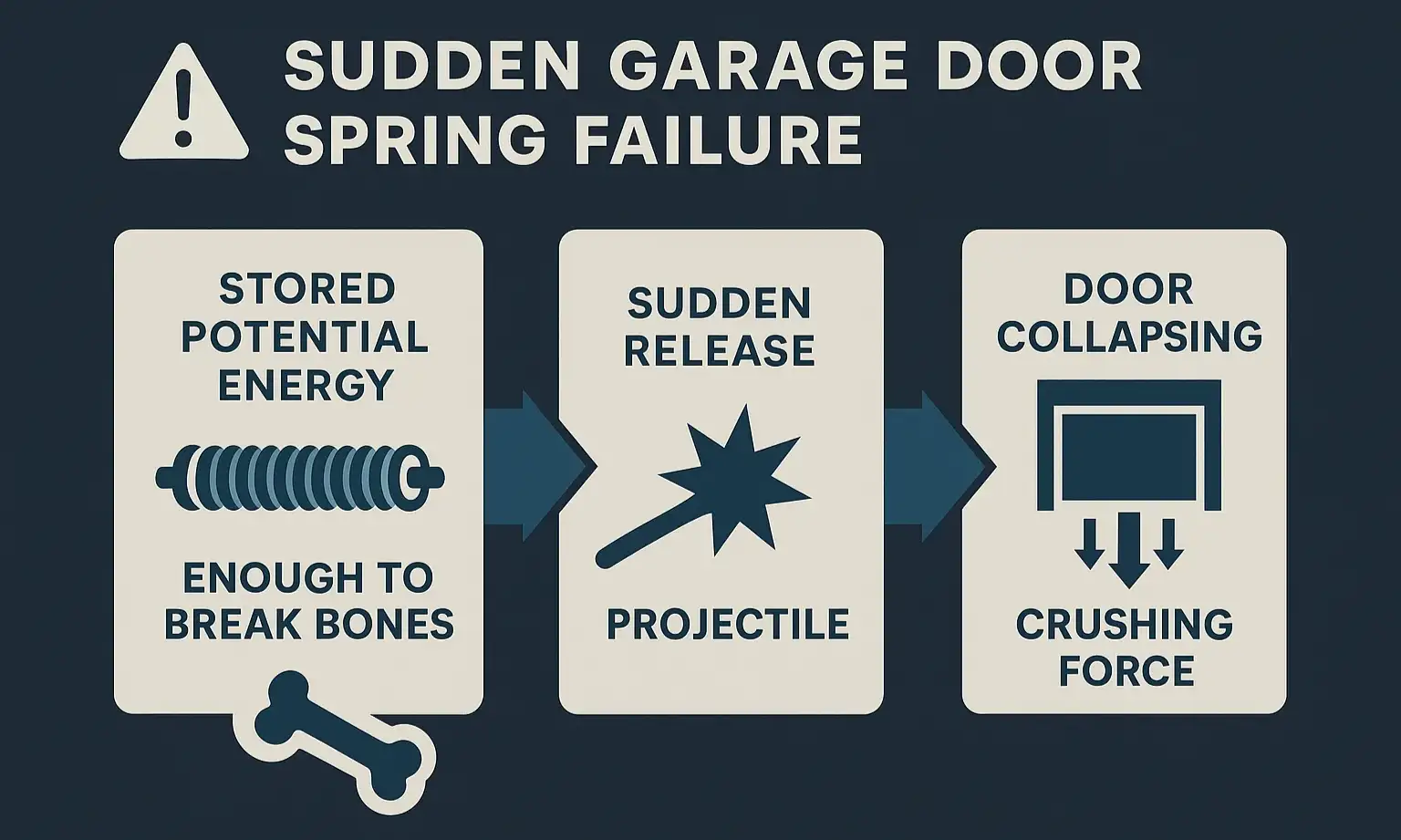
The Three Primary Dangers
- Sudden, Unpredictable Failure: As the paperclip analogy shows, failure happens without warning. A fatigued spring can snap while the door is opening, closing, or sitting perfectly still.
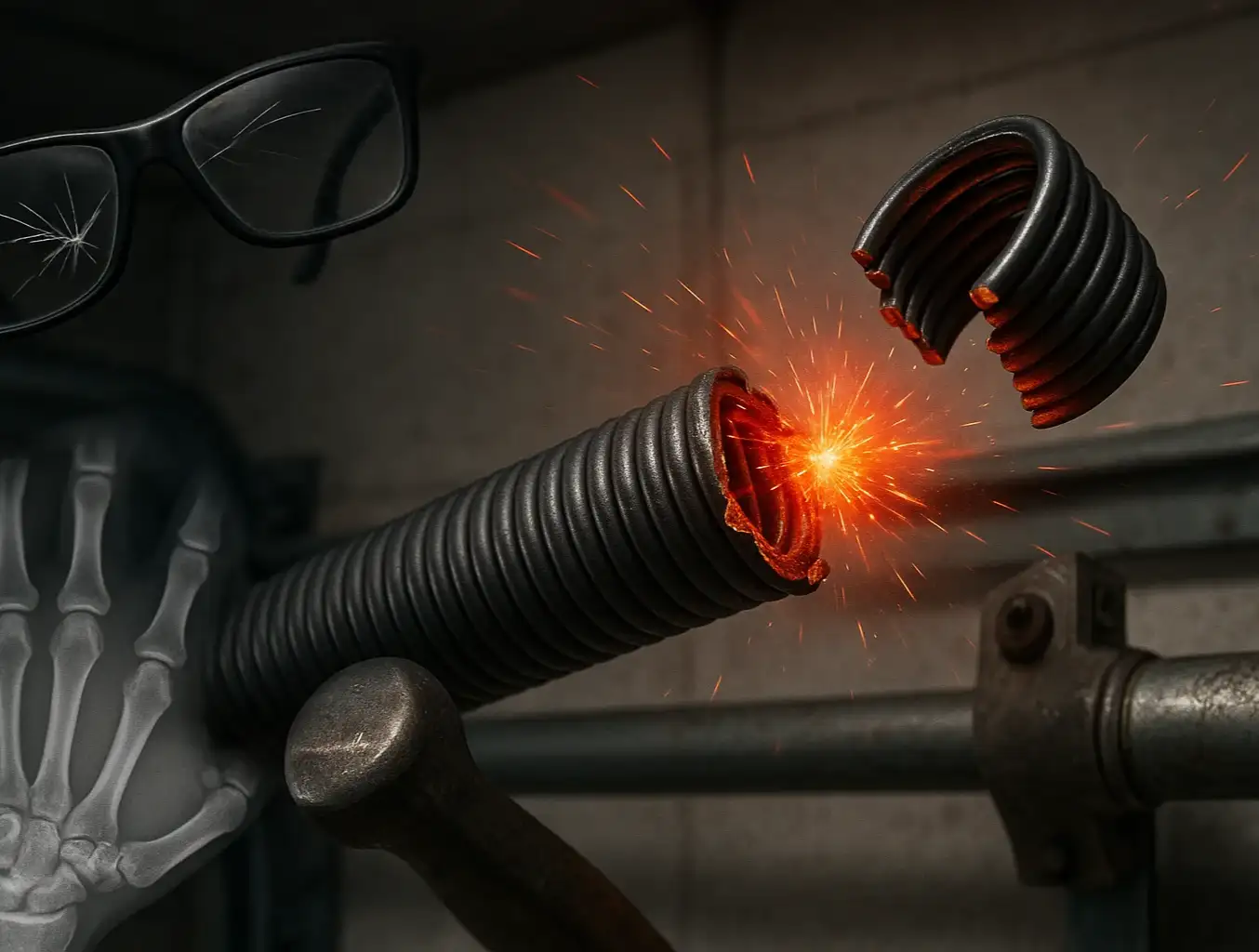
- Projectile Risk: When a spring breaks, the stored energy is released in a fraction of a second. This can send pieces of the spring or other hardware flying across your garage with enough force to dent a car, punch through drywall, or cause serious personal injury.
- Crushing Weight: The moment the spring breaks, your garage door opener is suddenly trying to lift a 300+ pound deadweight. It can't. If the door is in motion, it can come crashing down, posing a significant crushing hazard to anything—or anyone—in its path.
The Ultimate DIY Hazard
What to Do When You Suspect Your Springs Are Failing
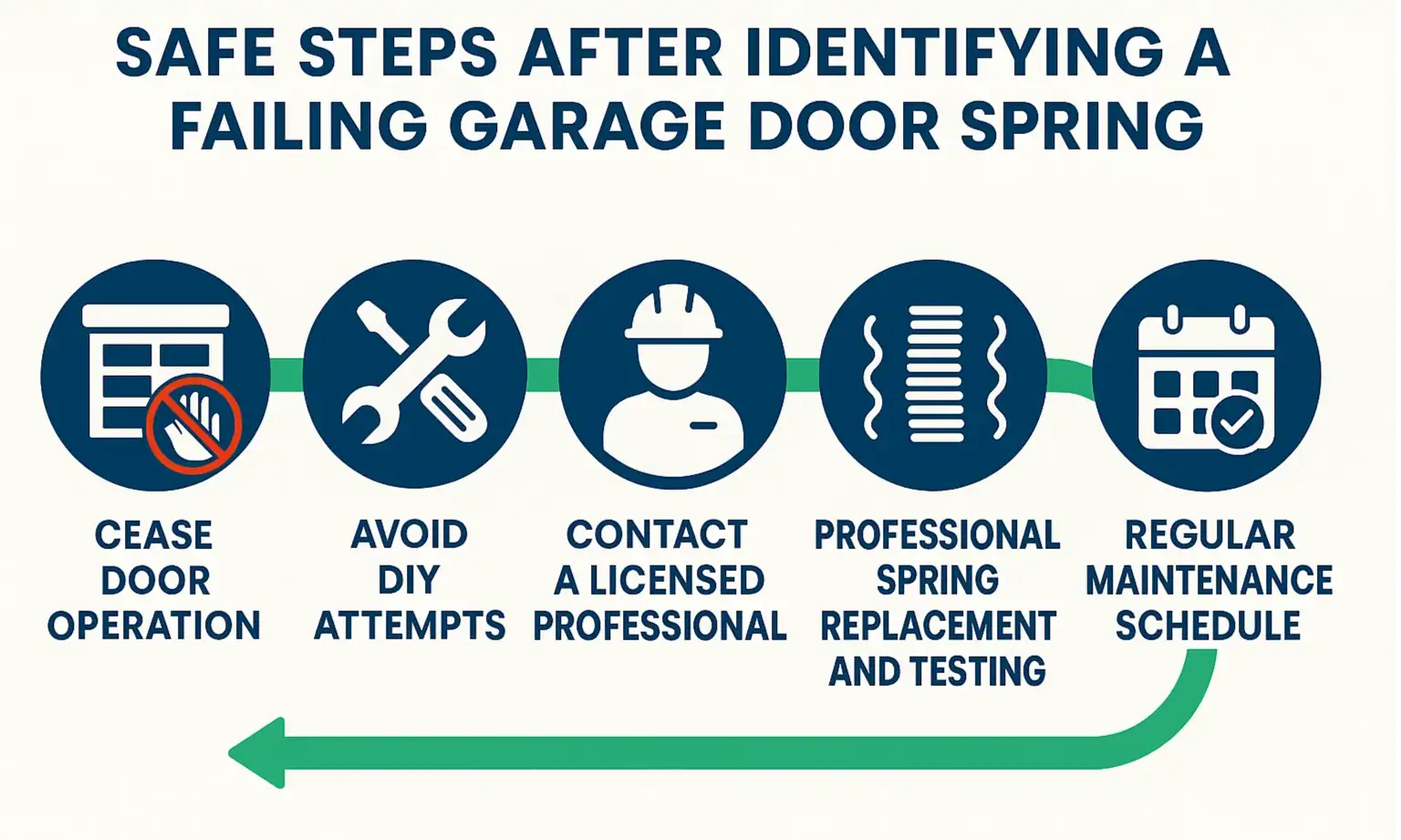
- STOP: Do not try to operate the door with the automatic opener. This can cause further damage to the opener or the door itself. Do not try to lift it manually.
- SECURE: Make sure pets and children stay clear of the garage door until it has been inspected.
- CALL A PROFESSIONAL: This is not a DIY job. A trained technician has the right tools, parts, and knowledge to perform a broken garage door spring repair safely and correctly. They will replace the springs, rebalance the door, and ensure the entire system is operating safely.
Need more information?
Get a free quote
Frequently Asked Questions About Garage Door Springs
How long do garage door springs last?
Why did only one of my two springs break?
Can a garage door spring really kill you?
Is it okay to open my garage door if the spring is broken?
What does a broken spring sound like?
From Awareness to Action
You may also like