Hit Your Garage Door with Your Car: Immediate Emergency Triage Protocol


Published: Sep 4, 2026

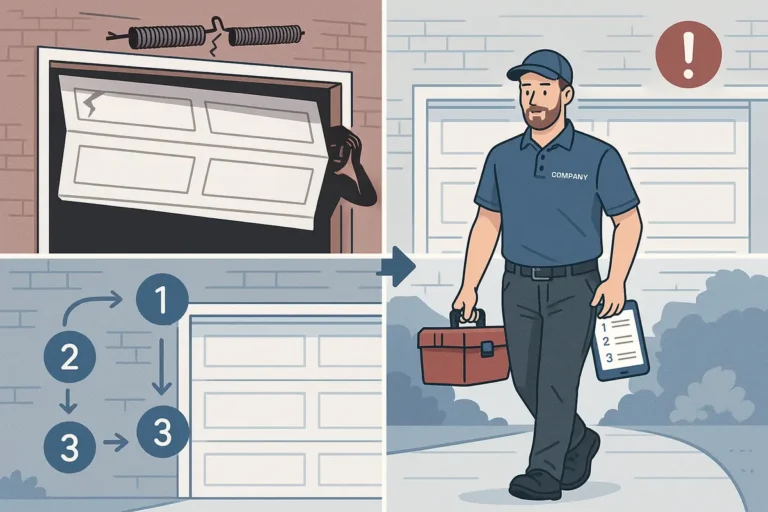
Hearing the crunch of metal against your garage door is an instant adrenaline trigger. Whether you shifted into drive instead of reverse or didn’t notice the door was still opening, the initial panic is universal. You need to know if the system is stable, how to protect your family, and what steps to take next.

According to data from the National Electronic Injury Surveillance System (NEISS) and the National Institutes of Health (NIH), approximately 20,000 to 30,000 garage door-related injuries occur in the U.S. annually, with over 2,000 of these classified as crushing incidents. A compromised overhead door is not just a cosmetic nuisance—it is an unstable mechanical hazard waiting to collapse.

This triage guide outlines the exact, safety-first steps to secure your home, assess the structural damage, and mitigate your financial liability.
The 30-Second Scene Stabilization Protocol


Before stepping out of your vehicle, you must stabilize the area to prevent secondary damage or injury.

  1. Immobilize the Vehicle: Put the car in Park, engage your emergency brake, and turn off the engine. Accidental acceleration while checking the bumper can cause structural failure or pin you against the door.
  2. Evacuate the Perimeter: Instruct all passengers, children, and pets to exit the vehicle from the side opposite the garage and move completely out of the driveway. Keep everyone at least 10 feet away.
  3. Establish a Safety Zone: Do not attempt to pull the car back immediately. A compromised bumper or license plate might be wedged into the door panels; shifting the vehicle could bring the entire assembly crashing down.

The Critical Safety Warning: Debunking the "Emergency Release" Myth


Many local repair blogs suggest pulling the red emergency release cord to test if you can manually open the door. This is highly dangerous advice.

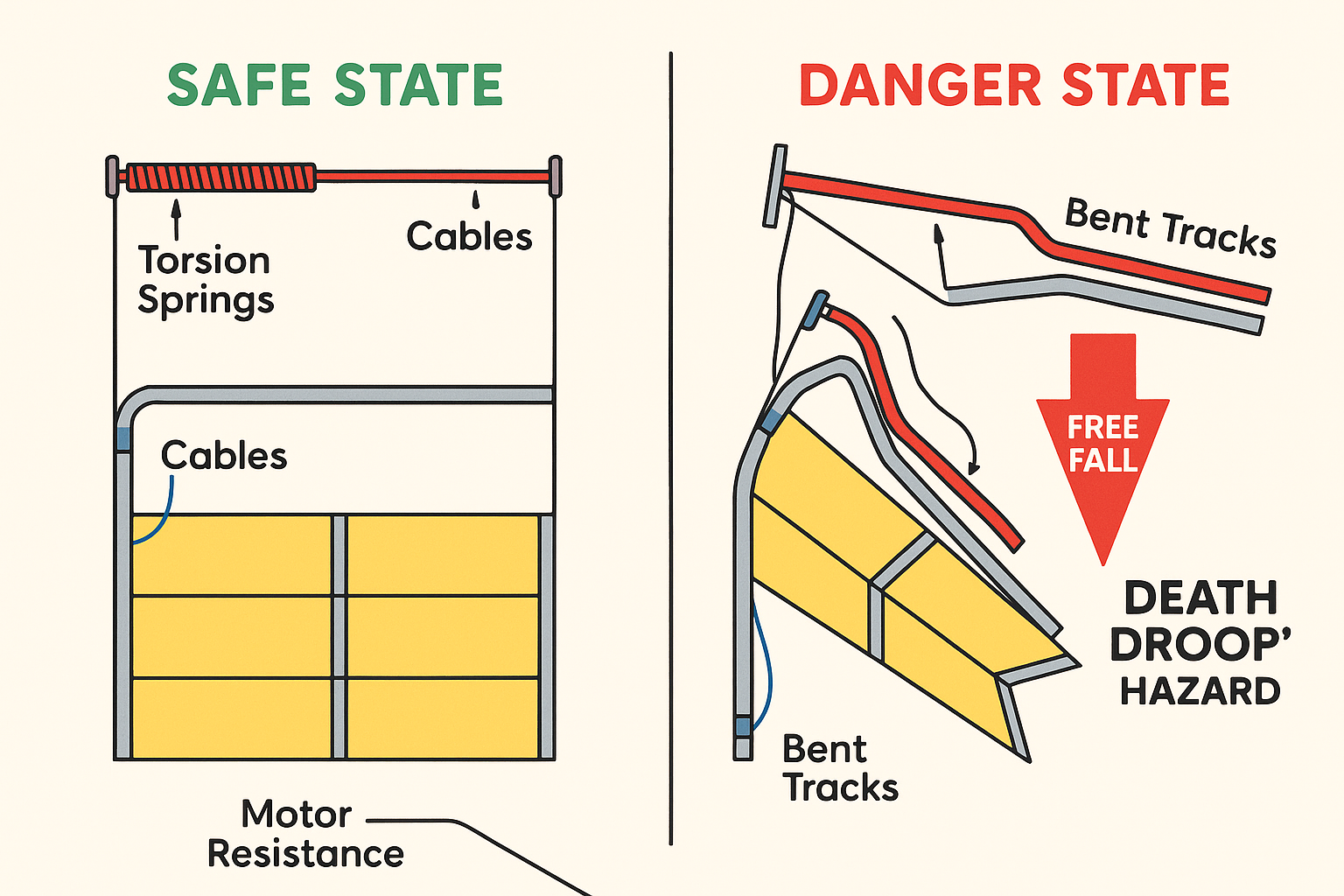
A standard residential garage door counterbalance system stores up to 300+ foot-pounds of active torque to offset the door’s weight. When a car impacts the panels, it can split a roller from its track, crack the structural hinges, or cause a broken garage door spring.

If you pull that red cord on a compromised door, you sever the mechanical link between the door and the trolley. Without the motor’s resistance, a door trapped in a bent garage door track can instantly free-fall with several hundred pounds of crushing force.

Infographic on the dangers of pulling the emergency release cord on damaged garage doors

Rule of thumb: Never pull the emergency release cord if the door is partially open, visibly bent, or hanging unevenly.


Electrical Lockdown: Safe Opener Isolation


Your next priority is preventing anyone from activating the door via a remote, keypad, or smart home app. Operating a structurally compromised door can instantly burn out your drive gears or snap high-tension cables.

You can isolate your system using three methods:

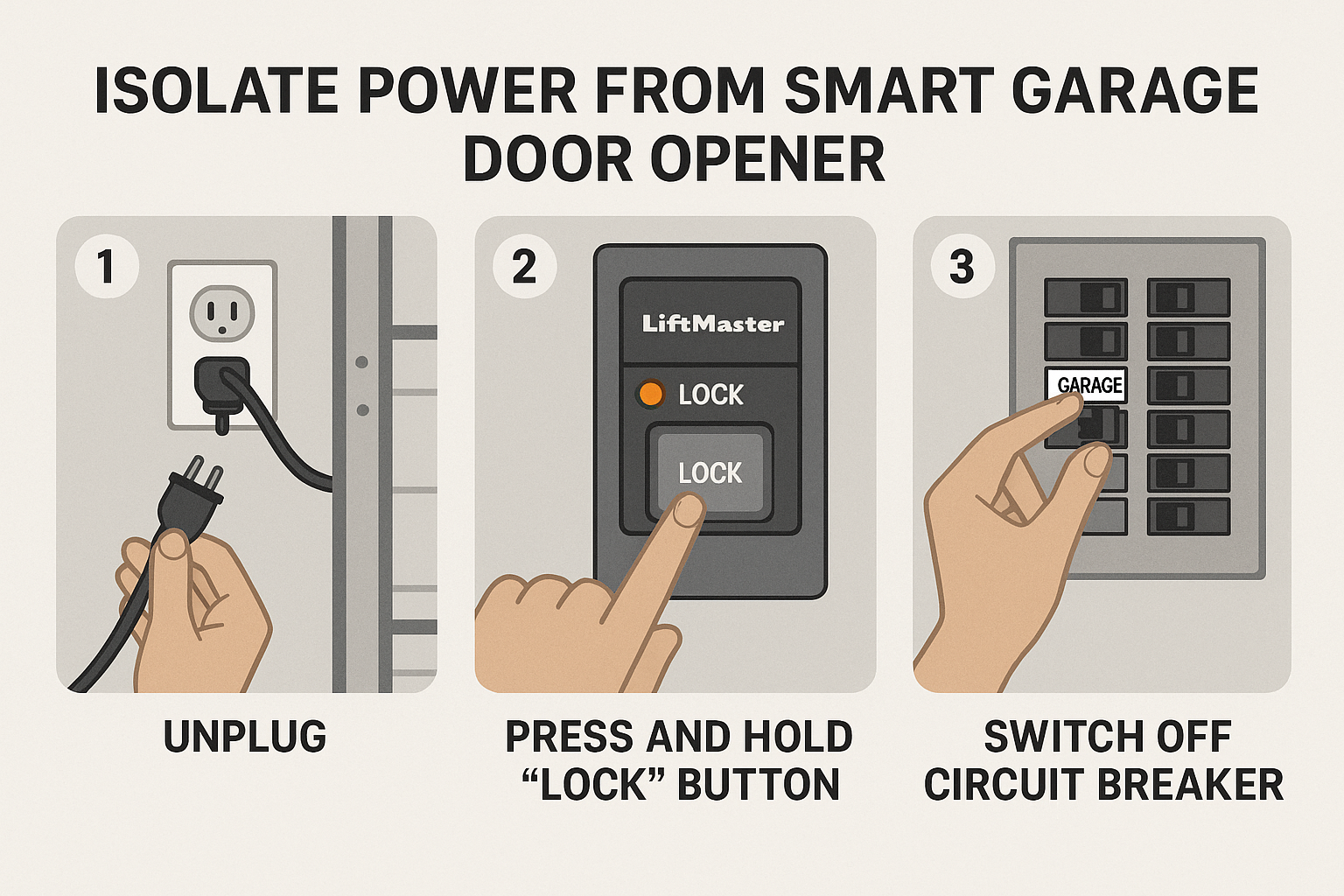
  • The Control Console Lock: Walk to your indoor wall station (e.g., LiftMaster or Chamberlain). Press and hold the “Lock” button for 5 seconds. The status indicator light will flash, confirming that all radio frequency (RF) remote signals and smartphone app commands are disabled.
  • Physical Disconnection: If you can safely reach the ceiling outlet without standing under the door tracks, unplug the power cord directly from the ceiling.
  • Breaker Box Shutoff: If the outlet is inaccessible, locate your main circuit breaker panel and switch off the breaker labeled “Garage.”

Stepwise guide on isolating power to a garage door opener after a vehicle strike

Once isolated, you protect your motor and prevent accidental system activation while evaluating the next steps. If you suspect internal electrical issues, scheduling a professional garage door opener repair is essential.


The "No-Touch" Structural Triage Checklist


Perform a visual inspection from a safe distance of at least five feet. Look for these critical warning indicators:

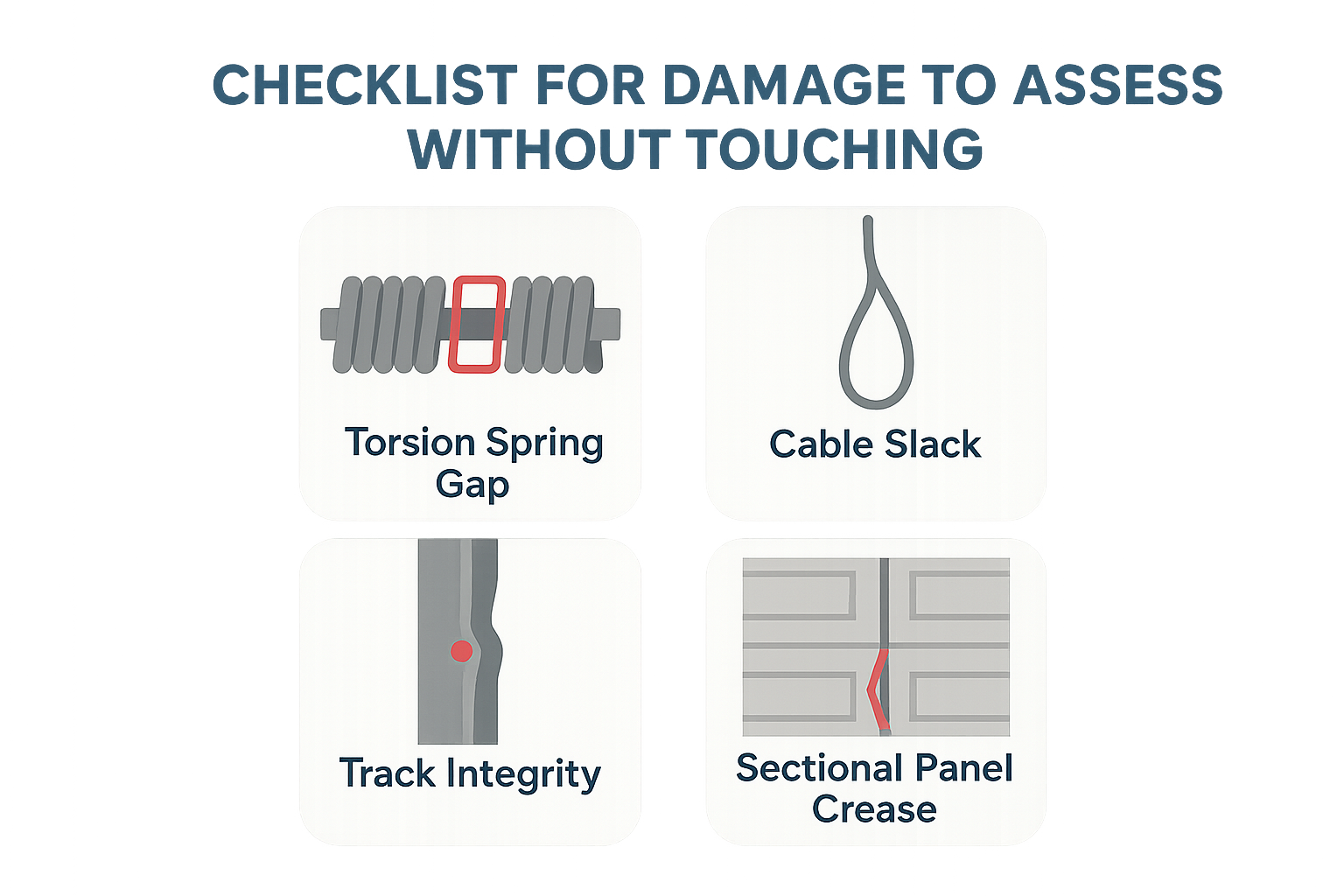
  • The Torsion Spring Gap: Examine the metal spring coil wound on the shaft above the door frame. If there is a clean gap between the coils, the spring has snapped and is no longer holding tension.
  • Cable Slack and Drum Alignment: Look at the steel cables running along the left and right sides. If you see broken garage door cables or cables hanging loose from their drums, the system has lost its counterbalance.
  • Track Distortion: Inspect the vertical steel rails. If they are pinched, bowed outward, or pulled away from the wooden wall framing, the door can slip out of the track and fall.
  • Vertical Sectional Creases: If a horizontal panel is creased across its structural center, it loses its load-bearing capacity.

Visual checklist of critical garage door structural check points to inspect after impact


The Condo and HOA Liability Matrix: Who Pays?


In multi-family or condominium environments, vehicle-to-gate collisions are common and legally complex.

  • Resident-Fault Incidents: If you strike a common-area garage door or automated gate, your auto insurance policy’s property damage liability coverage usually handles the claim up to your limit.
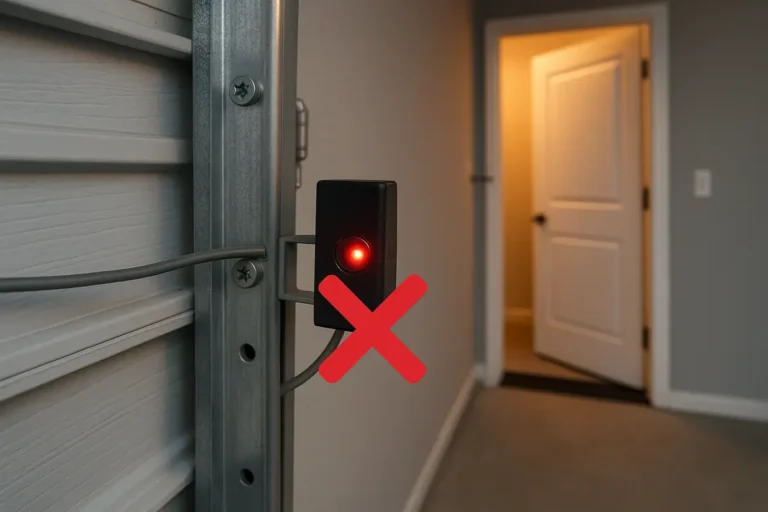
  • HOA-Fault Incidents: If a commercial rolling gate dropped onto your vehicle, liability often hinges on maintenance history. If the optical sensors, photocells, or safety edges were misaligned or poorly maintained, the HOA’s commercial liability insurance may be liable.
  • Key Action Steps: Immediately photograph the safety sensor indicator lights (noting if they are green, red, or off), request the HOA’s gate maintenance logs, and file a police report if the estimated damage exceeds $1,000 to satisfy insurance subrogation rules.

Protecting Your Home and Family


When a garage door is struck, its high-tension mechanical systems are compromised. Taking the right safety-first steps protects your family and property from a sudden collapse.

If your door shows signs of track distortion, spring gaps, or panel damage, do not attempt a DIY fix. Contact our experienced team for professional emergency garage door repair. We will secure your property, stabilize the system, and help you determine whether you need a minor component repair or a full garage door replacement to restore your home’s security.

Frequently Asked Questions


Can I drive my car out of the garage if the door is resting on it?

No. Moving the car can shift the door’s unstable weight distribution, causing the track system to fail completely and crush the vehicle’s roof. Wait for a technician to stabilize the door first.

Is it possible to bend the garage tracks back with a hammer?

No. Garage door tracks are precisely aligned to handle high weight loads. Hammering them weakens the steel structure and can lead to the door slipping off the tracks during future operation.

Will my homeowners or auto insurance cover the damage?

Your auto insurance property damage liability covers the damage to the garage door if you hit your own home. Your homeowners insurance may cover the door itself, but you must compare your deductible against the repair costs.


Contact / Request a Call